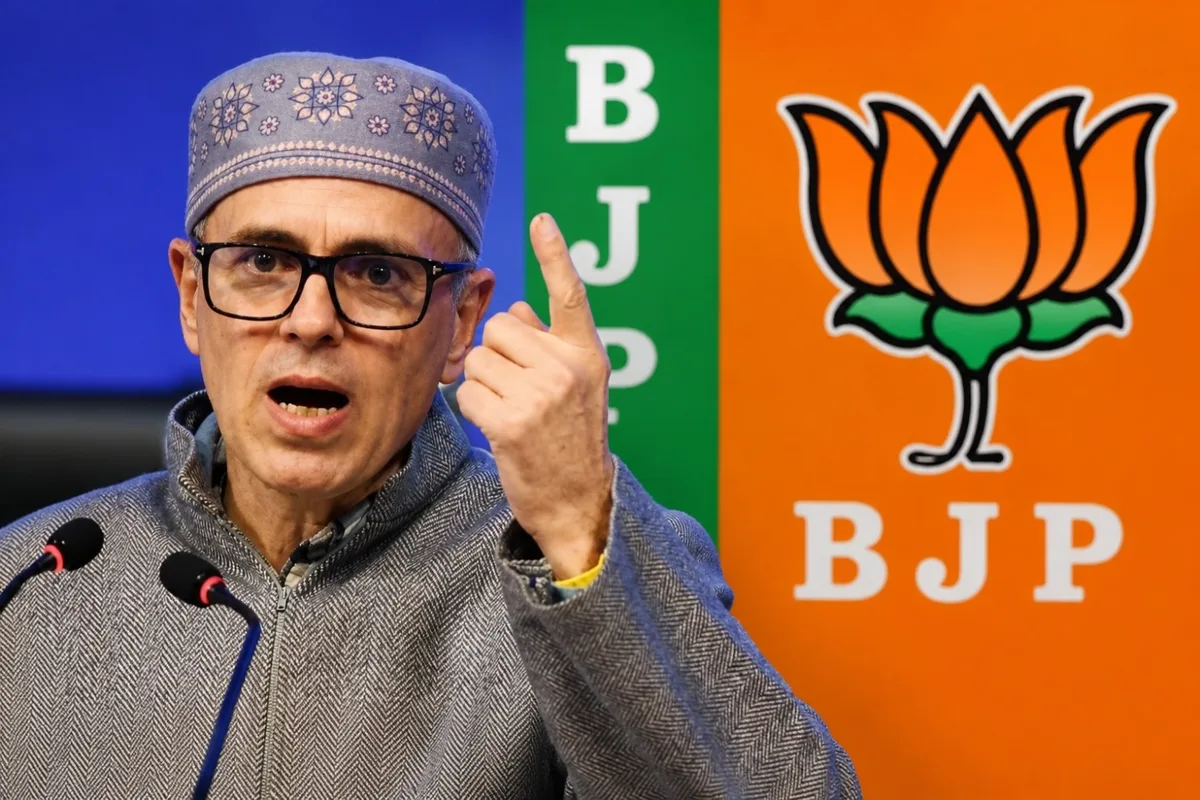
Omar Abdullah vs BJP Over J&K Assembly Session: Is Seven Sittings Enough for Public Accountability?
By: News Desk | 15 September 2026
Jammu and Kashmir’s political confrontation has moved from the familiar terrain of statehood and governance to a more procedural question: how much time should an elected Assembly get to debate the issues facing the Union Territory?
Chief Minister Omar Abdullah on September 15 hit back at BJP criticism of the forthcoming autumn session, saying the BJP had “no locus standi” to question its duration. His response came after Leader of Opposition Sunil Sharma accused the National Conference-led government of restricting the session to seven sittings and thereby limiting legislative scrutiny.
The dispute is worth examining beyond the political rhetoric because the session is scheduled from September 21 to September 30, with seven actual sittings spread across the period. The official J&K Legislative Assembly’s e-Vidhan portal lists the session for September 21–30, while the provisional calendar provides for government business, private members’ bills and resolutions.
The disagreement, therefore, is not simply about whether the Assembly will meet. It is about whether the allotted time is adequate for an opposition to scrutinise the government and for legislators to raise the large backlog of public concerns in J&K.
The immediate flashpoint: seven sittings
The autumn session will begin on September 21 with obituary references followed by government business. September 22 is also allocated to government business.
The House will not sit on September 23 because of Maharaja Hari Singh’s birth anniversary. Private Members’ Bills are scheduled for September 24 and 28, while September 25 is earmarked for Private Members’ Resolutions. September 26 and 27 are non-sitting days, and September 29 and 30 have been allocated for government business, with September 30 listed for government business “if any.”
That makes the session 10 calendar days but seven sitting days.
This distinction matters because describing it simply as a “seven-day session” can obscure how the calendar is structured. At the same time, the BJP argues that even seven sittings leave too little effective time for detailed scrutiny.
What the BJP is saying
Sunil Sharma, the BJP’s Leader of Opposition, has argued that the Assembly is the principal institutional forum available to elected representatives to raise public grievances.
According to Sharma, the seven-sitting schedule leaves only around five effective days for substantive debate because the opening day and the final day have limited business attached to them. He accused the NC government of reducing legislative accountability and called for the House to meet for substantially longer.
Reports on Sharma’s September 15 statement say he went further and demanded that the Assembly be convened for about a month, arguing that legislators need sufficient time to discuss issues affecting people across J&K.
His argument is essentially one of legislative scrutiny: with unemployment, recruitment, electricity tariffs, infrastructure, healthcare, development, statehood and other issues competing for attention, the opposition believes a short sitting schedule restricts its ability to question the government.
That is a political claim by the opposition, rather than an established finding that the government deliberately shortened the session to avoid accountability.
Omar Abdullah’s counterargument
Omar Abdullah rejected the accusation.
Responding to Sharma, the Chief Minister said there was nothing “non-serious” about a seven-day session and pointed to shorter sessions in some BJP-ruled states. He also questioned BJP members’ participation in Parliament and argued that his government would remain present in the Assembly throughout the scheduled working days.
His broader argument is that the length of an Assembly sitting cannot by itself establish whether a government is serious about legislative business.
Omar also sought to turn the BJP’s criticism back on the opposition, effectively arguing that BJP’s own record in legislatures should be considered before it lectures the J&K government about legislative seriousness.
The exchange illustrates the nature of the current NC-BJP contest: each side is attempting to make the other party’s institutional record part of the argument.
But does the BJP really have “no locus standi”?
This is where political rhetoric and parliamentary procedure need to be separated.
The BJP is not the ruling party in J&K, but it is the principal opposition party and its Leader of Opposition is formally part of the Assembly’s institutional structure.
In fact, Sunil Sharma is a member of the Assembly’s Business Advisory Committee (BAC). The committee also includes representatives of the NC, Congress, CPI(M), People’s Conference and an Independent member. Under the Assembly’s rules, the BAC deals with allocation of time for government bills and other business referred to it by the Speaker.
That makes the phrase “no locus standi” politically forceful but potentially misleading if understood literally.
The BJP does not have the authority to unilaterally determine the Assembly calendar. But as the opposition—and with its Leader of Opposition sitting on the BAC—it clearly has an institutional role in legislative proceedings.
The distinction is important:
The BJP can demand more time and criticise the schedule. It cannot itself decide the Assembly calendar.
That decision operates through the Assembly’s established procedures, Speaker and business-management mechanisms.
The Speaker and Business Advisory Committee matter
The controversy also puts the role of Speaker Abdul Rahim Rather and the Business Advisory Committee under greater focus.
The BAC was constituted ahead of the autumn session under Rule 317 of the Assembly’s Rules of Procedure and Conduct of Business. Its membership includes Sunil Sharma, meaning the opposition is represented in the mechanism dealing with allocation of legislative time.
This complicates the political narrative on both sides.
For the BJP, the existence of the BAC does not eliminate the argument that the allotted time is inadequate.
For the government, however, the presence of an established parliamentary mechanism means the issue is not simply a unilateral executive decision imposed outside the Assembly.
The eventual functioning of the House may therefore be more significant than the headline number of sittings.
What will actually happen inside the House?
The provisional calendar gives legislators several avenues for raising issues.
Government business is scheduled on multiple days. Private Members’ Bills are allocated two sitting days, while a separate day has been reserved for Private Members’ Resolutions.
The Assembly’s e-Vidhan system also shows the formal legislative infrastructure being used for the session, including notices for questions and other business.
That means the real test will not simply be seven versus 30 days.
It will be whether legislators receive adequate opportunity to:
- ask questions of ministers;
- debate government policies;
- introduce and discuss private members’ business;
- scrutinise expenditure and administration;
- raise constituency-level grievances;
- debate recruitment and unemployment;
- question healthcare and infrastructure delivery;
- discuss electricity and other economic pressures;
- debate the statehood question and Centre-J&K relations.
If these issues receive substantive debate, the government can argue that the calendar was sufficient.
If major issues are repeatedly curtailed because of time, the opposition will have stronger grounds to argue that the short schedule constrained scrutiny.
A broader NC-BJP confrontation
The present dispute is another chapter in a much larger political confrontation between the NC and BJP.
But the timeline supplied for this issue needs an important qualification: the NC and BJP could not have been clashing inside a J&K Legislative Assembly continuously from 2019 to 2024 because the elected J&K Assembly did not exist during that period.
The previous Assembly’s term ended after the political changes of 2018, and J&K remained without an elected legislature until the 2024 Assembly elections.
Therefore, the political disputes of 2019–23 were primarily played out through the Parliament, political parties, government institutions, public protests and other forums—not through an operational J&K Legislative Assembly.
The present Assembly is consequently significant in its own right: it is the first elected J&K legislature functioning after the constitutional changes of August 2019.
Statehood remains the larger political fault line
For the NC, restoration of statehood has remained a major political demand.
For the BJP, the post-2019 constitutional and administrative framework is fundamentally different from the position advanced by the NC.
That disagreement inevitably enters Assembly politics.
But the session-duration controversy is somewhat different. It concerns the working capacity of the legislature itself, regardless of where individual parties stand on Article 370 or statehood.
That is why the debate could have consequences beyond the immediate NC-BJP exchange.
A legislature is ultimately judged not only by the number of days it sits but by the quality of questions asked, answers provided, bills examined, committees functioning and public issues debated.
The politics of “accountability”
The BJP’s argument is straightforward: a government facing criticism over unemployment, recruitment, governance and public services should give legislators enough time to question ministers.
The NC’s counterargument is equally straightforward: a longer calendar does not automatically produce better accountability, and the government says it is prepared to work throughout the allotted sitting days.
Both propositions can coexist.
A short session can still be productive. A long session can also be unproductive.
The more meaningful indicators are what happens inside the House: how many questions are admitted, how many receive substantive answers, how much time is allocated to opposition interventions, whether bills receive detailed scrutiny and whether ministers are required to respond to specific public grievances.
The public-interest question
For ordinary people in J&K, the political argument over session length may matter less than what legislators actually bring into the House.
A young graduate waiting for recruitment, a patient travelling long distances for specialist healthcare, a trader struggling with infrastructure, a farmer dealing with rising costs, or a family waiting for restoration of statehood is unlikely to judge the Assembly solely by its calendar.
The relevant question is simpler:
Did the Assembly give their concerns enough space to be heard and answered?
That is ultimately where the NC government’s claim of seriousness and the BJP’s allegation of inadequate accountability will be tested.
A confrontation that is bigger than seven days
Omar Abdullah’s “no locus standi” remark has sharpened an already intense NC-BJP contest, but the underlying institutional question is more important than the political exchange.
The forthcoming Assembly session has seven scheduled sittings between September 21 and September 30, with government business, private members’ bills and resolutions on the provisional calendar.
The BJP wants substantially more time and says the present arrangement restricts scrutiny. The NC government says seven sittings are adequate and points to shorter legislative sessions elsewhere.
Neither claim can be conclusively settled before the House actually conducts its business.
The real measure will be whether those seven sittings produce meaningful legislative scrutiny—or whether important questions are left waiting for another session.
For J&K’s newly restored electoral politics, that distinction may matter far more than the rhetoric surrounding the number seven.


