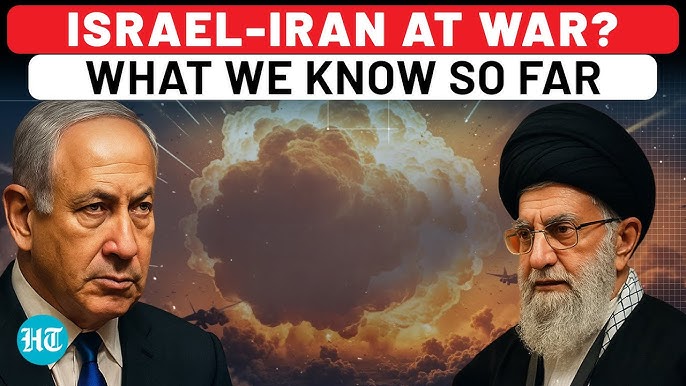
Iran–U.S. War Latest 2026: Who Is Involved, Escalation Risks & Regional Impact
By: Javid Amin | 28 February 2026
Is There an Official Iran–U.S. War?
As of the latest verifiable international reporting:
-
There is no formal declaration of war between the United States and Iran.
-
There is no confirmed acknowledgment from Washington or Tehran of sustained direct, full-scale military engagement.
-
However, the region is experiencing heightened military alert levels, proxy clashes, and strategic signaling.
The distinction matters. The Middle East is currently in what analysts describe as a “pre-war escalation phase” — where limited strikes, covert operations, and proxy attacks risk spiraling into broader conflict.
The Core Triangle: United States – Israel – Iran
1. The United States
The United States maintains a significant military presence in the Middle East, including:
-
U.S. Fifth Fleet in Bahrain
-
Al Udeid Air Base in Qatar
-
Al Dhafra Air Base in UAE
-
Al Salem Air Base in Kuwait
-
Troops in Iraq and Syria
Washington’s current posture emphasizes:
-
Protection of U.S. forces
-
Freedom of navigation in the Gulf
-
Support for Israel’s security
-
Deterrence against Iranian missile and drone threats
The U.S. has historically avoided direct large-scale war with Iran, preferring sanctions, covert operations, and limited retaliatory strikes.
2. Israel
The Israel views Iran as its most significant strategic threat, particularly concerning:
-
Iran’s ballistic missile program
-
Iran’s nuclear development
-
Iran’s support for Hezbollah and other armed groups
Israeli leaders have repeatedly stated they will act independently if they perceive an existential threat.
In previous years, Israel has conducted:
-
Airstrikes on Iranian-linked targets in Syria
-
Alleged cyber operations
-
Targeted assassinations attributed to intelligence operations
3. Iran
The Iran operates through both direct military capability and regional proxy networks.
Its strategic tools include:
-
Ballistic missile forces
-
Drone warfare capabilities
-
Naval units in the Persian Gulf
-
The Islamic Revolutionary Guard Corps (IRGC)
-
Proxy alliances across the region
Iran’s doctrine emphasizes deterrence through asymmetric retaliation rather than conventional warfare.
The “Axis of Resistance”: Iran’s Regional Network
If conflict escalates, it is unlikely to remain limited to direct U.S.–Iran exchanges. Iran’s influence extends across multiple theatres.
Hezbollah (Lebanon)
Hezbollah is arguably Iran’s most powerful regional ally.
Capabilities include:
-
Tens of thousands of rockets
-
Advanced missile systems
-
Deep operational experience
If activated, Hezbollah could open a northern front against Israel, dramatically widening the conflict.
Houthis (Yemen)
Houthis have previously targeted:
-
Red Sea shipping lanes
-
Saudi infrastructure
-
Israeli-linked vessels
Escalation could disrupt global maritime trade routes.
Popular Mobilization Forces (Iraq)
Popular Mobilization Forces include Iran-aligned factions capable of targeting U.S. bases in Iraq.
This remains one of the most immediate flashpoints in any escalation scenario.
Gulf States: Strategic Geography, Strategic Risk
Countries hosting U.S. bases face exposure if Iran retaliates against American assets.
Bahrain
Home to the U.S. Fifth Fleet, Bahrain sits directly across the Gulf from Iran.
Qatar
Qatar hosts Al Udeid, a central U.S. air operations hub.
UAE
United Arab Emirates hosts Al Dhafra Air Base and has normalized ties with Israel.
Kuwait
Kuwait provides logistical support for U.S. forces.
Saudi Arabia
Saudi Arabia is both an energy superpower and a historical rival of Iran.
None of these states want direct war. However, geography places them within missile range.
Is the United Kingdom Involved?
The United Kingdom traditionally coordinates closely with U.S. operations in the Gulf.
While London has historically supported U.S. regional security missions, there is no confirmed large-scale British combat role in a direct Iran strike scenario.
The Three Escalation Scenarios
Scenario 1: Full-Scale Regional War
What it would look like:
-
Direct missile exchanges between Iran and Israel
-
U.S. naval and air retaliation
-
Hezbollah entering conflict
-
Gulf energy infrastructure targeted
Impact:
-
Oil prices surge beyond crisis thresholds
-
Strait of Hormuz disruption
-
Massive regional displacement
-
Global market shock
This is the most dangerous path.
Scenario 2: Proxy Escalation (Most Likely Short-Term)
Iran avoids direct all-out war but activates proxies:
-
Hezbollah intensifies rocket fire
-
Houthis attack Red Sea shipping
-
Iraqi militias target U.S. bases
The U.S. and Israel respond with calibrated strikes.
Impact:
-
Sustained instability
-
Energy volatility
-
Diplomatic stalemate
This model reflects historical patterns.
Scenario 3: Diplomatic De-escalation
Possible triggers:
-
UN Security Council intervention
-
Backchannel mediation via Oman or Qatar
-
Temporary ceasefire framework
The United Nations Security Council has already called emergency consultations during previous crises.
This scenario requires political restraint from all sides.
Energy Markets and Global Economy
The Strait of Hormuz handles roughly one-fifth of global oil shipments.
Any sustained disruption could:
-
Spike oil prices
-
Drive inflation globally
-
Impact emerging economies disproportionately
Energy markets are highly sensitive to even perceived risk in the Gulf.
Is This Linked to the Gaza Conflict?
The ongoing Gaza conflict has sharpened regional polarization.
Iran positions itself as a supporter of Palestinian groups, while Israel seeks to demonstrate regional deterrence.
Escalation between Iran and Israel cannot be separated from the broader Gaza war dynamics.
Where Does India Stand?
India maintains strategic relations with:
-
Israel (defense and technology)
-
Iran (energy and connectivity)
-
Gulf states (diaspora and remittances)
New Delhi’s approach has consistently emphasized:
-
De-escalation
-
Protection of diaspora
-
Strategic neutrality
India’s advisories to nationals in Israel and Iran reflect precaution, not political alignment.
The Big Picture: War or Managed Escalation?
At present:
-
There is no confirmed total war.
-
There is significant military tension.
-
The region is in a volatile, unstable phase.
Historically, Iran and the U.S. have avoided direct sustained war despite severe incidents — including the 2020 killing of Qassem Soleimani.
The current trajectory suggests high-risk brinkmanship rather than immediate full-scale war.
However, miscalculation remains the greatest danger.
Final Assessment
Most Likely Path (Short-Term): Proxy escalation and calibrated retaliation.
Most Dangerous Path: Direct multi-front regional war involving Hezbollah and Gulf states.
Best-Case Path: Quiet diplomatic containment before strategic thresholds are crossed.
The Middle East is not yet in declared world war territory — but it is navigating one of its most fragile security environments in years.

