The Hidden Struggle of Kashmiri Families
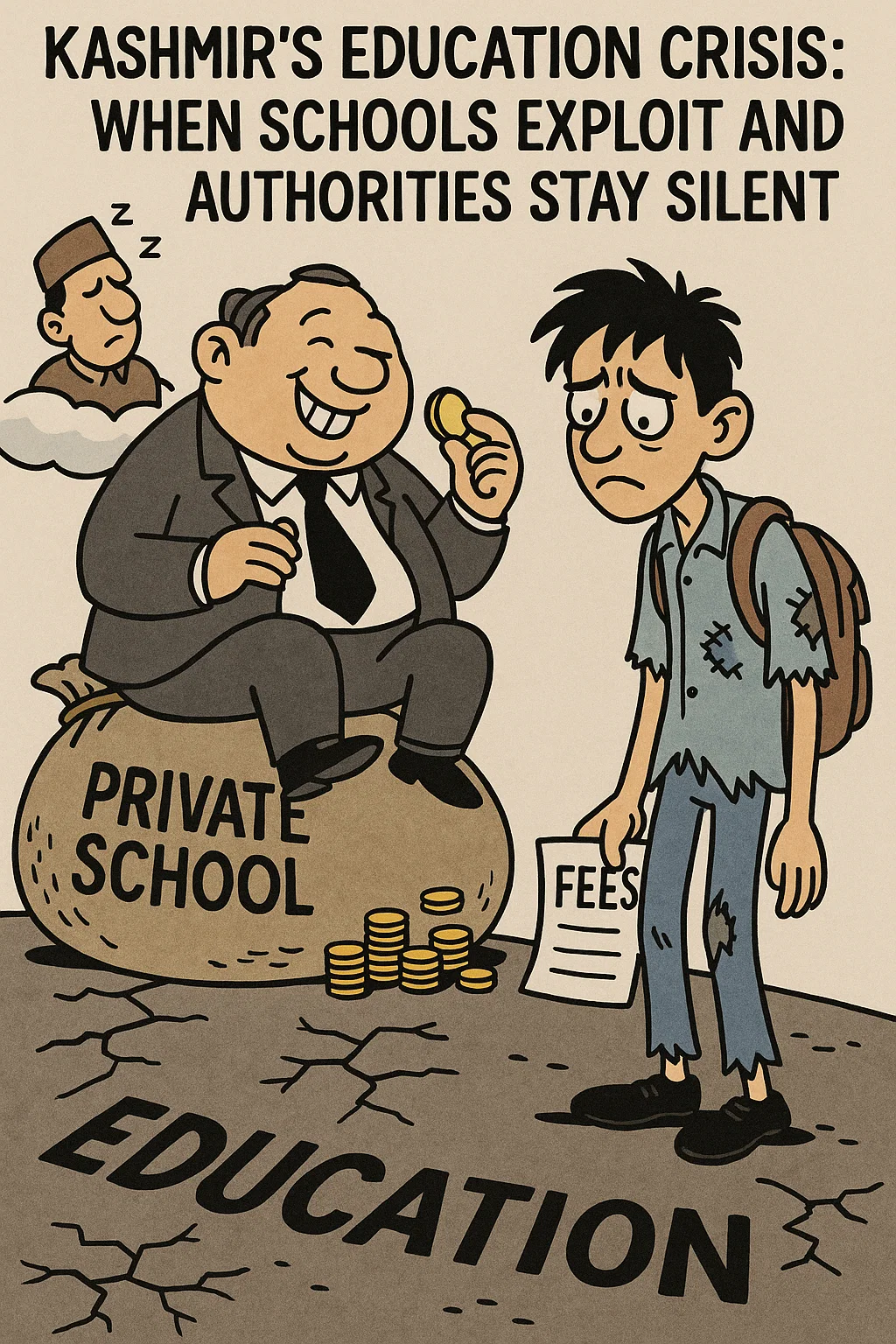
Srinagar 30 April 2025: In the serene valleys of Kashmir, a silent crisis is unfolding. While the region grapples with political and social challenges, another battle is being fought within households—against the escalating costs of private education. With over 65% of urban families relying on private schools due to the perceived decline in public education quality, the financial burden has become overwhelming. Families are now spending up to 40% of their monthly income on school fees, leading many into debt and despair.
The Fee Hike Epidemic: Exploiting Loopholes
The Jammu & Kashmir Committee for Fixation and Regulation of Fee (FFRC) was established in 2019 to cap annual fee hikes at 6%. However, enforcement has been lax. Schools in Srinagar, Baramulla, and Anantnag have reportedly increased fees by 15–18% annually, citing reasons like “infrastructure upgrades” that often never materialize. A 2024 survey by the Kashmir Education Watch found that 78% of parents faced unapproved hikes, with only 12% filing complaints due to fear of retaliation.
Retroactive Charges and Hidden Fees: Financial Ambushes
In 2024, a Sopore school demanded “balance fees” from 2020–2022, totaling ₹18,000 per student, without prior notice. Charges like “smart class fees” (₹3,000/year) and “lab development” (₹2,500/year) are levied without transparency. A 2023 RTI request revealed that 60% of schools couldn’t justify these costs. Parents feel like they’re being treated as ATMs, with new fee slips appearing every vacation.
Winter Vacations and Transportation Fees: Paying for Idle Services
Despite schools being closed during the 3-month winter break (December–February), many institutions charge 50% of transport fees (~₹4,500), arguing that driver salaries must be paid. However, parents question why they should subsidize payrolls for services not rendered. The J&K School Education Act lacks clauses regulating vacation-period charges, leaving parents powerless.
Psychological Impact on Students: Collateral Damage
The financial strain on families extends to students. In 2023, a 14-year-old in Budgam was barred from exams for unpaid fees, sparking protests. A 2024 study by the Institute of Mental Health and Neurosciences (IMHANS) Kashmir found that 34% of students in private schools suffer anxiety linked to financial stress at home. Teachers report being pressured to remind students about pending fees, leading to public humiliation and emotional distress.
Regulatory Apathy: The FFRC’s Ineffectiveness
Despite over 1,200 complaints filed since 2020, the FFRC has penalized only four schools. The committee hasn’t issued a revised fee structure since March 2023. In 2022, the J&K administration allocated ₹8 crore to private schools under the “Quality Improvement Program,” raising concerns about conflicts of interest. The Parents Association of Private Schools Kashmir (PAPSK) staged a 100-day sit-in in 2023, demanding FFRC reforms, but received only empty promises.
The Roadmap to Justice: Proposed Solutions
-
Immediate Audits: Conduct third-party audits of school finances, with penalties for non-compliance.
-
Transparency Portals: Mandate online disclosure of fee breakdowns and expenditures.
-
Student Protection Laws: Ban practices like exam bans and public shaming for unpaid fees.
-
Strengthen Parent Unions: Empower organizations like PAPSK to file collective lawsuits.
-
Revive Public Schools: Redirect funds to improve government schools, reducing dependency on private institutions.
Bottom-Line: A Call to Action
The crisis in Kashmir’s education system reflects broader societal inequalities. With 82% of the region’s private schools owned by politically connected elites, this issue transcends education—it’s about power and accountability. Parents must unite, authorities must act, and schools must remember: Education is a right, not a business.