Kashmir Tulip Garden 2026 रिकॉर्ड फुटफॉल: Srinagar Tulip Festival attracts 1 lakh visitors in 10 days
By: Javid Amin | 25 March 2026
A Spring Spectacle Like No Other: Kashmir’s Tulip Garden Breaks Records
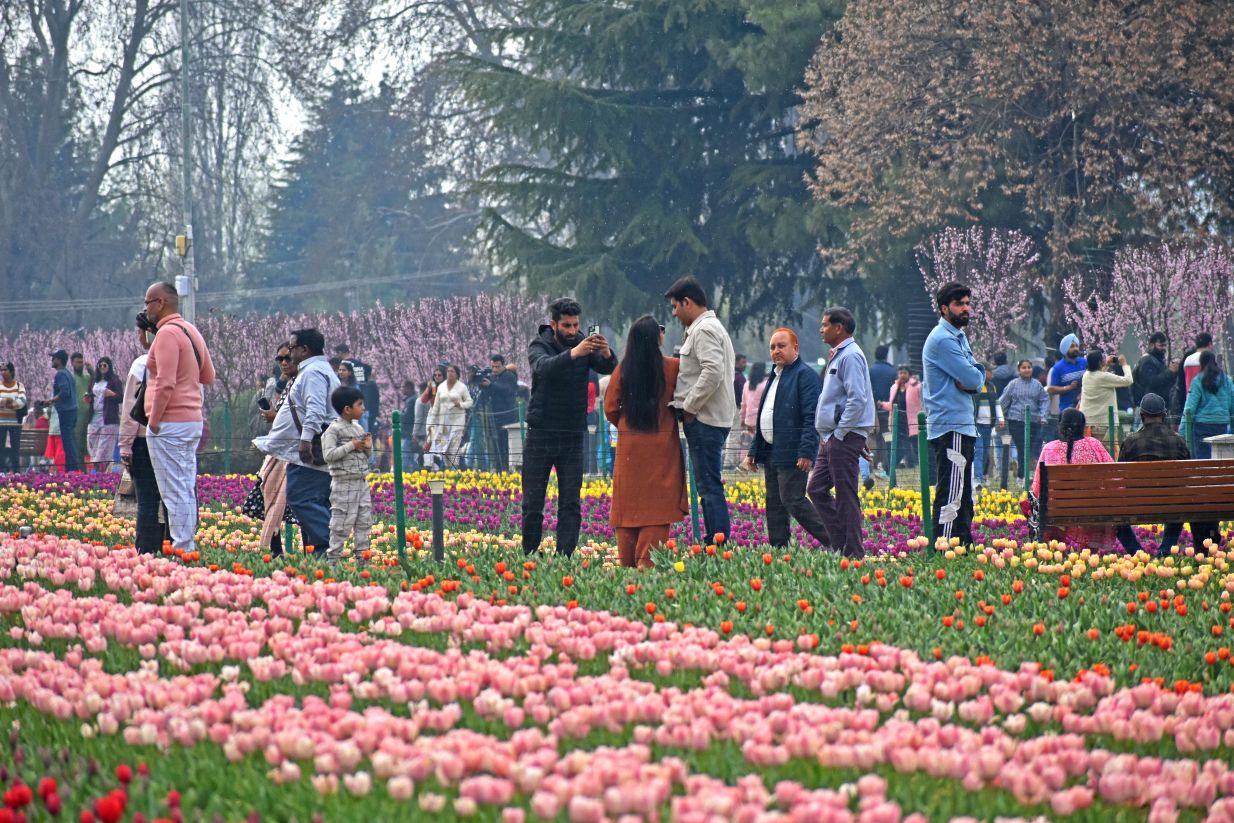
In a remarkable display of nature’s brilliance and tourism resurgence, the Indira Gandhi Memorial Tulip Garden has welcomed nearly 1 lakh visitors in just 10 days, signaling a powerful revival of Kashmir’s travel economy in 2026.
Nestled at the foothills of the Zabarwan range and overlooking the iconic Dal Lake, the garden has transformed into a vibrant mosaic of colors—featuring over 1.5 million tulips across 30 hectares, making it Asia’s largest tulip garden.
What was once a seasonal attraction has now evolved into a global tourism magnet, drawing visitors from across India and international destinations alike.
Also Read | Kashmir Spring 2026 Sale: Tulip Festival, Honeymoon & Family Packages from ₹30,000 | JKL Travels
Inside Asia’s Largest Tulip Garden: A Living Canvas of Color
A Floral Wonderland in Srinagar
Every spring, the Tulip Garden opens its gates for a brief window, typically between late March and early April. During this period, Srinagar witnesses a dramatic transformation as rows of tulips bloom in synchronized harmony.
Visitors strolling through the garden encounter:
- Brilliant reds, yellows, pinks, purples, and whites
- Carefully curated floral patterns and terraces
- Snow-capped Himalayan backdrops enhancing the visual appeal
The garden’s strategic layout ensures that each bloom stage overlaps slightly, extending the viewing season and maximizing visitor experience.
The Zabarwan Backdrop: Nature Meets Design
Set against the picturesque Zabarwan mountains, the garden offers one of the most photogenic landscapes in India. The contrast between vibrant tulips and the serene Dal Lake below creates a surreal atmosphere that has become a favorite for photographers, influencers, and nature lovers.
Tourism Surge 2026: Kashmir’s Comeback Story
From Uncertainty to Opportunity
After years marked by disruptions, Kashmir’s tourism sector is witnessing a robust recovery in early 2026. The tulip garden’s record-breaking footfall is not an isolated event—it is part of a broader tourism surge across the region.
Key Destinations Seeing High Footfall:
- Gulmarg – Skiing, gondola rides
- Pahalgam – River rafting, scenic valleys
- Sonamarg – Trekking, glaciers
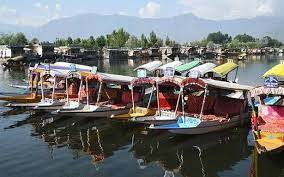
- Dal Lake – Houseboats, shikara rides
Tour operators report fully booked hotels, increased flight occupancy, and rising demand for local experiences.
Economic Ripple Effect: A Boon for Local Businesses
The surge in tourist arrivals has created a cascading economic impact across Srinagar and beyond.
Sectors Benefiting the Most:
- Hospitality (hotels, guesthouses, houseboats)
- Transportation (taxis, shikara services)
- Handicrafts (pashmina, carpets, souvenirs)
- Food and beverage industry
Local artisans and vendors are witnessing renewed demand, while houseboat owners on Dal Lake report near-full occupancy—a significant turnaround from previous years.
Also Read | Kashmir Tulip Festival 2026: India’s Most Colorful Spring Escape You Can Experience for Just ₹20,500
Security Tightened Amid Tourism Boom
High-Level Monitoring and Preventive Strategy
With increased footfall comes the challenge of ensuring safety. Following concerns after the 2025 Pahalgam attack, authorities have implemented extensive security measures.
Key Developments:
- Security review led by senior officials, including Govind Mohan
- Coordination with J&K administration, including Atal Dulloo and Nalin Prabhat
- Deployment of additional police and paramilitary forces
On-Ground Measures
Tourists visiting the Tulip Garden and surrounding areas will notice:
- Increased checkpoints and surveillance
- Traffic regulation near Dal Lake and garden routes
- Crowd management systems for smooth visitor flow
While visible security may slightly alter the travel experience, it has significantly boosted tourist confidence.
Balancing Growth and Experience
The Challenge of ‘Security Fatigue’
One emerging concern is the possibility of over-securitization impacting the overall visitor experience. Travelers seek relaxation and immersion in nature—excessive checks can sometimes disrupt this flow.
Authorities are therefore working to:
- Maintain a low-profile yet effective security presence
- Use technology (CCTV, drones) for non-intrusive monitoring
- Train personnel in tourist-friendly engagement
Sustainability Concerns: Can Kashmir Handle the Rush?
The tourism boom brings with it questions of sustainability.
Key Challenges:
- Waste management in high-footfall zones
- Pressure on local infrastructure
- Ecological impact on fragile mountain ecosystems
Experts emphasize the need for:
- Responsible tourism campaigns
- Visitor caps during peak days
- Infrastructure upgrades
7-Day Kashmir Tulip Itinerary: The Perfect Spring Escape
For travelers planning a visit, here’s a curated itinerary blending natural beauty, adventure, and cultural exploration.
Day 1: Srinagar – Tulip Garden Experience
- Arrival in Srinagar
- Visit Indira Gandhi Memorial Tulip Garden
- Explore nearby Mughal gardens
Day 2: Dal Lake – Houseboat Living
- Shikara ride on Dal Lake
- Overnight stay in a traditional houseboat
Day 3: Gulmarg – Snow & Adventure
- Travel to Gulmarg
- Gondola ride and skiing
Day 4: Pahalgam – Valleys & Rivers
- Explore Pahalgam
- River rafting and nature walks
Day 5: Sonamarg – Meadow of Gold
- Visit Sonamarg
- Trek to Thajiwas Glacier
Day 6: Srinagar Old City
- Explore heritage markets
- Shop for handicrafts
Day 7: Departure
- Final shopping and return journey
Also Read | Kashmir Tulip Festival 2026 Tour Package 4N/5D @ ₹ 30,000 Couple
Strategic Impact: Who Gains and How
| Stakeholder | Impact |
|---|---|
| Tourists | Safe, vibrant travel experience |
| Local Businesses | Revenue surge and job creation |
| Authorities | Tourism growth with security responsibility |
| Residents | Economic gain with lifestyle adjustments |
Risks That Could Shape the Future
Despite the optimism, certain risks remain:
1. Geopolitical Sensitivity
Kashmir’s global perception can shift rapidly with any incident.
2. Infrastructure Stress
Sudden tourism spikes can strain roads, sanitation, and services.
3. Environmental Degradation
Unregulated tourism may harm natural ecosystems.
Why the Tulip Festival Matters More Than Ever
The Tulip Garden is no longer just a floral attraction—it has become a symbol of Kashmir’s resilience and revival.
It represents:
- A shift toward seasonal tourism branding
- A successful model of public-private tourism synergy
- Renewed global interest in Kashmir as a safe destination
Conclusion: A Blooming Future for Kashmir Tourism
The record-breaking footfall at Srinagar’s Tulip Garden is more than a statistic—it’s a signal of confidence returning to Kashmir.
With careful planning, sustained security, and responsible tourism practices, Kashmir stands at the threshold of becoming one of Asia’s premier spring destinations.
The challenge ahead lies in preserving its delicate balance—between growth and sustainability, security and serenity.
If managed wisely, the tulips of Srinagar will not just bloom each spring—they will continue to tell the story of Kashmir’s enduring charm and revival.