J&K Assembly Debates 33 Private Members’ Bills, 3 Rejected Amid Heated Exchanges
By: Javid Amin | 31 March 2026
A Rare Surge in Legislative Activity
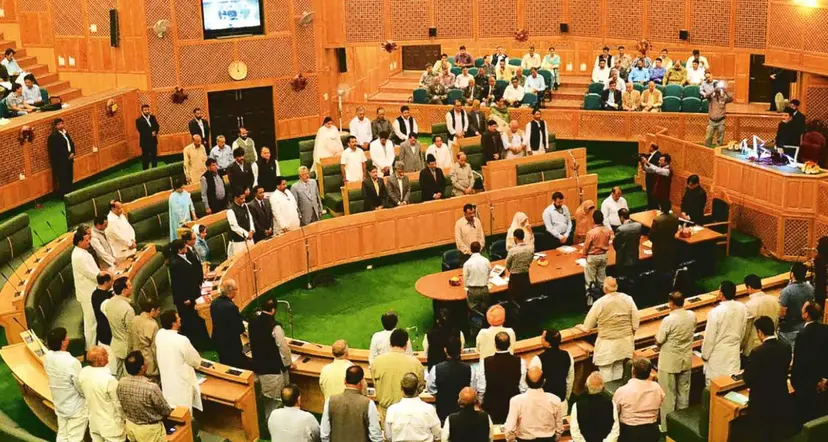
In a session marked by intensity and breadth, the Jammu & Kashmir Legislative Assembly on March 31, 2026, took up 33 private members’ Bills for debate—one of the most substantial legislative exercises in recent months.
While three Bills were voted down, many others were either referred for further scrutiny or kept pending. Beyond outcomes, the session offered something more significant: a window into the evolving priorities, tensions, and political messaging within Jammu & Kashmir’s legislative ecosystem.
What Are Private Members’ Bills—and Why They Matter
Unlike government Bills, private members’ Bills are introduced by legislators who are not part of the executive. Though rarely enacted into law, they serve critical democratic functions:
- Agenda Setting: Bring overlooked public issues into formal debate
- Accountability Tool: Push the government to clarify positions
- Policy Incubation: Ideas often reappear later in government legislation
In this context, debating 33 such Bills signals high legislative engagement—and a legislature actively grappling with grassroots concerns.
Inside the Assembly: Debate, Disruption, and Division
The atmosphere inside the House was far from routine.
Sharp Exchanges Reflect Political Undercurrents
Members from treasury and opposition benches engaged in pointed arguments, reflecting:
- Ideological differences
- Regional sensitivities
- Competing political narratives
This comes just days after disruptions over geopolitical issues, indicating a session already operating under heightened तनाव (tension).
Outcome Snapshot
- Total Bills Discussed: 33
- Bills Rejected: 3
- Others: Referred, deferred, or pending
The rejection of three Bills, though numerically small, has symbolic weight—highlighting the difficulty of consensus in a politically fragmented House.
Thematic Breakdown: What the 33 Bills Reveal
1. Social & Cultural Priorities: Identity, Faith, and समाज (Society)
Liquor Prohibition
Multiple Bills proposed:
- Complete ban on liquor across J&K
- Region-specific restrictions
This reflects ongoing social debates around:
- Public health
- Cultural values
- Revenue trade-offs
Protection of Religious Sites
Proposals aimed at safeguarding:
- Temples
- Mosques
- Gurdwaras
- Churches
These Bills underscore the importance of communal harmony in a sensitive region.
Return of Kashmiri Pandits
Several proposals focused on:
- सुरक्षित (safe) return
- Rehabilitation packages
- Housing and employment support
This remains one of the most emotionally and politically significant issues in the region.
2. Economic & Employment Concerns: Jobs at the Center
Regularisation of Jobs
Bills sought:
- Absorption of contractual workers
- Job security for temporary कर्मचारियों (employees)
This reflects widespread employment insecurity, especially among youth.
Cooperative Sector Reforms
Proposals targeted:
- Governance transparency
- Financial accountability
- Institutional strengthening
Reservation in Private Institutions
A notable proposal:
- Mandatory seats for BPL and Antyodaya families in private colleges
This raises complex questions about:
- Equity vs institutional autonomy
- State intervention in private education
3. Governance & Land Rights: Control, Identity, and Policy
Land Protection Measures
Bills aimed to:
- Safeguard local land ownership
- Prevent misuse of land laws
Land remains a deeply sensitive issue in J&K, tied to:
- Identity
- Economic security
- Political autonomy
Excise Law Amendments
Focused on:
- Stronger enforcement
- Regulation of liquor trade
Statehood Debate (Indirect)
While not formal Bills, discussions repeatedly touched upon:
- Restoration of statehood
- Greater administrative autonomy
4. Healthcare & Welfare: Public Service Accountability
Ban on Private Practice by Government Doctors
Key proposal:
- Prohibit government doctors from private practice
Objective:
- Ensure full-time availability in public hospitals
Healthcare Regulation
Bills aimed at:
- Improving service delivery
- Increasing institutional accountability
These proposals highlight persistent gaps in healthcare infrastructure.
Why Three Bills Failed: Understanding Legislative Resistance
The rejection of three Bills reflects deeper structural dynamics:
1. Political Opposition
Bills often fail when:
- They challenge ruling party priorities
- They lack cross-party consensus
2. Fiscal Concerns
Some proposals may have:
- High financial implications
- Implementation challenges
3. Legal and Administrative Feasibility
Certain Bills may conflict with:
- Existing laws
- Constitutional provisions
Political Messaging: More Than Just Lawmaking
Opposition Strategy
Rejected Bills provide ammunition to:
- Criticize government responsiveness
- Highlight unmet public demands
Ruling Side Position
The government can argue:
- Need for practical, implementable policies
- Avoidance of populist or impractical proposals
Governance Implications: Signal vs Substance
Limited Direct Impact
Historically, private members’ Bills:
- Rarely become law
- Have limited immediate policy impact
But Strong Indirect Influence
They:
- Shape public discourse
- Influence future legislation
- Pressure the executive
A Legislative Barometer of Public Sentiment
Taken together, the 33 Bills reflect four major public concerns in J&K:
- Social Harmony and Identity
- Employment Security
- Land and Resource Protection
- Healthcare Access and Accountability
These are not abstract policy areas—they are lived realities for citizens across the Union Territory.
Comparative Perspective: Is This Unusual?
In most Indian legislatures:
- Private members’ Bills are few
- Debate time is limited
Against this backdrop, J&K’s discussion of 33 Bills stands out as:
- Unusually high participation
- Broad policy engagement
Challenges Ahead: Consensus in a Divided House
Fragmented Politics
Diverse party positions make consensus difficult.
Policy Complexity
Issues like land rights and prohibition require:
- Multi-layered solutions
- Stakeholder consultation
Session Constraints
With limited time, many Bills may remain:
- Pending
- Deferred indefinitely
Key Takeaways
- The J&K Assembly debated an unusually high number of private members’ Bills.
- Three Bills were rejected, reflecting political and practical constraints.
- The proposals reveal core public concerns: jobs, land, healthcare, and social harmony.
- Private members’ Bills, though rarely enacted, shape policy discourse significantly.
- The session underscores both democratic vibrancy and the challenge of consensus-building.
Conclusion: Democracy in Motion, Consensus Still Elusive
The March 31 session of the Jammu & Kashmir Assembly was not just about legislation—it was about representation.
Representation of:
- Diverse voices
- Competing priorities
- Unresolved tensions
While only a fraction of these Bills may ever translate into law, their real value lies elsewhere—in forcing conversations, spotlighting grievances, and nudging governance toward responsiveness.
In a region as complex as Jammu & Kashmir, that in itself is a crucial लोकतांत्रिक (democratic) function.
Final Word
The debate over 33 private members’ Bills demonstrates that the Assembly is not dormant—it is सक्रिय (active), contested, and evolving.
But the real test lies ahead:
Can this legislative energy translate into actionable policy and tangible change for the people?