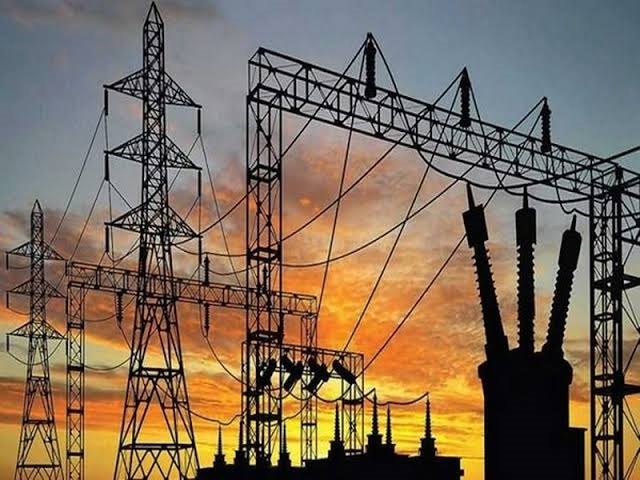
Kashmir Winter Power Cuts 2026: 300 MW Shortfall Raises Fresh Concerns Ahead of Winter
By: Javid Amin | 18 October 2026
As Kashmir prepares for another cold winter, an emerging electricity shortage is putting the spotlight back on one of the Valley’s most persistent public-service problems: the gap between the power its people need and the electricity available when demand is highest.
A report published by Kashmir Life on October 17 puts Kashmir’s peak-hour power deficit at nearly 300 megawatts (MW), with demand estimated at 1,300 to 1,350 MW and available supply fluctuating between 1,000 and 1,150 MW. The figures, attributed to an unnamed official, suggest that the Valley is entering the winter season with limited room to absorb a further increase in consumption.
But the problem extends beyond the seasonal increase in consumption. Jammu and Kashmir remains heavily dependent on electricity purchased from outside the Union Territory, while its own hydropower output changes with water availability. Transmission bottlenecks, distribution losses and the financial health of the electricity sector add further pressure.
Recent government figures presented in the Jammu and Kashmir Legislative Assembly also reveal a wider challenge. In a separate assessment covering the Union Territory, peak demand reached 3,063 MW against an available supply of 2,899 MW during the financial year up to July 2026. The government said the resulting 164 MW gap was managed through short-term power arrangements.
Kashmir Power Shortage: What the Latest Figures Reveal
The reported shortfall becomes clearer when demand and availability are examined side by side.
REPORTED PEAK-HOUR POSITION IN KASHMIR
Electricity demand
1,300–1,350 MW
Available supply
1,000–1,150 MW
Reported deficit
~300 MW
Local generation from J&K-owned plants
360–400 MW
Source: Kashmir Life, October 17, 2026, citing officials. Figures are reported estimates and may vary with the hour and operating conditions.
At the lower end of the reported demand range, 1,300 MW against 1,150 MW of available supply would leave a 150 MW gap. At the upper end, 1,350 MW against 1,000 MW would produce a 350 MW gap. This explains why the shortage can vary considerably rather than remain constant.
The distinction matters because electricity demand must be met in real time. Power available at midday cannot automatically be assumed to be available in the same quantity during the evening peak. Likewise, electricity purchased through short-term markets depends on procurement arrangements and the power available through the wider grid.
For consumers, the consequences are often measured less in megawatts than in hours without electricity. A supply shortfall can lead to scheduled curtailment, while local faults, maintenance work, overloaded equipment and weather-related damage can cause additional interruptions.
Why Electricity Demand Rises as Kashmir Enters Winter
Winter changes the way Kashmir uses electricity.
During warmer months, households may manage with lighting, refrigeration, appliances and other routine consumption. As temperatures drop, the need for heating becomes more pressing. Electric heaters, blowers and other heating appliances can draw substantial amounts of power, particularly when many households use them simultaneously.
The timing of this demand also matters. Morning consumption rises as people prepare for school, work and daily activities. Evening demand increases when households return home, switch on lights and heating appliances, and businesses continue operating.
This creates a difficult operating environment for electricity planners. Demand can climb sharply within a short period, even when the total daily consumption figure does not appear unusually high.
The social consequences are uneven. Households with the financial means to purchase backup batteries, inverters or alternative heating equipment may be better placed to cope with interruptions. Families unable to afford those options have fewer ways to maintain warmth, lighting and uninterrupted study time.
Students preparing for examinations, older people, people who require electrically powered medical equipment, and small businesses dependent on refrigeration or digital systems can face particular difficulties. The effects also extend to shops, workshops and service providers whose earnings depend on predictable operating hours.
Reliable electricity in winter is therefore more than a matter of convenience. It affects household expenditure, education, health, business activity and the wider quality of life.
The Hydropower Paradox: Why a Water-Rich Region Still Faces Shortages
The answer lies in the difference between potential generation capacity and the electricity that can actually be delivered when it is needed.
Jammu and Kashmir has substantial hydropower resources, but not all of that potential has been developed. The 2025–26 budget speech of the Union Territory government placed the region’s hydropower potential at approximately 20,000 MW, with about 3,400 MW harnessed at the time. It also outlined plans for additional projects intended to increase generation capacity.
During winter, river flows can fall as precipitation is stored as snow and seasonal runoff changes. The timing and severity of that reduction vary by river basin and year. When local generation declines at the same time as heating demand increases, the power system faces pressure from both sides.
There is another important distinction: the electricity generated within Jammu and Kashmir is not the same as the electricity available to consumers across the Valley. Power must also be transmitted, distributed and allocated across different areas and categories of demand.
A region can possess substantial natural resources and still experience supply shortages if generation is insufficient at peak hours, electricity procurement is constrained, or the network cannot reliably deliver power to consumers.
The issue is therefore not simply whether Kashmir has enough water to generate electricity. It is whether its generation assets, procurement arrangements and distribution infrastructure can provide sufficient dependable power throughout the year.
Heavy Dependence on Imported Power Leaves Kashmir Vulnerable
The latest reports estimate that Jammu and Kashmir imports nearly 84 per cent of its electricity, while generation from its own power stations fluctuates between 360 and 400 MW. The figures underline the region’s dependence on electricity sourced from outside the Union Territory.
Earlier reporting by Kashmir Life in May 2026 described plans to use short-term power markets to bridge projected deficits of between 100 and 300 MW. The report cited information presented to the Joint Electricity Regulatory Commission by the Jammu and Kashmir State Load Despatch Centre. It also noted that the region had relied on substantial quantities of imported thermal electricity during the preceding winter.
But such purchases are not a substitute for long-term planning. The amount of electricity available in the market, the timing of procurement, transmission capacity and the price at which power can be purchased all affect how effectively utilities can bridge a shortage.
For Kashmir, the challenge is to secure sufficient electricity before demand reaches its winter peak, rather than depend entirely on arrangements made after a shortage emerges.
Power Curtailment: Why Some Areas Face Longer Outages
Electricity shortages are not always experienced equally across the Valley.
According to a government response reported by Kashmir News Service in September 2026, Jammu and Kashmir is implementing a load-curtailment programme linked to feeder-level losses. Under the reported policy, feeders with losses below 15 per cent face no scheduled curtailment, those with losses between 15 and 40 per cent face three hours, and feeders with losses above 40 per cent face six hours.
The policy reflects an attempt to improve supply by linking curtailment to the performance of the distribution network. However, it also raises practical questions about how losses are measured, how frequently feeder data is updated and how consistently the schedules are implemented.
For consumers, a feeder-based policy can create very different experiences between neighbouring areas. A locality served by a relatively efficient feeder may receive better scheduled supply than an area with higher recorded losses.
That does not necessarily mean every interruption is caused by a shortage of electricity. Planned maintenance, equipment failures, damage to transmission lines and local distribution faults can all interrupt supply independently of the overall demand-supply balance.
Clear communication is therefore essential. Consumers need accurate schedules, timely notice of maintenance work and a reliable way to report outages or voltage problems. Without that information, it becomes difficult to distinguish scheduled curtailment from technical failures or unexpected supply disruptions.
The authorities also need to explain how feeder performance is assessed and what support is available to areas where outdated infrastructure contributes to repeated interruptions.
A Wider Problem: The Numbers Differ Depending on What Is Being Measured
The reported 300 MW shortage in Kashmir is significant, but it is not the only recent estimate of electricity stress in the region.
In September 2026, the Jammu and Kashmir government informed the Legislative Assembly that the Union Territory had recorded peak demand of 3,063 MW against available supply of 2,899 MW during the financial year up to July. The resulting 164 MW gap, according to the government, was managed through short-term arrangements.
The contrast nevertheless highlights an important issue for public accountability: electricity statistics are most useful when authorities clearly identify the period, geographical area, peak or average demand, available supply, contracted power and actual electricity delivered.
A peak-demand deficit is not the same as an energy shortfall measured over an entire month or year. Nor does the amount of electricity allocated to a utility necessarily equal the amount delivered to every consumer.
For a clearer picture of Kashmir’s winter preparedness, the public needs regularly updated figures showing actual demand, available supply, local generation, power purchases, outages and unserved electricity. Such reporting would help consumers understand whether a particular interruption reflects a shortage in the wider system or a failure in the local network.
Infrastructure Upgrades Are Underway, but Results Will Take Time
The government has acknowledged the need to strengthen the transmission and distribution network.
According to the September Assembly-related report, the Power Development Department is implementing works under the Revamped Distribution Sector Scheme (RDSS) and Union Territory capital expenditure programmes. The measures include replacing worn-out conductors with aerial bundled cables, upgrading undersized lines, adding or augmenting distribution transformers, improving receiving stations and strengthening high-tension and low-tension networks.
The reported completion target for the RDSS and related works is March 2028. The government also said 432 of the 1,831 works sanctioned or ongoing in the 2026–27 financial year had been completed at the time of its response.
These improvements matter because power supply depends on more than generation capacity. A stronger distribution network can reduce technical losses, improve voltage stability, accommodate higher loads and help utilities restore electricity more quickly after faults.
Yet infrastructure projects take time to deliver results. New transformers and upgraded conductors can improve the performance of the local network, but they cannot independently eliminate a shortage of electricity at the generation or procurement level.
The challenge is to ensure that investments in generation, transmission and distribution move forward together. Otherwise, additional power may be available at the grid level without producing a comparable improvement in the reliability experienced by consumers.
The government’s stated completion targets will therefore need to be matched by transparent progress reporting, measurable improvements in supply and effective maintenance once the projects become operational.
The Economic Cost of Unreliable Electricity
Power cuts carry costs that extend well beyond inconvenience inside the home.
Small businesses often operate with limited financial reserves. A shop that depends on electronic billing, a workshop using electric machinery or a business requiring refrigeration may lose working hours when electricity is unavailable.
Backup arrangements can reduce the disruption, but they add expenses. Batteries, inverters and other equipment require an initial investment, while their maintenance and eventual replacement add to household and business costs.
For businesses operating on tight margins, unreliable electricity can affect productivity and customer service. For households, frequent outages can create additional expenditure and make daily routines more difficult to manage.
The effect on education is equally important. Students preparing for competitive examinations or board exams need consistent lighting, access to digital learning resources and enough uninterrupted time to study. A prolonged outage during a winter evening can disrupt these activities, particularly in homes without backup power.
Healthcare facilities also need reliable electricity for lighting, refrigeration, diagnostic equipment and essential medical services. Although backup systems may protect critical operations in larger facilities, smaller establishments can face greater difficulties when interruptions coincide with severe weather.
These effects are not uniform across society. Families that can afford alternative sources of power have more options, while low-income households may have to absorb the disruption directly.
A reliable electricity supply is therefore part of the region’s wider economic and social infrastructure. Its quality affects not only comfort, but also productivity, educational opportunity and the ability of essential services to function effectively.
The Financial Challenge Behind the Power Crisis
Electricity supply also depends on whether distribution utilities can collect revenue, pay for purchased power and maintain their infrastructure.
A government reply reported by Kashmir Life in September 2026 placed outstanding electricity dues across Jammu and Kashmir at ₹8,583.05 crore. The reported figure included arrears attributed to domestic consumers, commercial consumers and government establishments.
Outstanding dues do not, by themselves, explain the current winter shortage. Nor do they establish that unpaid bills are the direct cause of a particular power cut. However, large arrears can complicate the financial management of a power utility, particularly when it must purchase electricity, repair equipment and invest in network improvements.
The problem requires a balanced approach.
Consumers need transparent billing, reliable service and fair treatment when disputes arise. Utilities, meanwhile, need effective metering, accurate billing, consistent revenue collection and a credible system for addressing large arrears across all categories of customers.
Reducing distribution losses and improving collection can help strengthen the financial position of the sector. But these measures must be accompanied by improvements in service quality. Consumers are more likely to trust a system when bills are understandable, supply schedules are communicated clearly and complaints receive timely attention.
Financial discipline and reliable electricity should not be treated as competing objectives. Both are necessary for a power sector capable of meeting rising winter demand.
What Kashmir Needs Before the Coldest Months Arrive
The immediate priority is to minimise the gap between peak demand and dependable supply. That requires practical measures that can be implemented before the coldest part of winter, alongside longer-term investment.
First, secure power procurement in advance. Authorities need to estimate peak-hour demand carefully and arrange sufficient electricity for periods when local generation falls. Advance planning can reduce exposure to last-minute purchases, although the final outcome will still depend on the availability of power and transmission capacity.
Second, publish clear curtailment schedules. Consumers should be able to access area-wise timetables, planned maintenance notices and updates when schedules change. Reliable communication will not eliminate shortages, but it will help households and businesses plan around them.
Third, strengthen vulnerable parts of the distribution network. Overloaded transformers, ageing conductors, weak connections and recurring low-voltage problems need attention before peak demand intensifies. The progress of ongoing infrastructure works should be measured against their impact on supply reliability, not merely the number of projects sanctioned.
Fourth, reduce technical and commercial losses. Better metering, network maintenance, accurate billing and fair enforcement can improve the efficiency of electricity distribution. Consumers should also have access to clear information about how feeder losses affect their supply schedules.
Fifth, accelerate dependable local generation. New hydropower projects can improve long-term energy security, but their contribution depends on construction progress, commissioning, seasonal output and the electricity available to the region. Projected capacity should not be confused with electricity that is already operational.
Finally, make electricity performance easier to scrutinise. Regular public reporting of demand, availability, procurement, local generation and outage duration would help establish whether interventions are producing measurable improvements.
Taken together, these steps would address both the immediate risk of winter curtailment and the structural weaknesses that make seasonal shortages difficult to manage.
A Familiar Winter Problem, and a Test of Public Service
For Kashmir’s residents, the return of power cuts is not a new story. Each winter brings renewed concern about heating, household routines, education and the reliability of essential services.
The latest reported 300 MW peak-hour deficit is a warning, but it should not be mistaken for a fixed forecast of how much electricity will be unavailable throughout the coming winter. Demand, procurement, generation and network conditions can change, and the actual severity of the shortage will depend on how those factors evolve.
There are also reasons to distinguish between immediate constraints and longer-term progress. Government figures show that short-term power arrangements have been used to address supply gaps, while distribution upgrades and new generation projects are part of the broader response. The effectiveness of these measures, however, must ultimately be judged by the electricity consumers receive.
Kashmir’s hydropower potential remains an important economic asset. Realising that potential will require sustained investment, realistic project timelines and careful management of the entire electricity system. It will also require attention to the less visible parts of the sector, from transmission capacity and feeder losses to billing, procurement and maintenance.
For now, the central question is not simply how much electricity Kashmir can generate in a good season. It is whether the power system can deliver reliable electricity when households need it most.
As winter approaches, that question will be measured in practical terms: how often the lights go out, how long they remain off, and how effectively the authorities respond when the cold deepens.
Follow Us on WhatsApp
Get Breaking News, Exclusive Updates & In-Depth Analysis from Kashmir and beyond, delivered straight to your phone.
Join our WhatsApp Channel: Follow Now


