Heavy rain, narrow lanes and a reported loudspeaker announcement preceded deadly crowd surge at Chorbagan pandal; government announces compensation and investigation
By: News Desk | 18 October 2025
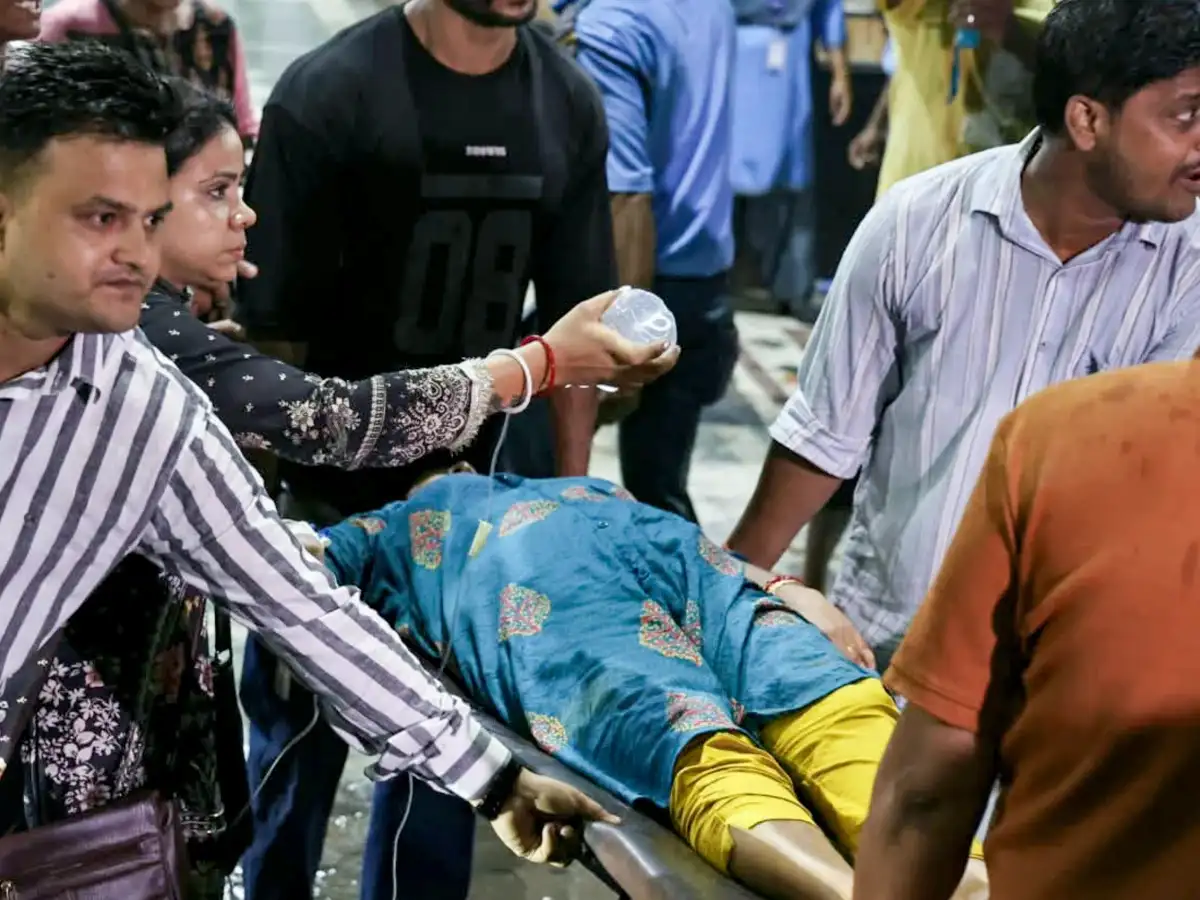
Kolkata: A Durga Puja celebration in north Kolkata turned into a devastating tragedy on Saturday evening after a stampede at the Chorbagan Sarbojanin Durgotsab Samity pandal claimed 19 lives and left around 25 people injured, according to reports published on Sunday morning.
The incident occurred on Maha Saptami, one of the busiest days of Kolkata’s Durga Puja celebrations, when large crowds were visiting popular pandals across the city. Heavy rain reportedly prompted visitors to rush for shelter, adding to the pressure in the narrow lanes surrounding the Chorbagan venue. A sudden crowd surge followed, leaving people trapped and others falling amid the confusion.
Kolkata Police detained 12 people, including members of the organising committee and security personnel, as investigators began examining the circumstances surrounding the disaster. The state government announced an investigation, while authorities collected CCTV footage and began reviewing the arrangements made for crowd movement and emergency response.
The tragedy has raised urgent questions about crowd management, access routes, emergency preparedness and the responsibilities of organisers and authorities at major public gatherings.
What happened at the Chorbagan Durga Puja pandal?
The stampede-like situation reportedly developed between 7 pm and 8 pm on Saturday near the Chorbagan pandal in north Kolkata. Videos recorded before the incident reportedly showed large numbers of people waiting to enter the venue.
According to eyewitness accounts reported by The Indian Express, the surrounding area consists of narrow lanes where only a few people can walk side by side. When rain intensified and visitors sought shelter, pressure on the crowded area reportedly increased. People began falling, and the resulting rush turned the situation deadly.
The exact sequence of events remains under investigation. Chief Minister Suvendu Adhikari said the preliminary briefing he received indicated that an announcement made over loudspeakers by the organisers preceded the incident.
Some reports have suggested that the announcement warned that the pandal might collapse if the crowd was not brought under control. However, the precise wording, context and role of the announcement have not been conclusively established in the available reporting. Investigators will need to determine whether it triggered panic, contributed to the crowd movement or formed part of a wider chain of failures.
It would therefore be premature to attribute the deaths to a single factor before the CCTV footage, eyewitness accounts and other evidence have been examined.
Death toll reaches 19; injured receive hospital treatment
The death toll rose as authorities and medical teams assessed the consequences of the crowd surge. Reports on Sunday morning placed the number of injured at around 25, although early accounts carried differing figures as information emerged from hospitals and officials.
The injured were taken to hospitals in Kolkata, including Calcutta Medical College and Hospital. Relatives gathered at medical facilities to identify victims and obtain information about family members who had been attending the festivities.
The loss of life has left families grieving during what was meant to be a religious and cultural celebration. Among those identified in media coverage was Sriparna Poddar, a 26-year-old nurse from Baidyabati in Hooghly district who had reportedly gone pandal-hopping with friends on her day off.
The final identification of all victims and the exact condition of every injured person should be confirmed through official updates.
Twelve detained as police examine possible lapses
Kolkata Police detained 12 people in connection with the investigation, including puja organisers. Authorities are also examining the role of private security personnel and others assigned to manage the crowd.
A police officer told PTI that those detained were being questioned to establish what led to the incident and that action would follow if lapses were found. CCTV footage from the location has been collected for examination.
Investigators are expected to focus on several key questions:
- Were entry and exit routes adequate for the number of visitors?
- Was the movement of people monitored as the crowd grew?
- Were enough trained personnel deployed to manage crowd pressure?
- Did the loudspeaker announcement contribute to the surge?
- Were emergency access and medical arrangements sufficient?
- Were the required safety measures in place, and were they followed?
Detention is a step in the investigation, not a finding of guilt. Responsibility will have to be determined on the basis of evidence, including the conduct of organisers, security staff and any officials whose duties are found to be relevant.
Investigation ordered; CCTV footage under scrutiny
The state government announced a high-level inquiry into the tragedy. Reports have described a proposed Special Investigation Team involving state investigative agencies, while officials have also referred to a fact-finding process and assistance from forensic and fire services.
The precise structure and terms of reference of the investigation should be established from the formal government order. The immediate task is to reconstruct the sequence of events and determine whether the disaster resulted from identifiable failures in planning, communication, crowd control or emergency response.
CCTV footage could prove important in establishing how the crowd moved before the crush, when the situation began to deteriorate and what action was taken by those responsible for safety.
Investigators will also need to examine the pandal’s layout, the capacity of its access lanes, the placement of barriers and the availability of clear routes for people trying to leave. These details matter because crowd disasters can develop rapidly when a large number of people are compressed into a confined space.
Compensation announced for victims’ families
The West Bengal government announced financial assistance and employment support for families affected by the tragedy.
According to reports by India Today, the package announced by Chief Minister Suvendu Adhikari includes:
- ₹25 lakh for the family of each deceased victim.
- A Group D government job for one eligible family member of each deceased victim.
- ₹5 lakh for each injured person.
- Coverage of the injured victims’ medical expenses.
Prime Minister Narendra Modi also announced ex gratia assistance of ₹2 lakh for the next of kin of each deceased person and ₹50,000 for each injured person, according to The Indian Express.
The assistance is intended to provide immediate support to bereaved families and injured survivors. It does not replace the need to establish accountability or address the practical and emotional consequences faced by those affected.
Political reactions follow the tragedy
The stampede has prompted political exchanges over responsibility for public safety and the administration of major events.
Adhikari said the investigation would examine whether organisers, police personnel, home guards, temporary workers or private security staff failed in their duties. He appealed to puja committees to work with the police and correct weaknesses in entry and exit arrangements, stressing that public safety must take priority over the design or popularity of a pandal.
Mamata Banerjee, the former chief minister and Trinamool Congress chief, expressed shock and sadness over the incident and wished the injured a speedy recovery. A TMC spokesperson, meanwhile, questioned the accountability of the police and the state administration. Those political claims are part of the public response, but responsibility for the disaster must ultimately be assessed through the investigation and available evidence.
The tragedy has also interrupted the festive atmosphere in the city, with authorities taking steps to restrict access to the affected venue and review safety arrangements at other crowded locations. Any wider closures or restrictions should be confirmed through official announcements.
Why crowd management at Durga Puja pandals matters
Kolkata’s Durga Puja is both a religious celebration and a major public event. Popular pandals attract large numbers of visitors, often in narrow neighbourhood streets where movement can become difficult during peak hours.
That combination makes crowd management a central safety responsibility. Organisers and authorities need to assess how many people a site can safely accommodate, how visitors will enter and leave, and how emergency services can reach the area if something goes wrong.
A safe plan must also account for sudden changes in weather, interruptions to normal movement and the possibility that an announcement or unexpected incident could prompt people to move in the same direction at once.
Crowd safety is not simply about deploying more personnel. It requires trained staff, clear communication, controlled entry, unobstructed exit routes, coordination with police and medical teams, and a plan for reducing crowd pressure before it becomes dangerous.
The Chorbagan tragedy makes these questions urgent. If the investigation confirms that narrow access routes, inadequate staffing or communication failures contributed to the incident, authorities and organisers will need to determine how such weaknesses can be corrected across other major public gatherings.
The questions the investigation must answer
The deaths at Chorbagan demand more than an immediate response and compensation announcement. The investigation must establish what happened, identify any preventable failures and explain how responsibility will be determined.
That requires a clear account of the crowd’s movement, the announcement reportedly made over the loudspeaker, the decisions taken by organisers and security staff, and the response once people began falling. It must also establish whether the arrangements matched the expected attendance and whether emergency services could reach those in need quickly.
The findings should inform future safety plans, not only for Durga Puja but for religious festivals, concerts, political gatherings and other events that draw large crowds into confined spaces.
For the families of the deceased, the priority is immediate support and a credible account of how their loved ones died. For the public, it is assurance that preventable weaknesses will be identified and addressed.
The Chorbagan stampede is a devastating reminder that festive crowds require rigorous planning, clear communication and reliable emergency arrangements. The investigation must now establish the facts and ensure that any proven failures lead to appropriate accountability and practical safety improvements.


