Cockroach Janta Party Tiranga March: Dipke and Delhi Police Face Off Ahead of Connaught Place Protest
By: Javid Amin | 16 October 2026
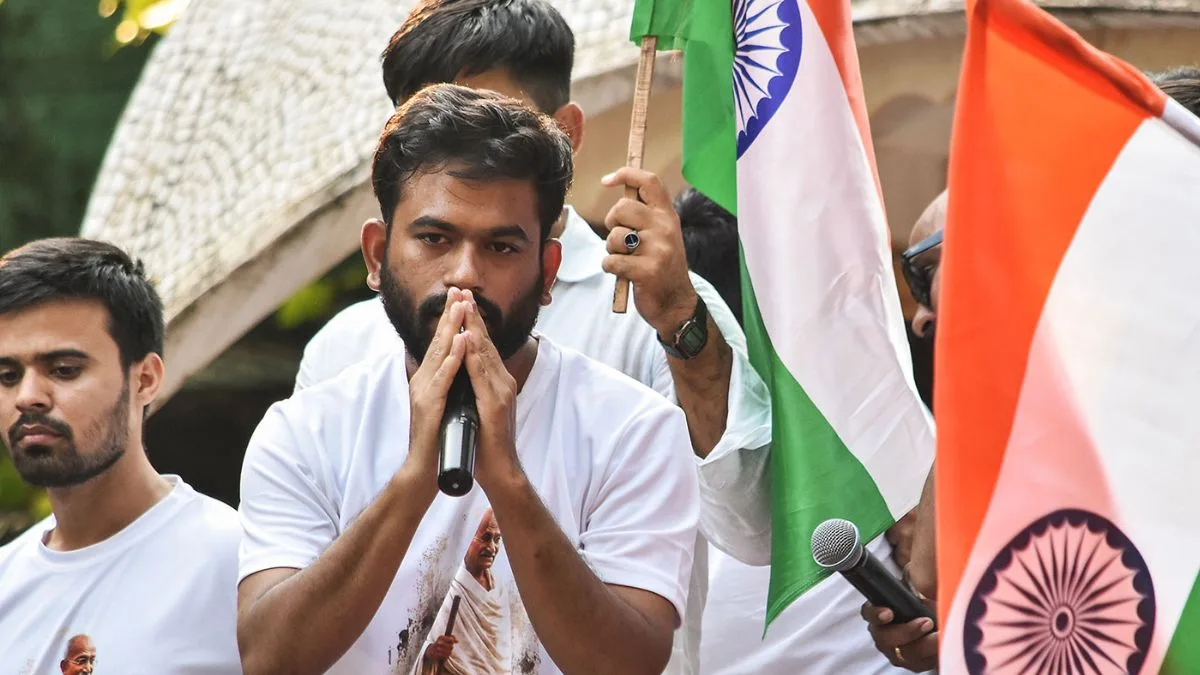
New Delhi: Tensions intensified in the national capital on Friday ahead of the Cockroach Janta Party’s (CJP) proposed ‘Lehra Do Tiranga’ march, with party founder Abhijeet Dipke and Delhi Police at odds over a planned gathering at Central Park in Connaught Place.
The confrontation escalated after a police team reportedly visited the residence of Nationalist Congress Party (Sharadchandra Pawar) spokesperson Anish Gawande, where Dipke was staying, and served him a notice urging him not to proceed with the demonstration. Police cited prohibitory orders under Section 163 of the Bharatiya Nagarik Suraksha Sanhita (BNSS), which restrict certain assemblies in designated areas.
Dipke, however, maintained that the proposed gathering was intended to be peaceful and urged citizens to join the march carrying the national flag. The event was scheduled for 5 pm, although the closure of Central Park and the restrictions imposed around Connaught Place created uncertainty over whether the proposed gathering could take place at its announced venue.
The dispute has moved beyond a disagreement over one demonstration. It has become part of a wider confrontation involving protest permissions, restrictions on public gatherings, demands for the resignation of Chief Election Commissioner Gyanesh Kumar and allegations of irregularities in electoral-roll revision.
Police Notice Adds to Tensions Before the March
According to reports, a team of more than 20 police personnel visited Dipke ahead of the proposed demonstration and asked him to call off the march.
The police action followed heightened security arrangements in central Delhi, where authorities were preparing for a possible gathering at one of the capital’s busiest commercial and public spaces.
Police have maintained that their priority is to prevent unauthorised assemblies, avoid public disorder and manage the potential impact on commuters and businesses. The restrictions are particularly significant because Connaught Place attracts large numbers of shoppers, office-goers, visitors and tourists.
Dipke’s supporters, meanwhile, have questioned why a gathering centred on carrying the national flag should face such restrictions. The CJP has presented the march as a peaceful expression of democratic rights and a show of solidarity with its detained leaders.
The two positions reflect the central dispute: organisers insist that peaceful political expression should be protected, while authorities argue that demonstrations must comply with applicable permissions and public-order restrictions.
The police notice does not, by itself, establish that the march would necessarily have resulted in disorder. Equally, the organisers’ stated intention to remain peaceful does not automatically exempt a gathering from lawful restrictions.
Why Is the CJP Organising the ‘Lehra Do Tiranga’ March?
The proposed demonstration follows the detention and judicial custody of CJP leaders Saurav Das and Ashutosh Ranka after protests connected to demands for Gyanesh Kumar’s resignation.
The controversy intensified after protesters attempted to demonstrate at Jantar Mantar, which was no longer available as a designated protest site under the prevailing arrangements. Police sources said the leaders had allegedly entered the restricted area without authorisation and violated conditions relating to public order.
The CJP disputes the handling of the incident and has questioned why its leaders were detained while carrying or attempting to unfurl the national flag.
Dipke subsequently called for a larger gathering at Central Park in Connaught Place, urging citizens, students, workers, political groups and civil society organisations to join the programme.
The choice of the national flag as the centrepiece of the protest has given the campaign a symbolic dimension. For the organisers, it represents their argument that peaceful assembly and political dissent are democratic rights. For the authorities, however, the proposed location and the prevailing restrictions remain separate questions from the symbolism of the event.
The immediate demand for the release of the detained leaders is therefore linked to a broader dispute over where demonstrations may be held and what conditions authorities can impose.
Central Park Closure Creates Another Obstacle
The New Delhi Municipal Council (NDMC) announced that Central Park would remain closed to the public on October 16 and 17, citing administrative reasons.
The timing has become a major point of contention because the park was the proposed venue for the CJP’s march. However, the reported closure notice did not officially establish that the decision was taken specifically to prevent the demonstration.
The closure, combined with police restrictions and additional security measures, has left organisers facing uncertainty over access to the planned venue.
Delhi Police has indicated that it may facilitate a limited gathering at a suitable alternative location, allowing participants to wave the national flag and sing the national anthem. The authorities have also identified designated grounds where demonstrations can be organised subject to the necessary permissions.
Dipke has questioned why the gathering cannot take place at Central Park and argued that repeatedly restricting proposed venues risks undermining the practical ability of citizens to demonstrate.
The disagreement highlights a recurring challenge in managing protests in major cities: organisers seek visible public spaces to attract attention to their demands, while authorities must account for traffic, commercial activity, security and the rights of people who are not participating.
Delhi High Court Declines to Stop the Protest
The legal dispute took an important turn when the Delhi High Court declined to restrain the CJP and Dipke from holding the proposed October 16 protest.
The court recorded an assurance from Delhi Police that it would take the necessary legal measures to regulate the gathering and maintain public order. The decision did not amount to an unconditional authorisation to assemble at Central Park regardless of the restrictions in force.
The proceedings followed a petition raising concerns about the possible disruption to businesses and public movement in Connaught Place.
The distinction is important. A court’s refusal to prohibit a proposed protest does not necessarily override separate, valid restrictions governing the venue, route or size of an assembly. At the same time, police assurances about maintaining order do not mean that organisers’ concerns about access to public space have been judicially rejected in their entirety.
The case places competing interests before the authorities: the constitutional protection of peaceful assembly and expression, the need to maintain public order, and the legitimate concerns of traders and other members of the public.
How those interests are balanced in practice will shape the immediate handling of the march.
Heavy Security Around Connaught Place
Security arrangements were stepped up in and around Connaught Place ahead of the proposed demonstration.
Police personnel were deployed at strategic locations, while barricades and surveillance arrangements were intended to regulate movement and prevent unauthorised entry into restricted areas. Traffic advisories and possible diversions also formed part of the preparations.
Some reports described a substantial deployment of police and central armed police personnel. However, the precise deployment figures should be treated cautiously unless confirmed by an official police statement.
Connaught Place presents particular logistical challenges because it combines commercial establishments, offices, public transport access and pedestrian spaces. A large gathering can affect road movement, access to shops and the movement of commuters through the area.
Authorities have therefore sought to discourage people from assembling at the announced venue while leaving open the possibility of a smaller, controlled event elsewhere.
For traders, the concern is the potential impact on business and customer access. For demonstrators, restrictions on the venue may limit the visibility of their campaign. The dispute is consequently about more than police deployment: it concerns how public spaces can be used for political expression without causing disproportionate disruption.
Dipke Says the Protest Will Remain Peaceful
Dipke has continued to describe the planned march as a peaceful mobilisation centred on the national flag and democratic rights.
He has appealed to citizens across political and social groups to participate, arguing that the right to peaceful protest should not depend on a person’s political affiliation or ideology.
The CJP leader has also questioned the restrictions imposed on demonstrations and argued that peaceful political activity should not automatically be treated as a threat to public order.
These statements represent the organiser’s position. Whether the event can proceed, and under what conditions, remains subject to the applicable restrictions and the police’s handling of the situation.
The authorities, for their part, have emphasised the need to comply with prohibitory orders and have warned of legal action against those who violate them.
The immediate outcome will depend on whether the organisers accept an alternative arrangement, whether a gathering takes place despite the restrictions and how police respond if participants attempt to enter the closed park.
Section 163 BNSS: Why the Legal Provision Matters
Section 163 of the Bharatiya Nagarik Suraksha Sanhita empowers an authorised executive magistrate to issue urgent orders in circumstances where immediate action is considered necessary to prevent specified risks, including obstruction, annoyance, injury or danger to human life, health or safety, or a disturbance of public tranquillity.
Such orders can impose restrictions on conduct or assemblies within their legally defined scope. They are not a blanket prohibition on all political expression throughout a city, and their application depends on the order’s terms, geographical coverage, duration and legal basis.
In the present dispute, police have cited prohibitory orders affecting Connaught Place and nearby areas as grounds for discouraging the proposed gathering.
The existence of such an order does not eliminate the need to examine its actual terms or how it applies to a particular assembly. Nor does the right to protest mean that organisers can disregard a valid restriction.
The legal question is therefore not simply whether carrying the national flag is lawful. It is whether a proposed gathering complies with the applicable rules governing its location, permissions and conduct.
The Larger Political Context: Electoral Rolls and the Demand for the CEC’s Resignation
The CJP’s march is part of a wider campaign challenging the conduct of the Election Commission and demanding the resignation of Chief Election Commissioner Gyanesh Kumar.
The protests have been linked to allegations of irregularities in the Special Intensive Revision (SIR) of electoral rolls. Critics have raised concerns about the verification process and the potential exclusion of eligible voters.
The Election Commission has rejected allegations of wrongdoing and maintained that the electoral-roll process is governed by established procedures. The competing claims have fuelled a political dispute over the integrity of voter lists and the institutions responsible for maintaining them.
The CJP and allied student groups have sought to turn those concerns into a public campaign, arguing that electoral transparency and accountability require greater scrutiny.
The allegations remain contested. Claims of irregularities should not be treated as established evidence of deliberate manipulation without supporting findings or documentary proof.
Nevertheless, the dispute has become a rallying point for groups seeking answers about voter verification and the conduct of electoral authorities.
For the CJP, the proposed Tiranga March serves two purposes: expressing support for its detained leaders and keeping pressure on the Election Commission over demands linked to the electoral-roll controversy.
The Right to Protest Versus Public Order
The standoff brings a familiar democratic question into sharp focus: how can authorities protect public order without unnecessarily restricting peaceful dissent?
The right to assemble peacefully is constitutionally protected in India, subject to reasonable restrictions permitted by law. Authorities can regulate demonstrations to address genuine concerns about safety, traffic and public order, but restrictions must operate within the relevant legal framework.
Organisers, in turn, must comply with valid orders and conditions governing public gatherings.
The difficulty arises when organisers believe that restrictions prevent them from exercising their rights, while authorities argue that the restrictions are necessary to manage the risks associated with a particular location or event.
The courts can examine disputes involving those competing interests, but the outcome depends on the facts, the applicable orders and the relief sought.
In the CJP case, the High Court’s refusal to stop the protest is an important part of the legal background. It should not be interpreted as a blanket ruling that every proposed gathering must be permitted at any location or without conditions.
What Happens Next?
As the scheduled time for the march approaches, several developments will determine how the situation unfolds.
- Venue access: Whether the organisers can assemble at Central Park or are directed towards an alternative location.
- Police action: How officers respond to attempts to gather in areas covered by prohibitory orders.
- Participation: Whether supporters and civil society groups turn out in significant numbers.
- Judicial developments: Whether further proceedings clarify the restrictions or arrangements for the demonstration.
- Public disruption: Whether traffic, shops and pedestrian movement around Connaught Place are affected.
- Political response: Whether the protest leads to renewed demands for the release of the detained leaders or further debate over electoral-roll revision.
As of the afternoon of October 16, the march remained a scheduled event amid restrictions and heightened security. Its eventual scale and outcome should not be assumed before the demonstration and the authorities’ response are confirmed.
A Test of Protest Management in the Capital
The CJP’s ‘Lehra Do Tiranga’ march has brought together several sensitive issues: the treatment of detained protesters, the use of public spaces, restrictions on demonstrations and the wider campaign over electoral-roll revision.
For Dipke and his supporters, the central argument is that peaceful dissent and the display of the national flag should not be treated as grounds for suppressing political expression. For Delhi Police and civic authorities, the stated priority is to enforce applicable restrictions and prevent disruption or disorder.
Neither side’s public position alone resolves the legal and practical questions at the heart of the confrontation.
The decisive issue is how the authorities manage the gathering within the law, whether organisers comply with valid restrictions, and whether the competing rights of demonstrators, traders, commuters and other members of the public can be accommodated.
The events surrounding the march may also influence the wider debate over designated protest venues in Delhi and the practical space available for political dissent in the capital.