Pahalgam Development Under the Scanner: Green Zones, Hotel Growth and the Enforcement Question
By: Javid Amin | 28 October 2026
Pahalgam, Jammu and Kashmir: Pahalgam’s appeal has always rested on what nature provides: mountain slopes rising above the Lidder River, open meadows, forested surroundings and the feeling of space that distinguishes a Himalayan resort from a crowded urban centre.
But as hotels, guest houses and commercial properties expand across the popular tourist destination, a difficult question is returning to the forefront: who is responsible for ensuring that development does not destroy the landscape on which Pahalgam’s tourism economy depends?
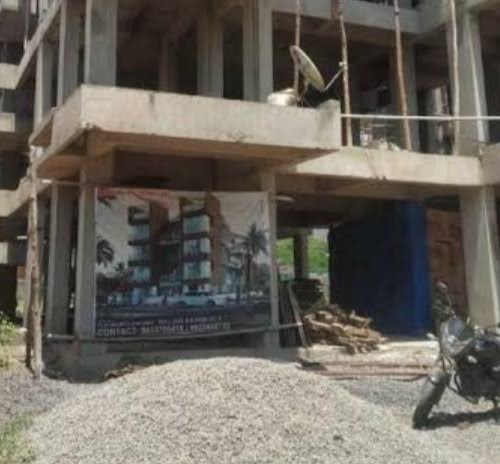
A fresh investigation published by India Today on October 28, 2026, has renewed scrutiny of alleged unauthorised construction in green and ecologically sensitive areas, reporting that commercial structures have continued to spread despite restrictions associated with Jammu and Kashmir High Court proceedings.
The report has brought renewed attention to concerns raised by environmentalists and local stakeholders about construction on natural slopes, the loss of open spaces and the pressure on Pahalgam’s fragile environment. It has also revived demands for stronger enforcement and an investigation into allegations of links between influential builders and officials. Those allegations require independent examination and should not be treated as established findings of corruption.
The controversy is not new. In January 2025, reports said the Pahalgam Development Authority (PDA) had issued notices to nearly 300 people over alleged unauthorised construction involving hotels, lodges and houses. The notices reportedly warned of possible sealing or demolition if violations were not satisfactorily addressed.
More importantly, the dispute has a substantial legal history. A public interest litigation filed in 2010 led to restrictions on construction in Pahalgam, followed by the approval of a revised Master Plan in 2015 and further High Court directions concerning ecologically sensitive zones, building permissions, sewage and solid-waste management.
The legal position is more specific than the phrase “blanket ban” sometimes suggests. Court records distinguish between prohibited zones, where new construction is not permitted, and areas where development may be considered under the applicable Master Plan and approval procedures.
That distinction is central to understanding the present controversy.
The real issue is not whether Pahalgam should develop. It is whether development is taking place within the rules, whether the rules are being enforced consistently, and whether the authorities are protecting the environmental assets that make the destination valuable in the first place.
Nearly 300 Structures: What the PDA Notices Revealed
One of the most significant developments in the continuing dispute came in January 2025, when reports said the PDA had issued notices to nearly 300 people over alleged unauthorised construction.
According to Free Press Kashmir’s report of January 29, 2025, the notices covered hotels, lodges and houses. A show-cause notice issued on January 16 reportedly alleged construction without the required permission and referred to violations of the Jammu and Kashmir Development Act, 1970, the Jammu and Kashmir Control of Building Operations Act, 1988, and the Pahalgam Master Plan 2032.
The notice reportedly warned that sealing or demolition could follow if a satisfactory response was not submitted within the specified period.
The number was significant because it suggested that the problem extended beyond a handful of isolated structures. Yet it must be interpreted carefully.
The figure of nearly 300 refers to people or cases reportedly served notices, not necessarily 300 buildings independently verified as illegal by a court. A notice initiates or advances a regulatory process. It does not, by itself, establish the final outcome of every case.
To understand the scale of the problem today, the authorities would need to publish an updated, site-specific account showing how many notices were issued, how many cases were resolved, how many structures were sealed or demolished, and how many remain under examination.
Without that information, the public cannot determine whether the 2025 enforcement drive produced lasting results or whether alleged violations have continued largely unchecked.
The October 28 India Today investigation has brought the issue back into the spotlight, but its broader allegations should be distinguished from the specific documentary record of the earlier notices.
The unanswered question is straightforward: what happened to the cases after the notices were issued?
If violations were established, what action followed? If construction was found to be permissible, what approvals supported that conclusion? And if proceedings remain pending, what is preventing their resolution?
These are questions the PDA and the district administration should answer through a public, verifiable record.
What the High Court Actually Directed
Pahalgam’s construction controversy traces back to a public interest litigation filed in 2010 by the Pahalgam Peoples Welfare Organisation.
The proceedings challenged concerns surrounding development and the protection of the tourist resort’s environment. The case eventually produced a series of judicial directions concerning construction, land-use planning and environmental management.
A significant clarification appears in the Jammu and Kashmir High Court’s order of September 5, 2017, in Pahalgam Peoples Welfare Organization versus State of Jammu and Kashmir and Others, PIL No. 484/2010.
The court recorded that the government had approved the revised Pahalgam Master Plan 2032 in September 2015 and that the plan had come into force on September 23, 2015.
The court also discussed the identification and demarcation of different land-use categories, including wildlife, forest and buffer zones, as well as areas where construction was prohibited.
According to the order, existing structures in the relevant forest, wildlife and buffer areas could remain, but no further construction would be permitted there. Repairs and renovations could be considered through the Building Operations Controlling Authority (BOCA), on an application-by-application basis and in accordance with the Master Plan.
In areas designated as permissible, new construction could be considered only in accordance with the Master Plan and the required approval process.
The court also made clear that the directions allowing consideration of permissions would not apply to structures erected contrary to earlier court orders. Such structures were to be identified and reported to the court.
This legal history matters for two reasons.
First, it establishes that environmental protection and construction control in Pahalgam are not merely matters of administrative preference. They have been the subject of judicial scrutiny and specific directions.
Second, it shows why the entire resort cannot automatically be described as subject to an identical, unconditional prohibition on every form of construction or repair. The applicable restrictions depend on the location, the relevant land-use category, the governing plan and the court’s directions.
For the latest allegations, the decisive test is therefore location-specific. A building in a prohibited forest or wildlife zone raises different legal questions from a proposal in an area where development may be permitted under the Master Plan.
The authorities should publish the relevant zoning maps, identify the affected sites and explain the legal basis for any permissions granted.
How Pahalgam’s Development Plan Became Part of the Controversy
The Master Plan 2032 was intended to provide a planning framework for the resort’s future development.
Its approval in 2015 followed years of legal proceedings and debate over the earlier planning framework. The High Court’s subsequent directions emphasised the need to identify the relevant zones and distinguish between areas where construction was permitted and those requiring stricter protection.
But a planning document can protect an environment only if its provisions are implemented on the ground.
That requires accurate land records, clearly marked boundaries, timely processing of applications, inspections during construction and action when buildings depart from approved plans.
If a property receives permission for a limited structure but expands beyond the approved design, the deviation must be identified and addressed. If work begins without permission in a prohibited zone, enforcement should not depend on the owner’s influence or the commercial value of the project.
The same principle applies to applications for repairing existing homes. Residents need a fair and predictable process, particularly when buildings require urgent maintenance. Environmental restrictions should not become a reason for arbitrary treatment, while repair permissions must not be used to legitimise substantial new construction disguised as renovation.
This is where transparent administration becomes essential.
The government should make it possible to check a property’s permitted land use, the status of its application and any enforcement proceedings. An accessible digital register, supported by field inspections, would reduce uncertainty for residents, businesses and enforcement agencies alike.
It would also help answer a central question in Pahalgam’s development debate: are the rules themselves inadequate, or are existing rules failing at the implementation stage?
The two problems require different solutions. Revising a plan cannot substitute for enforcing it, and enforcement cannot be fair if the applicable rules and boundaries are unclear.
Green Zones, Natural Slopes and the Environmental Cost of Construction
Pahalgam’s environmental concerns extend beyond the appearance of new buildings.
The resort sits in a mountain landscape shaped by river systems, slopes, vegetation and seasonal weather. Natural open spaces and vegetated land perform functions that become especially important when heavy rain or snow affects the region.
Vegetation helps protect soil from erosion, while the condition of a slope influences how water moves through the landscape. Construction can alter drainage patterns, concentrate runoff and disturb soil, depending on the location and the way the work is carried out.
Removing vegetation or modifying a natural slope does not automatically cause a landslide or flood. However, poorly planned development can increase risks where drainage is inadequate, slopes are unstable or buildings are placed in unsuitable locations.
The consequences may extend beyond the individual property.
Runoff from one site can affect a neighbouring road or settlement. Construction debris can obstruct drainage channels. Wastewater and solid waste can put additional pressure on the river and surrounding environment if they are not managed properly.
For a destination whose appeal depends on its natural surroundings, these risks have both environmental and economic implications.
The relevant question is therefore not simply how many buildings have appeared. It is where they have been built, whether the land can safely accommodate them, what environmental safeguards apply and how effectively those safeguards are enforced.
A detailed assessment of construction in Pahalgam should examine the condition of natural slopes, drainage systems, tree cover, river setbacks and wastewater arrangements. It should also distinguish between structures in prohibited zones and those located in areas where development is permitted subject to conditions.
Without such a site-specific assessment, claims about the environmental impact of individual buildings remain difficult to verify.
But the broader principle is well established: infrastructure and tourism facilities in mountain environments must be planned around the physical limits of the landscape, rather than treating the landscape as empty space available for construction.
The Lidder River: Why Sewage and Waste Management Matter
The Lidder River is central to Pahalgam’s identity. It shapes the landscape, supports local ecosystems and contributes to the resort’s appeal.
Its protection is therefore inseparable from the management of tourism infrastructure.
The High Court’s September 2017 order addressed this issue directly. The court examined the handling of solid waste and sewage and called for measures to segregate biodegradable and non-biodegradable waste.
It also recorded information about sewage treatment facilities reportedly handling two million litres per day and raised the question of whether treated wastewater entering the Lidder met prescribed standards. The court directed that samples be tested and the results placed before it.
The order demonstrates that the environmental challenge was not limited to the legality of construction. It also involved what happens after buildings are occupied and commercial activity begins.
Hotels, guest houses and restaurants generate wastewater and solid waste. If these are not managed adequately, their cumulative impact can place pressure on local infrastructure and water quality.
The existence of a sewage treatment plant is not sufficient proof that a system is functioning properly. Its actual performance, the volume of wastewater reaching it, the quality of the treated discharge and the condition of connected drainage networks all matter.
Similarly, the number of rooms or properties in a destination should be considered alongside the capacity of its water supply, sewerage, waste collection and treatment systems.
The available court order establishes that these concerns were raised and that testing and reporting were directed in 2017. It does not, by itself, establish the current condition of the Lidder River or the present performance of Pahalgam’s sewage infrastructure.
Those questions require recent water-quality data, treatment-plant records and inspections by the relevant authorities.
For a fresh investigation, the government should disclose the latest water-quality test results, sewage-treatment capacity and actual operating performance, along with details of action taken where standards have not been met.
Tourism Growth: Jobs and Investment on One Side, Ecological Pressure on the Other
Pahalgam’s tourism industry provides livelihoods to hotel workers, transport operators, pony handlers, guides, shopkeepers, restaurant owners and many other local residents.
Additional accommodation can create employment, attract investment and help meet visitor demand during busy periods. For families whose incomes depend on tourism, construction can represent an opportunity rather than simply an environmental threat.
That economic reality deserves recognition.
But tourism growth is not sustainable if the infrastructure supporting it expands faster than the surrounding environment and public services can accommodate.
A hotel brings more than rooms. It also brings demand for water, electricity, waste collection, wastewater treatment, road access and parking. The combined pressure of multiple developments can become substantial even where individual projects appear manageable.
This is why carrying capacity matters.
In practical terms, carrying capacity means understanding how much tourism-related activity a destination can support without unacceptable damage to its environment, infrastructure or residents’ quality of life.
It is not a single universal number that can be applied to every Himalayan resort. It requires local evidence, including seasonal visitor numbers, water availability, waste generation, road congestion, land-use patterns and environmental monitoring.
For Pahalgam, a credible assessment could help establish where additional accommodation is appropriate, where development should be restricted and where public infrastructure must be upgraded before further expansion is considered.
Such a process would protect the environment while also providing greater certainty to legitimate tourism businesses.
The objective should not be to stop tourism. It should be to prevent short-term commercial gains from undermining the natural assets on which the sector depends.
Allegations of Regulatory Failure Need a Transparent Investigation
The latest reporting has revived allegations that influential builders have been able to undertake construction despite restrictions, raising questions about whether enforcement has been applied consistently.
These claims are serious. They should be investigated, but they should not be treated as proven merely because they have been repeated by activists or media reports.
Establishing whether regulatory failure or corruption occurred would require evidence such as building-permission records, approved site plans, inspection reports, correspondence between agencies, enforcement notices and the documented status of individual properties.
If a building was constructed in a prohibited zone, investigators would need to determine who authorised the work, if anyone did, and whether officials followed the applicable procedures.
If a structure exceeded its approved design, the relevant question would be whether the deviation was detected and what action followed.
Where officials failed to act despite documented violations, the reasons for that failure would also need examination.
Such an investigation should distinguish administrative delay, unclear zoning, negligent supervision and deliberate misconduct rather than assuming that every irregularity proves a criminal conspiracy.
The January 2025 controversy surrounding the PDA’s enforcement notices adds another dimension. Free Press Kashmir reported that the authority’s chief executive officer, Masarat Hashim, was transferred shortly after notices were issued to nearly 300 people.
The timing prompted questions about the administration’s approach to enforcement. However, timing alone does not establish that the transfer was caused by the notices or that political interference occurred. The report carried an allegation from an official concerning influential interests, but the available account does not independently establish that allegation as fact.
A proper investigation would need to examine the transfer order, the official reasons for the move, the enforcement record and any subsequent action on the cases.
The public interest is best served by documentary evidence rather than inference.
Residents Also Need Fair and Predictable Rules
The debate over illegal construction has another side that deserves attention.
Residents in Pahalgam have previously complained about difficulties obtaining permission to repair or maintain their homes. In a report published by Kashmir News Observer, residents said they had waited for permissions while struggling with deteriorating buildings.
The report also quoted the then PDA chief executive officer explaining that the authority was assessing residents’ needs and that permissions would be considered under the applicable rules.
These accounts highlight a challenge common to environmentally sensitive destinations: restrictions are necessary, but their implementation must be transparent and consistent.
A resident seeking essential repairs should be able to understand what is permitted, what documents are required and how long a decision is expected to take. A hotel operator seeking to build in a prohibited zone should not be able to bypass those requirements simply because the investment is commercially valuable.
The distinction between repair and new construction is particularly important. Routine maintenance may be necessary to keep an existing home safe, while a major extension or replacement structure may raise entirely different planning questions.
The High Court’s 2017 directions recognised the need for case-by-case consideration of repairs and renovations to existing structures in specified areas, subject to the Master Plan and the relevant approval process.
A fair system would publish clear criteria, give written reasons for decisions and provide a defined route for review.
Consistent enforcement would then protect both the environment and the rights of residents, reducing the perception that restrictions are applied differently depending on who owns the property.
What Should Happen Next?
The latest allegations call for a response that is specific, verifiable and focused on enforcement.
First, the PDA should publish an updated account of the nearly 300 cases reported in 2025. The record should distinguish notices issued, cases resolved, permissions granted, violations established, structures sealed or demolished, and proceedings still pending.
Second, the district administration and the relevant planning authorities should publish an updated map identifying prohibited forest, wildlife and buffer zones, alongside areas where construction may be considered under the Master Plan.
Third, the authorities should conduct and disclose site inspections of the locations identified in recent reporting. The results should state whether construction is taking place, which permissions apply and whether any violations have been confirmed.
Fourth, the government should commission or publish current assessments of wastewater treatment, water quality, solid-waste management and drainage in the resort. These should be based on recent data rather than relying solely on directions issued years ago.
Fifth, allegations of corruption or preferential treatment should be referred to an appropriate investigative mechanism if the available evidence warrants it. Any findings should be published to the extent permitted by law.
Finally, enforcement should follow the applicable legal process. Where violations are established, authorities should take action in accordance with the law and relevant court directions. Where permissions are valid, they should explain the legal basis for allowing the work to proceed.
The result should be a system in which compliance is verifiable and enforcement does not depend on public controversy.
Pahalgam’s Future Depends on What Happens Beyond the Headlines
Pahalgam does not face a choice between protecting nature and providing livelihoods. Its long-term economic future depends on preserving the landscape that attracts visitors in the first place.
Hotels and other tourism facilities can contribute to the local economy, but their growth must remain within the limits set by planning rules, environmental safeguards and the capacity of public infrastructure.
The High Court’s record shows that the issues surrounding construction, land-use planning, sewage and waste management have been recognised for years. The latest reports suggest that questions about compliance and enforcement remain relevant.
What has not yet been established from the available evidence is the complete present-day scale of unauthorised construction, the final status of the earlier notices or whether specific officials or builders engaged in misconduct.
Those questions require a fresh, documented investigation and a clear response from the authorities.
If construction is continuing in prohibited areas, the public deserves to know how it happened and what action will follow. If buildings are compliant with the applicable Master Plan, that too should be demonstrated through transparent records.
The answer cannot be another round of assurances followed by silence.
Pahalgam’s green spaces, river system and mountain slopes are not obstacles to development. They are part of the foundation on which its tourism economy rests. Protecting them requires planning that is scientifically informed, legally sound and consistently enforced.
The measure of success will not be how many notices are issued or how many inspections are announced. It will be whether illegal construction is stopped, legitimate development follows clear rules, environmental damage is prevented and residents can see that the law applies equally.
For Pahalgam, the real test begins after the headlines fade.


