Chief Minister questions delay in restoring statehood, using a sharp rhetorical reference to U.S. President Donald Trump that has intensified the political discourse
By: Javid Amin | 12 July 2026
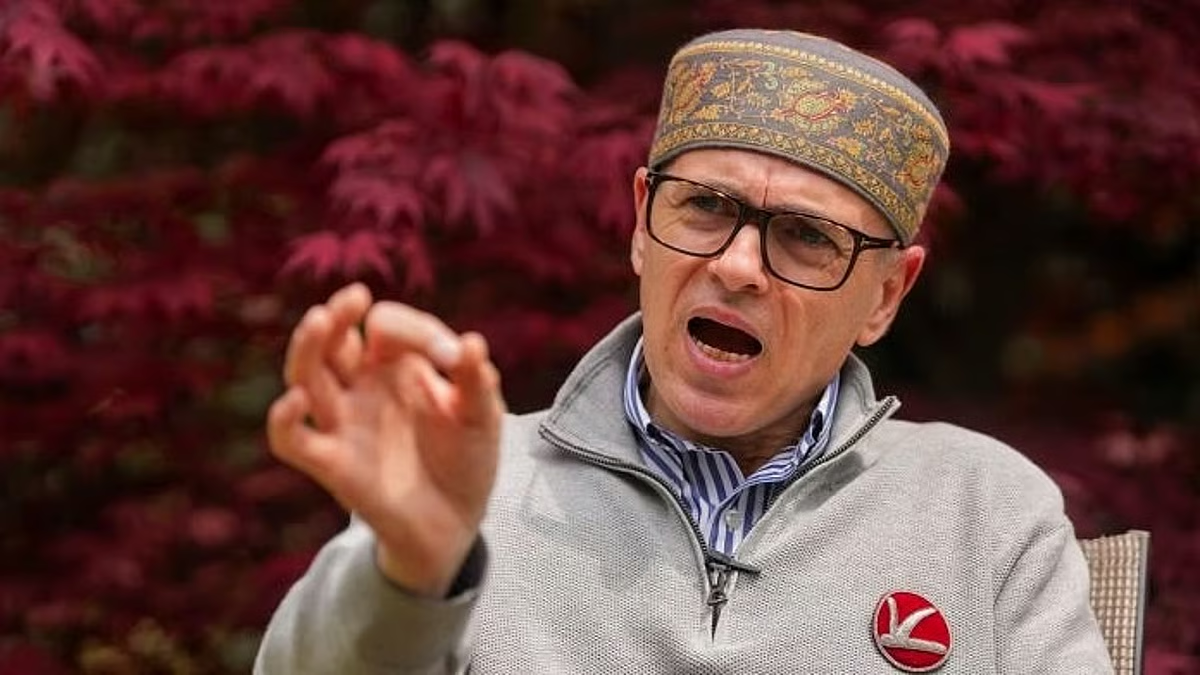
Jammu and Kashmir Chief Minister Omar Abdullah has launched one of his strongest public attacks yet on Prime Minister Narendra Modi over the continued delay in restoring the Union Territory’s statehood, using a rhetorical reference to U.S. President Donald Trump that has triggered a fresh political controversy.
During his remarks, Omar Abdullah questioned whether he should seek Donald Trump’s intervention if repeated appeals to the Government of India on the restoration of statehood continue to go unanswered.
The statement, though rhetorical, immediately became the focal point of political debate, with supporters describing it as an expression of mounting frustration over the prolonged delay, while critics accused the National Conference leader of unnecessarily invoking a foreign leader in a domestic constitutional matter.
The controversy has once again pushed the issue of Jammu and Kashmir’s statehood to the centre of national political discussion.
“Should I Ask Trump?” — Omar Abdullah’s Sharp Political Message
Omar Abdullah’s comment was widely interpreted as a direct criticism of the Union Government’s pace on fulfilling its commitment to restore Jammu and Kashmir’s statehood.
His rhetorical question suggested that despite repeated assurances from New Delhi, the people of Jammu and Kashmir are still waiting for a concrete roadmap.
Political observers say the remark was intended less as an appeal to any foreign government and more as a pointed critique of the Centre’s perceived inaction.
By invoking Donald Trump in the discussion, Omar sought to underline what he views as the lack of urgency in addressing one of Jammu and Kashmir’s most significant political demands.
Statehood Remains the Central Political Issue
Since the reorganisation of Jammu and Kashmir in August 2019, the restoration of statehood has remained one of the most prominent political demands across the region.
The erstwhile state was bifurcated into the Union Territories of Jammu and Kashmir and Ladakh following the abrogation of Article 370.
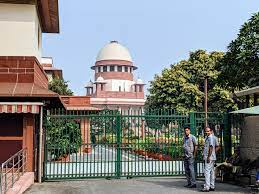
While the constitutional status of Article 370 was upheld as having been validly altered by the Supreme Court in its December 2023 judgment, the Court also recorded the Union Government’s assurance that statehood to Jammu and Kashmir would be restored at an appropriate time. However, no official timeline has yet been announced.
Regional political parties, including the National Conference, have consistently maintained that restoring democratic institutions should include the return of full statehood.
Why Omar Abdullah Chose This Moment
The timing of Omar Abdullah’s remarks is politically significant.
The National Conference has repeatedly sought clarity from the Centre regarding the roadmap for restoring statehood after the successful conduct of Assembly elections.
From the party’s perspective, the continuation of Union Territory status despite an elected government has become increasingly difficult to justify politically.
By raising the issue in such dramatic terms, Omar appears to be signalling that patience within his party—and among many of its supporters—is wearing thin.
His statement also reinforces the National Conference’s attempt to keep statehood at the forefront of political discourse rather than allowing governance and development issues alone to dominate public debate.
Political Reactions Expected Across Party Lines
The remark is expected to invite strong responses from rival political parties.
BJP’s Likely Position
The Bharatiya Janata Party (BJP) is likely to dismiss Omar Abdullah’s comments as political theatrics, arguing that the Centre has already reiterated its commitment to restoring statehood at an appropriate stage.
The BJP has consistently defended its post-2019 policy by highlighting improvements in infrastructure, investment, security and governance, while maintaining that constitutional decisions regarding Jammu and Kashmir remain an internal matter of India.
The party may also criticise the reference to an international leader as unnecessary and politically irresponsible.
Regional Parties
Other regional parties may use the controversy to reiterate their own demands for an early restoration of statehood while differing on political strategy.
Some leaders may support Omar’s criticism of the delay but avoid endorsing the use of international references in domestic political messaging.
Public Sentiment: Growing Frustration Over Delayed Statehood
Among many residents of Jammu and Kashmir, the demand for restoring statehood has evolved beyond a constitutional issue into one concerning democratic representation and administrative authority.
While development projects, infrastructure expansion and economic initiatives remain important public concerns, political parties continue to argue that an elected government should enjoy the same constitutional powers available to other Indian states.
For sections of the electorate, Omar Abdullah’s remarks reflect accumulated frustration over the absence of a clear timeline.
Others, however, believe that strong rhetoric should be accompanied by sustained political engagement and tangible outcomes.
The Diplomatic Dimension
Although Omar Abdullah’s reference to Donald Trump was widely understood as rhetorical, invoking the leader of another country inevitably attracted attention.
Foreign policy and constitutional matters relating to Jammu and Kashmir have long been sensitive issues for New Delhi, which consistently maintains that they are India’s internal affairs.
Political analysts suggest that references to foreign leaders, even in a symbolic context, risk shifting the conversation away from the substantive issue of statehood and toward debates over political language and diplomatic propriety.
Risks for the National Conference
While the statement has generated significant public attention, it also presents political risks for the National Conference.
1. Criticism Over International Reference
Opponents may argue that mentioning a foreign leader in relation to an internal constitutional matter provides unnecessary political ammunition and distracts from the substantive demand for statehood.
2. Expectations of Concrete Action
Strong political messaging inevitably raises public expectations.
If the National Conference cannot demonstrate measurable progress on statehood through negotiations, parliamentary engagement or legal avenues, critics may question whether such statements are producing tangible political results.
3. Intensifying Political Polarisation
The controversy is also likely to deepen existing divisions between supporters of the National Conference and the BJP, with each side interpreting Omar Abdullah’s remarks through sharply different political lenses.
Why the Statehood Debate Matters
The debate extends beyond political symbolism.
Restoration of statehood would return fuller legislative and administrative powers to the elected government of Jammu and Kashmir, affecting governance, policymaking and Centre–state relations.
For the National Conference, the issue has become central to its political identity after the 2019 constitutional changes.
For the BJP-led Union Government, the restoration of statehood is linked to broader considerations of governance, security and constitutional policy.
This difference in approach continues to shape the region’s political landscape.
The Road Ahead
Omar Abdullah’s “Should I ask Trump?” remark has ensured that the demand for Jammu and Kashmir’s statehood remains firmly in the national spotlight.
Whether viewed as a powerful political metaphor or an unnecessarily provocative statement, it reflects the growing impatience among regional political leaders over the absence of a defined timeline for restoring statehood.
The coming months are likely to see renewed political pressure on the Union Government as opposition parties seek greater clarity on the issue. At the same time, the Centre is expected to maintain that the restoration of statehood will take place at an appropriate time, without committing to a specific schedule.
Until that clarity emerges, the question of when Jammu and Kashmir will regain full statehood is set to remain one of the most consequential issues in the region’s political discourse.