Srinagar Traffic Plan 2026: Smart Signals, Parking Projects & Enforcement to Ease Congestion
By: Javid Amin | 12 April 2026
A City at a Standstill: Why Srinagar’s Traffic Problem Needs Urgent Fixing
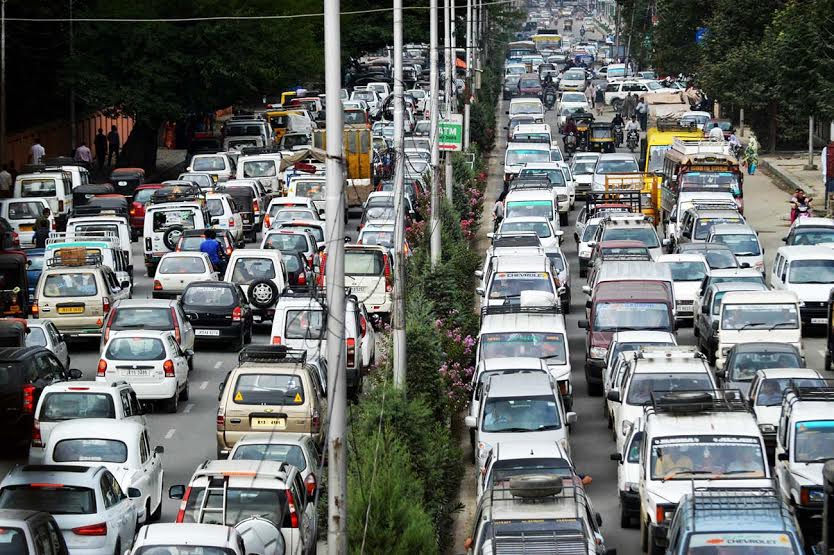
Traffic congestion in Srinagar is no longer a seasonal inconvenience—it has become a daily urban crisis.
From Lal Chowk to Nowgam, commuters face long delays, chaotic intersections, and shrinking road space. With vehicle numbers rising sharply and road infrastructure struggling to keep pace, the city is experiencing systemic congestion stress.
In response, the administration has stepped up efforts. A high-level meeting chaired by the Divisional Commissioner has laid out a multi-layered strategy—one that moves beyond temporary fixes toward long-term urban mobility reform.
Parking Overhaul: Tackling the Root Cause of Congestion
Why Parking Is the Core Issue
One of the biggest contributors to Srinagar’s traffic bottlenecks is unregulated roadside parking.
- Vehicles occupy significant portions of already narrow roads
- Commercial hubs become choke points
- Emergency vehicle movement is obstructed
To address this, authorities are prioritizing multi-level parking infrastructure.
What’s Being Planned
- Review of Detailed Project Reports (DPRs) for new parking facilities
- Identification of high-density zones for construction
- Gradual phasing out of roadside parking in critical areas
Agencies like the Srinagar Development Authority are expected to play a key role in executing these projects.
Expected Impact
If implemented effectively:
- Road width available for traffic will increase
- Congestion in commercial zones will ease
- Parking chaos during peak hours will reduce significantly
Smart City Integration: Technology Meets Traffic Management
The Role of Smart Systems
Under the umbrella of Srinagar Smart City Limited, authorities are looking to integrate advanced technology into traffic regulation.
Key Interventions
- Intelligent Traffic Signals: Adaptive systems that adjust signal timing based on real-time traffic flow
- Surveillance Cameras: Monitoring violations and congestion hotspots
- Data-Driven Planning: Using analytics to identify patterns and optimize routes
Why It Matters
Traditional traffic policing is reactive. Smart systems allow for:
- Proactive congestion management
- Reduced human intervention
- Faster response to traffic build-ups
This marks a shift toward evidence-based urban mobility planning.
Multi-Agency Coordination: Breaking Silos
Who’s Involved
The traffic reform plan brings together multiple agencies:
- Srinagar Development Authority (SDA)
- Lakes Conservation and Management Authority (LCMA)
- Roads & Buildings (R&B) Department
- Education Department
- Traffic Police
Why Coordination Matters
In the past, lack of coordination led to:
- Road projects clashing with traffic plans
- Poorly designed intersections
- Delayed implementation of solutions
The new committee aims to ensure:
- Unified planning
- Faster decision-making
- Better execution
This is critical for a city where infrastructure, environment, and mobility are deeply interconnected.
Stricter Enforcement: Discipline on the Roads
What Will Change
The Senior Superintendent of Police (Traffic) has been tasked with intensifying enforcement.
Focus Areas
- Illegal parking crackdown
- Lane discipline enforcement
- Regulation in school zones
- Monitoring peak-hour congestion
Immediate Impact
Residents can expect:
- Increased fines for violations
- More visible traffic personnel
- Temporary diversions and restrictions
While enforcement may initially feel strict, it is essential for behavioral change among commuters.
Understanding the Problem–Solution Matrix
| Problem | Proposed Solution |
|---|---|
| Roadside parking | Multi-level parking infrastructure |
| Peak-hour congestion | Smart signals + stricter enforcement |
| Poor coordination | Multi-agency planning committee |
| Tourist season pressure | Smart City integration and monitoring |
Challenges That Could Slow Progress
1. Rapid Urban Growth
Srinagar’s vehicle population has surged in recent years:
- More private cars
- Increased commercial transport
- Expansion of city limits
However, road capacity has not expanded proportionately.
2. Tourism Pressure
As a major tourist destination, Srinagar sees:
- Seasonal spikes in traffic
- Increased demand for parking
- Congestion in key areas like Boulevard Road and Dal Lake vicinity
3. Implementation Delays
Infrastructure projects, especially parking facilities, often face:
- Land acquisition issues
- Funding constraints
- Bureaucratic delays
Without timely execution, even the best plans risk losing impact.
Urban Mobility in Transition: A Socio-Environmental Perspective
Traffic congestion is not just a mobility issue—it has broader implications.
Environmental Impact
- Increased vehicle emissions
- Air quality deterioration
- Noise pollution
Social Impact
- Longer commute times
- Reduced productivity
- Stress and road rage incidents
Economic Cost
- Fuel wastage
- Delays in goods movement
- Loss of business efficiency
Addressing traffic is therefore essential for overall urban sustainability.
What Residents Can Expect
Short-Term (2026)
- Strict enforcement drives
- Pilot smart traffic signals
- Temporary decongestion measures
Medium-Term (2026–27)
- Construction of multi-level parking facilities
- Expansion of Smart City traffic systems
- Improved coordination between departments
Long-Term Vision
- Integrated transport network
- Potential introduction of mass transit solutions
- Smarter, more efficient urban mobility
Key Takeaways
- Srinagar is shifting toward structural traffic solutions
- Focus on parking infrastructure, smart technology, and enforcement
- Multi-agency coordination aims to improve implementation
- Challenges remain in execution and urban growth management
- Successful rollout could significantly ease congestion
Conclusion: From Chaos to Coordination?
Srinagar’s traffic crisis has been years in the making—but the current strategy signals a turning point.
By combining infrastructure development, technology integration, and strict enforcement, authorities are attempting to move from reactive management to systemic reform.
The real test, however, lies in execution.
If timelines are met and coordination holds, Srinagar could finally transition from congested streets to a more organized, efficient, and commuter-friendly city.
If not, the risk is clear: the city may continue to grow—but its roads may not keep up.


