Tamil Nadu vs J&K: Why Fast Governance in Tamil Nadu Is Intensifying Public Frustration in Kashmir
By: Javid Amin | 12 May 2026
A growing political conversation in Jammu and Kashmir is no longer centered only around Article 370, autonomy, or Delhi–Srinagar relations.
Instead, a more practical and emotionally resonant question is beginning to dominate public discourse:
“Why do promises in Jammu & Kashmir move so slowly while leaders elsewhere act within days?”
The comparison that increasingly appears in public discussions, political debates, and social media conversations is between:
- Tamil Nadu and
- Jammu & Kashmir.
More specifically, between:
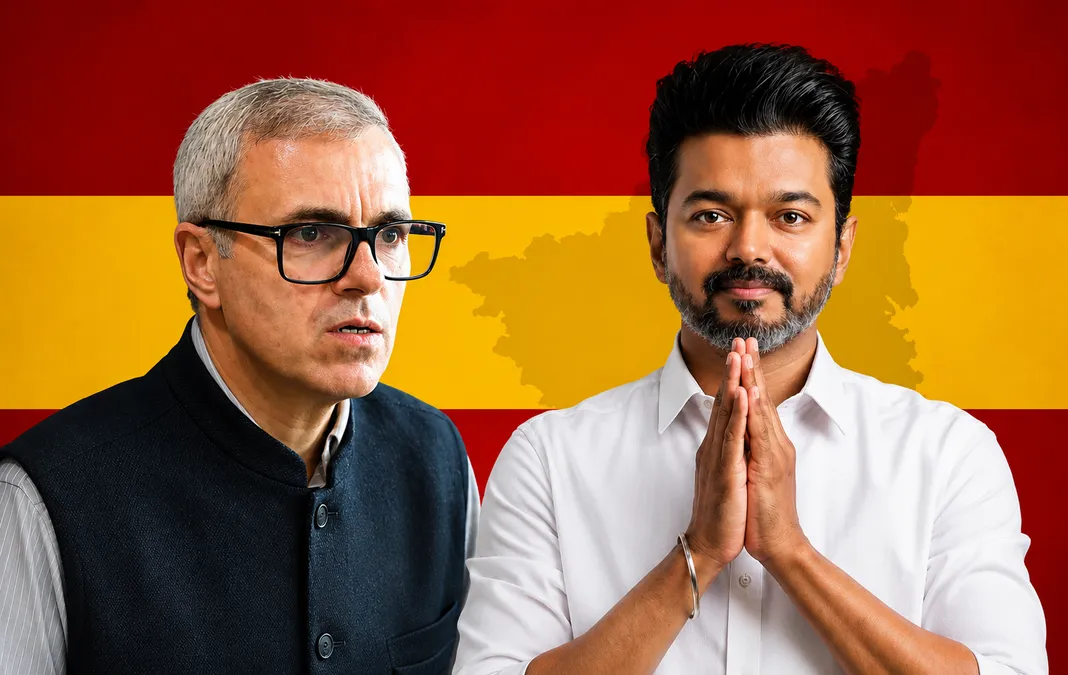
- the rapid, highly visible governance style associated with Vijay in Tamil Nadu,
- and the slower, bureaucratic pace associated with traditional political parties in J&K, including the Jammu & Kashmir National Conference and the Jammu and Kashmir Peoples Democratic Party.
The comparison may not be entirely equal structurally — but politically, it is becoming increasingly powerful.
Tamil Nadu and J&K Are Not Governed Under the Same System
Political analysts caution that comparisons between Tamil Nadu and Jammu & Kashmir often overlook one crucial constitutional reality:
Tamil Nadu is a full-fledged state, while J&K remains a Union Territory.
This distinction dramatically affects governance capacity.
What Changed After 2019?
Following the August 2019 reorganization:
- Jammu & Kashmir lost full statehood,
- powers shifted significantly toward the Centre,
- and governance became more centralized.
As a result, the Chief Minister of J&K does not possess the same administrative freedom enjoyed by state Chief Ministers elsewhere in India.
What a Tamil Nadu Chief Minister Controls
A Chief Minister in Tamil Nadu can directly influence:
- policing,
- bureaucracy,
- finances,
- welfare systems,
- and administrative execution.
This enables quicker implementation of:
- symbolic decisions,
- welfare measures,
- or political announcements.
That is one reason visible policy action in Tamil Nadu often appears immediate and decisive.
But Structural Limits Alone Do Not Convince the Public
Despite these constitutional realities, many people in Jammu & Kashmir remain unconvinced by explanations centered only on “limitations.”
The public mood increasingly reflects a different argument:
Even within constraints, political urgency still matters.
Critics argue that:
- traditional parties have become overly bureaucratic,
- governments react instead of lead,
- and election promises are repeatedly recycled without visible delivery.
This perception has created a widening credibility gap.
Why Fast Decisions Matter Politically
Political momentum today is often driven less by long-term policy and more by visible action.
When new leaders:
- announce decisions quickly,
- issue immediate orders,
- or move symbolically within days,
they create a perception of:
- seriousness,
- responsiveness,
- and accountability.
Even symbolic decisions can generate enormous psychological impact because they send a simple political message:
“We heard you.”
That perception matters deeply in an era where public patience is shrinking rapidly.
Why Traditional Parties Are Facing Growing Skepticism
A major political shift emerging in Jammu & Kashmir is the declining emotional hold of traditional political narratives.
For decades, politics revolved around:
- identity,
- autonomy,
- Article 370,
- and Centre–State tensions.
But increasingly, younger voters are asking:
- Where are the jobs?
- Why are recruitment processes delayed?
- Why are welfare schemes stalled?
- Why does governance remain slow regardless of who rules?
This frustration now cuts across political lines:
- Jammu & Kashmir National Conference,
- Jammu and Kashmir Peoples Democratic Party,
- Bharatiya Janata Party,
- Jammu and Kashmir Apni Party,
- and smaller regional formations alike.
Why the Liquor Debate Became a Trigger Point
The liquor controversy involving Omar Abdullah exposed this broader frustration.
When Omar Abdullah said:
“Who has forced anyone to drink?”
many people did not interpret it as a governance explanation.
Instead, critics heard:
- political fatigue,
- emotional disconnect,
- and dismissal of public concerns.
In Kashmir, alcohol is not merely a policy issue.
It intersects with:
- religion,
- morality,
- identity,
- tourism,
- secularism,
- and cultural anxieties.
That is why the backlash became emotional so quickly.
Opposition Parties Sensed Political Opportunity
The controversy immediately gave political ammunition to rivals.
PDP’s Position
Mehbooba Mufti and Iltija Mufti framed the issue around:
- social values,
- women’s safety,
- and cultural preservation.
They also cited prohibition examples from:
- Gujarat and
- Bihar,
to argue that alcohol bans are not incompatible with secular governance.
BJP’s Intervention
Ravinder Raina and Darakhshan Andrabi also demanded stronger restrictions.
Darakhshan Andrabi described Kashmir as:
“the land of sufis and saints,”
arguing that governance must respect public sentiment.
Aga Ruhullah’s Criticism
Aga Ruhullah Mehdi escalated the pressure further by calling Omar Abdullah’s comments:
“arrogant and illogical.”
His remarks were politically important because they reflected discomfort beyond formal opposition circles.
The Structural Reality: Governing J&K Is More Complex
Despite public frustration, analysts acknowledge that governance in Jammu & Kashmir faces challenges fundamentally different from Tamil Nadu.
| Tamil Nadu | Jammu & Kashmir |
|---|---|
| Stable statehood | Union Territory status |
| Strong industrial economy | Heavy dependence on central grants |
| Administrative continuity | Security-centric governance |
| Large private sector | Limited economic diversification |
| Greater policy autonomy | Significant federal oversight |
In J&K:
- security considerations influence daily administration,
- bureaucracy is highly centralized,
- and even minor policy decisions can become politically sensitive.
This naturally slows implementation.
The Bigger Shift: Governance Credibility Is Becoming Central
Political observers say Kashmir is entering a new political phase.
Earlier, elections were largely driven by:
- emotional identity politics,
- autonomy debates,
- and Delhi–Kashmir narratives.
Today, governance credibility is becoming equally important.
The central political question increasingly sounds like:
“Who can actually deliver?”
Not merely:
“Who can speak emotionally?”
This is especially true among younger voters who increasingly evaluate leaders through:
- jobs,
- transparency,
- visible action,
- speed,
- and accountability.
Why the Liquor Debate Hurt NC Politically
For supporters of Omar Abdullah, his remarks reflected:
- secular governance,
- personal freedom,
- and practical administration.
But in politics, perception often matters more than intent.
The perception that emerged was:
- the leadership appeared disconnected,
- dismissive,
- and slower than public expectations.
That perception damaged NC’s attempt to reposition itself around:
- development,
- youth,
- education,
- and governance reforms.
Conclusion: Kashmir’s Politics Is Changing From Emotion to Expectation
The Tamil Nadu vs J&K comparison may not be constitutionally identical — but politically, it reflects a deeper transformation underway in Kashmir society.
People are becoming less patient with:
- symbolic speeches,
- repetitive emotional narratives,
- and delayed governance.
Instead, they increasingly demand:
- visible delivery,
- faster implementation,
- accountability,
- and urgency.
Whether the issue is:
- liquor policy,
- electricity,
- jobs,
- universities,
- rehabilitation,
- or welfare promises,
the public mood is shifting toward one central demand:
“If others can act quickly, why are we still waiting?”
That question is fast becoming one of the most defining political sentiments in Jammu & Kashmir today.