West Bank Settlements: Western Pressure Grows as UK, France and Canada Move Toward Trade Bans
By: Javid Amin | 08 September 2026
The United Kingdom, France and Canada are moving to ban imports from Israeli settlements in the occupied West Bank, while a wider group of European governments says it will pursue or support restrictions. The measures come as settlement construction accelerates, settler violence rises and the E1 project threatens to further fragment the territory. But the emerging sanctions regime is less uniform than the headlines suggest, and its real impact will depend on implementation.
For years, Western governments have repeated the same formula on the Israeli-Palestinian conflict: Israeli settlements in the occupied West Bank are illegal under international law, settlement expansion undermines a future Palestinian state, and the two-state solution remains the preferred diplomatic outcome.
What has changed in September 2026 is the willingness of some of those governments to move from condemnation to economic measures.
On September 8, the United Kingdom, France and Canada announced plans to prohibit imports from Israeli settlements in the occupied West Bank and to take additional targeted action against people and businesses involved in settlement expansion. Eleven other countries joined a wider political declaration warning that Israel’s policies are rapidly damaging the prospects for a two-state settlement.
The announcement followed weeks of mounting international concern over settlement construction, particularly the expansion of the E1 area east of Jerusalem.
But this is not yet a single Western sanctions regime.
Some countries are already restricting settlement-related commerce. Others are preparing legislation. Several have sanctioned individual settlers or Israeli officials rather than settlement goods. And the European Union itself remains divided over how far to go.
That distinction matters because the political significance of these measures is currently greater than their immediate economic impact.
The West Bank reality behind the diplomatic announcement
The latest diplomatic pressure did not emerge in a vacuum.
Across the West Bank, Palestinian communities have experienced growing pressure from settlement expansion, settler attacks, demolitions, land restrictions and movement controls.
The United Nations has documented a sharp deterioration.
In August, the UN said that nearly 3,800 Palestinians had been displaced in 2026 as a result of settler violence, demolitions and evictions. It recorded more than 1,430 settler-related incidents affecting approximately 260 Palestinian communities. The UN also reported that 76 Palestinians had been killed in the West Bank during 2026 by that point, alongside three Israelis.
Earlier OCHA reporting provided a more granular picture of what displacement looks like on the ground.
In communities such as East Tayba, residents have reported repeated incursions into residential areas, livestock grazing on Palestinian farmland, destruction of property, movement restrictions and threats to leave. OCHA said that, between January 2023 and July 6, 2026, 121 Palestinian communities had experienced full or partial displacement. More than 6,200 Palestinians had been displaced in that context, including more than 2,300 during 2026 alone.
This is the practical backdrop to the diplomatic language about “settlement expansion”.
It is not simply a dispute over new houses on a map. For Palestinians living in vulnerable rural and Bedouin communities, settlement expansion can mean losing access to grazing land, roads, water sources and agricultural fields.
Recent reporting from al-Mughayyir, north-east of Ramallah, illustrates how quickly local disputes can become deadly. In early September, two Palestinian teenagers were killed during a confrontation involving Israeli forces and settlers. The Israeli military said its forces were responding to a threat while trying to recover sheep allegedly taken by Palestinians. Palestinian residents and rights groups disputed the circumstances.
Such incidents help explain why Western governments increasingly treat settlement expansion and settler violence as interconnected problems rather than separate issues.
Why E1 has become the diplomatic flashpoint
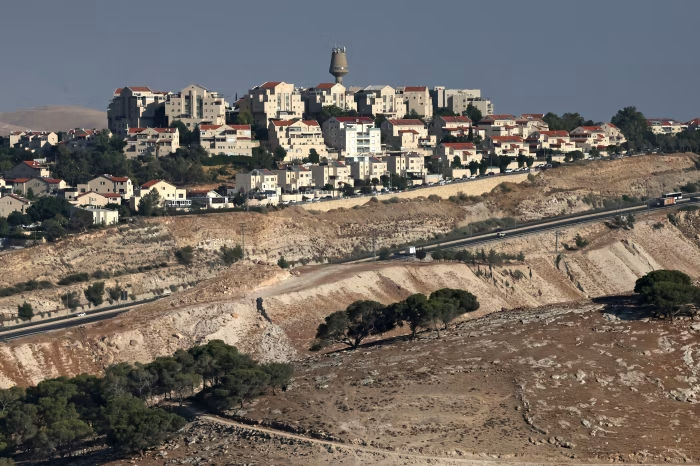
At the centre of the latest international dispute is E1, an area east of Jerusalem linking the city with the major Israeli settlement of Ma’ale Adumim.
The concern among governments supporting a Palestinian state is geographical.
Construction in E1 could create a much more continuous built-up Israeli presence between Jerusalem and Ma’ale Adumim, while making territorial continuity between northern and southern parts of the West Bank more difficult.
Israel’s government has long defended settlement construction on security, historical and political grounds. Palestinians and most international governments view settlement expansion as a mechanism for entrenching Israeli control over territory captured in 1967.
The latest development is particularly significant because construction has moved beyond planning rhetoric.
Settlement watchdog Peace Now reported that Israel’s Housing Ministry opened a tender on August 18 for 1,234 housing units in E1. Those units form part of a broader plan for 3,401 housing units. The bidding deadline is October 19, shortly before Israel’s October 27 election.
Peace Now argues that the timing could make it harder for a future Israeli government to reverse the project.
The Israeli government has not accepted the international characterization of settlements as illegal and has repeatedly rejected the idea that settlement construction should determine the borders of a future Palestinian state.
That dispute is unlikely to disappear.
But E1 has become a particularly powerful diplomatic symbol because governments that still support a two-state solution see the project as potentially changing the territorial facts before negotiations can determine them.
What the 12-country declaration actually says
The September 8 statement was signed by:
Canada, Denmark, Finland, France, Iceland, Ireland, Norway, Poland, Portugal, Spain, Sweden and the United Kingdom.
But it would be misleading to describe all 12 as having already imposed identical trade sanctions.
The governments said they would introduce national restrictions, support European restrictions, or were actively considering additional measures. They specifically welcomed measures already taken by Ireland, Spain, the Netherlands, Norway and Belgium.
That wording is deliberate.
Foreign ministries often need to coordinate measures with domestic legislation, customs authorities and European trade rules. Announcing a policy and putting an enforceable import prohibition into operation are therefore two different stages.
The distinction is particularly important for businesses.
A political declaration does not automatically mean that every supermarket, importer or financial institution in those countries must immediately stop dealing with every product connected to an Israeli settlement.
The actual impact will depend on implementing legislation, customs definitions, enforcement mechanisms and the precise meaning of “settlement goods”.
Britain makes the biggest symbolic shift
Britain’s announcement is arguably the most politically significant of the three major moves.
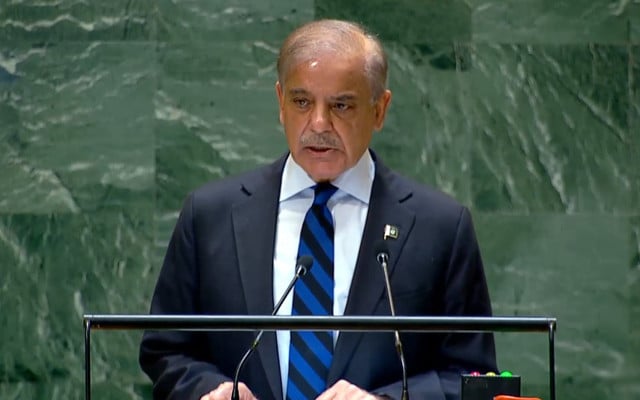
Foreign Secretary Ed Miliband told Parliament that Britain would introduce an import ban on goods from illegal settlements in the occupied territories.
London also intends to target companies and individuals providing services connected to settlement expansion, including construction, infrastructure, financing and real estate.
That goes beyond simply placing a label on settlement-produced goods.
It targets the economic ecosystem that enables construction.
The UK’s position had already been moving in this direction. In June, Britain joined Australia, Canada, France, New Zealand and Norway in sanctions against individuals and entities accused of financing or enabling settler violence.
Until September, however, Britain had stopped short of a comprehensive settlement-goods ban.
A UK parliamentary briefing published in July showed how contested the question remained. The government had advised businesses against economic and financial activity in illegal settlements but had not yet introduced the full trade prohibition demanded by some MPs.
The September decision therefore represents a significant escalation in British policy.
It also carries historical weight.
Britain was the mandatory power in Palestine before the creation of Israel in 1948. Its diplomatic relationship with Israel has subsequently been close, even when disagreements have emerged over settlements and Palestinian statehood.
That makes London’s decision politically more consequential than the value of the trade itself.
France’s approach is broader than trade alone
France has combined pressure on settlement policy with targeted sanctions.
In June, Paris imposed an entry ban, known administratively as an “IAT”, on Israeli Finance Minister Bezalel Smotrich, alongside measures involving other figures connected to settlement activity and settler violence. French authorities had already taken similar action against National Security Minister Itamar Ben-Gvir.
The French approach therefore illustrates a broader European strategy.
Rather than treating Israel as a whole as a sanctioned state, governments are increasingly attempting to distinguish between:
- Israel and Israeli citizens generally;
- settlements located in occupied territory;
- violent settlers;
- officials promoting or facilitating settlement expansion;
- businesses directly involved in settlement construction.
That distinction is politically important.
The governments involved insist that their measures are aimed at specific policies and individuals, not at Israelis as a population.
Canada’s move carries G7 significance
Canada’s decision is also important because it places another major Western economy alongside Britain and France.
Prime Minister Mark Carney’s government said Canada, France and the UK would ban settlement imports and introduce targeted measures against settlements and those who facilitate or profit from them. At the same time, Ottawa reaffirmed support for Israel’s security and for a negotiated two-state outcome.
That combination is deliberate.
Canada is trying to communicate two messages simultaneously: opposition to settlement expansion and continued support for Israel’s security.
This is not an attempt to sever relations with Israel.
It is pressure designed to influence Israeli policy.
Whether that strategy works is another question.
Norway shows why the wording matters
Norway provides perhaps the clearest example of the difference between political intent and legal implementation.
Oslo announced in June that it was preparing legislation to prohibit trade in goods produced in Israeli settlements. The proposed law would also prohibit certain exports to settlements, property purchases and specific construction, engineering, architectural and real-estate services linked directly to settlement development.
But the legislation was still under public consultation, with a September 19 deadline.
So describing Norway simply as having “banned settlement goods” would overstate the position.
It has moved considerably further than a diplomatic warning, but the proposed statutory ban still had to complete the legislative process.
That distinction is important for accurate reporting.
Ireland, Spain, Belgium and the Netherlands were already moving
The September declaration specifically praised Ireland, Spain, the Netherlands, Norway and Belgium for action already taken.
These governments have been among the European states pushing hardest for stronger differentiation between Israel proper and the settlements.
Their policies have not necessarily been identical.
Some measures focus on settlement goods. Others involve sanctions against settlers, investment restrictions, customs enforcement or legal advice to businesses.
The wider trend is nevertheless clear: governments that once relied heavily on political condemnation are increasingly examining the economic relationships that allow settlement activity to continue.
Australia and New Zealand are taking a different route
The original summary also needs correction here.
Australia and New Zealand have not simply joined a blanket import ban on settlement goods.
Their most concrete measures have focused on individuals and entities.
Australia imposed additional Magnitsky-style sanctions in June on three Israeli individuals and four entities in response to settler violence. The measures included targeted financial sanctions and travel bans. Australia said the designated entities included farming outposts linked to settler violence.
New Zealand similarly announced travel bans on three Israeli settlers accused of involvement in settlement expansion and violence. Wellington stressed that the measures were directed at those individuals, not at Israelis generally.
That distinction matters.
Sanctioning an individual freezes or restricts access to a country’s financial system and territory.
An import ban affects commercial supply chains.
The two instruments send different signals and have different economic effects.
Why sanctions are unlikely to cripple the settlement economy overnight
This is where the politics becomes more complicated.
The settlement economy is significant locally, but settlement-origin goods represent only a small part of the overall economic relationship between Israel and major Western countries.
Reuters noted that the new trade bans are likely to be largely symbolic in direct economic terms because the volume of settlement exports is relatively limited.
That does not mean the measures are meaningless.
Their purpose is partly legal and diplomatic.
If governments explicitly distinguish settlement goods from products made inside internationally recognised Israeli territory, they are reinforcing the position that the settlements cannot be treated as ordinary Israeli territory for trade purposes.
That principle dates back years.
UN Security Council Resolution 2334, adopted in 2016, stated that Israeli settlements in territory occupied since 1967, including East Jerusalem, had “no legal validity” and constituted a violation of international law. It also called on states to distinguish in their dealings between Israel and the territories occupied since 1967.
The International Court of Justice went further in its July 2024 advisory opinion, finding Israel’s continued presence in the occupied Palestinian territory unlawful and calling for an end to new settlement activity.
Israel rejects these legal characterisations and disputes the broader international legal interpretation of the territory.
But the legal position adopted by the UN Security Council and the ICJ has increasingly become the foundation for Western governments seeking to impose settlement-specific restrictions.
The ground-level question: who pays the price?
There is another unresolved issue.
If settlement goods are prohibited, who ultimately bears the economic cost?
In theory, the measures are designed to target settlement enterprises and those financing or facilitating expansion.
But supply chains in the West Bank are complicated.
Israeli companies can operate across the Green Line. Products may move through Israeli ports, warehouses and distributors before reaching foreign markets. Determining the precise origin of agricultural produce, manufactured goods or processed products can therefore be more complicated than simply identifying a company as “Israeli”.
This is one reason implementation will matter more than the headline announcement.
Customs authorities will need reliable origin documentation.
Importers will need due diligence systems.
Businesses may choose to avoid disputed products altogether rather than risk violating sanctions.
That could produce a broader reputational effect even where the direct trade value is small.
Israel’s response: the diplomatic confrontation widens
Israel has reacted sharply.
Foreign Minister Gideon Saar announced that Israel would close Britain’s consulate in East Jerusalem in response to the UK’s settlement measures. He also said Britain would be excluded from a US-led Gaza coordination mechanism and that other restrictions would be imposed on British officials.
The consulate is not an ordinary diplomatic office.
The British Consulate General in Jerusalem represents the UK’s interests in Jerusalem, the West Bank and Gaza and provides political, economic, security and consular services relating to Palestinians and British nationals.
Its proposed closure could therefore have practical consequences beyond symbolism.
It would reduce Britain’s diplomatic operating capacity in areas where London has historically maintained a distinct relationship with Palestinian institutions and communities.
Israel has framed the sanctions as unacceptable foreign interference and as an attempt to exert pressure on Israeli domestic politics.
Britain, France and Canada see them differently: as measures designed to prevent further damage to the possibility of a Palestinian state.
Both narratives are now colliding.
The United States is the glaring exception
Perhaps the most important geopolitical fact is not who has joined the sanctions campaign, but who has not.
The United States has not followed Britain, France and Canada in imposing the same settlement-goods restrictions.
That leaves Washington and several European allies increasingly out of step over how to respond to Israeli settlement policy.
The split matters because the United States remains Israel’s most important strategic partner.
European governments can increase diplomatic and economic pressure, but Washington’s position significantly affects how much leverage that pressure ultimately produces.
If the US maintains its current position while European governments intensify sanctions, Israel may become increasingly dependent on the American market and diplomatic relationship to cushion the effects of European measures.
The two-state solution is at the centre of the argument
The sanctions debate ultimately returns to one question: Is a viable Palestinian state still geographically possible?
The governments behind the September declaration say settlement expansion is making the answer increasingly uncertain.
Their concern is not merely the number of housing units.
It is the cumulative effect of roads, infrastructure, settlement blocs, outposts, administrative control and restrictions on Palestinian development.
The UN has warned that settlement expansion and related measures are undermining Palestinian territorial continuity and self-determination. Its June 2026 report described accelerating settlement activity, rising settler violence and restrictions on Palestinian access to land.
The E1 project has become particularly important because of its location.
If settlement development creates a continuous Israeli-controlled corridor around East Jerusalem and Ma’ale Adumim, critics argue that a future Palestinian state could be left with disconnected territorial pockets rather than a contiguous state.
Israel disputes that interpretation and maintains that final borders should be determined through negotiations.
But that is precisely the diplomatic argument driving the sanctions.
European governments increasingly fear that the “facts on the ground” are changing faster than diplomacy can respond.
Are Western sanctions becoming a new policy?
The answer is yes, but cautiously.
For decades, many Western governments relied on diplomatic statements, settlement-product labelling and calls for negotiations.
The new measures indicate a gradual shift toward differentiation and targeted economic pressure.
The emerging policy has several layers:
First, trade restrictions on goods originating in settlements.
Second, sanctions against violent settlers and organisations.
Third, restrictions on companies providing construction, financing, infrastructure or real-estate services to settlements.
Fourth, entry bans against officials and individuals associated with settlement expansion or violence.
Fifth, diplomatic pressure against Israeli policies considered to facilitate de facto annexation.
The measures remain selective rather than comprehensive.
That is deliberate.
Most governments involved are not calling for a general economic embargo on Israel. They are trying to target settlement activity while maintaining diplomatic, security and economic relations with Israel itself.
The bigger test is whether policy follows rhetoric
The September announcement represents a significant political shift, but it is too early to call it a decisive economic turning point.
The strongest immediate impact is diplomatic.
Britain, France and Canada have moved from warning Israel about settlements to using trade policy against settlement-linked commerce. A larger group of European countries has publicly signalled willingness to follow.
Israel’s decision to retaliate against Britain shows that Jerusalem does not regard these measures as irrelevant.
Yet the central question remains unanswered.
Will sanctions change Israeli settlement policy?
Or will they simply deepen the diplomatic divide between Israel and parts of Europe without altering construction on the ground?
The answer will depend on what happens next.
If the UK, France and Canada establish enforceable customs regimes, sanction major companies and follow through against financing networks, the economic pressure could become more meaningful.
If other European states convert their declarations into legislation, the effect will multiply.
But if implementation remains fragmented, the measures could remain primarily symbolic.
A West Bank turning point, but not yet a policy breakthrough
The significance of September’s announcement lies less in the immediate value of the banned goods than in the political principle behind it.
For the first time in years, several major Western governments are openly treating settlement expansion not simply as an obstacle to peace, but as an issue requiring economic consequences.
That is a meaningful change.
The ground situation explains why.
The UN is documenting rising settler violence and displacement. E1 construction is moving forward. Israeli authorities are expanding administrative control. Palestinian communities are reporting increasingly severe restrictions and attacks. Meanwhile, the diplomatic window for a contiguous Palestinian state appears to be narrowing.
Yet sanctions alone cannot resolve the Israeli-Palestinian conflict.
They cannot determine borders, guarantee Israeli security, create a functioning Palestinian government or settle the status of Jerusalem and refugees.
What they can do is alter the cost-benefit calculation around settlement expansion.
That is now the test.
The Western governments involved have moved beyond statements.
The next question is whether they are prepared to enforce the policies they have announced.
And on the West Bank, where another housing tender, another road, another outpost and another displaced family can change the geography of a future peace agreement, time may be the most consequential factor of all.