Kashmir First Snowfall 2026: Higher Reaches Turn White as Autumn Arrives
By: News Desk | 05 September 2026
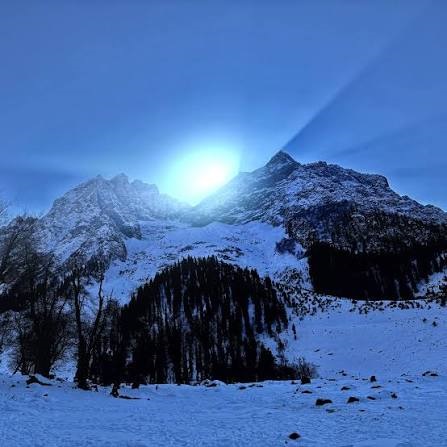
Srinagar: Kashmir has received its first snowfall of the season, with the weather taking a distinctly colder turn across the Valley’s highest mountain reaches.
Fresh, light snow was reported on Saturday from the upper reaches of Gulmarg, Sonamarg, Gumri and Zojila, along with parts of the Pir Panjal range. Snow was also reported from Kaobal Gali in the Tulail area of Bandipora and over Mahadev Peak in Srinagar district.
The snowfall, however, remained largely confined to the extreme higher reaches, around 3,900 metres and above, rather than covering the towns and lower elevations of Kashmir.
For Kashmir, where the changing seasons are written visibly across its mountains, the first September snow is more than a postcard moment.
It is a seasonal marker.
The green of summer is beginning to give way to autumn’s gold and, at the highest elevations, winter’s first white brushstrokes.
And for residents, farmers, tourists, transport authorities and mountain communities, the snowfall carries a practical message as well:
The colder season is approaching, and Kashmir’s high-altitude landscape is beginning its annual transition.
Kashmir’s First Snowfall Arrives in the Higher Reaches
The first snowfall was reported on September 5, following a spell of rain across several parts of Jammu and Kashmir.
According to reports citing the Meteorological Department, light snow fell over higher areas of Bandipora and Ganderbal, particularly around Gumri and Zojila, while fresh snow was also seen over the upper reaches of Gulmarg and the Pir Panjal mountains.
The snowfall was light and mostly restricted to high elevations.
That detail is important.
This is not yet the arrival of widespread winter snowfall across the Valley. Srinagar and most lower-altitude areas remain well outside the immediate snow zone.
Instead, the event is an early high-altitude signal of the seasonal transition.
The mountain peaks have simply entered winter before the plains.
Gulmarg Gets Its First Snowy Touch
Gulmarg was among the better-known tourist destinations to receive fresh snow.
Snow was reported from the higher areas around Gulmarg, including upper mountain sections and the Pir Panjal range.
For tourists, even a thin coating of snow on Gulmarg’s higher slopes has a powerful visual effect.
The landscape changes almost instantly.
The green mountain scenery begins acquiring the first hints of the winter palette that will eventually transform Gulmarg into one of India’s best-known snow destinations.
But visitors should keep expectations realistic.
The September snowfall is not equivalent to the deep winter snow season.
It is an early, high-altitude snowfall confined mainly to the upper reaches.
The heavier and more widespread snow that tourists associate with Gulmarg generally comes later in the winter season.
Sonamarg and Zojila Turn White
The most significant snowfall reports came from the Sonamarg-Gumri-Zojila axis.
Fresh snow was recorded in the high-altitude areas around Gumri and Zojila, leaving a thin white layer over the mountain slopes.
Zojila is particularly important because it is more than a scenic mountain pass.
It is a strategic transport link between Kashmir and Ladakh.
The pass sits at a high elevation, making it vulnerable to sudden changes in weather. Even relatively light snowfall can reduce visibility, make road surfaces slippery and complicate traffic movement if conditions deteriorate.
As of September 5, available road-status information indicated that the Srinagar-Leh route through Zojila remained operational under regulated traffic timings, subject to weather and road conditions.
So the first snowfall does not mean the Srinagar-Leh highway has closed.
But it does provide a reminder that travellers using the route are entering a period when mountain weather can change rapidly.
Pir Panjal Also Receives Fresh Snow
Snowfall was also reported from higher parts of the Pir Panjal range.
This mountain system forms a major geographical barrier between the Kashmir Valley and the plains of Jammu and northern India.
Its upper reaches can receive snow well before substantial winter conditions arrive in the Valley.
Reports from September 5 also indicated fresh snow over high-altitude areas associated with the Pir Panjal, while Mahadev Peak in Srinagar district was reported to have received a fresh covering.
The pattern reinforces an important point about Kashmir’s weather:
Altitude often matters more than calendar dates.
At 3,900 metres, September can already look like early winter while the Valley floor can still experience relatively warm daytime temperatures.
What About Pahalgam and Aru?
The original information circulating around the snowfall mentioned areas such as Aru and Betaab Valley.
However, current reports that could be independently verified do not clearly establish fresh snowfall specifically in those tourist spots.
That distinction is worth maintaining in a news report.
Pahalgam is considerably lower than the extreme elevations where the September 5 snowfall was concentrated. The broader Pahalgam region may certainly see snow on its higher surrounding peaks as the season progresses, but it would be premature to report that Aru and Betaab Valley themselves received confirmed fresh snowfall based on the currently available evidence.
For a professional news publication, accuracy is more valuable than adding a familiar tourist name to a snowfall list.
Rain in the Plains, Snow on the Peaks
The weather system that brought snow to the higher mountains also produced rainfall across parts of the Valley.
This created a dramatic contrast.
In the lower elevations, residents experienced rain, while several thousand metres above them, the precipitation arrived as snow.
That is normal meteorologically.
As air rises over mountains, temperatures generally decrease with altitude. When temperatures are sufficiently low, precipitation that would fall as rain at lower elevations can reach the ground as snow higher up.
The result is one of Kashmir’s most recognisable seasonal transitions:
Rain in Srinagar, snow on the peaks.
Reports also noted hailstorms and gusty winds in some locations, while temperatures dropped after the weather spell.
Is This the Start of Winter in Kashmir?
Not quite.
It is better described as an early high-altitude winter signal rather than the beginning of full winter across Kashmir.
Meteorological reports indicate that the snowfall remained confined largely to elevations around 3,900 metres and above.
The distinction is important because Kashmir’s seasons do not change simultaneously everywhere.
The transition happens gradually:
High peaks → mountain passes → upper valleys → middle elevations → Valley floor.
The highest peaks can receive snow while Srinagar remains comparatively mild.
Only later, as temperatures decline and winter weather systems become more frequent, does snow begin reaching progressively lower elevations.
What the First Snow Means for Kashmir Tourism
For the tourism industry, the first snow always generates excitement.
Photographs of snow-covered mountains can quickly attract visitors searching for early winter experiences.
Gulmarg, Sonamarg and other high-altitude destinations are likely to benefit from increased interest, particularly among photographers, adventure travellers and tourists looking for a glimpse of snow before the main winter season.
But travellers should understand the difference
Early-season snowfall does not mean that every tourist destination is covered in snow.
At this stage:
- snow is primarily on the higher slopes;
- lower tourist areas may remain green;
- road conditions can change quickly at high elevations;
- heavy winter clothing becomes increasingly useful in mountain areas;
- access to high-altitude locations can depend on weather conditions.
For travellers, the attraction is therefore not necessarily a “snow holiday” yet.
It is the chance to experience Kashmir between seasons—when autumn colours begin emerging below while the mountains acquire their first winter cover.
Book Kashmir – Enjoy Snow with JKL Travels
If you are planning a Kashmir getaway to experience the changing seasons, now is a good time to plan ahead.
Book Kashmir – Enjoy Snow with JKL Travels and explore the Valley’s scenic destinations with a professionally planned itinerary covering the best of Kashmir’s mountains, lakes and tourist attractions.
Whether you are planning a family holiday, couple’s trip or photography-focused escape, early planning can help you choose the right destinations according to the prevailing weather.
Agriculture: Snow Is a Seasonal Signal, Not an Immediate Threat
For Kashmir’s farmers, the first snowfall is also a reminder that the agricultural calendar is moving toward its next phase.
September is an important period for harvesting activities, particularly in the Valley’s major horticultural belts.
Apple harvesting, for example, is already underway for several varieties during this period.
The arrival of snow at extreme elevations does not mean that crops in the Valley are suddenly exposed to winter conditions.
The snowfall is far too high-altitude and limited for that interpretation.
Instead, farmers are watching the broader seasonal transition.
The key concerns include:
- temperature fluctuations;
- rainfall during harvest;
- orchard disease pressure;
- fruit quality;
- transportation conditions;
- storage and market access;
- the timing of colder weather.
For paddy farmers too, September represents an important phase as the crop approaches maturity and harvesting.
So while the first snow is visually dramatic, its agricultural significance is primarily as a seasonal indicator at this stage.
Why Zojila Snowfall Deserves Special Attention
Among all the locations reporting fresh snow, Zojila deserves particular attention because of its role in regional connectivity.
The pass connects Kashmir with Ladakh through the Srinagar-Leh highway.
The route remains operational during the broader travel season, but mountain weather can create sudden complications.
Snowfall can bring:
- reduced visibility;
- slippery surfaces;
- temporary traffic restrictions;
- delays;
- snow accumulation;
- increased risk of accidents.
For that reason, travellers heading toward Kargil or Ladakh should check the latest traffic and weather advisories rather than relying on a road being historically open during September.
The first snowfall is therefore a warning to stay alert, not a reason to assume the road has closed.
Current road information on September 5 indicated regulated traffic movement through Zojila, subject to weather and operational conditions.
Kashmir’s First Snow and the Climate Question
Every early snowfall inevitably raises a question:
Is this climate change—or simply normal Himalayan weather?
The scientifically responsible answer is that one snowfall event cannot establish a climate trend.
Snowfall timing varies naturally from year to year because of changes in atmospheric circulation, temperature, moisture availability and western disturbances.
A single early or late snowfall therefore cannot be used as proof that Kashmir’s climate is changing in one particular direction.
What scientists examine instead are long-term records:
- snowfall frequency;
- snow-cover duration;
- average winter temperature;
- precipitation type;
- snowline elevation;
- glacier mass balance;
- seasonal precipitation;
- frequency of extreme weather.
That longer record provides the evidence needed to understand whether the region’s climate system is undergoing a persistent shift.
The September snowfall is therefore best described as weather variability and a seasonal marker, rather than definitive evidence of climate change.
The Hidden Importance of Snow for Kashmir’s Water System
Snow is not merely a winter attraction.
In the Himalayas, snow functions as a natural seasonal reservoir.
When accumulated snow melts gradually, it can contribute to streams, rivers and groundwater systems.
The timing of melting matters.
Too little winter snow can reduce water availability later in the year.
Rapid melting, especially when combined with warmer temperatures, can increase runoff.
That makes snowfall patterns relevant to:
- agriculture;
- drinking-water supplies;
- hydropower;
- river flows;
- ecosystems;
- tourism;
- downstream communities.
Kashmir’s water future therefore depends not simply on annual precipitation totals but also on how much precipitation falls as snow, where it accumulates and how quickly it melts.
Autumn Has Arrived—But Winter Is Still Waiting
The first snow has created a visual contradiction that Kashmir knows well.
The lower Valley is entering autumn.
The trees are beginning their gradual transformation.
Harvesting activity is underway.
Tourist landscapes remain largely green.
And yet, high above the Valley, winter has already left its first signature.
That contrast is one of Kashmir’s defining seasonal experiences.
It is also a reminder of how sharply temperature and weather conditions can change with elevation.
Book Kashmir – Enjoy Snow with Kashmir Travels
Planning to witness Kashmir’s early snow-covered peaks?
Book Kashmir – Enjoy Snow with Kashmir Travels and discover Gulmarg, Sonamarg, Pahalgam and Srinagar while the Valley transitions from autumn toward winter.
For travellers hoping to see actual snow, however, it is important to distinguish between snow on high peaks and snowfall at the tourist towns themselves. Current conditions can change quickly, so itineraries should be planned around the latest weather and road advisories.
What Tourists Should Know Before Travelling
If you are planning a Kashmir trip after the first snowfall, a few simple precautions can make the journey smoother.
Check weather before heading to high elevations
Mountain conditions can change within hours.
Keep warm clothing
Even if Srinagar feels comfortable during the day, Gulmarg, Sonamarg and Zojila can be significantly colder.
Do not assume every destination has snow
The current snowfall is concentrated mainly at extreme elevations.
Check road conditions
Especially if travelling toward Zojila or other high-altitude routes.
Keep flexibility in the itinerary
Mountain weather can cause delays or temporary route restrictions.
Follow local advisories
Official weather and traffic updates should take priority over social-media posts.
The First Snow Is a Beautiful Warning
Kashmir’s first snowfall is easy to romanticise.
And perhaps it should be.
There is something almost cinematic about watching the first white layer appear on mountains that only days earlier were green.
But behind the beauty lies a practical message.
The high mountains are beginning to cool.
The tourist season is changing.
Mountain roads will gradually become more weather-sensitive.
Farmers are moving deeper into the harvest calendar.
And the Valley is beginning its long transition toward winter.
For now, the snow remains largely confined to Kashmir’s highest elevations. There is no indication that winter has suddenly arrived across the entire Valley.
But the seasonal clock has unmistakably moved forward.
Conclusion: Kashmir’s First Snowfall Marks the Beginning of a New Season
The first snowfall of the 2026 season has transformed Kashmir’s highest mountain landscapes, with fresh snow reported from Gulmarg, Sonamarg-Gumri, Zojila, the Pir Panjal range, Kaobal Gali and other extreme high-altitude areas.
For tourists, it is a preview of the snowy Kashmir that will emerge more fully later in the year.
For farmers, it is a seasonal reminder as harvesting activities gather pace.
For commuters, particularly those using the Srinagar-Leh corridor, it is a reason to pay closer attention to mountain weather.
And for environmental observers, it provides another data point in the much larger story of Himalayan weather variability.
The snowfall itself may be light.
The message is not.
Autumn is arriving in the Valley—and winter has already touched the peaks.


