Aakash Chopra Says Kashmir Can Produce India’s Next Fast Bowler
By: News Desk | 06 September 2026
There is something striking about Aakash Chopra’s latest observation on Kashmir cricket. It is not simply a compliment to a region that has produced talented cricketers. It comes at a moment when Jammu and Kashmir cricket has begun moving from promise to results.
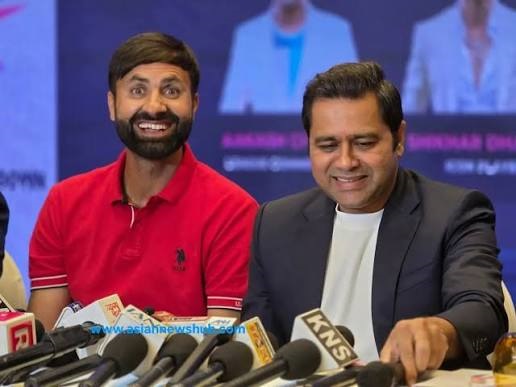
Speaking in Srinagar on September 6, former India opener and commentator Chopra said he hoped India’s next fast bowler would come from the region. His words were equally revealing about the challenge facing local cricket: the talent, he suggested, is already somewhere in Kashmir, but the system has not always been able to find it or provide enough opportunities for it to develop.
That distinction matters.
Kashmir does not need another generic prediction about sporting potential. It needs pathways. And the evidence of the past few years suggests those pathways are beginning to take shape.
Aakash Chopra’s Kashmir prediction comes at an important moment
Chopra was speaking against the backdrop of Jammu and Kashmir’s extraordinary 2025-26 domestic season.
In February, J&K won the Ranji Trophy for the first time, defeating Karnataka in the final at Hubballi on the basis of a commanding first-innings lead. It was a landmark achievement for a side that had entered the competition in 1959-60 and had waited decades for its first title.
The significance of that victory extends beyond the trophy cabinet.
A Ranji title changes how a cricketing ecosystem sees itself. Young players no longer have to imagine success as something that happens somewhere else. They can point to their own dressing room and see players from their region reaching the top of Indian domestic cricket.
And one of the biggest stories behind that championship was a fast bowler.
Auqib Nabi took 60 wickets during the 2025-26 Ranji season and was named Player of the Season. His seven five-wicket hauls were central to J&K’s title campaign.
That makes Chopra’s comment particularly timely.
The question is no longer whether Kashmir and Jammu and Kashmir can produce serious pace-bowling talent. The evidence is already there.
The bigger question is how many more players are waiting to be discovered.
Auqib Nabi has already moved the conversation forward
If Chopra’s comments are about the future, Auqib Nabi provides a powerful example from the present.
The Baramulla-born seamer’s rise has been one of the clearest signs of the depth developing in J&K cricket. His domestic numbers have steadily pushed him into the national conversation.
Nabi followed 44 wickets in the 2024-25 Ranji Trophy with 60 in the following season. His performances helped J&K win its maiden Ranji title.
Then came an even bigger breakthrough.
In August, Nabi received his maiden India call-up for the Test series against Sri Lanka after Jasprit Bumrah was ruled out with injury. Reuters reported that Nabi had taken 104 wickets across the previous two Ranji seasons and had also impressed during India A’s tour of Sri Lanka.
That call-up made him the first player from Jammu and Kashmir selected for India’s senior Test squad.
It was a significant moment, but it also demonstrated something important about the route from regional cricket to the national team. Nabi did not arrive because of hype alone. He built his case through sustained first-class performances.
For youngsters watching in Kashmir, that is perhaps more valuable than any motivational speech.
There is now a visible pathway.
Kashmir has produced more than one kind of pace talent
The story does not begin with Nabi.
Jammu and Kashmir has already produced several bowlers who have reached high-level cricket, including Rasikh Salam Dar and Umran Malik.
Rasikh, in particular, offers an instructive example of how quickly a young player can move when talent meets exposure.
The right-arm fast bowler was spotted during a trial in Srinagar and eventually reached the IPL. In 2026, he played a major role for Royal Challengers Bengaluru, taking 19 wickets during their title-winning campaign.
The official IPL player profile lists Rasikh as a right-arm fast bowler and records his 2026 campaign with RCB, including a three-wicket haul in the final.
Then there is Brijesh Sharma, another example of the widening pipeline.
The Udhampur-born fast bowler made his IPL debut for Rajasthan Royals in 2026 and is set to make his first-class debut for Jammu and Kashmir in the 2026-27 domestic season. Before reaching the IPL, he had represented J&K at Under-19 and Under-22 level and later developed his game through opportunities outside the region.
These careers are different, but together they tell the same story.
There is talent.
The challenge is identifying it early enough and giving it the right environment.
Parvez Rasool showed Kashmir could reach India
Before the current generation of pacers, Parvez Rasool had already broken an important barrier.
The Bijbehara-born all-rounder became the first international cricketer from Jammu and Kashmir when he made his ODI debut for India against Bangladesh in 2014. The Jammu & Kashmir Sports Council identifies him as the region’s first international cricket player.
Rasool’s journey was built on strong domestic performances. Ahead of his India selection, he had scored 594 runs and taken 33 wickets during the 2012-13 Ranji season for J&K.
His importance today is not merely historical.
Rasool represents the first major proof that a youngster from the region can travel all the way from local cricket to the Indian dressing room.
The generation that followed saw a different kind of breakthrough, with fast bowlers such as Rasikh and Umran attracting national attention.
Now Nabi has taken that progression another step forward.
Does Kashmir really have natural conditions for fast bowling?
This is where the discussion needs some nuance.
It is tempting to argue that Kashmir’s mountains, altitude, climate or terrain automatically create fast bowlers. Cricket science does not support such a simple equation.
Fast bowling is a highly technical discipline. Pace depends on biomechanics, strength, run-up efficiency, front-leg stability, release mechanics, workload management and the ability to generate and transfer force efficiently.
Conditions can influence development, but they cannot manufacture a 140-kmph bowler.
What Kashmir can offer is something potentially just as important: a large pool of young athletes, a strong sporting culture and growing access to organised cricket.
The region’s cricket infrastructure is also becoming more structured.
The Jammu and Kashmir Cricket Association’s current programme includes talent-hunt trials and deep-selection camps across age groups, including Under-16, Under-19 and Under-23 levels, alongside senior men’s fitness camps and trials.
That matters because elite fast bowlers cannot be developed through occasional trials alone.
They need years of monitored workloads, strength and conditioning, technical coaching, injury prevention, video analysis and competitive matches.
The missing ingredient is not necessarily talent. It is opportunity.
This is arguably the most important part of Chopra’s message.
He did not suggest that Kashmir simply needs more boys bowling fast.
He spoke about opportunities and platforms.
That is a much bigger issue.
A teenager who bowls 130 kmph in a local tournament may look impressive, but selectors need to know what happens when that player bowls on different pitches, against stronger batsmen, under pressure and over several seasons.
That requires exposure.
It requires representative cricket.
It requires coaches who can distinguish raw pace from sustainable pace.
And it requires access to specialist support before injuries or technical flaws become permanent problems.
J&K’s current cricket structure shows movement in that direction, with the JKCA conducting multiple age-group trials, selection matches and fitness camps.
But the next stage will be about quality as much as quantity.
The Ranji Trophy triumph has changed the psychology
J&K’s maiden Ranji Trophy title may prove to be one of the most important developments for the region’s cricketing culture in decades.
The team defeated Karnataka after building a huge first-innings advantage in the final. Auqib Nabi’s seven-wicket haul in the first innings was one of the defining performances of the championship campaign.
For young cricketers, successful senior players create something statistics cannot measure easily: belief.
A youngster in Srinagar, Baramulla, Anantnag, Pulwama or another part of the region can now see multiple examples of players progressing from local cricket to domestic prominence and, increasingly, to the IPL or India setup.
That visibility can influence participation.
It can influence parents.
It can influence investment in academies.
And it can persuade talented youngsters that cricket is not simply a recreational pursuit but a viable professional ambition.
The IPL is opening another door
The Indian Premier League has also become an important scouting mechanism.
For young pacers, franchise trials can provide exposure to coaches and performance staff operating at a level that is difficult to replicate in local cricket.
Auqib Nabi’s earlier trial with Mumbai Indians was one such moment. At that stage, he was already producing exceptional Ranji numbers, having taken 44 wickets in the 2024-25 season.
Rasikh Salam’s journey provides another example of what can happen when a player catches the eye of the right people at the right time.
Brijesh Sharma’s route is different again, demonstrating how players can use competitions outside J&K to attract IPL attention before returning to the state system.
The lesson is straightforward.
Kashmir does not necessarily need to produce a fast bowler who fits one mould.
It needs a system capable of identifying different types of fast bowlers and developing them according to their individual strengths.
And then there is the next generation
Perhaps the most interesting line in Chopra’s comments was his suggestion that the next fast bowler is already somewhere in Kashmir, waiting to be discovered.
That is not something that can be proven.
But it is a reasonable sporting possibility.
The region now has an expanding network of age-group trials, domestic success, professional players and increasingly visible pathways into elite cricket.
The difficult part is ensuring that a talented 15-year-old does not disappear from the system at 17.
That means scouting cannot stop at major cities.
Talent identification needs to reach smaller towns and villages. Coaches need access to reliable equipment. Young bowlers need proper strength programmes. Workloads need monitoring. Promising players need regular high-quality competition.
And perhaps most importantly, selectors need patience.
A fast bowler is rarely a finished product at 18.
Kashmir’s cricket story is becoming bigger than one player
There is a tendency in Indian cricket to search constantly for “the next Bumrah”, “the next Shami” or “the next star”.
That can be useful for headlines, but it can also distort player development.
Kashmir’s objective should not be to manufacture a replica of an established Indian fast bowler.
It should be to develop bowlers with their own identities.
One might be a swing bowler. Another could have genuine pace. A third may specialise in seam movement. Another could become a T20 specialist.
Auqib Nabi’s success, Rasikh Salam’s IPL journey and Brijesh Sharma’s emergence demonstrate that there is no single route.
And that is precisely why Chopra’s observation is worth paying attention to.
He is not merely predicting that Kashmir will produce a fast bowler.
He is pointing toward a cricketing ecosystem that may finally be capable of producing several.
The real test begins after the headlines
Aakash Chopra’s words will generate excitement in Kashmir, and rightly so. But the harder work begins after the applause.
The region needs more competitive cricket, better scouting, specialist fast-bowling coaching, modern fitness support and sustained exposure to strong opposition.
The infrastructure must follow the talent.
The selection process must remain transparent.
And promising players must be protected from the familiar dangers of early hype, excessive workloads and premature expectations.
J&K’s maiden Ranji Trophy title has already demonstrated that the region can compete with India’s established domestic powers. Auqib Nabi’s India call-up has shown that its players can break into the national conversation. Rasikh Salam’s IPL success and Brijesh Sharma’s emergence provide further evidence that the pathway is widening.
Now comes the intriguing part.
Somewhere in Kashmir, there may indeed be another young bowler running in with a new ball in his hand, dreaming of an India jersey.
Chopra’s point is that the talent may already be there.
The responsibility of the cricketing system is to find him.
And if Kashmir can turn its growing cricket culture into a dependable development pipeline, India’s next fast-bowling story may not begin in one of the country’s traditional cricket centres.
It could begin in the Valley.


