Engineer Rashid Completes Seven Years in Jail; AIP Appeals to CJI for Expedited Bail
By: News Desk | 08 Aug 2026
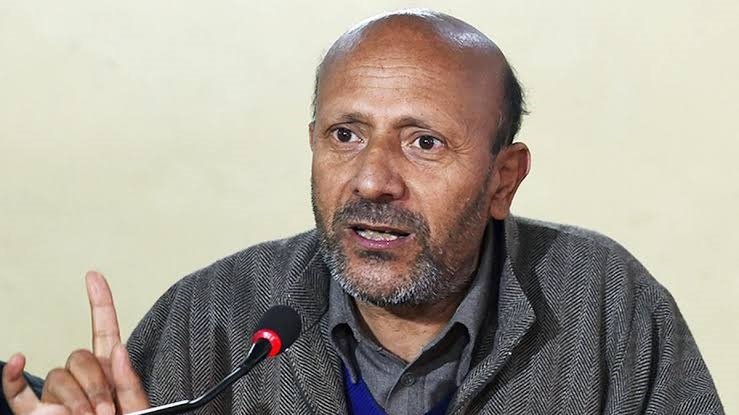
Baramulla Lok Sabha MP and Awami Ittehad Party (AIP) president Engineer Rashid, whose full name is Abdul Rashid Sheikh, has completed seven years in custody in a case investigated by the National Investigation Agency (NIA).
Marking the milestone, the AIP has appealed to Chief Justice of India Surya Kant for urgent consideration of Rashid’s bail plea, asking that the matter be dealt with with “compassion, urgency and constitutional fairness.”
The appeal places renewed focus on one of the most unusual political-legal situations in Jammu & Kashmir: a sitting Member of Parliament continuing to face prolonged incarceration while representing a constituency that elected him in the 2024 Lok Sabha election.
Rashid’s supporters argue that his prolonged detention has created a democratic representation problem. The prosecution, however, has opposed his release and raised concerns including the possibility of influencing witnesses.
Seven Years in Custody: Why August 9 Matters
Rashid was arrested by the NIA on August 9, 2019, just days after the Union Government announced the abrogation of Article 370 and the reorganisation of Jammu & Kashmir.
He has remained in custody in connection with the NIA’s terror-funding investigation, subject to limited periods of court-authorised release.
The seven-year milestone therefore falls on August 9, 2026, rather than August 5, the anniversary of the Article 370 decision.
The distinction is important because Rashid’s political and legal journey has been closely intertwined with the post-2019 political environment in Jammu & Kashmir.
AIP Appeals Directly to Chief Justice of India
The AIP used the completion of seven years in custody to renew its appeal for judicial intervention.
Party representatives urged CJI Surya Kant to ensure that Rashid’s bail plea receives timely consideration, framing the matter not merely as a legal dispute but as one involving constitutional liberty and democratic representation.
The party has argued that continued incarceration of an elected parliamentarian creates difficulties for his constituents and raises questions about how long an elected representative can remain physically absent from the institution to which he was elected.
The AIP has simultaneously reiterated its faith in the Constitution and the Supreme Court, stressing that its appeal is for timely adjudication rather than a departure from the judicial process.
The Legal Case Behind Rashid’s Incarceration
Rashid is facing proceedings arising from the NIA’s investigation into alleged terror funding.
It is important to distinguish between an allegation and a conviction: the charges against Rashid have not established his guilt merely because he has remained in custody.
His prolonged detention has nevertheless become a major political issue, particularly because of his status as an elected MP.
In an April 2026 order, the Delhi High Court noted that Rashid had been in custody for more than six years and eight months, apart from a 48-day period when he was out on interim bail. The court also noted that he had previously been permitted to attend Parliament sessions on custody parole.
Rashid’s Election Victory Changed the Political Equation
Perhaps the most striking development in Rashid’s case came in the 2024 Lok Sabha election.
Despite being in jail, Rashid contested the Baramulla parliamentary constituency and defeated National Conference vice-president Omar Abdullah by a substantial margin.
The result transformed Rashid from a jailed political leader into an elected Member of Parliament with a direct electoral mandate.
For the AIP, that victory demonstrated that his political influence had survived years of incarceration.
For his opponents, however, the election result did not alter the legal proceedings against him.
This tension—between an electoral mandate and an ongoing criminal prosecution—continues to define the political debate surrounding his imprisonment.
A Parliament Seat Without Its Elected Member
Rashid’s incarceration has also raised questions about parliamentary representation.
The AIP argues that Baramulla’s electorate effectively faces a representation gap because the MP chosen by voters cannot freely perform his parliamentary and constituency responsibilities.
Rashid has previously been allowed limited access to Parliament through custody parole.
In July 2025, for example, a Delhi court granted him custody parole to attend the Monsoon Session. His interim bail plea at that stage was rejected.
The courts have therefore attempted, in specific circumstances, to balance his parliamentary responsibilities with the requirements of the ongoing case.
Courts Have Granted Limited Interim Relief
Rashid has not remained continuously outside the judicial system without any relief.
In April 2026, the Delhi High Court granted him one week of interim bail to visit his ailing father, subject to stringent conditions, including police accompaniment.
Following his father’s death in May, the Delhi High Court again granted interim bail so that Rashid could attend the funeral and perform customary last rites. The relief was granted until June 2 and was subject to conditions including police escort.
These orders demonstrate that the courts have considered humanitarian and parliamentary circumstances in individual applications while the underlying case continues.
Why Bail Has Become the Central Question
The debate over Rashid’s detention is ultimately about the balance between several competing principles:
- The presumption of innocence until conviction.
- The seriousness of allegations under anti-terror legislation.
- The statutory restrictions governing bail under the UAPA.
- The constitutional protection of personal liberty.
- The need to avoid indefinite pre-trial incarceration.
- The democratic mandate attached to an elected public representative.
These considerations make Rashid’s case legally complex.
His supporters focus heavily on the duration of custody and his status as an elected MP. The prosecution has raised concerns about the potential impact of release on the trial, including the possibility of influencing witnesses.
The ultimate decision, however, rests with the competent court after considering the applicable law and facts of the case.
The Broader Kashmir Political Significance
Rashid’s case has significance well beyond the courtroom.
The AIP has increasingly used his incarceration and 2024 electoral victory as evidence of what it describes as continuing political alienation in parts of Kashmir.
His supporters portray him as a politician who secured a direct electoral mandate despite being imprisoned.
The National Conference and other mainstream parties, meanwhile, remain major competitors for political influence in north Kashmir.
Rashid’s continued absence from active political life therefore affects not only his party but also the competitive landscape of the Valley.
AIP Seeks to Turn Legal Delay Into a Political Issue
The AIP’s latest appeal deliberately combines two arguments: constitutional liberty and democratic representation.
The party is asking the judiciary to consider the length of Rashid’s incarceration while emphasizing that Baramulla voters elected him to Parliament.
This strategy allows the AIP to keep the case in public discussion without abandoning its stated reliance on constitutional institutions.
However, prolonged detention in a UAPA case cannot automatically be equated with a legal finding of guilt or innocence. Bail remains a judicial determination based on the statutory framework and circumstances before the court.
A Wider Debate Over Prolonged UAPA Detention
Rashid’s case also comes amid broader judicial debate over prolonged incarceration of accused persons under stringent anti-terror laws.
In July 2026, the Supreme Court granted bail to two UAPA accused who had spent nearly 12 years in custody, holding that exceptionally prolonged incarceration combined with little prospect of an early trial could implicate the fundamental right to personal liberty under Article 21.
That judgment does not automatically determine Rashid’s case—the facts, procedural history, allegations and stage of trial are different—but it adds context to the larger national discussion over prolonged pre-trial detention under special criminal statutes.
What the Seven-Year Milestone Means for J&K Politics
Rashid’s seven years in custody have become a political milestone because they coincide with several major transformations in Jammu & Kashmir.
He was arrested immediately after the 2019 constitutional changes.
Five years later, he won the Baramulla Lok Sabha election from prison.
Now, seven years after his arrest, his party is once again asking the country’s highest court for urgent consideration of his bail.
The sequence has given Rashid a political identity that extends beyond his party’s organisational strength.
The Road Ahead
The immediate focus will remain on the judicial process and the AIP’s demand for expeditious consideration of Rashid’s bail plea.
For the AIP, the objective is clear: keep the issue of its president’s incarceration firmly in the political and constitutional conversation.
For Baramulla’s electorate, the question is more practical—how effectively can an elected representative serve constituents while remaining in custody?
And for the judiciary, the case involves the difficult balance between the stringent requirements of UAPA proceedings, the integrity of the trial, and the constitutional principle of personal liberty.
Seven years after his arrest, Engineer Rashid’s case has therefore evolved into something larger than an individual bail dispute. It sits at the intersection of national-security law, constitutional liberty, electoral representation and Kashmir’s contested political landscape.
Whether the next chapter brings regular bail, further judicial restrictions, or continued incarceration, the case is likely to remain a significant political and legal flashpoint in Jammu & Kashmir.