Cockroach Janta Party seeks to turn ‘Kya Bolti Public’ into a grassroots political platform focused on everyday concerns
By News Desk | 06 Aug 2026
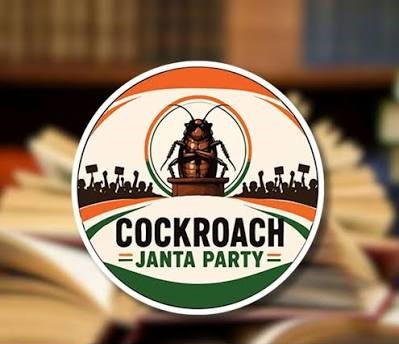
The Cockroach Janta Party (CJP) has unveiled a new mass-connect initiative, “Kya Bolti Public,” placing public concerns at the heart of its latest political campaign.
The campaign is built around four broad pillars—youth empowerment, governance accountability, social justice and economic relief—reflecting issues that directly affect students, job seekers, working families and communities seeking greater political representation.
The launch comes at a time when political parties are increasingly attempting to move beyond traditional rallies and election-season messaging by creating direct channels for public engagement.
For the CJP, Kya Bolti Public appears designed to turn that public engagement into a sustained political narrative.
Rather than focusing on a single issue, the campaign seeks to connect four major areas of public concern: education and employment, government accountability, social inclusion and household economic pressures.
What Is ‘Kya Bolti Public’?
The phrase Kya Bolti Public—roughly translating to “What does the public say?”—is central to the campaign’s political messaging.
Its symbolism is straightforward: instead of presenting politics as a conversation conducted only by leaders, the campaign seeks to place ordinary citizens at the centre of the discussion.
The CJP says the initiative will provide a platform through which people can raise concerns about education, employment, governance, social justice and the cost of living.
That approach could help the party build a broader identity around public participation rather than conventional political campaigning.
The four pillars provide the structure for that message.
1. Youth Empowerment: Putting Jobs and Education at the Centre
The first and potentially most politically significant pillar is youth empowerment.
For a country facing intense competition for government and private-sector jobs, education and employment remain among the strongest drivers of political sentiment among young people.
The CJP’s agenda focuses on:
- Employment opportunities.
- Education reforms.
- Student concerns.
- Skill development.
- Greater opportunities for young people.
- A stronger voice for students in policymaking.
The emphasis on youth also has a clear political dimension.
Young voters increasingly form an important constituency, but their concerns can extend well beyond traditional party politics. Employment prospects, examination systems, recruitment delays, educational costs and opportunities for professional growth can directly influence how young people perceive governments.
By making youth empowerment its first pillar, the CJP is attempting to connect political participation with these everyday concerns.
From Student Anger to Political Participation
The strategy could become particularly important if the party succeeds in converting student dissatisfaction into sustained civic and political engagement.
However, slogans alone are unlikely to be enough.
The real test will be whether Kya Bolti Public can translate demands into specific policy proposals—for example, recruitment reforms, examination transparency, vocational training, entrepreneurship support and mechanisms for student representation.
2. Governance Accountability: Making Government Promises Answerable
The second pillar focuses on governance accountability.
The CJP intends to highlight issues involving:
- Transparency.
- Corruption.
- Government promises.
- Public-service delivery.
- Administrative accountability.
- Implementation of development commitments.
This pillar positions the party as a potential political watchdog.
The central message is that governments should not be judged only by announcements but by whether those announcements actually reach citizens.
That distinction is increasingly important in modern political communication.
A road announcement, employment scheme or welfare programme may generate headlines, but voters ultimately judge governments on whether the promised benefit reaches the intended beneficiary.
The Accountability Challenge
For the CJP, the campaign could provide an opportunity to build a database of public grievances and use those complaints to question government departments.
But accountability campaigning also carries its own burden.
If a party promises to become the “voice of the people,” it must eventually demonstrate that it can provide evidence, documentation and workable alternatives, rather than simply criticising those in power.
3. Social Justice: Expanding the Political Conversation
The third pillar is social justice, with emphasis on equality, minority rights and inclusive policymaking.
This gives Kya Bolti Public a broader social dimension.
Rather than limiting its messaging to economic concerns, the CJP is seeking to address questions about whether different sections of society receive equal opportunities and representation.
The party’s stated focus includes:
- Equality before institutions.
- Minority rights.
- Social inclusion.
- Equal access to opportunities.
- Representation of marginalized communities.
The political importance of this pillar lies in its potential to broaden the campaign beyond a single demographic.
A campaign focused exclusively on students or employment could remain limited to particular constituencies. Social justice, by contrast, provides a framework through which the party can engage with a wider range of communities.
From Representation to Inclusion
The effectiveness of this pillar will depend on whether the CJP can move beyond broad political language.
Voters may increasingly expect measurable commitments: What does equal representation mean? Which institutional reforms are proposed? How will discrimination be addressed? What mechanisms would ensure that marginalized communities can access government programmes?
Those questions could determine whether the social justice agenda becomes a substantive policy platform or remains primarily campaign rhetoric.
4. Economic Relief: Taking on Inflation and Livelihood Pressures
The fourth pillar directly addresses the economic concerns affecting households.
The CJP has identified:
- Inflation.
- Wages.
- Employment.
- Livelihoods.
- Household financial pressures.
as key areas of concern.
Economic issues often have the strongest connection to everyday political sentiment because they are experienced at the household level.
When food prices rise, wages fail to keep pace or employment becomes uncertain, economic policy stops being an abstract political subject.
It becomes a family issue.
For the CJP, Kya Bolti Public could therefore use economic relief as a bridge between political messaging and everyday experiences.
The Cost-of-Living Test
The campaign’s economic credibility will ultimately depend on specificity.
Promises to reduce inflation or improve livelihoods can attract attention, but voters may ask:
How?
Will the party propose targeted subsidies, employment programmes, wage reforms, support for small businesses, tax changes or stronger price-monitoring mechanisms?
The more concrete the answers, the more seriously the economic pillar is likely to be received.
Why the Four Pillars Matter Politically
Taken together, the four pillars create a relatively broad political framework.
| Pillar | Core Focus | Potential Political Appeal |
|---|---|---|
| Youth Empowerment | Jobs, education, student concerns | Young voters |
| Governance Accountability | Transparency, corruption, delivery | Anti-incumbency voters |
| Social Justice | Equality, minority rights, inclusion | Marginalized communities |
| Economic Relief | Inflation, wages, livelihoods | Working and middle-class households |
The strategy effectively attempts to connect political dissatisfaction with everyday life.
That may be the central idea behind Kya Bolti Public.
Instead of asking citizens to engage with politics only during elections, the campaign seeks to create a continuing conversation around issues people encounter throughout the year.
‘Voice of the People’ Narrative Takes Shape
The name itself gives the campaign its strongest political symbolism.
Kya Bolti Public suggests a simple question: What are people actually saying?
That allows the CJP to frame itself as an intermediary between citizens and the political establishment.
The campaign could include public meetings, grassroots outreach, issue-based discussions and direct engagement with communities, although the effectiveness of those mechanisms will depend on how extensively they are implemented.
If successful, the campaign could help the party establish a political identity built around listening and responding.
But there is also a risk.
A campaign that promises to represent everyone’s voice can quickly face criticism if public grievances are collected but not translated into action.
CJP’s Attempt to Build a Broader Political Identity
The four-pillar agenda suggests that the CJP is seeking to move beyond issue-specific activism.
Youth issues provide the mobilisation base.
Governance accountability provides the political confrontation.
Social justice provides the ideological and social framework.
Economic relief connects the campaign to everyday household concerns.
Together, they offer the party a broader political narrative.
This could be particularly useful for a relatively young political organization attempting to establish recognition among voters.
The challenge, however, is converting message architecture into organizational strength.
A successful grassroots campaign requires local representatives, consistent communication, credible policy proposals and the ability to follow up on individual grievances.
The Opposition Strategy Behind the Campaign
Kya Bolti Public also has an obvious political dimension.
By focusing on problems rather than government achievements, the CJP can challenge official narratives about development, governance and stability.
The party can potentially use public grievances to ask:
- Are development promises being fulfilled?
- Are young people finding jobs?
- Are government services reaching citizens?
- Are marginalized communities receiving equal opportunities?
- Are wages keeping pace with living costs?
These questions can create political pressure without requiring the party to rely solely on traditional opposition rhetoric.
The campaign therefore has the potential to become both a public-engagement programme and an opposition communication strategy.
The Biggest Test: Turning Four Pillars Into Policy
The launch gives the CJP a clear political framework.
But political frameworks are only the beginning.
The next stage will be far more difficult: implementation.
For Kya Bolti Public to become a serious political platform, the CJP will need to demonstrate what it would actually do on each issue.
For example:
On Youth
Clear proposals on recruitment, education, skills and entrepreneurship.
On Governance
Mechanisms for transparency, public audits and monitoring government commitments.
On Social Justice
Specific policies addressing representation, equal opportunity and minority protections.
On Economy
Practical proposals addressing inflation, wages, employment and small-business livelihoods.
Without such details, critics could dismiss the campaign as another political slogan.
With them, it could develop into a more substantive policy platform.
Can ‘Kya Bolti Public’ Build a Sustained Grassroots Movement?
The answer will depend on execution.
The campaign has several elements that can help it gain traction:
A simple name: Easy to remember and directly connected to public sentiment.
Broad issues: Jobs, inflation, governance and social justice affect large sections of society.
Youth focus: Provides an opportunity to engage politically active younger citizens.
Grassroots orientation: Direct public interaction can generate local-level visibility.
But there are equally significant challenges.
A broad agenda can become too diffuse. Trying to represent everyone can make it difficult to establish a clear political identity.
The CJP will therefore have to balance breadth with specificity.
What Comes Next for CJP?
The launch of Kya Bolti Public marks the beginning rather than the conclusion of the campaign.
Its next phase is likely to determine whether the four pillars remain headline themes or develop into a sustained political programme.
The most important indicators to watch will be:
- How many communities the campaign reaches.
- Whether public grievances are systematically documented.
- Whether the CJP publishes concrete policy proposals.
- How the government responds to the party’s allegations.
- Whether youth participation translates into wider political mobilisation.
- Whether the campaign continues beyond the immediate news cycle.
If the party manages to build a functioning feedback loop—public complaint → documentation → political advocacy → policy demand → measurable outcome—the campaign could acquire greater political relevance.
Conclusion: From ‘What Does the Public Say?’ to ‘What Will Politics Do?’
The CJP’s Kya Bolti Public campaign attempts to put an uncomplicated question at the centre of its political strategy: What does the public actually want?
Its four pillars—youth empowerment, governance accountability, social justice and economic relief—cover some of the most politically sensitive concerns facing ordinary citizens.
But the real test begins after the launch.
People may be willing to speak. The harder question is whether political organisations can listen, organize those concerns and turn them into meaningful action.
For the CJP, Kya Bolti Public could become an effective grassroots platform if it succeeds in doing exactly that.
Ultimately, the campaign’s success will not be measured by how loudly the party asks “Kya bolti public?”
It will be measured by whether the public believes someone is actually listening.