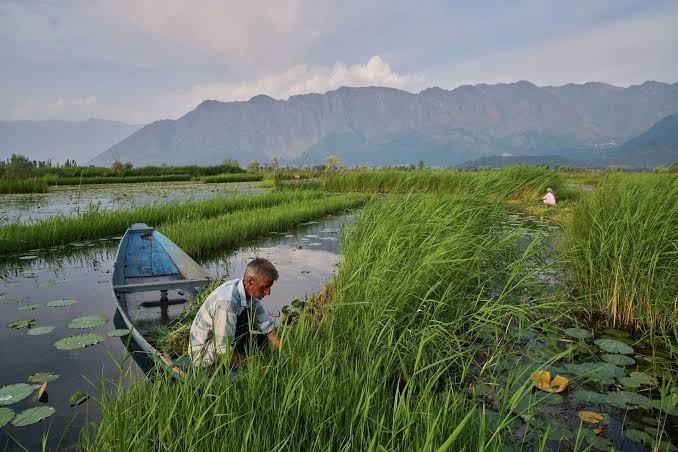
Kashmir’s Lakes in Crisis: Climate Change, Pollution and Encroachment Threaten Dal, Wular and Anchar
By: Javid Amin | 29 June 2026
Kashmir’s Lifeline Is Drying Up
Snow-capped mountains and shimmering lakes have long defined Kashmir’s identity. From the iconic shikaras gliding across Dal Lake to the vast waters of Wular—one of Asia’s largest freshwater lakes—and the ecologically significant Anchar Lake, these water bodies have shaped the Valley’s culture, economy and environment for centuries.
Today, however, these lakes are facing one of the greatest challenges in their history.
Climate change, untreated sewage, rapid urbanisation, encroachments and mounting tourism pressure are accelerating the degradation of Kashmir’s wetlands. Environmental scientists warn that unless restoration efforts become faster, stricter and more sustainable, these iconic lakes could lose much of their ecological function in the coming decades.
The crisis extends beyond shrinking water bodies. It threatens biodiversity, drinking water security, flood regulation, tourism, livelihoods and the cultural heritage that has made Kashmir famous across the world.
Climate Change Is Altering Kashmir’s Fragile Lake Ecosystem
The Himalayan region is warming faster than many other mountain ecosystems, and Kashmir’s lakes are already showing visible signs of stress.
Rising temperatures increase evaporation during summer months while reduced snowfall and changing rainfall patterns limit the amount of fresh water flowing into lakes through streams and wetlands.
Environmental researchers also point to shorter winters, erratic precipitation and declining snow reserves, all of which affect the natural hydrological cycle that sustains Kashmir’s lakes.
Lower water levels expose more shoreline, encourage weed growth and reduce the lakes’ ability to naturally dilute pollutants.
These changes create conditions that favour ecological imbalance and accelerate the degradation of freshwater ecosystems.
Dal Lake: Kashmir’s Crown Jewel Under Growing Pressure
Dal Lake remains the most recognised symbol of Kashmir’s tourism industry and cultural identity.
Spread across Srinagar, the lake supports thousands of residents, including houseboat owners, shikara operators, fishermen and communities cultivating floating vegetable gardens.
However, decades of environmental degradation have transformed the lake.
Historical records indicate that the larger Dal wetland system once extended to nearly 22 square kilometres. Today, the open water area is estimated at around 10 to 11 square kilometres, although exact measurements vary depending on seasonal water levels and survey methods.
Several factors are responsible for this decline.
Sewage Pollution
Large quantities of domestic wastewater continue to enter the lake despite improvements in sewage infrastructure. Nutrient-rich wastewater promotes excessive aquatic weed growth and algal blooms that reduce dissolved oxygen levels.
Encroachments
Illegal construction, land reclamation and gradual encroachment have reduced the lake’s natural boundaries over several decades.
Tourism Pressure
Millions of visitors contribute significantly to Kashmir’s economy, but increasing tourism also generates additional waste, plastic pollution and pressure on fragile ecosystems unless carefully managed.
Wular Lake Faces Siltation and Encroachment
Located in north Kashmir, Wular Lake plays a critical ecological role by regulating floods, storing water and supporting aquatic biodiversity.
The lake also provides livelihoods to thousands of fishing families.
Yet Wular has undergone dramatic changes.
Sediment carried by the Jhelum River and surrounding streams continues to accumulate within the lake basin. Combined with encroachments and conversion of wetlands into agricultural land, siltation has considerably reduced the lake’s effective water spread and storage capacity.
Experts warn that continued degradation could weaken Wular’s natural role in flood moderation, making downstream areas more vulnerable during periods of heavy rainfall.
Anchar Lake Reflects the Valley’s Urban Environmental Crisis
Anchar Lake, located on the outskirts of Srinagar, has become one of Kashmir’s most polluted lakes.
Rapid urban expansion around the lake has resulted in untreated sewage inflows, solid waste dumping and nutrient pollution.
In many areas, thick mats of weeds and algae now dominate the lake surface, reducing water quality and limiting aquatic life.
Environmentalists say Anchar represents what could happen to other lakes if pollution control measures fail to keep pace with urban growth.
Pollution Is Fueling an Ecological Imbalance
One of the biggest threats facing Kashmir’s lakes is eutrophication—a process in which excessive nutrients encourage rapid growth of algae and aquatic weeds.
Major pollution sources include:
- Untreated domestic sewage
- Fertiliser runoff from agricultural fields
- Solid waste disposal
- Plastic pollution
- Commercial waste from expanding settlements
When algae multiply rapidly, sunlight struggles to penetrate the water, affecting underwater vegetation. As algae die and decompose, oxygen levels decline, making survival difficult for fish and other aquatic organisms.
The result is a gradual collapse of ecological balance.
Biodiversity Is Declining
Kashmir’s lakes support numerous species of fish, birds and aquatic plants.
However, environmental degradation is reducing habitat quality.
Native fish populations are facing increasing stress from pollution, falling oxygen levels and habitat loss. Migratory birds that rely on wetlands during seasonal journeys are also affected as feeding and nesting grounds deteriorate.
The disappearance of aquatic vegetation further weakens the food chain, impacting insects, amphibians and waterfowl that depend on healthy wetland ecosystems.
Thousands of Livelihoods Hang in the Balance
The degradation of Kashmir’s lakes is also becoming an economic crisis.
Thousands of families rely directly on these water bodies for their income.
Among those most affected are:
Fishermen
Declining fish populations reduce daily catches and household earnings.
Floating Vegetable Growers
Farmers cultivating vegetables on floating gardens in Dal Lake face increasing challenges due to deteriorating water quality.
Shikara Operators
Changing visitor perceptions and environmental degradation affect tourism-dependent livelihoods.
Houseboat Owners
Houseboats remain an integral part of Kashmir’s tourism identity, but pollution and declining lake aesthetics threaten business sustainability.
For many communities, protecting the lakes is directly linked to protecting their future.
Tourism Faces a Long-Term Challenge
Dal Lake has traditionally served as the face of Kashmir tourism.
Clean water, scenic reflections and traditional shikaras have attracted visitors from across India and abroad.
However, increasing pollution, excessive weed growth and unpleasant odours in some areas risk damaging the Valley’s image if environmental conditions continue to deteriorate.
Tourism experts believe that preserving lake ecosystems is essential not only for environmental reasons but also for maintaining Kashmir’s competitiveness as a global tourism destination.
Restoration Efforts Are Showing Progress—but Challenges Remain
Authorities have launched several initiatives aimed at restoring Kashmir’s lakes, though experts say sustained implementation is critical.
Expansion of Sewage Treatment
New and upgraded sewage treatment plants are intended to reduce the discharge of untreated wastewater into Dal and adjoining water bodies.
Mechanical De-Weeding
Specialised machines are regularly deployed to remove excessive aquatic weeds and improve water circulation.
Wetland Restoration
Conservation programmes seek to revive marshes and buffer zones that naturally filter pollutants before they enter lakes.
Community Participation
Resident groups, educational institutions and environmental organisations are increasingly organising lake-cleaning campaigns and awareness drives encouraging responsible waste disposal and reduced plastic use.
Government Conservation Projects
The Lakes Conservation and Management Authority (LCMA)—which succeeded the former Lakes and Waterways Development Authority (LAWDA)—continues to oversee lake conservation, encroachment removal and infrastructure improvements around Dal and Nigeen lakes. Wular restoration is also supported through dedicated wetland conservation programmes involving multiple government agencies.
What More Needs to Be Done?
Environmental experts suggest that restoring Kashmir’s lakes requires long-term planning rather than isolated clean-up campaigns.
Key priorities include:
- Preventing untreated sewage from entering lakes.
- Strict enforcement against illegal encroachments.
- Restoring wetlands that naturally filter pollutants.
- Promoting sustainable tourism with stronger waste management.
- Encouraging climate-resilient urban planning.
- Expanding scientific monitoring using satellite imagery and water-quality assessments.
- Increasing community participation in lake conservation.
Snapshot: Why Kashmir’s Lakes Are Under Threat
| Challenge | Current Situation | Impact |
|---|---|---|
| Climate Change | Higher temperatures, reduced snowmelt, erratic rainfall | Lower water levels and ecosystem stress |
| Pollution | Sewage, fertiliser runoff, plastic waste | Algal blooms, declining water quality |
| Urban Expansion | Encroachments and illegal construction | Shrinking lake boundaries |
| Siltation | Sediment accumulation, especially in Wular | Reduced water storage capacity |
| Tourism Pressure | Increased waste and infrastructure demand | Ecological degradation if unmanaged |
A Defining Test for Kashmir’s Environmental Future
Kashmir’s lakes are far more than tourist attractions. They regulate floods, recharge groundwater, sustain biodiversity, support thousands of livelihoods and preserve centuries of cultural heritage.
Their decline is a warning that environmental degradation, climate change and unplanned development are converging to reshape one of the Himalayas’ most fragile ecosystems.
The coming decade will be decisive. Stronger pollution control, scientific wetland restoration, climate adaptation and responsible urban planning can still reverse much of the damage. But delaying action could mean losing not only the ecological richness of Dal, Wular and Anchar, but also an irreplaceable part of Kashmir’s identity.
Protecting these lakes is no longer just an environmental responsibility—it is essential for safeguarding the Valley’s economy, culture and future generations.

