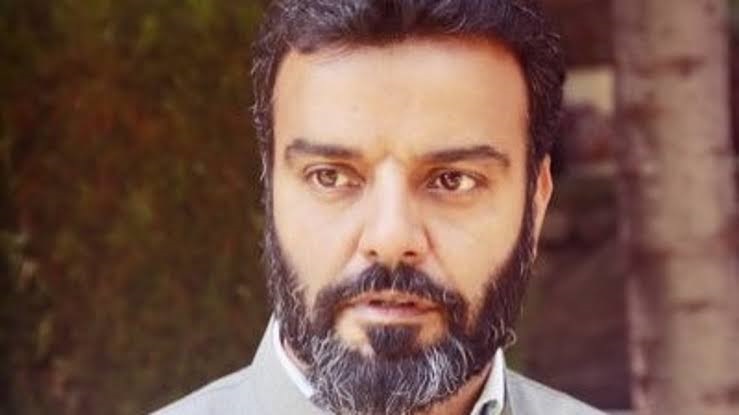
The Ground Reality Behind His Exit, Kashmir’s History of Political Rebellion and the Battle to Build a New Political Constituency
By: Javid Amin | 01 November 2026
The central question is not simply whether Aga Syed Ruhullah Mehdi can survive outside the National Conference. It is whether he can turn his public disagreement with the party into a political movement with an organisation, a constituency and a credible long-term programme.
At first glance, Ruhullah’s proposed departure looks like a dramatic confrontation between an individual leader and one of Kashmir’s oldest political organisations. But the deeper story is about something larger: the gap between electoral promises and the limits of governance after the abrogation of Article 370, the changing expectations of Kashmir’s younger voters, and the search for political leadership beyond established party structures.
There is, however, an important distinction to maintain throughout this analysis: public support for Ruhullah’s position is not the same as a mandate for a new party, and dissatisfaction within the NC is not proof that its legislators are preparing to join him.
That distinction matters because Kashmir’s political history offers examples of leaders who successfully built alternatives to established parties, but also of prominent figures whose personal stature failed to translate into electoral strength.
Research cut-off: November 1, 2026. Ruhullah has announced that he intends to resign from the National Conference and the Lok Sabha on November 3. This article therefore assesses his announced decision and the political circumstances surrounding it; it does not treat the resignation as already completed.
The resignation is about more than a party disagreement
Ruhullah’s confrontation with the NC has developed over several years. It did not begin with the latest cabinet reshuffle, nor can it be explained entirely by the allocation of ministerial positions.
His disagreements became increasingly visible after the 2024 Assembly elections, when the NC returned to power on a political programme that included the demand for restoration of Article 370, statehood, employment and other commitments. Ruhullah has repeatedly accused the leadership of moving away from the political promises on which it sought public support.
The disagreement became particularly sharp over the difference between demanding restoration of statehood and continuing to pursue the restoration of Article 370. In August 2026, he wrote to NC president Farooq Abdullah, arguing that treating statehood as the outer limit of J&K’s political aspirations risked normalising the constitutional changes made in August 2019. He also questioned the party’s commitment to constitutional protections and political rights.
His latest announcement is therefore the culmination of an extended political dispute.
On October 31, Ruhullah reiterated that he would resign on November 3, accusing the party leadership of abandoning commitments concerning Article 370, constitutional rights, reservation policy and the release of prisoners. He also made an important distinction: he said his struggle should not be confused with the dissatisfaction among some NC legislators over ministerial positions and internal appointments.
That statement deserves particular attention.
It means that, although Ruhullah’s confrontation and the current NC legislators’ discontent are unfolding at the same time, they should not automatically be treated as one political movement.
Ruhullah is presenting his departure as an ideological protest. The legislators’ memorandum, by contrast, contains a combination of political demands, organisational grievances and complaints about the distribution of power.
The two could eventually overlap, but there is no verified evidence that they have already merged into a common political platform.
What is actually happening inside the National Conference?
The latest internal developments have added another layer to the crisis.
Reports published on October 31 said that a group of legislators had prepared a memorandum after a meeting at the residence of Lolab MLA Qaiser Jamsheed Lone. According to a legislator quoted by Daily Excelsior, 18 legislators signed the memorandum, while six others participated virtually or extended support.
This is an important factual distinction. The figure of 24 refers to the broader group associated with the memorandum; it does not establish that all 24 legislators physically attended the meeting.
The reported demands include:
-
A comprehensive cabinet restructuring.
-
Replacement of ministers who have completed two years in office.
-
Removal of Chief Minister Omar Abdullah’s adviser, Nasir Aslam Wani.
-
Stronger efforts for restoration of statehood and special status.
-
Time-bound implementation of the NC’s 2024 election manifesto.
-
Restructuring of the party organisation.
The memorandum is significant because its demands extend beyond ministerial berths. It also raises questions about the party’s political direction and the pace at which it is pursuing its electoral commitments.
However, the leadership has rejected the description of a revolt. NC provincial president Showkat Ahmad Mir has characterised the meeting as an informal gathering and dismissed claims that the government is facing an imminent change. The party has acknowledged dissatisfaction among some legislators but has not accepted that the developments amount to a rebellion capable of bringing down the government.
There is another important point: reports of a fixed 15-day ultimatum should be treated cautiously. The latest Daily Excelsior account says the legislators were seeking an appointment with Farooq Abdullah and that no date had been fixed for the meeting. It reports that the question of mass resignations could be considered if their demands were not addressed, but does not establish a formally agreed deadline.
Why this matters for Ruhullah
The NC’s internal discontent creates an opportunity for a leader challenging the party’s direction. But it does not automatically create a support base for that leader.
An MLA unhappy about being denied a ministerial berth may still prefer to remain within the NC. A legislator demanding a stronger position on Article 370 may share part of Ruhullah’s political argument but disagree with his decision to resign. Another may simply want greater access to the chief minister.
These are different motivations.
The real test will be whether any of these legislators publicly adopt Ruhullah’s political programme and are willing to accept the consequences of doing so. Until that happens, describing the group as a Ruhullah-led faction would go beyond the available evidence.
Ruhullah’s electoral strength: A serious asset, but not a ready-made party
One reason Ruhullah cannot be dismissed as an ordinary dissident is his electoral performance.
In the 2024 Lok Sabha election, he won the Srinagar parliamentary constituency with 356,866 votes, defeating PDP candidate Waheed Ur Rehman Para by 188,416 votes. He secured approximately 52.9 per cent of the votes polled. The reported turnout was 38.6 per cent.
That was a decisive victory.
It established him as a major political figure in the Srinagar parliamentary constituency and gave him a platform beyond the traditional internal hierarchy of the NC.
But there is a qualification that should not be overlooked.
He contested on the National Conference ticket. The election result reflects the combined strength of his personal appeal, the NC’s organisational machinery, its established voter base and the political circumstances of the 2024 election.
It would be inaccurate to assume that all 356,866 voters would automatically support him if he contested under a new party or as an Independent.
This is the central electoral question facing Ruhullah.
Can he carry the voters who supported him as an NC candidate into a new political arrangement?
The answer cannot be established through social-media reactions, public meetings or the number of people expressing solidarity. It will require an electoral test.
There is nevertheless a strong starting point: Ruhullah has already demonstrated that he can attract a substantial vote in a major parliamentary constituency. Most aspiring regional leaders begin without that level of electoral recognition.
His challenge is to turn that recognition into an independent political identity.
Kashmir’s political history: Five models of rebellion and reinvention
The most useful way to assess Ruhullah’s future is not to compare him with one politician alone. Kashmir has seen several attempts to create alternatives to established political parties. Some succeeded, some survived without achieving dominance, and others failed to convert initial enthusiasm into electoral strength.
The historical record offers valuable lessons, but it does not produce a reliable numerical success rate. Claims that a fixed percentage of political rebels disappear or become influential are analytical guesses, not official statistics.
1. Mufti Mohammad Sayeed: The successful alternative-builder
The strongest example of a successful political alternative in modern J&K.
Mufti Mohammad Sayeed’s political journey is often cited as the clearest example of a leader breaking away from an established party and building a successful regional alternative.
He had a long political career before launching the People’s Democratic Party in July 1999. He had served in Congress, held ministerial positions at the national level and was Union Home Minister in the V.P. Singh government.
His departure from Congress and the formation of the PDP were not the actions of a newcomer entering politics. He brought decades of political experience, contacts across party lines and a deep understanding of the region’s political landscape.
The PDP did not become a ruling party overnight.
In the 2002 Assembly election, it won 16 seats. Congress won 20, and the two parties formed a coalition government. Mufti became Chief Minister under a power-sharing arrangement. The PDP later increased its Assembly tally to 21 in 2008 and emerged as a major political force in the 2014 elections, eventually forming a coalition government with the BJP in 2015.
What made the Mufti model work?
There were several ingredients:
-
A distinct political narrative.
-
An established leadership network.
-
Experienced political figures who joined the new party.
-
A regional constituency looking for an alternative to the NC.
-
The ability to negotiate with other parties and convert electoral gains into government formation.
Mufti also understood that a regional party needed to address more than one political constituency. The PDP attempted to combine a distinctive Kashmir narrative with a broader programme of regional representation and engagement with New Delhi.
The lesson for Ruhullah is straightforward.
A political alternative needs more than a powerful argument against the existing party. It needs people, structures and a strategy for translating public sentiment into votes.
There is also a crucial difference between the two leaders. Mufti had spent decades building relationships and political networks before the PDP was launched. Ruhullah has significant public recognition, but there is no evidence yet of an independent organisational network comparable to the one Mufti assembled.
The Mufti comparison therefore offers a possible route, not proof that Ruhullah can repeat it.
2. Ghulam Nabi Azad: The warning about personal stature
The clearest recent warning against confusing a prominent leader with a strong political organisation.
Ghulam Nabi Azad’s experience with the Democratic Progressive Azad Party (DPAP) is perhaps the most relevant cautionary example for Ruhullah.
Azad left the Congress in 2022 after a long national political career. He had served as Union minister, Chief Minister of the erstwhile state of Jammu and Kashmir and a senior figure in national politics.
His departure initially generated considerable attention. Several leaders joined his new organisation, and there was speculation that his personal standing could reshape the political landscape.
The electoral results told a different story.
In the 2024 Assembly elections, DPAP contested 23 constituencies but failed to win a single seat. Its candidates struggled to establish a statewide presence, while several prominent leaders who had initially joined the party had already departed. The Indian Express reported that the party’s average vote share across the constituencies it contested was 5.34 per cent.
Azad’s experience exposed a basic weakness in breakaway politics: a leader may command respect, attract media attention and possess decades of political experience, yet still struggle to mobilise voters without a functioning organisation.
Why this comparison matters
Ruhullah and Azad are not identical cases.
Azad entered the political contest with enormous administrative experience and national visibility. Ruhullah’s appeal is more closely associated with his political position on Article 370, constitutional rights and the direction of mainstream politics in Kashmir.
But the organisational challenge is similar.
A new political platform needs more than a recognisable face. It requires candidates who can win locally, workers who can mobilise voters, and a structure that remains active between elections.
Azad’s experience shows that political stature cannot substitute for electoral machinery.
3. Altaf Bukhari: The governance-first alternative
A different model of political positioning after August 2019.
Altaf Bukhari launched the Apni Party in March 2020, months after the abrogation of Article 370 and the reorganisation of the former state.
The party brought together former legislators and political figures, many of whom had previously been associated with the PDP, Congress and other mainstream formations. Its initial emphasis was on governance, economic issues, restoration of statehood and engagement with New Delhi.
Its approach differed from the more confrontational political language associated with the NC and PDP.
The party sought to project itself as a practical alternative, arguing that political engagement with the Centre was necessary to protect local interests and secure administrative and economic benefits.
However, it faced a serious credibility problem in the Valley. Critics associated it with the BJP, a perception that the party itself later tried to counter. Its electoral performance remained weak, and it failed to establish itself as a replacement for the NC or PDP.
The lesson for Ruhullah
Bukhari’s experience demonstrates that organisational expansion alone is not enough.
A party may attract former legislators, former ministers and politically experienced figures. But if voters do not believe in its political independence or ideological credibility, its electoral prospects can remain limited.
For Ruhullah, the reverse challenge may arise.
He may have a strong political position that resonates with a section of the electorate, but he must demonstrate that his proposed alternative can also deliver on governance, employment, education, economic development and everyday public concerns.
A movement built only around constitutional questions may struggle to become a complete electoral alternative unless it also develops a credible governance agenda.
4. Sajjad Lone: Surviving as a regional political pole
An example of political survival without statewide dominance.
The People’s Conference offers another useful comparison, but it needs to be understood correctly.
The organisation did not begin with Sajjad Lone as a new political entrant. It has roots in the political career of his father, Abdul Gani Lone. Sajjad inherited an existing political legacy and organisational identity, even as the party’s strategy and public positioning changed over time.
The party has survived major political transitions and maintained pockets of influence, particularly in parts of north Kashmir.
In the 2024 Assembly election, Sajjad Lone won Handwara for the People’s Conference. The contest was extremely close: he defeated the NC candidate by just 662 votes. The party won one seat in the 90-member Assembly.
That result illustrates both the strength and limitation of the People’s Conference model.
It has maintained political relevance and can influence electoral calculations. But it has not displaced the NC or PDP as a major Valley-wide political force.
The lesson for Ruhullah
There is a realistic political future between becoming Chief Minister and disappearing from public life.
A leader can remain influential, shape political debate, build a concentrated regional support base and become relevant in coalition discussions without commanding a statewide majority.
That may be a more realistic early objective for Ruhullah than immediately attempting to replace the NC.
5. The failed breakaway model: When the movement never becomes an organisation
Kashmir’s political history also includes leaders who left established parties, launched platforms or attempted to build alternative groups but failed to sustain them.
Their stories are different, but a common problem appears repeatedly: the absence of organisational depth.
A new political formation requires:
-
A leadership team with credibility beyond one individual.
-
District and constituency-level structures.
-
Local candidates with public acceptance.
-
A clear political programme.
-
A system for funding and campaign management.
-
The ability to remain active between elections.
Without these, a political movement can become dependent on one leader’s public appearances and media coverage.
That creates a serious vulnerability. Once the initial excitement fades, the organisation has little capacity to maintain its presence.
This is the danger Ruhullah must avoid.
The constitutional question: Article 370 and statehood are not interchangeable
One of the most important parts of Ruhullah’s argument concerns the difference between restoration of statehood and restoration of Article 370.
These are related political issues, but they are not the same constitutional demand.
In December 2023, the Supreme Court upheld the Union government’s decision to abrogate Article 370. It also recorded the Centre’s assurance that statehood would be restored and directed that restoration take place at the earliest and as soon as possible.
That ruling fundamentally changed the political and legal environment in which the NC government operates.
The elected government in J&K can advocate for restoration of constitutional protections, raise political demands, pass resolutions within its legislative competence and press the Centre through democratic channels. But it cannot independently reverse the Supreme Court’s judgment or restore Article 370 through a decision of the Union Territory’s Council of Ministers.
This is why the distinction matters.
Restoration of statehood is a demand concerning the constitutional and administrative status of Jammu and Kashmir within the Indian Union. Restoration of Article 370 concerns the special constitutional arrangement that the Supreme Court has held was validly abrogated.
For Ruhullah, the concern appears to be that the NC may gradually reduce its political ambition to statehood restoration while failing to sustain a serious campaign on Article 370 and other constitutional issues.
For the NC leadership, the argument may be that statehood is an achievable and immediate political objective, while restoration of Article 370 faces a different legal and political reality.
Both positions reflect a genuine strategic disagreement.
But this disagreement also creates a political opening.
If a section of the electorate believes that mainstream parties have accepted the post-2019 constitutional settlement too readily, a leader who continues to challenge that position may attract support.
The difficult question is whether that support is broad enough to sustain a political organisation.
What is Ruhullah actually betting on?
His political wager appears to have four major components.
1. The ideological constituency
Ruhullah is attempting to occupy political space among voters who believe that the NC has not pursued its 2024 commitments with sufficient determination.
His message is not simply that the government has failed to deliver on development or employment.
It is that the party sought public support on constitutional and political promises but has subsequently failed to maintain the same level of commitment.
That is a more fundamental challenge to the party’s credibility.
If he can convince voters that his departure is rooted in principle rather than personal ambition, he may establish an independent political identity.
However, there is a danger: the political constituency that agrees with him on Article 370 may not necessarily agree with him on every other issue, nor may it be ready to support a new party.
2. The post-2019 generation
A major part of Ruhullah’s potential appeal lies in younger voters who have grown up politically in the period after August 2019.
Their expectations may differ from those of older generations who experienced the political competition between the NC, PDP and Congress over several decades.
Issues that could shape their political choices include:
-
Constitutional identity and political representation.
-
Employment and recruitment transparency.
-
Education and economic opportunities.
-
Reservation policy.
-
Statehood and democratic accountability.
-
The credibility of elected representatives.
Ruhullah may be able to connect these issues into a broader political narrative.
But it would be premature to describe him as the established representative of Kashmir’s youth. That claim requires evidence from sustained grassroots engagement, voter surveys and electoral performance.
Online popularity is not a substitute for a district-level political network.
3. Discontent within the NC
The internal memorandum by NC legislators is another possible opening.
A party facing organisational dissatisfaction may struggle to maintain a unified political message. If disagreements continue, leaders who feel marginalised may begin looking for alternative platforms.
Yet the interests of the disgruntled legislators are not necessarily identical to Ruhullah’s.
Some are reportedly seeking cabinet changes and greater access to the leadership. Ruhullah has publicly criticised the focus on positions and said his fight is about political commitments.
That difference could become a major obstacle to any future alliance between them.
A common opponent does not automatically create a common political programme.
4. The post-Abdullah leadership question
The NC has a long political history and remains closely associated with the Abdullah family.
The question of future leadership is therefore unavoidable.
But it would be simplistic to assume that the departure of Ruhullah, or the dissatisfaction of a group of MLAs, automatically creates a succession contest.
Omar Abdullah remains the chief minister and the party’s principal executive face. Farooq Abdullah continues to occupy a central organisational position.
Ruhullah’s political future will depend on whether he can establish himself as an alternative centre of influence, not merely on whether the NC experiences internal disagreements.
The risk-opportunity matrix: Where does Ruhullah stand?
The following assessment is qualitative. It is based on his public position, the current NC situation and the historical performance of political alternatives in J&K. It is not a statistical forecast.
| Political route | Opportunity | Principal risk | Ground assessment |
|---|---|---|---|
| Reconciliation with NC | Retains access to the party’s established political network | Could be seen as retreating from his public stand | Possible, but his latest statements make an immediate return difficult |
| Independent pressure politics | Maintains visibility and ideological credibility | Influence may not translate into electoral power | Most plausible immediate route if he proceeds with resignation |
| Formation of a new party | Could occupy political space left by dissatisfied voters | Building an organisation across J&K is difficult | Ambitious medium-term possibility |
| Issue-based regional movement | Can mobilise around Article 370, statehood and political rights | Public mobilisation may not produce election victories | Possible if sustained beyond public meetings |
| Alliance with an existing party | Provides organisational support and candidates | May damage his independent political credibility | No verified agreement or negotiation at present |
| Political isolation | Preserves his freedom to criticise established parties | Risks loss of parliamentary platform and electoral influence | A serious risk if no organisational structure emerges |
SWOT analysis: Ruhullah’s political position
Strengths
-
A decisive 2024 Lok Sabha victory.
-
Strong public recognition in the Valley.
-
A clearly articulated position on Article 370 and constitutional rights.
-
An independent public identity within the NC’s political ecosystem.
-
Ability to attract attention to issues that may otherwise receive limited political focus.
Weaknesses
-
No publicly demonstrated independent party organisation.
-
No established district-wide cadre network under his own leadership.
-
His parliamentary victory was secured on an NC ticket.
-
His support may be stronger in some constituencies than across the entire Union Territory.
-
No demonstrated independent funding or candidate-selection structure.
Opportunities
-
Dissatisfaction among voters who feel the NC has diluted its political commitments.
-
Discontent within the ruling party.
-
A potential constituency among younger voters.
-
Continued political debate over statehood and constitutional rights.
-
The possibility of building an issue-based platform before creating a full political party.
Threats
-
The NC’s established organisational strength.
-
The possibility that internal dissent will be contained through accommodation.
-
Fragmentation among leaders who agree on grievances but differ on strategy.
-
A loss of visibility after leaving Parliament.
-
The risk that political mobilisation will not translate into votes.
The most important immediate decision: Is Ruhullah willing to surrender his parliamentary platform?
Ruhullah’s proposed resignation from the Lok Sabha is arguably the most consequential part of his announcement.
His 2024 victory gave him a national platform and a substantial electoral mandate. Resigning from Parliament would mean voluntarily giving up an institutional position from which he can raise J&K’s political concerns, question the government and remain visible in national debates.
It is also a significant political signal.
By saying that he will not continue representing the constituency under a party symbol whose leadership he believes has abandoned its promises, Ruhullah is attempting to frame his resignation as an act of political accountability.
But the move carries a practical cost.
A public declaration of resignation is not, by itself, the formal completion of the process. The resignation must be submitted through the prescribed parliamentary procedure, and the Speaker must satisfy himself that it is voluntary and genuine before accepting it.
If accepted, the Srinagar parliamentary constituency would face a vacancy and the subsequent electoral process would determine its next representative.
This raises a difficult question: will Ruhullah be able to retain his political relevance without the parliamentary platform that helped amplify his voice?
His planned public address at Behisht-e-Zehra Park in Budgam on November 3 will be an important early indicator of the political direction he intends to take.
Can Ruhullah become Chief Minister one day?
Theoretically, yes. But the route is much more complicated than leaving the NC and attracting public support.
To become Chief Minister, Ruhullah would need to establish a political base capable of winning Assembly seats or become part of a coalition with sufficient legislative strength.
He would also have to enter the J&K Legislative Assembly within the constitutional timeframe applicable to a minister who is not already a member of the legislature.
There are several possible routes:
-
Form a political party and contest Assembly elections.
-
Build a regional political platform and negotiate an alliance.
-
Become a leading figure in a broader coalition of parties.
-
Establish a strong enough independent legislative presence to influence government formation.
Every route requires organisation and electoral support.
His 2024 Lok Sabha victory is a significant achievement, but parliamentary and Assembly elections are different contests. A parliamentary constituency covers a much larger area, while Assembly elections depend heavily on local leadership, constituency-level networks and candidate credibility.
Winning Srinagar by a large margin does not automatically establish a statewide political base.
Ruhullah’s first realistic objective should be to become an independent political force. The chief ministership is a much later question.
Is a BJP alliance or another political arrangement possible?
Political alliances in Jammu and Kashmir have repeatedly crossed old ideological boundaries. The PDP-BJP coalition formed in 2015 remains one of the most striking examples of parties with sharply different political positions coming together to form a government.
That history makes it impossible to rule out every future political realignment.
But there is a difference between saying something is theoretically possible and claiming that it is happening.
As of November 1, there is no verified evidence that Ruhullah is negotiating with the BJP, preparing to join a BJP-backed formation or planning to enter a coalition with the party.
In fact, his latest public position does not support such a conclusion. He has criticised the NC leadership over its approach to Article 370 and constitutional rights, and he has also opposed attempts to bring down the elected government through horse-trading. He has said the NC government should complete its five-year term.
An alliance with the BJP would therefore carry a substantial political credibility cost for him among voters who support his current ideological position.
It would require a major explanation of how such an arrangement fits into his stated political programme.
The same principle applies to any alliance with another existing party: it may provide organisational strength, but it could also weaken the independent identity he is attempting to establish.
The hidden question: Could NC’s internal dissent and Ruhullah’s politics eventually converge?
This is perhaps the most important possibility to watch.
The NC’s internal discontent and Ruhullah’s ideological challenge are currently separate developments. Yet both expose weaknesses in the party’s political management.
The legislators’ memorandum raises questions about cabinet performance, organisational control, the role of advisers and implementation of the manifesto.
Ruhullah’s criticism is more fundamental. He is questioning whether the party remains committed to the political promises that helped it return to power.
If these two streams ever converge, the NC could face a challenge that goes beyond a cabinet reshuffle.
But such a convergence would require several developments:
-
A group of legislators openly aligning with Ruhullah’s political programme.
-
Agreement on a common position on Article 370, statehood and governance.
-
The emergence of leadership beyond one individual.
-
A shared strategy for elections and political mobilisation.
-
A willingness among dissatisfied NC leaders to leave the organisational security of the party.
At present, no such organised formation has been publicly established.
It is also worth noting that NC appears to be attempting to manage the impending parliamentary vacancy and its internal discontent through organisational accommodation. Greater Kashmir reported on November 1 that the party had offered the Srinagar-Budgam parliamentary constituency to several senior leaders, including Abdul Rahim Rather, Mubarak Gul and Hasnain Masoodi. The report, based on sources and a confirmation from Hasnain Masoodi’s son, suggests the leadership is considering ways to manage the vacancy and contain dissatisfaction. It does not establish that a final candidate has been selected.
This is an important counterpoint to the idea that the NC is simply losing control.
The party still has political resources, senior leaders and an organisational network. Its ability to accommodate competing interests should not be underestimated.
What should we watch over the next six months?
The next phase will tell us considerably more than the current political statements.
| Indicator | Why it matters |
|---|---|
| Formal resignation from the Lok Sabha and NC | Establishes whether the announced break is completed |
| The November 3 public gathering | Offers the first indication of the scale and nature of his post-NC political mobilisation |
| Formation of a core political team | Shows whether he is moving beyond individual activism |
| Support from sitting NC legislators | Could turn an individual challenge into a wider political realignment |
| District-level meetings and organisational appointments | Demonstrates whether a genuine political structure is emerging |
| A clear programme on jobs, education, reservation and governance | Tests whether his politics can extend beyond constitutional questions |
| Performance in any future electoral contest | Provides the clearest evidence of independent voter support |
The most important measure will not be the size of a single public meeting.
It will be whether Ruhullah can maintain a political presence in constituencies where he does not already enjoy a strong personal following.
A leader who can mobilise supporters in Budgam or Srinagar but cannot build a network in other districts may remain an influential regional voice without becoming a statewide political alternative.
Final ground assessment: Political suicide or calculated gamble?
Ruhullah’s proposed departure is not necessarily political suicide. But neither is it proof that a new political force is about to emerge in Kashmir.
His strengths are real: a decisive parliamentary victory, a strong public profile and a political position that has kept the question of Article 370 and the NC’s electoral commitments at the centre of public debate.
His weaknesses are equally real: no demonstrated independent party structure, no established district-level organisation and no confirmed group of legislators committed to joining him.
The historical comparisons point in different directions.
-
Mufti Mohammad Sayeed shows that a breakaway leader can build a successful regional party, but only through organisation, political timing and years of groundwork.
-
Ghulam Nabi Azad demonstrates that enormous personal stature cannot guarantee electoral success.
-
Altaf Bukhari shows that organisational expansion without sufficient public credibility can produce limited electoral returns.
-
Sajjad Lone demonstrates that a leader can remain relevant for years without achieving statewide dominance.
Ruhullah’s position today contains elements of all four experiences, but he has not yet replicated the organisational model of any successful alternative-builder.
The most plausible immediate outcome, if he proceeds with his announced resignation, is an independent political phase in which he continues to challenge the NC’s ideological direction and attempts to build a wider constituency.
A new political party may follow, but announcing one before establishing a core team, district-level organisation and a detailed programme would be premature.
Reconciliation with the NC cannot be ruled out in the long term, although his latest statements suggest that the differences have become deeper than a disagreement over positions or cabinet representation.
The real verdict
Ruhullah is betting that political credibility can become more valuable than the organisational protection of an established party.
That is a bold proposition in Kashmir’s political environment.
But the decisive test will come when the public attention surrounding his resignation begins to fade. Will supporters continue to attend meetings? Will local leaders join him? Will younger voters organise around his programme? Will he be able to offer a credible political and governance alternative?
If the answers are yes, he could become an important independent pole in the next phase of J&K politics.
If not, he may remain an influential voice whose political reach is greater in public debate than in electoral contests.
The most important question is therefore not whether Ruhullah can challenge the Abdullah leadership.
It is whether he can build something that survives beyond his own political personality.
In Kashmir, challenging an established party is difficult. Replacing its organisation is considerably harder.


