Mirwaiz Calls Eviction Notice to Delhi’s Historic Race Course Mosque ‘Deeply Disturbing’
By: News Desk | 20 October 2026
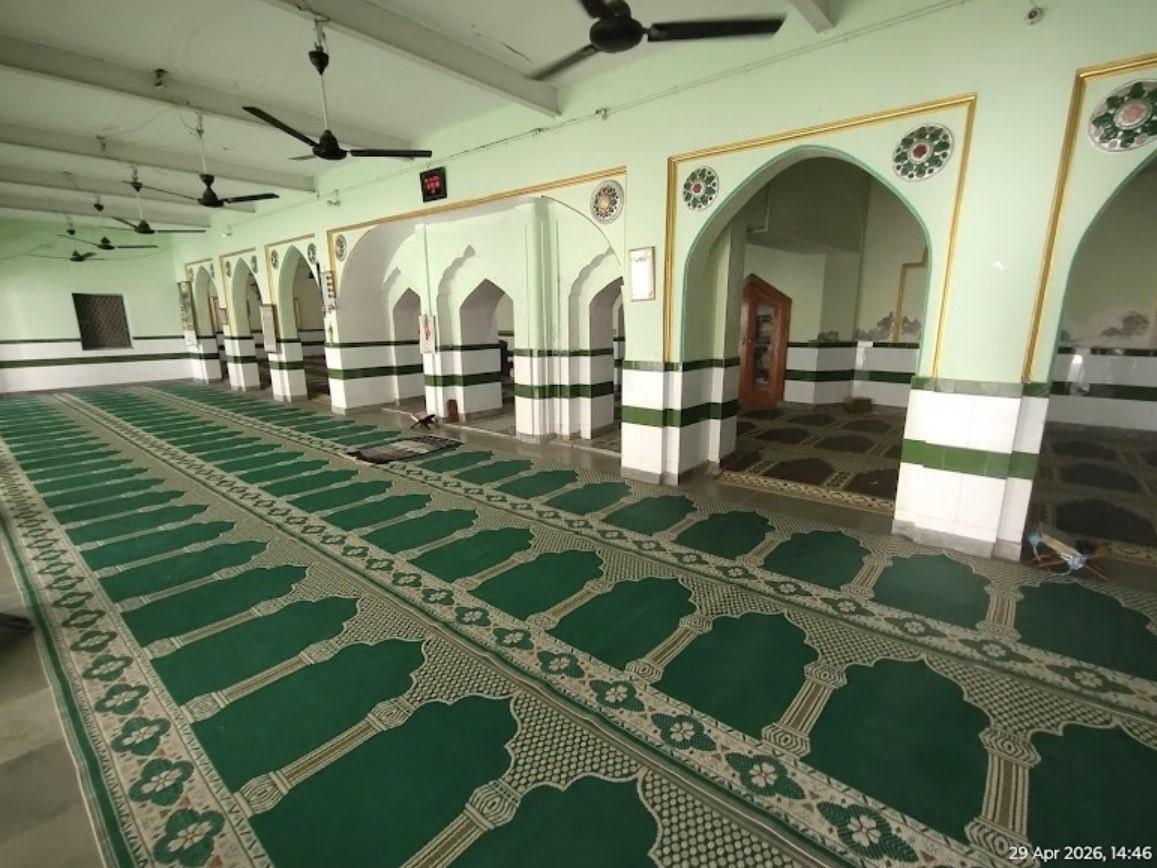
Srinagar/New Delhi: A reported six-day eviction notice to Delhi’s historic Race Course Mosque has triggered concern among religious leaders in Kashmir and renewed debate over the protection of Muslim religious properties, the administration of Waqf assets and the preservation of heritage sites.
Mirwaiz Umar Farooq, Kashmir’s chief cleric, has described the development as “deeply disturbing”, questioning why a mosque reported to have been recognised as a gazetted Waqf property since 1977 should face eviction proceedings.
In a statement posted on X on October 20, Mirwaiz also questioned the reported failure of Waqf authorities to intervene effectively, asking what safeguards remain for other Muslim religious properties if a recognised place of worship cannot be protected.
His intervention has added a wider political and religious dimension to a dispute that initially centred on a government land agency’s demand that the mosque premises be vacated.
According to reports published by The Tribune and The New Indian Express, the Land and Development Office (L&DO) has declared the premises unauthorised and issued a notice asking those occupying the property to leave within six days. The mosque is also listed in the New Delhi Municipal Council’s heritage register.
The dispute has since drawn attention from several Muslim organisations and political figures, with calls for government intervention and legal protection.
At the centre of the controversy is a question that goes beyond the immediate eviction notice: how should the competing claims of government land ownership, religious endowment and heritage preservation be resolved when they concern a place of worship?
Why Mirwaiz Umar Farooq Is Questioning the Eviction Notice
Mirwaiz’s criticism centres on the mosque’s reported legal recognition and the responsibility of the institutions entrusted with protecting Waqf properties.
“Deeply disturbing that Delhi’s historic Race Course Mosque, a gazetted Waqf property since 1977 and a listed heritage site, faces eviction within six days,” he said in his post.
He also expressed concern over what he described as the failure of Waqf authorities to defend the property.
“This is precisely why we strongly opposed the Waqf amendments and increased government control through appointed nominees over Muslim religious endowments,” Mirwaiz said, questioning what protection remained for other religious properties.
His comments connect the immediate dispute with a broader debate over the management of Muslim religious endowments in India.
For Waqf institutions, the controversy raises questions about their ability to protect properties against competing claims and to provide legal assistance when the ownership or occupation of religious premises is challenged.
However, the allegation that Waqf authorities failed to act effectively should be understood as a concern raised by Mirwaiz and other critics. The complete administrative record, including any action taken by the relevant authorities, would need to be examined before drawing a definitive conclusion about institutional responsibility.
What Is the Dispute Over the Race Course Mosque?
The immediate issue is a notice issued by the Land and Development Office, which administers government land under the Union government’s urban development framework.
According to The Tribune, the L&DO has taken the position that the mosque premises occupy government land without the required authorisation. The notice reportedly directs the occupants to vacate the premises within six days.
Muslim organisations and representatives of the mosque have challenged the situation, pointing to its reported status as a gazetted Waqf property and its inclusion in the New Delhi Municipal Council’s heritage register.
These claims bring different legal questions into play.
A Waqf designation concerns the status of property as a religious or charitable endowment under the applicable legal framework. A heritage listing concerns the recognition and preservation of a site’s historical or architectural value. Neither label, on its own, necessarily resolves every question about land title, lawful occupation or the authority to issue an eviction notice.
The government agency’s position and the mosque’s claimed legal status therefore need to be examined against the underlying records, including the relevant notification, land documents, terms of occupation and any applicable heritage protections.
The distinction is important because the dispute should not be reduced to a simple contest between a mosque and the government. Its outcome depends on the legal basis of the competing claims and whether the applicable procedures have been followed.
As of October 21, the reports reviewed describe an eviction notice and an escalating dispute. They do not establish that a final judicial determination has settled the competing claims.
Mosque Representatives Allege Disconnection of Electricity and Water
The controversy has also intensified following allegations that essential services to the mosque have been disrupted.
The New Indian Express reported on October 20 that Imam Mohammed Haroon, who said he had been associated with the mosque for nearly four decades, alleged that its electricity and water connections had been disconnected and the gates closed.
According to the report, Haroon said the actions had made it difficult for worshippers to offer namaz.
These are allegations attributed to the mosque’s imam. The reports reviewed do not provide a complete official account explaining the circumstances surrounding the reported disconnections or establishing the legal basis for each action.
Nevertheless, the allegations have added urgency to calls for intervention. For worshippers, access to a functioning place of prayer is an immediate concern, separate from the longer legal dispute over the premises.
Any assessment of the matter should establish who ordered the disconnections, under what authority they were carried out and whether access to the mosque has been restricted under a formal order.
Those details will be important in determining whether the measures form part of the eviction process or arise from a separate administrative decision.
Waqf Authorities Under Scrutiny
Mirwaiz’s statement has placed the role of Waqf authorities at the centre of the debate.
Waqf properties are religious or charitable endowments governed by the applicable statutory framework. Their administration can involve registration, record-keeping, management of assets and legal action to protect property interests.
Where a property faces eviction or a challenge to its legal status, the relevant Waqf institution may need to examine the documentation, establish its legal interest and seek appropriate remedies.
In this case, critics have questioned why a property described as a gazetted Waqf site has reached a point where eviction is being pursued by a government land agency.
A related concern has been raised by AIMIM president Asaduddin Owaisi, who sought the intervention of Union Minority Affairs Minister Kiren Rijiju. Owaisi questioned why the Delhi Waqf Board had not challenged the action and highlighted concerns about its current functioning.
The Delhi Waqf Board’s role and capacity to respond are therefore part of the wider controversy. However, the reasons for any delay or absence of intervention should not be assumed without a verified account from the relevant authorities.
A clear public explanation from the concerned Waqf institution, the L&DO and the mosque’s representatives would help establish what steps have been taken and what legal options remain available.
How the Waqf Amendment Debate Has Entered the Controversy
Mirwaiz has linked the mosque dispute to his opposition to the Waqf (Amendment) Act, 2025, arguing that increased government involvement in the administration of Muslim religious endowments raises concerns about institutional independence and the protection of religious assets.
The amended law has been challenged before the Supreme Court, bringing questions about Waqf administration and property protections into a wider constitutional debate.
In September 2025, the Supreme Court declined to stay the entire amended statute but issued interim directions concerning certain provisions while the legal challenge continued. The Court’s order did not amount to a blanket suspension of the law.
The Race Course Mosque dispute has now brought these wider concerns into a concrete local setting. Critics are asking whether the existing legal and administrative arrangements provide sufficient protection when a religious institution’s claimed rights conflict with a government agency’s position on public land.
There is, however, an important distinction between criticism of the Waqf amendments and the legal merits of this particular eviction notice. The mosque’s status and the validity of the action against it must be determined on the relevant documents and applicable law, rather than assumed from the broader political debate.
The controversy may intensify calls for stronger safeguards, but the immediate dispute still requires its own legal examination.
Jamiat Ulama-i-Hind Seeks Intervention as Dispute Widens
The matter has moved beyond statements by individual religious leaders.
According to The Tribune on October 21, Jamiat Ulama-i-Hind said it would challenge the eviction notice in the Delhi High Court. The organisation has also sought government intervention to protect the mosque.
Owaisi has separately urged Kiren Rijiju to intervene, while Mirwaiz has raised concerns over the mosque’s reported Waqf and heritage status.
These interventions indicate that the dispute is becoming a broader test of how religious organisations respond when the legal status of a place of worship is contested.
The next stage will depend on the legal challenge, the response of the relevant authorities and whether interim protection is sought or granted. A decision by the High Court, if and when issued, could clarify the immediate position regarding the notice and the procedures followed by the land agency.
Until then, it would be premature to describe the mosque as definitively facing demolition or to suggest that a court has already ruled in favour of either side.
Why the Heritage Status Matters
The Race Course Mosque’s reported inclusion in the New Delhi Municipal Council’s heritage register adds another dimension to the dispute.
Heritage recognition can impose specific considerations concerning preservation, alteration and the treatment of historically significant structures. The precise protections available depend on the applicable listing and the rules governing the site.
The mosque’s heritage status does not automatically settle the question of land ownership, but it makes the preservation implications relevant to any decision affecting the structure.
If eviction proceedings ultimately lead to changes in the use, access or physical condition of the premises, the authorities may need to address the applicable heritage requirements alongside the land and property issues.
That is why the matter should be examined through both legal and preservation frameworks. A resolution based on verified records and transparent procedures would help avoid a situation in which the competing claims are argued entirely through political statements.
Wider Concerns Among Religious Leaders in Kashmir
For religious leaders in Kashmir, the dispute has become a point of concern about the security of Muslim religious institutions beyond the region.
Mirwaiz’s intervention reflects a broader anxiety over whether recognised religious endowments and historically significant places of worship can rely on effective legal protection when challenged by government agencies.
The questions raised are not limited to the Race Course Mosque:
- What legal remedies are available when a registered Waqf property receives an eviction notice?
- How should government land claims be reconciled with existing religious endowment records?
- What responsibilities do Waqf authorities have when a property faces a legal challenge?
- How should heritage protections be applied when a disputed property is also a place of worship?
- What procedures are required before access to religious premises or essential services can be restricted?
These questions deserve answers based on records, law and the responses of the institutions involved.
The controversy also illustrates why the distinction between an allegation and an established legal finding matters. Religious leaders are entitled to raise concerns, and government agencies must be able to explain the legal basis of their actions. Neither position should be treated as conclusive without examining the evidence.
Current Status: What Is Known About the Eviction Notice?
As of October 21, 2026, the following points are supported by the reporting reviewed:
The eviction notice: The L&DO has reportedly declared the premises unauthorised and directed the occupants to vacate within six days.
The mosque’s status: The mosque is reported to be listed in the NDMC heritage register, while its representatives and Muslim organisations describe it as a gazetted Waqf property dating to 1977.
Essential services: The mosque’s imam has alleged that electricity and water were disconnected and that access was restricted. A complete official explanation of these allegations was not available in the reports reviewed.
Political and religious response: Mirwaiz Umar Farooq has criticised the notice, Asaduddin Owaisi has sought the Union government’s intervention, and Jamiat Ulama-i-Hind has said it would challenge the notice in the Delhi High Court.
Legal outcome: The reports reviewed do not establish that a final court ruling has resolved the dispute or that demolition has taken place.
The immediate priority is to establish the precise legal status of the property, the grounds on which the L&DO issued the notice and the remedies available to the mosque’s representatives. The response of the Delhi Waqf Board and the relevant government departments will also be important.
A Dispute That Demands Clarity, Not Assumptions
The Race Course Mosque controversy has brought together questions of government land administration, Waqf property rights, heritage preservation and access to religious worship.
Mirwaiz Umar Farooq has framed the eviction notice as a warning about the protection available to Muslim religious properties. Other Muslim organisations have called for intervention and indicated that they intend to pursue legal remedies.
The L&DO’s reported position, meanwhile, centres on the claim that the premises are unauthorised government land. That claim must be assessed against the property records, the mosque’s documented status and the procedures followed before the notice was issued.
The legal process will be crucial in determining what happens next. Equally important will be clear communication from the authorities and the institutions responsible for the mosque’s protection.
For now, the controversy remains unresolved in the reporting reviewed. Whether the matter is settled through administrative action or the courts, the outcome will have implications beyond one property, particularly for public confidence in the management and protection of religious endowments and heritage sites.
Follow Us on WhatsApp
Get Breaking News, Exclusive Updates & In-Depth Analysis from Kashmir and beyond, delivered straight to your phone.
Join our WhatsApp Channel: Follow Now