Rahul Gandhi Slams PM Modi’s ‘Silence’ After Iranian Ship Iris Dena Sinks Near Sri Lanka
By: Javid Amin | 04 March 2026
India’s domestic political debate has intersected with rising global tensions after Congress leader Rahul Gandhi criticized Prime Minister Narendra Modi for remaining silent following the sinking of an Iranian naval vessel in the Indian Ocean.
The vessel, identified as IRIS Dena, reportedly sank in waters near Sri Lanka after being struck by a torpedo allegedly fired from a U.S. submarine during the escalating conflict involving Iran and the United States.
The incident has triggered political reactions in India, with opposition leaders warning that the growing confrontation in the Middle East is beginning to affect the broader region.
Rahul Gandhi Raises Concern Over ‘Conflict in Our Backyard’
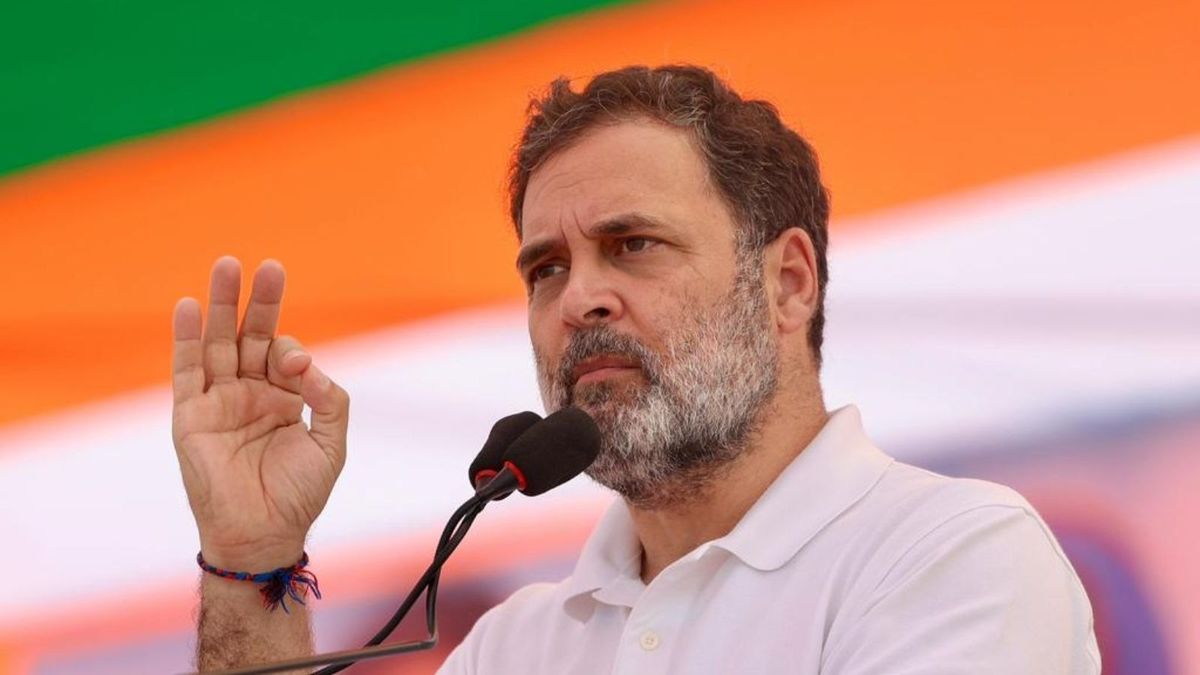
In a strongly worded post on X (formerly Twitter), Rahul Gandhi argued that the sinking of the Iranian vessel highlights how rapidly geopolitical tensions are moving closer to India’s strategic sphere.
“The conflict has reached our backyard, with an Iranian warship sunk in the Indian Ocean. Yet the Prime Minister has said nothing,” Gandhi wrote.
The Leader of the Opposition in the Lok Sabha said that moments of international crisis require decisive leadership and clear messaging from the government.
“At a moment like this, we need a steady hand at the wheel. Instead, India has a compromised PM who has surrendered our strategic autonomy,” Gandhi added.
His comments reflect the opposition’s broader criticism of the government’s foreign policy approach amid rising tensions across West Asia.
Iranian Vessel Sinks Near Sri Lanka
According to emerging reports, the Iranian naval ship IRIS Dena was operating in the Indian Ocean when it was struck by a torpedo believed to have been launched from a U.S. submarine.
The attack reportedly occurred in waters not far from Sri Lanka, raising concerns among regional security observers that the widening Iran-U.S. confrontation could spill into major maritime routes in the Indian Ocean.
The Indian Ocean is one of the world’s most strategically vital waterways, carrying a significant portion of global energy shipments and trade between Asia, the Middle East, and Europe.
While details about casualties or damage from the incident remain limited, the sinking of the ship marks a serious escalation in the ongoing confrontation between Iran and U.S.-aligned forces.
Strategic Importance of the Indian Ocean
The waters around Sri Lanka sit near some of the busiest maritime corridors on the planet.
Energy shipments from the Middle East regularly pass through the Indian Ocean before reaching Asian markets such as India, China, Japan, and South Korea.
Security experts warn that any military escalation in these waters could have significant consequences for regional stability, global trade routes, and energy supplies.
For India, which imports a large share of its crude oil from the Gulf region, the safety of these sea lanes is a critical national interest.
Political Debate in India
Rahul Gandhi’s criticism also reflects a broader political debate in India about the country’s diplomatic positioning amid rising global tensions.
Opposition leaders have repeatedly argued that India must maintain what they describe as “strategic autonomy,” a foreign policy principle that allows the country to avoid being drawn into rival geopolitical blocs.
The Congress leader’s comments suggest concern that India’s response to international crises may be constrained by its relationships with major powers.
However, government officials have not yet issued a detailed statement regarding the reported sinking of the Iranian vessel.
India’s Delicate Diplomatic Balance
India has historically maintained complex relationships with both the United States and Iran.
New Delhi shares a strategic partnership with Washington in areas such as defense cooperation, technology, and Indo-Pacific security.
At the same time, India has longstanding ties with Tehran, particularly in energy trade and regional connectivity projects.
Balancing these relationships has been a central challenge for Indian diplomacy, especially during periods of heightened tensions in the Middle East.
Wider Regional Context
The incident involving the Iranian vessel comes amid an already volatile geopolitical environment.
The confrontation between Iran, Israel, and the United States has intensified in recent weeks, with missile strikes, naval activity, and escalating rhetoric raising fears of a broader regional conflict.
Analysts warn that naval engagements in the Indian Ocean could signal a dangerous expansion of the conflict beyond the Middle East.
Such developments could draw additional countries into the crisis or threaten key shipping lanes used by global trade.
Silence from the Government So Far
Despite the strategic implications of the reported sinking, the Indian government has not yet publicly commented on the incident.
Foreign policy observers note that New Delhi often adopts a cautious approach during unfolding international crises, preferring to assess verified information before issuing official statements.
However, the lack of immediate reaction has provided political ammunition to opposition leaders who argue that India should take a clearer diplomatic position when regional security is involved.
Strategic Stakes for India
For India, developments in the Indian Ocean carry major security and economic implications.
The region forms the core of India’s maritime security strategy and is central to its trade routes, energy supply chains, and naval operations.
Any military confrontation in these waters could affect shipping insurance costs, oil prices, and regional stability.
Security analysts say that if tensions between Iran and the United States continue to escalate, India may face increasing pressure to play a diplomatic role in stabilizing the region.
Looking Ahead
As global tensions continue to rise, the sinking of the Iranian vessel near Sri Lanka underscores how quickly distant conflicts can move closer to South Asia.
For India, the challenge will be navigating a careful diplomatic path that protects national interests while avoiding entanglement in escalating global rivalries.
Whether the government chooses to address the incident publicly or maintain its current silence remains to be seen.
What is clear, however, is that geopolitical developments in the Indian Ocean are increasingly shaping both international diplomacy and domestic political debate in India.