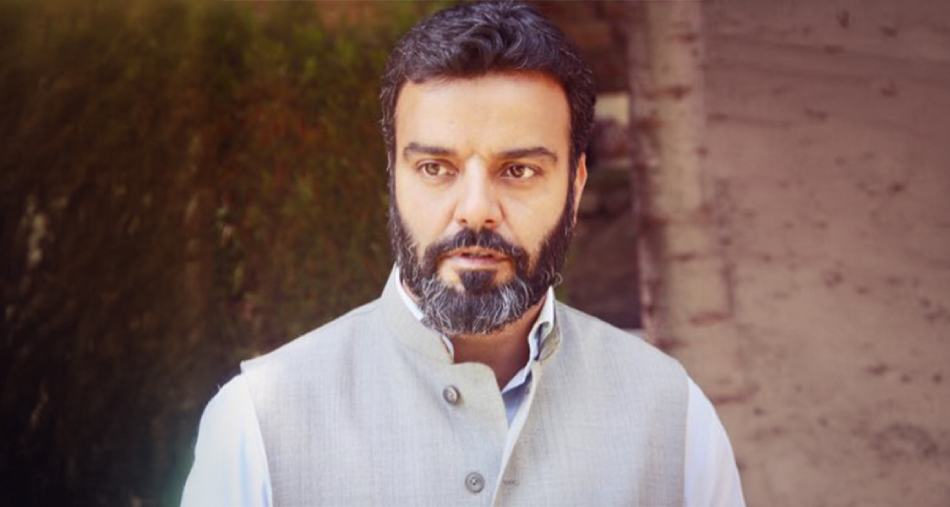
Aga Ruhullah Flags Hostility Against Kashmiris, Questions J&K Government Over Unfulfilled Promises
By: Javid Amin | 20 October 2026
Srinagar: National Conference MP Aga Syed Ruhullah Mehdi has raised concerns over what he describes as growing hostility towards Kashmiris, questioning claims of normalcy in Jammu and Kashmir while demanding greater accountability from the elected government on political commitments, employment, reservation and other public issues.
Speaking to reporters in Srinagar on October 20, the Srinagar parliamentarian linked his concerns about the treatment of Kashmiris to two recent stone-pelting incidents involving Delhi-to-Srinagar passenger buses in Haryana and Punjab. He argued that the experiences of people travelling outside the Union Territory must also form part of any assessment of the situation following the constitutional changes introduced in August 2019.
His remarks bring together two closely connected debates in Jammu and Kashmir: whether the political changes of 2019 have delivered the promised sense of normalcy, and whether the government elected in 2024 has done enough to address the expectations of its voters.
The immediate backdrop is particularly significant. Two Kashmir-bound buses operated by the same transport company were targeted in separate incidents within approximately 24 hours. While the Haryana incident has triggered competing accounts over its motive, the second attack in Punjab has intensified concerns about passenger safety and the need for a thorough investigation.
Two Bus Attacks in Two Days Put Kashmiris’ Safety in Focus
The first incident occurred late on Saturday, October 17, at the parking area of Divine Star Dhaba in Haryana’s Karnal district, according to reports published on October 19.
A private bus travelling from Delhi to Srinagar was involved in an altercation that escalated into stone-pelting, damaging the vehicle and leaving passengers injured. The bus driver, Waqar Chowdhary, alleged that the men involved called him a terrorist and objected to the vehicle being there.
The Indian Express reported that at least four passengers from Kashmir were injured, including an elderly man, while a dhaba employee also sustained injuries. Haryana Police arrested two men and impounded their car.
The police presented a different account of the incident’s origins.
According to Karnal police officials quoted by The Indian Express, the confrontation began when a car struck the bus while attempting to manoeuvre in the parking area. An argument followed, eventually escalating into a physical altercation and stone-pelting.
Police maintained that the immediate cause was a parking dispute and denied that the incident had a communal or anti-Kashmiri motive. The driver’s account, however, included alleged anti-Kashmiri abuse, leaving questions about the conduct of those involved that investigators must examine alongside the circumstances that initially triggered the confrontation.
The issue took on added significance when another bus operated by the same company, Star World Ventures, was targeted in Punjab the following night.
The second incident occurred around 11 pm on Sunday, October 18, near Doraha in Ludhiana district. Stones struck a Delhi-to-Srinagar bus, shattering a windowpane. Unlike the Haryana incident, no injuries were reported in Punjab.
The Indian Express reported on October 20 that Punjab Police had registered a case against unidentified persons and were examining CCTV footage from nearby establishments. Officials were also coordinating with their Haryana counterparts to determine whether the incidents were connected or had separate motives.
The fact that both vehicles belonged to the same operator has heightened concern, but it does not by itself establish that the attacks were coordinated or motivated by hostility towards Kashmiris.
That distinction matters. The allegations of discriminatory abuse in Haryana warrant serious scrutiny, while the precise motives behind both incidents remain matters for investigation.
For passengers, however, the immediate concern is straightforward: travelling between Kashmir and other parts of the country should not expose them to intimidation or violence.
Ruhullah Questions the Claim of Normalcy After 2019
Against this backdrop, Ruhullah has challenged the broader political narrative surrounding Jammu and Kashmir since the abrogation of Article 370.
In his assessment, the changes introduced in August 2019 have not resolved the alienation and mistrust experienced by sections of the population. Instead, he argues, Kashmiris continue to face suspicion and difficulties both within their home region and elsewhere in the country.
The National Conference MP has also criticised verification procedures, detentions and other security-related practices, arguing that these contribute to a sense of insecurity among ordinary residents.
These are political allegations and assessments rather than independently established conclusions about every Kashmiri’s experience. Nevertheless, they raise questions that go beyond party politics: how should normalcy be measured, and whose experiences should count when governments assess progress?
For the Centre, the post-2019 period has been associated with efforts to strengthen administrative integration, improve infrastructure and encourage investment and development in Jammu and Kashmir. The government has defended the constitutional changes as part of its approach to governance and national integration.
Critics, including Ruhullah, argue that administrative improvements cannot alone settle questions of political representation, civil liberties, public trust and the relationship between Kashmir and the Union government.
The recent bus attacks have given that argument an immediate human dimension. Even when an incident originates in a local dispute, alleged identity-based abuse can leave passengers questioning whether their regional background makes them vulnerable to suspicion or hostility.
At the same time, determining whether a particular act constitutes a hate-motivated offence requires evidence about the conduct, statements and intentions of those involved. A credible response must investigate those questions rather than assume either that prejudice was necessarily the motive or that it played no role.
Article 370 Remains at the Centre of Kashmir’s Political Debate
Ruhullah’s criticism also reflects a continuing disagreement over the constitutional and political future of Jammu and Kashmir.
On August 5, 2019, the Union government initiated the process that removed Article 370’s special constitutional arrangements. The Jammu and Kashmir Reorganisation Act, 2019, subsequently divided the former state into the Union Territories of Jammu and Kashmir and Ladakh.
The changes fundamentally altered the region’s constitutional position and relationship with the Centre, becoming one of the most consequential political developments in the history of modern Jammu and Kashmir.
The legal position and the political debate, however, are not identical.
The court’s judgment resolved the constitutional challenge before it, but it did not eliminate political disagreement over the desirability of the changes or the future relationship between Jammu and Kashmir and the Union government.
For Ruhullah, acknowledging that the 2019 decision was wrong is not enough. He has questioned what concrete steps the elected leadership and political parties are taking to address the loss of constitutional arrangements and the wider political expectations associated with their restoration.
This position places pressure on the National Conference leadership itself.
The party has historically advocated the restoration of Jammu and Kashmir’s special status and has made the political consequences of 2019 a central part of its public position. Yet an elected Union Territory government cannot unilaterally reverse a constitutional change upheld by the Supreme Court.
That institutional reality makes the question of political accountability more complicated. The government can pursue its stated objectives through political negotiation, legislative initiatives where constitutionally available, public advocacy and engagement with the Centre. It cannot guarantee that the Union government will accept its demands.
The challenge for regional leaders is therefore to explain both what they intend to achieve and what practical steps they can take towards that objective.
From Constitutional Promises to Jobs and Electricity, Public Expectations Remain High
Ruhullah’s concerns are not limited to Article 370. He has also questioned the government’s performance on employment, electricity supply, reservation policy, student grievances, medical interns’ concerns, prisoners’ issues and the protection of local employment opportunities.
His criticism is that the government has yet to demonstrate sufficient progress across the range of issues that matter to residents.
The breadth of these concerns illustrates the difficulty facing any government in Jammu and Kashmir.
Constitutional questions carry considerable political and symbolic weight, but residents also judge governments through the services they receive, the opportunities available to young people and the responsiveness of public institutions.
For unemployed graduates, the availability of secure jobs may be more immediate than the pace of constitutional negotiations. For students, the outcome of a reservation-policy dispute can directly affect admission prospects and career planning. For households, electricity costs and supply interruptions shape daily life, particularly during periods of high demand.
These concerns cannot be resolved through political statements alone. They require clear administrative decisions, implementation schedules, transparent recruitment processes and regular public reporting on progress.
Ruhullah has questioned whether assurances made to students over reservation-related grievances have produced satisfactory results. He has also raised concerns over medical interns and other groups seeking action from the administration.
Such disputes require specific answers: what commitments were made, which deadlines were established, what has been implemented and what obstacles remain?
Without that information, public debate can become trapped between competing claims of failure and progress. Publishing measurable outcomes would give residents a more reliable basis for judging the government’s record.
Reservation Dispute and Student Protests Test the Government’s Responsiveness
Reservation policy has become an important part of the wider political debate because it affects access to education, public employment and opportunities for different social groups.
Ruhullah’s remarks reflect concerns among sections of the student community over the handling of reservation-related questions and the pace of decisions affecting their future. His criticism also includes grievances raised by medical interns.
For the government, these issues require balancing competing demands, reviewing applicable rules and ensuring that decisions comply with the relevant legal and administrative framework.
For students, prolonged uncertainty can have immediate consequences. Admission decisions, examination schedules, recruitment opportunities and career plans may depend on policy clarity.
The political importance of these protests lies not simply in the number of people participating, but in the questions they raise about consultation and trust.
When an administration offers assurances, the public reasonably expects a clear explanation of the process and a realistic timeline. If deadlines cannot be met, the reasons should be communicated openly.
Ruhullah has described student and activist protests as legitimate efforts to demand accountability and reclaim democratic space. His comments suggest that demonstrations should be understood as part of the political process rather than dismissed without addressing the issues that prompted them.
That argument also places responsibility on protest organisers and authorities alike to ensure that demonstrations remain peaceful and that grievances are addressed through lawful, transparent channels.
Omar Abdullah Government Faces Pressure From Within Its Political Camp
One of the more significant aspects of Ruhullah’s criticism is that it comes from a National Conference parliamentarian rather than solely from the BJP or another opposition party.
The remarks expose tensions between the expectations generated by the 2024 Assembly election and the practical limits of governing Jammu and Kashmir as a Union Territory.
The National Conference returned to government under Omar Abdullah after campaigning on a range of political and governance issues. For voters who supported the party in the expectation of change, the key question is whether those commitments are translating into tangible outcomes.
Ruhullah’s intervention suggests that sections of the party’s broader political constituency want a clearer account of progress, especially on Article 370, statehood, employment and reservation.
However, his criticism should not automatically be interpreted as proof that the government has made no progress in every area. That conclusion would require an assessment of specific policies, expenditure, recruitment figures, service delivery and implementation records.
Equally, the government’s electoral mandate does not exempt it from scrutiny.
A government elected on promises of change must explain which commitments it has fulfilled, which remain pending and which fall outside its authority. Where responsibility rests with the Centre, it must explain its efforts to secure action. Where decisions lie within the Union Territory administration’s powers, it must demonstrate what it has done.
This distinction is especially important in Jammu and Kashmir, where major political questions intersect with a governance structure that differs from that of a full-fledged state.
Employment and Local Jobs Remain Central to the Governance Debate
Employment is among the most consequential issues raised by Ruhullah because it connects economic opportunity with the credibility of political promises.
For educated young people, a shortage of suitable jobs can mean prolonged dependence on family incomes, repeated examination attempts or migration in search of work. For families, uncertainty over recruitment and career prospects can create financial pressure and frustration with public institutions.
The demand to protect local employment opportunities also reflects concerns about how jobs are allocated, which categories receive access to opportunities and whether recruitment rules adequately account for the region’s circumstances.
But employment policy needs to be assessed through evidence rather than promises alone.
Useful indicators include the number of vacancies advertised, recruitment examinations completed, appointment orders issued, pending selection lists cleared and permanent positions created. Equally important are private-sector job creation, investment that produces sustainable employment and the quality of available work.
Ruhullah has asked what the government has achieved on employment and the protection of jobs. His intervention increases pressure on the administration to provide a more detailed account of its record and explain the measures it intends to take next.
A credible assessment should distinguish between new employment announcements, recruitment processes underway and jobs actually filled. Those categories are often discussed together in political messaging but represent different stages of delivery.
Electricity Supply and Everyday Governance Matter as Much as Political Commitments
Electricity has also featured prominently in the debate over the government’s performance.
Reliable power supply is essential to households, businesses, healthcare facilities, educational institutions and tourism-related enterprises. Interruptions can affect everything from household expenses to business productivity, particularly when demand rises during winter or periods of extreme weather.
Ruhullah’s criticism places electricity alongside employment and reservation as an area where residents expect visible improvement.
For the administration, the relevant questions include whether promised benefits have been implemented, how supply interruptions are being managed, what improvements have been made to distribution infrastructure and whether consumers are receiving clear information about tariffs and eligibility.
These issues are particularly important because residents experience governance through routine interactions with public services. A government may have a broader political agenda, but the quality of its administration is also measured by whether electricity is available, recruitment is transparent and complaints receive timely responses.
The same principle applies to students, medical interns and families seeking information about detained relatives. Each issue has its own legal and administrative context, but all contribute to public perceptions of whether institutions are accessible, fair and accountable.
Political Rights and Public Protest Return to the Foreground
Ruhullah has also defended recent protests by students and activists, describing them as legitimate expressions of public dissatisfaction and suggesting that democratic space is beginning to reopen.
The significance of this argument lies in the relationship between protest and accountability.
In a democratic system, demonstrations can give citizens a way to raise concerns when they believe official channels are not producing results. They can also draw attention to issues that might otherwise receive limited administrative or political attention.
At the same time, the existence of protests alone does not establish that democratic institutions are functioning effectively. A stronger assessment would consider whether people can organise peacefully, whether authorities respond proportionately, whether grievances receive a hearing and whether decisions are explained transparently.
The return of an elected Assembly in 2024 restored an important component of representative politics in Jammu and Kashmir. But the wider debate over political rights also includes statehood, the distribution of powers between the Union Territory administration and the Centre, and the public’s ability to influence decisions affecting daily life.
For regional parties, the challenge is to turn public mobilisation into specific policy demands and sustained institutional engagement. For the administration, the task is to demonstrate that criticism can lead to a meaningful response rather than simply another round of political exchanges.
Why the Bus Attacks Matter Beyond the Immediate Damage
The incidents in Haryana and Punjab have added a national dimension to Ruhullah’s argument about the treatment of Kashmiris.
The buses were travelling on a route connecting Delhi with Srinagar, carrying passengers who depended on inter-state transport to reach their destination. The alleged abuse in Haryana and the subsequent stone-pelting incident in Punjab have raised concerns that extend beyond the repair costs of damaged vehicles.
Transport operators must be able to run services without fear of intimidation. Passengers must be able to stop for meals, travel through unfamiliar towns and continue their journeys without being threatened because of where they come from.
The investigation into the two incidents is therefore important for practical as well as symbolic reasons.
In Haryana, the arrests and police account of a parking dispute provide a starting point for establishing how the confrontation unfolded. Investigators must also examine the driver’s allegations of anti-Kashmiri abuse and the accounts of other people present.
In Punjab, police have registered a case against unidentified individuals and begun examining available CCTV footage. Officials have also indicated that they are checking whether the two attacks are linked.
The outcomes will matter. If the incidents arose from separate disputes, the evidence should establish that. If discriminatory abuse or a coordinated motive is substantiated, the investigation should identify the responsible individuals and proceed under the law.
Neither political rhetoric nor an early explanation should substitute for that process.
The broader lesson is that national integration depends not only on constitutional arrangements or official statements but also on the everyday treatment of citizens moving across state boundaries.
The Larger Question: What Would Meaningful Normalcy Look Like?
Ruhullah’s remarks ultimately raise a question that reaches beyond any one politician or party: how should normalcy in Jammu and Kashmir be defined?
One approach emphasises security, infrastructure, investment, tourism and administrative functioning. Another places greater weight on political autonomy, civil liberties, democratic participation and the relationship between the region and the Union government.
These perspectives are not necessarily mutually exclusive. Improvements in infrastructure do not automatically resolve political grievances, just as political demands do not remove the need for effective public services and economic opportunities.
A fuller assessment must consider both.
The same applies to the treatment of Kashmiris elsewhere in India. Two attacks on passenger buses warrant investigation and appropriate action, but they do not by themselves establish the scale of hostility faced by the entire population. Broader claims require wider evidence, including documented incidents, police records, court proceedings and credible accounts from affected individuals.
What the incidents do establish is the need to take allegations of intimidation seriously, protect passengers and ensure that law enforcement responds impartially.
For the Omar Abdullah government, the immediate political challenge is to explain its record on the commitments it made and identify where progress is possible within its powers. For the Centre, the continuing questions of statehood and the post-2019 constitutional settlement remain significant to the region’s political future. For law enforcement agencies in Haryana and Punjab, the priority is to establish the facts behind the bus attacks and ensure accountability where offences have occurred.
Conclusion: Kashmir’s Political Debate Is About Trust as Much as Power
Aga Ruhullah Mehdi’s latest criticism brings together the major concerns shaping Jammu and Kashmir’s political conversation: the legacy of Article 370’s abrogation, the demand for statehood, the performance of the elected government, employment and reservation disputes, and the safety of Kashmiris travelling outside the region.
The attacks on Kashmir-bound buses have given renewed urgency to his argument, although the motives behind the incidents must be established through investigation rather than assumed in advance.
Meanwhile, his criticism of the National Conference-led government reflects a broader test of political credibility. Voters expect elected leaders to pursue their promises, communicate the limits of their authority and demonstrate measurable progress on issues affecting everyday life.
Ultimately, normalcy cannot be measured by a single indicator. It requires security, functioning institutions, economic opportunity, political participation and confidence that every citizen can travel and live without intimidation.
For Jammu and Kashmir, the question is no longer simply what different governments promise. It is whether those promises produce tangible results—and whether residents can see a credible path from political assurances to lasting change.
Follow Us on WhatsApp
Get Breaking News, Exclusive Updates & In-Depth Analysis from Kashmir and beyond, delivered straight to your phone.
Join our WhatsApp Channel: Follow Now


