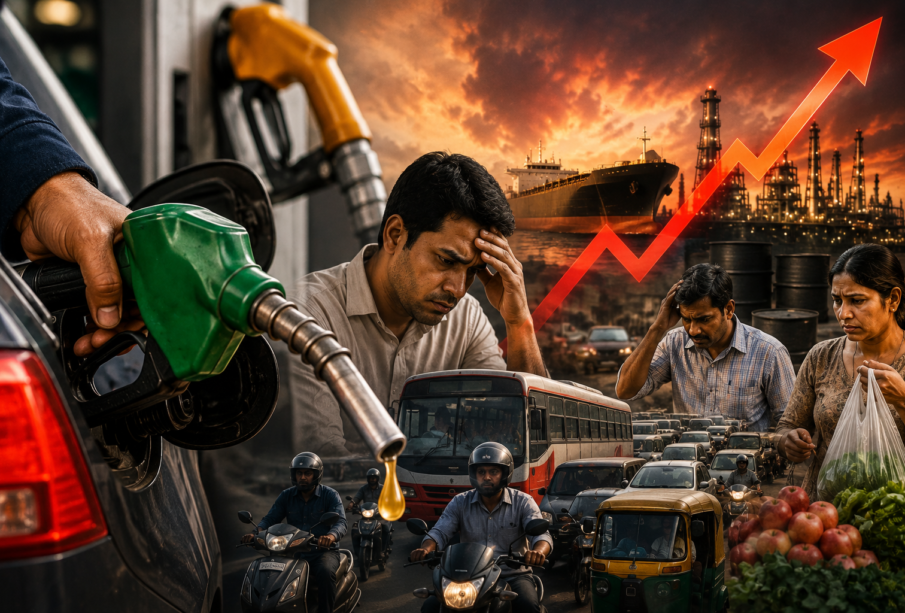
Fuel Prices Surge Again in India: Petrol and Diesel Hike Crosses ₹7.5 Per Litre in Two Weeks, Inflation Fears Deepen
By: Javid Amin | 24 May 2026
Fresh Fuel Price Hike Adds Pressure on Consumers Across India
Indian consumers are facing another blow as petrol and diesel prices have been increased yet again, marking the fourth fuel price hike in less than two weeks. Petrol prices have been raised by ₹2.61 per litre, while diesel prices have gone up by ₹2.71 per litre. With the latest revision, cumulative increases since May 15 have crossed ₹7.5 per litre, triggering concerns over inflation, rising transport costs, and growing pressure on household finances.
The latest increase comes at a time when millions of families are already grappling with elevated living costs. From daily commuters and small businesses to farmers and transport operators, the ripple effects of rising fuel prices are expected to spread across multiple sectors of the economy.
Latest Fuel Price Revision: What Has Changed?
According to industry sources, state-run oil marketing companies revised fuel prices upward on Monday, increasing petrol by ₹2.61 per litre and diesel by ₹2.71 per litre. The latest hike follows earlier increases on May 15, May 19, and May 23, making it the fourth upward revision in less than fourteen days.
Key Highlights
- Petrol price increased by ₹2.61 per litre.
- Diesel price increased by ₹2.71 per litre.
- Total cumulative increase since May 15 exceeds ₹7.5 per litre.
- Fourth fuel price hike in less than two weeks.
- Prices have crossed the ₹100-per-litre mark in several major cities.
The pace and frequency of the hikes have surprised consumers and market observers alike, particularly after a prolonged period during which fuel prices remained largely unchanged.
Why Are Petrol and Diesel Prices Rising?
Global Crude Oil Prices Under Pressure
The primary driver behind the latest increase is the surge in international crude oil prices. Escalating geopolitical tensions in West Asia have disrupted global energy markets, pushing crude oil prices higher and increasing import costs for fuel-dependent economies such as India.
India imports more than 80 percent of its crude oil requirements. As a result, any significant increase in global oil prices has a direct impact on domestic fuel costs.
Weaker Rupee Adds to Import Costs
Alongside rising crude prices, fluctuations in the Indian rupee have further increased the cost of importing oil. A weaker rupee means oil marketing companies must pay more in local currency terms for the same quantity of imported crude oil.
Market-Linked Fuel Pricing
Government officials and industry experts argue that India’s fuel pricing mechanism is linked to international market conditions. As crude oil prices rise globally, domestic fuel prices eventually adjust to reflect those changes. Opposition leaders, however, contend that taxation policies and delayed price adjustments have intensified the burden on consumers.
How the Fuel Price Hike Will Affect Everyday Life
Transport Costs Set to Rise
One of the most immediate consequences of higher fuel prices is increased transportation costs.
Taxi operators, auto-rickshaw drivers, app-based cab services, bus operators, and logistics companies are expected to pass a portion of the increased fuel expenses on to customers. As a result, passengers could soon face higher fares, while businesses may encounter rising delivery and distribution costs.
For a country where road transport moves the majority of goods, higher diesel prices can quickly affect the entire supply chain.
Agriculture Sector Faces Additional Burden
The diesel price increase is particularly significant for India’s farming community.
Diesel powers irrigation pumps, tractors, harvesters, and transportation vehicles used in agricultural operations. Higher diesel costs can raise cultivation expenses and reduce profit margins for farmers, especially during crucial sowing and harvesting seasons.
The impact may be more pronounced in regions where farmers rely heavily on diesel-powered irrigation systems. Increased logistics costs can also affect the movement of fruits, vegetables, and other perishables from farms to markets.
Household Budgets Under Strain
For ordinary households, rising fuel prices rarely remain limited to petrol pumps.
As transportation costs increase, the prices of groceries, vegetables, dairy products, consumer goods, and essential services often follow. Economists describe this as the “inflationary ripple effect,” where higher energy costs gradually influence the broader economy.
Families already managing high food prices and elevated living expenses may now face additional financial pressure in the weeks ahead.
Inflation Concerns Return to the Forefront
Fuel prices play a critical role in determining inflation trends.
Petrol and diesel are essential inputs for transportation, manufacturing, agriculture, and logistics. When fuel becomes more expensive, businesses often pass the additional costs to consumers.
Economists warn that repeated fuel price increases could contribute to:
- Higher food inflation.
- Increased transportation charges.
- Costlier manufactured goods.
- Rising service-sector prices.
- Reduced consumer spending power.
With inflation already a key concern for policymakers, sustained increases in fuel costs could complicate efforts to stabilize prices and support economic growth.
Political Debate Intensifies Over Fuel Prices
The latest fuel hike has reignited political debate across the country.
Opposition parties have accused the central government of placing additional burdens on citizens during a period of economic uncertainty. Critics argue that consumers are being forced to absorb the impact of global market volatility without adequate relief measures.
Government representatives and industry officials, however, maintain that fuel prices reflect international market realities and that oil marketing companies cannot indefinitely absorb losses caused by surging crude oil costs.
The issue is likely to remain politically sensitive as rising fuel costs affect millions of households and businesses nationwide.
What Lies Ahead for Fuel Prices?
The future direction of fuel prices will largely depend on developments in global energy markets.
If crude oil prices remain elevated or geopolitical tensions continue to disrupt supply routes, further upward revisions cannot be ruled out. Analysts suggest that much will depend on:
- Global crude oil trends.
- Stability in West Asia.
- Currency exchange rates.
- Domestic taxation policies.
- Demand and supply conditions in India’s energy market.
Any sustained pressure on international oil markets could keep fuel prices volatile in the coming weeks.
The Bottom Line
The latest petrol and diesel price hike marks another challenging moment for Indian consumers. With cumulative increases now exceeding ₹7.5 per litre in less than two weeks, the impact is expected to be felt far beyond fuel stations. Transport operators, farmers, businesses, and households are all likely to face higher costs, while inflation concerns are once again moving to the centre of economic discussions.
As global crude oil markets remain uncertain, the coming weeks will be crucial in determining whether fuel prices stabilize or continue their upward march, further testing the resilience of India’s economy and the budgets of millions of citizens.


