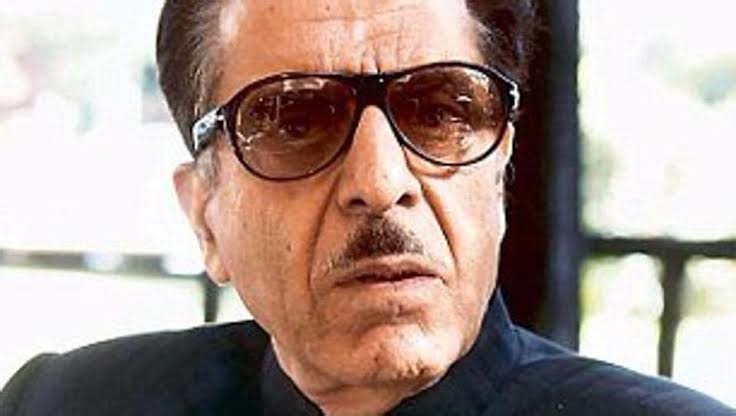
Saifuddin Soz’s Article 370, Internal Autonomy Remarks Trigger Political Storm; BJP Demands Congress Clarification
By: News Desk | 16 July 2026
Veteran Congress leader says statehood alone is insufficient for Jammu and Kashmir, while BJP labels the remarks ‘anti-national’ and asks the Congress leadership to clarify its position
A fresh political controversy has erupted over Jammu and Kashmir after senior Congress leader Saifuddin Soz called for the restoration of Article 370 and internal autonomy, arguing that the return of statehood alone would not address the region’s political aspirations.
The remarks have drawn a sharp response from the Bharatiya Janata Party (BJP), which described the comments as “anti-national” and demanded that the Congress leadership publicly clarify whether Soz’s views represent the party’s official position.
The exchange has once again placed Article 370, autonomy and statehood at the centre of national political debate, at a time when regional parties are intensifying their campaigns for the restoration of Jammu and Kashmir’s statehood.
What Saifuddin Soz Said
Addressing the ongoing debate over Jammu and Kashmir’s political future, Saifuddin Soz argued that statehood should not be treated as the final objective.
According to Soz, the larger political issue remains the restoration of the constitutional arrangement that existed before August 5, 2019, including Article 370 and what he described as internal autonomy for Jammu and Kashmir.
He maintained that the region’s accession to India took place under specific constitutional arrangements and argued that these historical commitments should continue to inform the political discourse surrounding Jammu and Kashmir.
Soz also suggested that discussions focused solely on restoring statehood overlook broader constitutional questions that, in his view, remain unresolved.
His comments have revived long-standing debates over the meaning of autonomy, federalism and constitutional safeguards in Jammu and Kashmir.
Understanding ‘Internal Autonomy’
The term internal autonomy has been part of Jammu and Kashmir’s political vocabulary for decades and has been interpreted differently by different political groups.
Historically, it has referred to greater legislative and administrative powers for the elected government of Jammu and Kashmir within the framework of the Indian Constitution. It is distinct from the concept of sovereignty or independence, although critics and supporters have often disagreed over its practical implications.
The National Conference had previously adopted an autonomy resolution in 2000, seeking the restoration of the constitutional position that existed before 1953. The proposal was rejected by the Union Government at the time.
Following the abrogation of Article 370 in 2019, demands for autonomy have largely become political positions advanced by some regional leaders rather than active constitutional proposals before the courts.
BJP Calls the Remarks ‘Anti-National’
The BJP responded swiftly to Soz’s comments.
Party national spokesperson Sudhanshu Trivedi alleged that the remarks went beyond advocating statehood and ventured into questioning India’s constitutional framework.
According to the BJP, references to internal autonomy risk creating confusion over the constitutional status of Jammu and Kashmir and may be interpreted as seeking arrangements inconsistent with the current constitutional order.
The BJP argued that Article 370 was constitutionally altered in 2019 and that the Supreme Court upheld the validity of that decision in December 2023. The party reiterated that the issue of Article 370 has been legally settled, even as it acknowledged that statehood remains a separate matter on which the Union Government has repeatedly said it remains committed.
The BJP also called upon the Congress leadership—including Rahul Gandhi, Sonia Gandhi and Mallikarjun Kharge—to clarify whether Soz’s remarks reflect the party’s official position or constitute his personal views.
Congress Yet to Issue an Official Clarification
At the time of the controversy, the Congress had not issued a formal statement either endorsing or distancing itself from Soz’s remarks.
This silence has provided political space for the BJP to intensify its criticism, arguing that the absence of an immediate clarification raises questions about the Congress’s position on Article 370 and autonomy.
Political analysts note that the Congress has generally supported the restoration of democratic processes and statehood in Jammu and Kashmir but has not formally campaigned for reversing the Supreme Court’s judgment on Article 370.
Whether the party chooses to clarify its stance could influence the trajectory of the political debate in the coming days.
Statehood vs Article 370: Two Distinct Political Questions
The latest controversy highlights the continuing distinction between two major political demands in Jammu and Kashmir.
Statehood
The restoration of statehood concerns the return of Jammu and Kashmir as a full-fledged state with expanded legislative and administrative powers.
The Union Government has repeatedly stated that statehood will be restored at an appropriate time, although no timetable has been announced.
Article 370 and Internal Autonomy
The restoration of Article 370 and internal autonomy represents a broader constitutional demand advanced by some regional political leaders.
Following the Supreme Court’s 2023 judgment upholding the constitutional validity of the 2019 changes, these demands remain part of the political debate rather than an ongoing constitutional process.
Soz’s remarks seek to bring this broader constitutional discussion back into the mainstream political conversation.
Political Implications
Fresh Challenge for the Congress
The controversy places the Congress in a politically sensitive position.
If it distances itself from Soz’s remarks, it risks criticism from sections of its traditional support base in Jammu and Kashmir.
If it endorses or remains ambiguous about the comments, it may face sustained attacks from the BJP at the national level.
BJP’s Political Strategy
The BJP is likely to use the controversy to reinforce its long-standing narrative that the constitutional changes of 2019 strengthened national integration and should not be revisited.
The party may also attempt to portray the opposition as divided over questions relating to national unity and constitutional policy.
Regional Political Impact
The remarks come as regional parties, particularly the National Conference, continue to campaign for the restoration of statehood.
The renewed focus on Article 370 and autonomy could complicate efforts to maintain a unified opposition narrative centred primarily on statehood.
Public Response in Jammu and Kashmir
Public opinion on these issues remains diverse.
Some political groups and sections of the public continue to advocate the restoration of Article 370 and greater constitutional protections, viewing them as central to preserving Jammu and Kashmir’s political identity.
Others believe that immediate priorities should include restoring statehood, strengthening democratic institutions, improving governance and accelerating economic development.
This diversity of opinion explains why debates surrounding Article 370 continue to generate strong political reactions years after the constitutional changes of 2019.
Why This Debate Matters Nationally
The controversy extends beyond Jammu and Kashmir because it touches on broader constitutional and political questions.
The discussion involves competing interpretations of federalism, Centre–state relations, constitutional autonomy and democratic representation.
For the BJP, the issue is closely linked to its position that the abrogation of Article 370 completed the constitutional integration of Jammu and Kashmir.
For opposition leaders such as Saifuddin Soz, the debate remains unfinished, with autonomy and constitutional safeguards continuing to occupy an important place in regional political discourse.
The Road Ahead
Saifuddin Soz’s remarks have reopened one of the most contentious debates in Indian politics at a time when the focus had largely shifted toward the restoration of Jammu and Kashmir’s statehood.
The BJP’s demand for a formal clarification from the Congress ensures that the controversy is unlikely to subside quickly. How the Congress leadership responds—or chooses not to respond—could shape the political narrative in the coming weeks.
Meanwhile, regional parties are expected to continue pressing for statehood, while some leaders, including Soz, seek to expand the conversation to include Article 370 and internal autonomy.
As political activity intensifies ahead of opposition campaigns and protests on Jammu and Kashmir’s constitutional future, the controversy underscores that questions surrounding statehood, Article 370 and autonomy remain among the most politically sensitive issues in contemporary Indian politics.

