Poonch Flash Floods and Landslides Kill Four in Surankote, Rescue Operations Intensify Amid Heavy Rain
By: News Desk | 19 July 2026
Heavy Rain Triggers Widespread Destruction Across Hilly District as Emergency Response Intensifies
A spell of intense rainfall has triggered devastating flash floods and landslides in Jammu and Kashmir’s Poonch district, leaving four people dead and several others missing, with Surankote tehsil emerging as the worst-hit area.
The disaster unfolded after continuous heavy rain lashed the mountainous region, sending torrents of water, mud and debris into residential settlements, damaging homes, blocking roads and disrupting essential services. Rescue teams continue to work in difficult terrain to locate missing residents, evacuate stranded families and restore connectivity to isolated villages.
Officials have launched a multi-agency emergency response involving the State Disaster Response Force (SDRF), police, civil administration, and local volunteers as fresh rainfall continues to pose challenges to rescue operations.
Surankote Bears the Brunt of the Disaster
According to officials, all four confirmed fatalities occurred in Surankote tehsil, where overflowing streams and landslides caused extensive damage to residential areas.
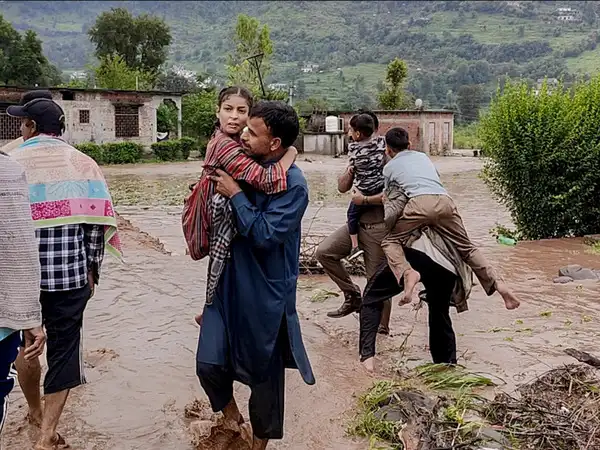
Several people are still reported missing, prompting search operations across affected villages. Rescue personnel are using heavy machinery wherever possible to clear debris, while teams are also conducting manual searches in areas inaccessible to equipment.
Authorities are yet to release the identities of all the victims, and the number of missing persons may change as communication is restored with remote villages.
Heavy Rain Triggers Flash Floods and Landslides
The disaster was caused by continuous heavy rainfall over the hilly catchments of Poonch district.
Mountain streams overflowed rapidly, while saturated slopes gave way, triggering multiple landslides that swept across roads and settlements.
Flash floods carried mud, rocks, uprooted trees and debris downstream, damaging:
- Residential houses
- Village roads
- Small bridges and culverts
- Agricultural land
- Power infrastructure
- Water supply networks
The rugged topography of Surankote and surrounding areas amplified the impact, leaving several communities temporarily cut off.
Rescue Operations Continue Around the Clock
Emergency response teams were mobilised soon after reports of flooding and landslides emerged.
The operation involves coordinated efforts by:
- State Disaster Response Force (SDRF)
- Jammu and Kashmir Police
- Civil administration
- Revenue officials
- Local volunteers
- Public Works Department personnel
Rescue teams are focusing on:
Searching for Missing Residents
Teams continue combing debris-covered areas and riverbanks in an effort to locate those still unaccounted for.
Evacuating Stranded Families
Residents trapped in vulnerable locations are being shifted to safer areas wherever access is possible.
Restoring Road Connectivity
Heavy machinery has been deployed to remove landslide debris from blocked roads to enable relief vehicles to reach affected villages.
Relief Measures Underway
The district administration has initiated emergency relief operations to support affected communities.
Relief efforts include:
Temporary Shelters
Emergency shelters are being established for families displaced by damaged or unsafe homes.
Food and Essential Supplies
Authorities are distributing food packets, drinking water and other basic necessities in accessible areas while working to reach remote villages.
Medical Assistance
Health teams have been deployed to provide first aid, emergency treatment and monitor public health conditions in flood-affected localities.
Restoration of Electricity
Power department personnel are repairing damaged lines and restoring electricity in villages where it is safe to do so.
Officials say restoration work will continue as weather conditions permit.
Infrastructure Suffers Significant Damage
The heavy rainfall has severely affected public infrastructure across parts of Poonch district.
Roads Blocked
Multiple roads remain blocked due to landslides, slowing rescue and relief operations.
Houses Damaged
Several homes have suffered structural damage after being hit by floodwaters or landslide debris.
Electricity Disrupted
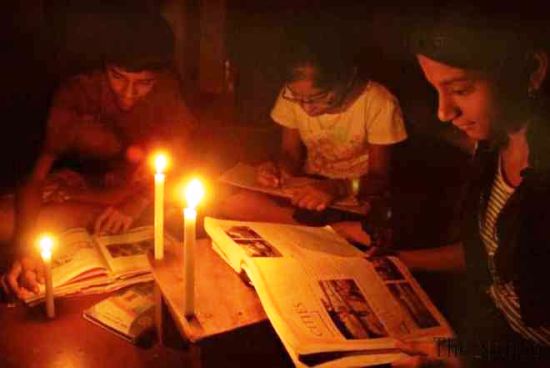
Power outages have affected several villages following damage to electricity infrastructure.
Communication Challenges
Disrupted roads and intermittent communication networks have complicated coordination with remote settlements.
Authorities are prioritising the reopening of key roads to improve access for emergency services.
Impact at a Glance
| Category | Current Situation |
|---|---|
| Confirmed Deaths | 4 (all reported from Surankote tehsil) |
| Missing Persons | Several residents reported missing; search operations ongoing |
| Infrastructure | Roads blocked, bridges damaged, homes affected, electricity disrupted |
| Emergency Response | SDRF, police, district administration and volunteers deployed |
| Relief Measures | Shelters opened, food, water and medical assistance being provided |
Fresh Rainfall Continues to Pose Serious Risks
Disaster management officials have warned that the danger has not yet passed.
Landslide Risk Remains High
Continuous rainfall has left hill slopes saturated, increasing the possibility of additional landslides.
Flooded Streams
Water levels in mountain streams remain elevated, creating the risk of renewed flash flooding if heavy rain persists.
Isolated Villages
Several remote habitations remain difficult to access due to blocked roads and damaged bridges.
Authorities have advised residents to avoid travel through vulnerable areas unless absolutely necessary.
Public Health Concerns Emerging
Beyond the immediate disaster, health officials are closely monitoring potential secondary risks.
Floodwater contamination can lead to:
- Waterborne diseases
- Contaminated drinking water sources
- Poor sanitation conditions
- Increased mosquito breeding in stagnant water
Medical teams are encouraging residents to consume safe drinking water, maintain hygiene and report symptoms of illness promptly.
Climate Experts Warn of Increasing Extreme Weather
Environmental experts note that the disaster reflects a broader pattern of increasingly frequent extreme weather events across the Himalayan region.
In recent years, Jammu and Kashmir has witnessed:
- Intense cloudbursts
- Flash floods
- Landslides
- Erratic rainfall
- Heatwaves
- Prolonged dry spells
While individual weather events cannot be attributed solely to climate change, scientific studies indicate that a warmer atmosphere can hold more moisture, increasing the likelihood of intense rainfall events. Combined with fragile mountain geology, deforestation, unplanned construction and expanding settlements in hazard-prone areas, the impacts of such events can become more severe.
Experts recommend strengthening watershed management, improving slope stabilization, expanding early-warning systems and enforcing scientific land-use planning in vulnerable hill districts.
Safety Advisory for Residents
Authorities have urged residents in Poonch and adjoining hilly areas to remain alert as rainfall is expected to continue.
Residents are advised to:
- Avoid travelling through landslide-prone roads during heavy rain.
- Stay away from overflowing streams, nallahs and riverbanks.
- Follow evacuation instructions issued by local authorities.
- Report missing persons or emergencies immediately to the nearest administration or police station.
- Keep emergency supplies, drinking water and essential medicines readily available.
- Monitor official weather updates before undertaking any journey.
Looking Ahead
The loss of four lives in Surankote is a stark reminder of the vulnerability of Jammu and Kashmir’s mountainous districts to extreme weather. As rescue teams continue searching for missing residents and restoring access to isolated communities, the immediate focus remains on saving lives, providing relief and preventing further casualties.
The disaster also underscores the need for long-term investment in resilient infrastructure, improved weather forecasting, landslide hazard mapping and community-based disaster preparedness. With forecasts indicating the possibility of further rainfall, authorities remain on high alert while urging the public to exercise caution until conditions improve.
Editor’s Note: This report is based on information available from district authorities and emergency responders at the time of publication. The number of missing persons, casualty figures and damage assessments may change as rescue operations continue and additional official updates are released.