Kashmir’s big-screen moment begins at SKICC
By: Javid Amin | 07 September 2026
The lights have come on in Srinagar, and for the first time, Jammu & Kashmir is not merely appearing inside the frame.
It is hosting the frame.
The inaugural International Film Festival of Jammu & Kashmir (IFFJK) 2026 opened on Monday at the Sher-i-Kashmir International Convention Centre (SKICC) on the banks of Dal Lake, bringing filmmakers, actors, artists, industry professionals and cinema enthusiasts together for what organisers describe as a new chapter in the region’s long relationship with the silver screen.
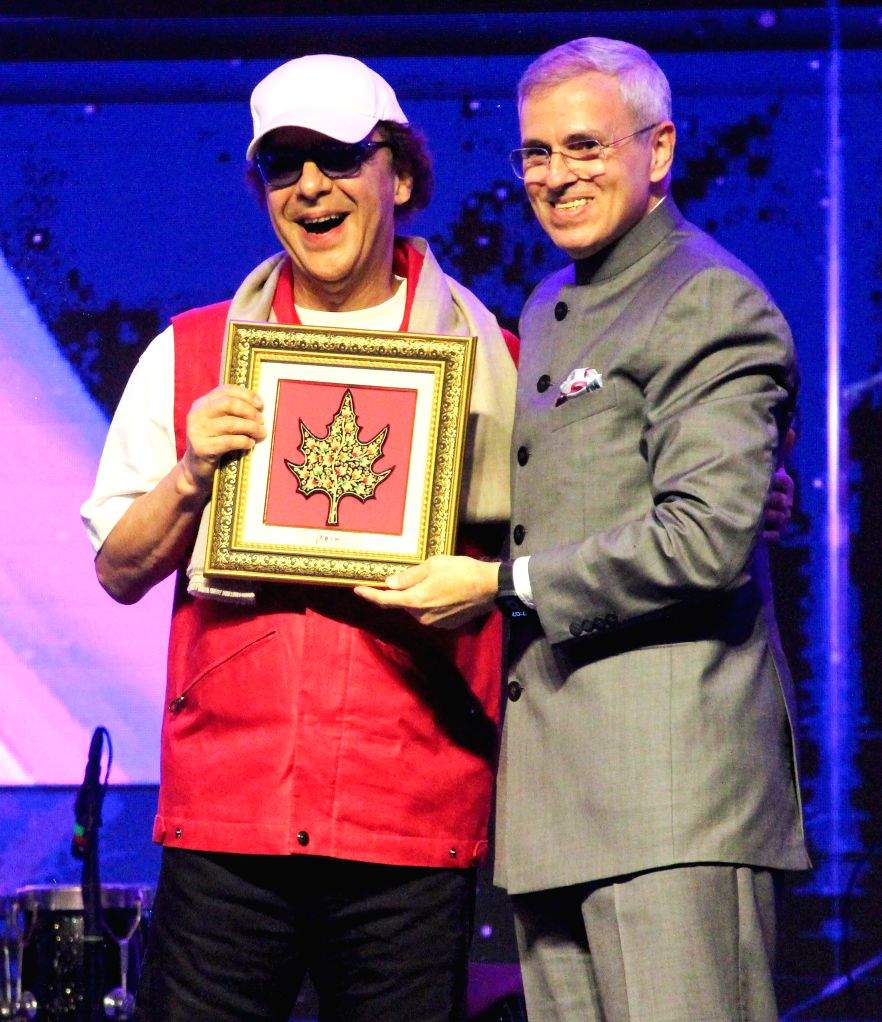
Chief Minister Omar Abdullah, who inaugurated the festival, used the occasion to make a larger pitch to the global film industry.
His message was clear: Kashmir should no longer be viewed simply as a beautiful place to shoot a few scenes.
It should be seen as a place where stories originate, talent develops and films can be made.
“Kashmir is not just a location on a call sheet; it is a creative sanctuary,” Omar said, describing the Valley as a home for global storytellers and a voice ready to speak to the world.
The remark captured the central ambition behind IFFJK.
The festival is not just about screening films.
It is about changing the way Kashmir is positioned within the film economy.
135 films from 41 countries put Kashmir at the centre of world cinema
The inaugural festival, being held from September 7 to 10, is operating under the theme “Rang-e-Cinema” and features 135 films from 41 countries.
The official IFFJK platform confirms that the programme includes international competition, curated showcases, feature films, documentaries, shorts and regional cinema, including the J&K Select and Bharat Panorama sections.
India has the largest representation with 64 films, followed by France with 13 and Iran with eight, according to the festival’s pre-event programme details.
The programme is being staged across venues including SKICC, INOX Multiplex Srinagar, Movie Time Cinemas KC Central Jammu and the Gulmarg Convention Centre.
That geographical spread is important.
The festival is being presented not merely as a Srinagar event but as a Jammu & Kashmir-wide cultural platform.
For a region seeking to expand its tourism economy and creative industries, that distinction matters.
Omar Abdullah: ‘Do not just film our mountains, seek out our stories’
Omar’s speech went beyond the familiar language of tourism promotion.
He acknowledged Kashmir’s long cinematic history but argued that its future cannot depend entirely on nostalgia.
The Chief Minister recalled films such as Junglee, Kashmir Ki Kali, Aradhana and Bobby, which helped establish Gulmarg, Dal Lake and other Kashmir locations in the visual imagination of generations of Indian audiences. He also referred to Yash Chopra’s contribution to Kashmir’s cinematic identity and more recent films such as Mission Kashmir, Haider, Rockstar, Highway and Bajrangi Bhaijaan.
But then he shifted the emphasis from scenery to society.
“Cinema is more than landscapes; cinema is culture,” Omar said, pointing towards Kashmir’s music, crafts, oral traditions and cultural practices.
He urged filmmakers coming to J&K to look beyond the mountains.
His appeal was essentially this: talk to artisans, listen to musicians, explore old-city lanes and allow Kashmir’s living culture to enter the story rather than using the Valley simply as visual decoration.
It is a significant distinction.
For decades, Kashmir has been one of Indian cinema’s most recognisable landscapes. IFFJK is now trying to make it one of its recognisable storytelling centres.
Experience the Kashmir Behind the Cinema
For travellers attending IFFJK 2026, the festival can be combined with Srinagar’s heritage, Dal Lake experiences, Gulmarg, Pahalgam and other destinations across the Valley.
JKL Travels can assist with customised Kashmir holiday packages, accommodation, transportation and sightseeing.
Call / WhatsApp: +91 88033 24 365 | +91 97960 24 365
Vidhu Vinod Chopra’s ‘homecoming’ gives the festival a personal face
If Omar Abdullah spoke about Kashmir’s future in cinema, filmmaker Vidhu Vinod Chopra brought the conversation back to memory.
For Chopra, the festival was not an ordinary professional appearance.
It was a return home.
Speaking to reporters on the sidelines of IFFJK, Chopra recalled his connection with Srinagar, including his years at SP College, and described his participation in the festival as an emotional homecoming.
“I am from Kashmir, as you know. I studied at SP College and for me, it is a homecoming,” Chopra said.
He also referred to his roots in Amira Kadal, describing the journey from his childhood neighbourhood to his position in the Indian film industry as an emotional one.
His message to Kashmiri youngsters was perhaps even more significant than the nostalgia.
Do not underestimate yourselves.
Chopra said he sees substantial talent in Kashmir and urged young people to show the world what they can do. He described IFFJK as an opportunity for local youngsters to interact with filmmakers and for films and filmmakers from around the world to come to Kashmir.
And when asked about Kashmir’s relationship with cinema, he offered an observation that sits neatly alongside Omar’s message.
Kashmir has its own stories.
Those stories deserve to be told.
‘Bae chus Kashur’: a filmmaker returns to his roots
Chopra’s declaration of his Kashmiri identity gave the inauguration an emotional dimension that a conventional industry event would struggle to manufacture.
“Bae chus Kashur” — “I am Kashmiri” — was more than a statement of identity.
It reflected the festival’s larger question: who gets to tell Kashmir’s stories?
For years, the Valley has been represented through the eyes of filmmakers from outside the region. Sometimes that produced romantic images. Sometimes political narratives. Sometimes powerful human stories.
But an international festival based in Kashmir creates a different possibility.
Local filmmakers can enter the conversation themselves.
Their stories can be screened beside films from France, Iran, the United States, Europe, Asia and elsewhere.
That is a much more interesting cultural exchange than simply bringing international cinema to a scenic destination.
It puts Kashmir’s own storytellers into the same room.
A festival designed to build more than an audience
IFFJK’s official programming makes clear that the organisers want the event to operate as an industry platform as well as a public festival.
Alongside screenings are masterclasses, workshops, panel discussions, industry conversations and cultural programmes. The official programme specifically describes these sessions as opportunities for audiences and emerging filmmakers to interact with national and international experts and understand changing trends in filmmaking.
That may eventually prove more valuable than the red carpet.
A screening lasts two hours.
A useful professional connection can last decades.
For a young cinematographer from Kashmir, meeting an experienced director could lead to mentorship. For a local production assistant, an international crew could become a future employer. For a writer, a panel discussion could turn an idea into a script.
This is how a festival begins to become an ecosystem.
From cinema to employment: the economic argument
The cultural case for IFFJK is straightforward.
The economic case is more complicated, but potentially larger.
Every serious film production generates demand for a long list of services.
Hotels need to accommodate crews.
Transport operators move people and equipment.
Restaurants and caterers supply food.
Local guides assist with locations.
Technicians, electricians, sound engineers, carpenters, costume professionals and production assistants find work.
Local artists can be employed.
Handicrafts can become part of production design.
And if productions stay for weeks or months rather than a few days, the spending spreads much further into the local economy.
That is why Omar’s emphasis on developing a local workforce is important.
The Chief Minister said the administration wants to build a pool of cinematographers, line producers, sound engineers, actors and other professionals while developing post-production facilities, equipment banks, studios and film education institutions.
In other words, the ambition is to move from location economy to film-production economy.
J&K film policy enters the spotlight
The inauguration also served as a platform for the government’s filmmaking policy.
Omar highlighted the Jammu & Kashmir Film Policy, including a single-window mechanism intended to simplify location permissions, security coordination and other approvals for productions.
He also referred to financial incentives and production subsidies linked to shooting days and local expenditure.
That policy infrastructure could be decisive.
A spectacular location alone does not make a competitive filming destination.
Producers also want certainty.
They need to know how quickly permissions can be obtained, whether locations will be accessible, whether local crew is available and how much time and money will be lost navigating administrative procedures.
If J&K can make those processes genuinely predictable, Kashmir’s natural advantages become considerably more valuable.
Why the festival matters to Kashmir’s tourism economy
The festival arrives at an interesting moment for Kashmir tourism.
The Valley is already one of India’s best-known leisure destinations, but tourism has traditionally been concentrated around scenery and seasonal experiences.
Cinema offers another proposition.
A visitor can come not only to see Dal Lake, Gulmarg or Pahalgam, but to experience a place associated with a film, attend a festival, meet filmmakers or explore the cultural world behind a story.
The official IFFJK programme itself leans into that relationship between cinema and place, including cultural installations and experiences built around Kashmir’s landscapes and cinematic history.
The potential is particularly attractive for destination businesses.
A film festival visitor may arrive for four days but stay longer to explore the Valley.
That can mean additional hotel nights, meals, taxis, guided tours, shopping and local experiences.
Planning a Kashmir trip around IFFJK?
Visitors travelling to Srinagar for the festival can combine the event with Dal Lake, Gulmarg, Pahalgam, Sonamarg and other Kashmir experiences. For customised itineraries, stays, transfers and sightseeing, contact JKL Travels on +91 88033 24 365 or +91 97960 24 365.
But the real prize is not tourism. It is talent
There is a tendency to measure cultural festivals by visitor numbers.
That would miss the deeper opportunity here.
The most important people at IFFJK may not be the celebrities walking the red carpet.
They may be the students sitting quietly in a masterclass.
The aspiring writer taking notes.
The young filmmaker screening a short film.
The local technician meeting an international production team.
Or the Kashmiri storyteller who realises, perhaps for the first time, that a story from his or her neighbourhood can sit on an international programme.
This is where Chopra’s comments become especially relevant.
He did not simply return to Kashmir to celebrate his own career.
He urged local youngsters to recognise their own potential.
That is the kind of message an emerging creative economy needs.
Turn the Film Festival Into a Kashmir Holiday
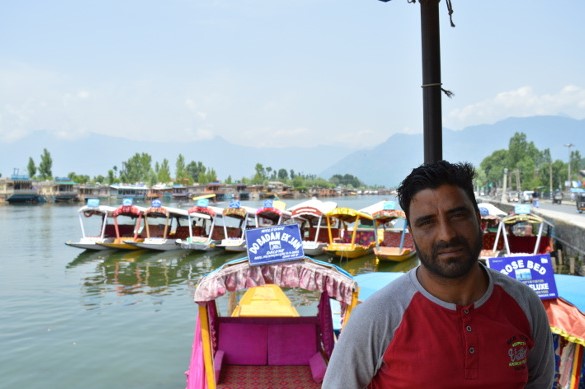
From a Shikara ride on Dal Lake and a houseboat stay to Gulmarg and Pahalgam excursions, Kashmir Travels can help visitors build a customised itinerary around their IFFJK visit.
Call / WhatsApp: +91 88033 24 365 | +91 97960 24 365
Kashmir’s cinematic identity is being rewritten
There is an interesting irony at the heart of IFFJK.
Kashmir has never really needed an introduction to cinema.
Indian cinema introduced Kashmir to generations of audiences long ago.
What has changed is the ambition.
The Valley is now trying to move from being cinema’s scenery to cinema’s participant.
That means encouraging local stories, attracting productions, building technical capacity and creating a regular meeting place for filmmakers.
The festival’s J&K Select category is particularly important in that context. The official programme gives regional cinema a dedicated space alongside international and Indian selections.
If sustained, that could help create a pipeline from local storytelling to national and international audiences.
The ₹96 lakh prize purse adds serious competitive weight
IFFJK is also putting significant financial value behind its awards.
The festival has announced a total prize purse of ₹96 lakh across nine categories.
The top award for Best Film carries ₹25 lakh, while Best Director and Best Debut Film of a Director carry ₹15 lakh each. The Best Film – J&K Select award carries ₹10 lakh. Other awards recognise acting and technical categories including cinematography, sound design and editing.
For a first edition, that is a substantial commitment.
More importantly, the award structure combines established excellence with emerging talent and regional cinema.
That sends a useful signal: the festival wants both international credibility and local relevance.
A cultural bridge, not just a film event
There is another layer to the festival that cannot easily be measured in rupees.
International filmmakers arriving in Kashmir are not simply attending screenings.
They are experiencing the region.
They meet local people and artists. They encounter Kashmiri food, music and crafts. They travel through its landscapes and cities.
That creates a form of cultural exchange that happens naturally rather than through formal diplomacy.
Cinema is particularly suited to this.
A film can cross a border in a matter of hours.
A conversation between two filmmakers can produce a collaboration years later.
A young Kashmiri filmmaker can discover a completely different way of telling a story after watching an Iranian, French or Korean film.
That is the less visible economy of a festival.
Ideas move.
People connect.
Possibilities multiply.
The difficult question begins after September 10
For all the excitement surrounding IFFJK 2026, there is a question that will remain after the closing ceremony.
What happens next?
One successful festival cannot create a film industry.
The government’s own stated ambition is considerably bigger: an ecosystem involving permissions, incentives, local crew, equipment, post-production, studios and film education.
Delivering that will take time.
The festival will need continuity.
Filmmakers who visit this year will need reasons to return.
Local talent will need opportunities after the masterclasses end.
Film productions will need to actually shoot in J&K.
And the economic benefits need to reach beyond large hotels and established businesses into smaller local enterprises.
If those pieces come together, the festival could become an annual anchor for a much larger creative economy.
If they do not, IFFJK risks remaining an impressive but temporary cultural spectacle.
For Kashmir, this is about who tells the story
That may ultimately be the most important theme emerging from the first IFFJK.
Omar Abdullah’s message was that Kashmir is more than a location.
Vidhu Vinod Chopra’s message was that Kashmir has talent.
Put together, the two ideas point towards the same future.
Kashmir should not only be filmed. Kashmir should make films.
It should produce writers, directors, cinematographers, editors, actors, musicians and production professionals.
It should give local stories an audience.
And it should invite the rest of the world to listen.
That is why the opening at SKICC carries significance beyond the glamour of a first-day ceremony.
For a region that has spent decades being photographed, romanticised, documented and interpreted by others, IFFJK offers the possibility of something different.
A chance to pick up the camera.
And tell the story from inside the frame.
A new chapter, but only the first frame
The first International Film Festival of Jammu & Kashmir has opened with an unusually powerful combination of numbers and symbolism.
135 films.
41 countries.
Four days.
One region with a long cinematic memory.
But the most memorable moments of the opening were not necessarily the statistics.
They were Omar Abdullah describing Kashmir as a “creative sanctuary” and Vidhu Vinod Chopra returning to the place he still calls home.
Those two statements capture the festival’s central promise.
Kashmir has been a cinematic landscape for generations.
Now it wants to become a cinematic community.
Whether IFFJK eventually transforms that ambition into a durable film industry will depend on what happens after the applause fades.
For now, however, the first frame has been shot.
And this time, Kashmir is not merely in the picture.
Kashmir is helping direct it.
Planning to Attend IFFJK 2026?
Festival visitors looking to combine cinema with Kashmir’s landscapes, culture and local experiences can contact JKL Travels / Kashmir Travels for itinerary assistance, transfers and holiday planning.
+91 88033 24 365 | +91 97960 24 365