22,886 Jobs Outsourced in Two Years: Why Jammu & Kashmir’s Recruitment Model Is Facing Growing Scrutiny
By: Javid Amin | 21 June 2026
Opposition Raises Alarm as Outsourcing Debate Moves to Centre Stage
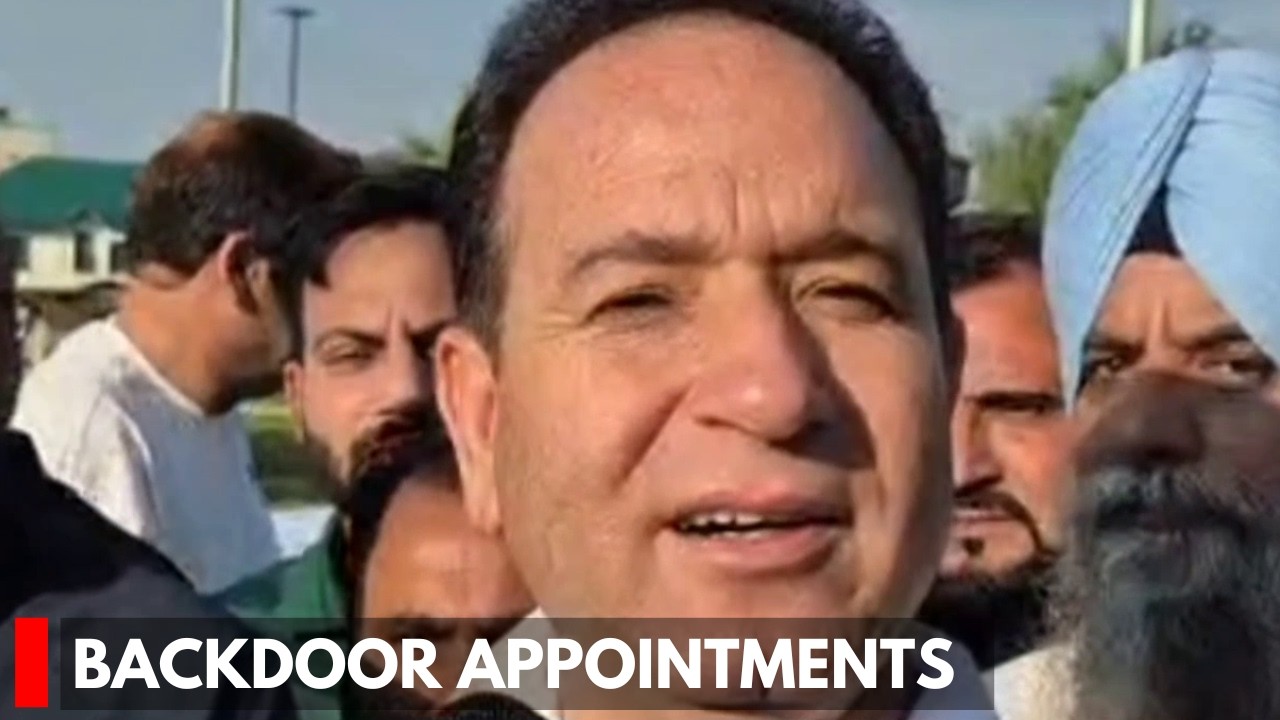
A fresh political storm has erupted in Jammu & Kashmir after Leader of Opposition Sunil Sharma accused the government of encouraging “backdoor appointments” and excessive outsourcing, triggering a wider debate about employment, transparency, and governance.
The controversy comes at a time when unemployment remains one of the most pressing concerns for young people across the Union Territory. Thousands of educated graduates continue to wait for recruitment notifications while government departments increasingly rely on outsourced manpower to fill operational gaps.
While the government insists outsourcing is a legitimate administrative mechanism aimed at meeting urgent staffing requirements, opposition parties, civil society groups, and sections of unemployed youth argue that the practice risks bypassing merit-based recruitment systems established through institutions such as the Jammu and Kashmir Public Service Commission (JKPSC) and the Jammu and Kashmir Services Selection Board (JKSSB).
What has transformed the issue from a political allegation into a serious public debate is the emergence of official data, legislative disclosures, and judicial observations that have placed recruitment practices under an intense spotlight.
The Numbers Behind the Controversy
Recent disclosures in the Jammu & Kashmir Legislative Assembly revealed that nearly 22,886 positions were outsourced during the previous two years.
The figures indicate that:
- More than 16,000 positions were filled through private outsourcing agencies.
- Over 6,000 outsourced personnel were engaged in Government Medical Colleges and healthcare institutions.
- Outsourcing arrangements span multiple departments and sectors.
These numbers have become central to the opposition’s criticism.
For many observers, the scale of outsourcing raises important questions about whether permanent vacancies that could be filled through competitive examinations are increasingly being handled through contractual arrangements.
Supporters of outsourcing argue that many of these engagements address immediate operational needs rather than sanctioned government vacancies.
Critics, however, contend that the growing dependence on outsourced workers may gradually weaken conventional recruitment channels.
₹62 Crore Outsourcing Bill Sparks New Questions
The debate intensified further after official figures showed that government spending on outsourced services crossed ₹62 crore during the 2025-26 financial year.
Assembly records indicate that:
| Indicator | Official Data |
|---|---|
| Jobs Outsourced (2 Years) | 22,886 |
| Through Private Companies | 16,000+ |
| GMCs & Health Institutions | 6,000+ |
| Outsourcing Expenditure | ₹62.65 Crore |
| Active Outsourcing Contracts | 249 |
The expenditure covers a wide range of services, including:
- Information technology support
- Housekeeping services
- Security personnel
- Transport operations
- Technical manpower
- Administrative support functions
Government departments argue that outsourcing provides flexibility and helps address workforce shortages without long recruitment delays.
Yet critics see the growing expenditure as evidence that public resources are increasingly being directed toward contractual arrangements rather than long-term employment opportunities.
Sunil Sharma’s Charge: ‘Backdoor Appointments’ and Governance Failure
Leader of Opposition Sunil Sharma has framed the issue as more than a staffing challenge.
According to Sharma, outsourcing has evolved into a mechanism that allows recruitment outside transparent and competitive processes.
He alleges that many appointments are being made without adequate public advertisements or fair competition, thereby undermining the principles of equal opportunity.
The BJP leader argues that such practices:
- Deny deserving candidates a fair chance.
- Create insecurity among educated youth.
- Erode trust in government institutions.
- Encourage perceptions of favoritism and nepotism.
His remarks reflect a broader opposition strategy focused on employment and governance, two issues that continue to resonate strongly among voters across Jammu & Kashmir.
High Court’s Strong Intervention Changes the Debate
Perhaps the most significant development in the controversy has come from the judiciary.
In recent observations, the Jammu & Kashmir and Ladakh High Court sharply criticized irregular recruitment practices and described certain forms of selective appointments as a “fraud on the Constitution.”
The Court emphasized that public employment cannot become the preserve of a privileged few and reiterated that recruitment must comply with constitutional guarantees of equality and fairness.
The observations emerged during proceedings related to disputed appointments and alleged irregular recruitment processes.
Legal experts believe these remarks have strengthened demands for greater transparency and accountability in public hiring.
The judiciary’s intervention has also elevated the debate from political rhetoric to a matter of constitutional governance.
Why Youth Are Angry
The outsourcing controversy has struck a particularly sensitive nerve among Jammu & Kashmir’s youth.
Every year, thousands of graduates and postgraduates prepare for examinations conducted by recruitment agencies such as JKPSC and JKSSB.
Many spend years preparing for government jobs because such positions offer:
- Employment stability
- Career progression
- Pension and service benefits
- Social security
- Professional recognition
When recruitment remains delayed while outsourcing expands, many aspirants perceive it as a shrinking opportunity landscape.
Youth organizations and student groups have increasingly expressed concerns that outsourcing may reduce the number of vacancies eventually referred to recruitment boards.
Whether this perception is fully accurate or not, it has contributed to growing frustration among job seekers.
Civil Society Raises Accountability Concerns
Beyond employment issues, civil society organizations have also questioned the governance implications of large-scale outsourcing.
Critics argue that outsourced employees often operate within a complex accountability structure where responsibility is divided between private agencies and government departments.
Some activists describe this phenomenon as the creation of a “shadow workforce”—a large body of personnel performing public functions without being fully integrated into government service structures.
Concerns frequently raised include:
Transparency
Recruitment procedures through private agencies may not always be subject to the same public scrutiny as government examinations.
Accountability
Determining responsibility for performance and service delivery can become more complicated when multiple contractors are involved.
Job Security
Contract workers generally lack the protections and benefits available to regular government employees.
Institutional Capacity
High turnover among outsourced personnel may affect continuity and institutional memory.
Government’s Defence: Outsourcing Is Necessary
Government officials have consistently defended outsourcing as a practical administrative tool.
According to the official position, outsourced manpower is engaged to address immediate operational requirements and does not necessarily replace regular recruitment.
Authorities maintain that outsourcing follows established procurement procedures, including:
- General Financial Rules (GFR)
- E-tendering mechanisms
- Government e-Marketplace (GeM) procedures
- Departmental guidelines
Officials argue that many departments face urgent staffing shortages that cannot always wait for lengthy recruitment cycles.
From the government’s perspective, outsourcing ensures continuity of essential public services while permanent recruitment processes move forward separately.
The Larger Political Battle Over Jobs
The outsourcing controversy is rapidly becoming one of the most politically significant issues in Jammu & Kashmir.
For the opposition, it provides an opportunity to highlight concerns over governance, transparency, and unemployment.
For the government, it presents the challenge of defending administrative decisions while reassuring young people that merit-based recruitment remains a priority.
The issue cuts across political lines because employment remains one of the few concerns that directly affects nearly every household in the Union Territory.
As a result, debates over outsourcing are increasingly becoming debates about governance itself.
What Happens Next?
Several developments could shape the future trajectory of the controversy:
Judicial Scrutiny
Further court interventions could result in closer examination of recruitment and outsourcing practices.
Recruitment Reforms
Public pressure may encourage greater transparency and faster filling of vacancies through JKPSC and JKSSB.
Political Mobilization
Opposition parties are likely to continue using the issue as a central campaign theme.
Public Accountability
Citizens are expected to demand clearer explanations regarding staffing policies and recruitment strategies.
Conclusion
The outsourcing row in Jammu & Kashmir is no longer merely a dispute between the government and the opposition.
Official figures showing 22,886 outsourced positions, expenditure exceeding ₹62 crore, and strong judicial observations have transformed it into a larger debate about transparency, fairness, and the future of public employment.
While the government maintains that outsourcing is an administrative necessity, critics argue that expanding contractual arrangements risk weakening merit-based recruitment systems and public trust.
For thousands of educated young people waiting for opportunities, the controversy is not simply about statistics—it is about whether the promise of equal opportunity in public employment remains intact.
As political parties, courts, and civil society continue to scrutinize the issue, one thing is clear: the debate over jobs and governance is likely to remain at the centre of Jammu & Kashmir’s political discourse in the months ahead.


