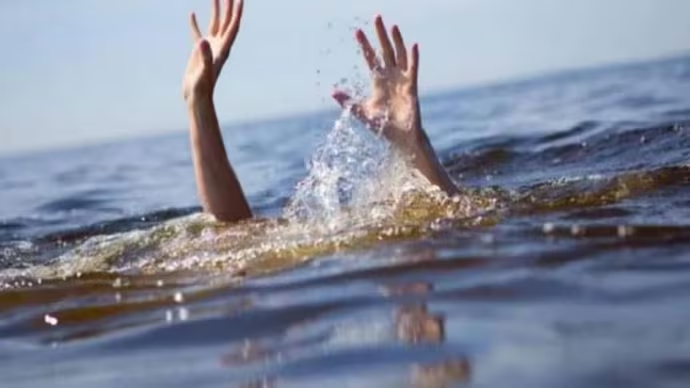
Kashmir Drowning Crisis Deepens: Rising Heat, Unsafe Rivers and Missing Safety Measures Fuel Surge in Water Deaths
By: Javid Amin | 01 June 2026
Kashmir Drowning Deaths Rise Sharply as Climate Change and Safety Gaps Create a Growing Public Hazard
From Grieving Families to Alarming Statistics, Kashmir’s Rivers Are Turning Into Silent Death Traps
Srinagar, Kashmir: Two heartbreaking incidents along the Jhelum River have once again drawn attention to an escalating public safety crisis in Kashmir. In one case, a family continues searching for a father swept away by the river’s powerful current. In another, a young boy lost his life after being pulled under the same waters.
While these tragedies have shocked local communities, officials and disaster response experts warn that they are part of a much larger and deeply concerning pattern emerging across Kashmir’s rivers, lakes, canals, and streams.
Over the past three years, drowning incidents have steadily increased across the Valley, exposing critical shortcomings in safety infrastructure, public awareness, and emergency preparedness. Rising temperatures linked to climate change have further intensified the problem, pushing more people towards water bodies during summer months and increasing exposure to dangerous conditions.
Kashmir’s Growing Drowning Crisis: The Numbers Tell a Troubling Story
Recent data collected from disaster response agencies and local administrative records indicate a persistent rise in drowning incidents across the Valley.
| Year | Reported Drownings | SDRF/NDRF Rescue Operations | Major Hotspots |
|---|---|---|---|
| 2023 | 48 | 92 | Jhelum River, Dal Lake, Wular Lake |
| Jan–Jul 2024 | 35 | 73 | Habba Kadal, Sopore, Baramulla |
| 2025 (Estimated) | 50+ | 100+ | South Kashmir Streams, Ganderbal Canals |
| 2026 (Till May) | 22 | 41 | Srinagar Outskirts, Kupwara |
Authorities recorded an alarming spike during June 2024 alone, when 11 drowning deaths were reported, making it one of the deadliest months in recent years.
Disaster management officials believe the trend is closely linked to extreme summer temperatures, which have encouraged residents, especially children and young adults, to seek relief in rivers and canals that are neither monitored nor designed for recreational swimming.
Why Kashmir’s Rivers Are Becoming Increasingly Dangerous
Climate Change Is Altering Human Behaviour
Kashmir has witnessed a noticeable increase in summer temperatures over the last decade. Traditionally known for its mild climate, the Valley now experiences prolonged heatwaves that frequently push temperatures beyond normal seasonal averages.
During recent summers, temperatures in Srinagar have climbed above 34 degrees Celsius, prompting thousands of residents to gather near rivers, lakes, and irrigation canals.
What was once occasional recreational activity has become a common response to rising heat.
Experts note that while people seek temporary relief from soaring temperatures, many underestimate the strength of river currents, sudden depth changes, and underwater hazards.
The result is a growing number of preventable drowning incidents.
The Jhelum River: Kashmir’s Lifeline and Emerging Danger Zone
Flowing through the heart of Srinagar and several districts, the Jhelum River remains one of Kashmir’s most important waterways.
However, rescue personnel identify the river as one of the region’s most dangerous drowning hotspots.
The river’s current can change dramatically within short distances. Areas that appear calm on the surface often conceal powerful undercurrents capable of pulling swimmers into deeper sections within seconds.
Several recent drowning incidents have occurred near popular urban stretches where local residents routinely gather without any formal safety supervision.
Officials warn that even experienced swimmers are vulnerable to sudden current shifts and water turbulence.
Lack of Safety Infrastructure Continues to Cost Lives
One of the most significant concerns raised by disaster management experts is the absence of basic safety infrastructure around major water bodies.
Across many parts of Kashmir:
- Warning boards are missing or damaged.
- Riverbanks remain unfenced.
- Lifeguard services are largely unavailable.
- Emergency rescue equipment is limited.
- Designated safe swimming zones do not exist.
Residents often access dangerous riverbanks without encountering any visible cautionary signs.
Experts argue that many deaths could be prevented through relatively low-cost interventions such as fencing, hazard markers, rescue stations, and community monitoring systems.
Children and Youth Among the Most Vulnerable
Young people account for a significant proportion of drowning victims across Kashmir.
School vacations and extreme heat frequently draw children and teenagers to rivers, canals, and lakes for swimming and bathing.
Many enter the water without adult supervision.
Community leaders say there is often a misconception that familiar local water bodies are safe simply because they are frequently visited.
In reality, water levels, currents, and riverbed conditions can change rapidly due to weather fluctuations and upstream flow variations.
A single misjudgment can quickly turn a routine outing into a tragedy.
Rescue Teams Face Operational Challenges
The State Disaster Response Force (SDRF) and National Disaster Response Force (NDRF) have significantly increased rescue operations in recent years.
However, responders continue to face several challenges:
Difficult Terrain
Many drowning incidents occur in remote locations where access is limited.
Time Sensitivity
The first few minutes after a drowning incident are often critical. Delays in reporting incidents can reduce rescue success rates.
Equipment Limitations
Specialized underwater search tools, sonar systems, and surveillance drones remain limited in some operational areas.
River Conditions
Strong currents and poor underwater visibility often complicate search-and-recovery operations.
Despite these challenges, rescue personnel continue to conduct intensive searches and awareness campaigns across vulnerable districts.
Urban Expansion Is Making Rivers More Unpredictable
Environmental experts point to rapid urbanization as another contributing factor.
Encroachments along riverbanks and unplanned construction activities have altered natural water channels in several areas.
When river channels narrow, water flow accelerates, increasing current velocity and creating hazardous conditions.
Combined with seasonal fluctuations and changing rainfall patterns, these modifications can transform previously manageable sections into dangerous zones.
Experts argue that water safety must now become part of broader urban planning and environmental management policies.
What Needs to Change: Experts Recommend Immediate Action
Install Warning Signage
Danger boards should be placed at all major drowning hotspots, including the Jhelum River, Dal Lake, Wular Lake, canals, and streams.
Deploy Trained Lifeguards
Permanent lifeguard stations should be established at high-risk locations during summer months.
Launch Community Awareness Campaigns
Schools, colleges, mosques, and local organizations can play a crucial role in spreading water safety awareness.
Use Modern Technology
Authorities should expand the use of drones, sonar equipment, GPS tracking systems, and surveillance tools to improve rescue capabilities.
Create Designated Safe Zones
Clearly marked swimming and recreational areas can reduce accidental exposure to dangerous currents.
Strengthen Regulations
Authorities may consider enforcing restrictions and penalties in hazardous zones where swimming is prohibited.
Behind Every Statistic Is a Family’s Loss
The true cost of drowning incidents cannot be measured through numbers alone.
Every victim leaves behind devastated parents, grieving siblings, spouses, and children.
Some victims lose their lives while attempting to save others. Others are children whose summer outings end in tragedy.
These stories reveal a recurring reality: many drowning deaths are preventable.
The combination of rising temperatures, inadequate infrastructure, limited awareness, and delayed intervention continues to place vulnerable communities at risk.
Future Outlook: A Growing Threat That Requires Urgent Attention
If current trends continue unchecked, experts fear Kashmir could witness more than 60 drowning-related deaths annually by 2027.
While SDRF and NDRF authorities have intensified patrols, awareness campaigns, and rescue preparedness measures, experts stress that government action alone will not solve the problem.
Meaningful change will require collaboration between authorities, educational institutions, local communities, religious leaders, and families.
As Kashmir adapts to a changing climate, water safety must become a public priority rather than an afterthought.
Without immediate intervention, the Valley’s rivers and lakes may continue claiming lives that could otherwise be saved through awareness, preparedness, and prevention.
Conclusion
Kashmir’s drowning crisis is no longer an isolated safety issue. It is emerging as a complex challenge shaped by climate change, urban development, infrastructure deficiencies, and human behaviour.
The recent tragedies on the Jhelum River serve as a stark reminder that every delayed safety measure carries a human cost.
Protecting lives will require more than rescue operations after accidents occur. It demands proactive planning, stronger safeguards, community education, and a collective commitment to ensuring that Kashmir’s cherished waterways do not become recurring sites of preventable loss.


