US Pushes Two-Phase Strategy: Reopen the Strait of Hormuz First, Then Pursue Iran’s Denuclearisation
By: Javid Amin | 03 Aug 2026
Trump Labels Upcoming Iran Negotiations as the “Last Chance” to Prevent Further Conflict
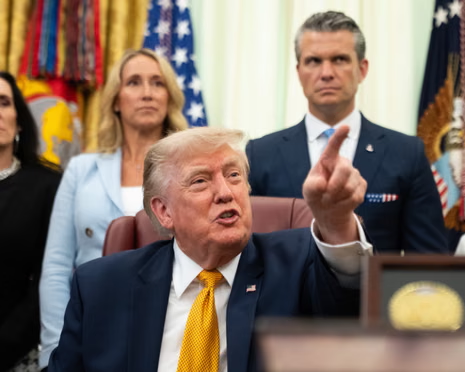
US President Donald Trump has raised the stakes ahead of the next round of negotiations with Iran, describing the upcoming diplomatic engagement as Tehran’s “last chance” to reach an agreement and prevent a broader military confrontation.
Speaking about Washington’s strategy, Trump said the proposed negotiations would follow a phased approach, beginning with the reopening of the Strait of Hormuz, one of the world’s most important maritime trade corridors, before moving to the more complex issue of Iran’s nuclear programme.
The remarks come amid heightened tensions across the Gulf following recent military exchanges, continued threats to international shipping, and growing concerns over regional stability.
Trump Outlines a Two-Phase Roadmap for Negotiations
According to Trump’s proposed framework, the immediate objective is restoring normal maritime movement through the Strait of Hormuz.
Describing the importance of the waterway, Trump indicated that reopening the strait would be the first confidence-building measure aimed at reducing immediate geopolitical and economic risks.
“The first phase of talks must ensure the reopening of the Strait of Hormuz.”
Only after stabilising maritime security, Trump said, would negotiations shift toward Iran’s nuclear programme.
“The second phase will be the denuclearisation. And that will take a little while.”
The sequencing reflects Washington’s stated priority of addressing urgent global energy concerns before entering what is expected to be a lengthy and technically demanding nuclear negotiation process.
Strait of Hormuz Remains at the Centre of Global Attention
The Strait of Hormuz continues to be one of the world’s most strategically important waterways.
A significant portion of global crude oil and liquefied natural gas exports passes through the narrow maritime corridor linking the Persian Gulf to international markets.
Recent tensions have renewed fears that any disruption to shipping could affect global energy supplies, increase transportation costs and trigger fresh volatility in international oil markets.
Trump’s emphasis on reopening the strait highlights Washington’s view that securing uninterrupted maritime navigation is essential for regional stability and the global economy.
US Warns That Failure of Talks Could Lead to More Military Action
Alongside the diplomatic proposal, Trump delivered a clear warning that failure to reach an agreement could result in additional American military operations.
According to the US position, diplomacy remains the preferred path, but Washington is prepared to intensify military pressure if negotiations collapse or Iran refuses to meet key demands.
The statement reinforces the administration’s strategy of combining diplomatic outreach with military deterrence, aiming to increase pressure on Tehran while leaving the door open for negotiations.
Denuclearisation Expected to Be a Long-Term Challenge
While reopening maritime routes is presented as the immediate priority, the second phase—denuclearisation—is expected to be considerably more complex.
Any agreement involving Iran’s nuclear programme would likely require:
- Comprehensive technical inspections.
- Long-term verification mechanisms.
- International monitoring arrangements.
- Gradual implementation of agreed commitments.
- Continued diplomatic engagement among multiple stakeholders.
Experts have long argued that nuclear negotiations involve years of monitoring and confidence-building measures rather than a single political agreement.
Tehran Yet to Signal Acceptance of Washington’s Proposal
Although Washington has framed the negotiations as a final opportunity for diplomacy, Tehran has continued to maintain its own position regarding the dispute.
Iranian leaders have repeatedly insisted that any negotiations must respect Iran’s sovereignty and national interests while rejecting what they describe as coercive diplomacy.
The gap between both sides’ public positions suggests that significant differences remain before substantive negotiations can begin.
Regional Stakes Continue to Rise
The latest diplomatic initiative unfolds against a backdrop of elevated military tensions across the Middle East.
Recent confrontations involving US forces, Iran-backed armed groups and regional partners have heightened concerns that any breakdown in talks could quickly translate into further military escalation.
Neighbouring Gulf states remain on heightened alert as governments monitor developments affecting regional security, maritime trade and critical energy infrastructure.
Potential Impact on Global Energy Markets
Financial markets continue to closely watch developments surrounding the Strait of Hormuz.
Even without a sustained disruption to shipping, uncertainty surrounding the waterway has contributed to volatility in global energy markets.
Analysts believe that successful negotiations leading to secure maritime navigation could help ease pressure on oil prices, while renewed confrontation could have the opposite effect by increasing supply concerns and shipping costs.
Key Developments at a Glance
| Aspect | Latest Development | Potential Impact |
|---|---|---|
| US–Iran Talks | Trump calls negotiations the “last chance” | Increased diplomatic pressure on Tehran |
| Strait of Hormuz | Reopening identified as the first negotiating priority | Improved global energy security if achieved |
| Nuclear Programme | Denuclearisation proposed as the second phase | Long-term verification and monitoring required |
| Military Strategy | US warns of additional strikes if diplomacy fails | Greater risk of regional military escalation |
| Oil Markets | Traders closely monitoring Hormuz | Continued price volatility linked to geopolitical developments |
Challenges Facing the Negotiations
Fragile Diplomatic Environment
The negotiations begin amid deep mistrust built over years of military confrontation, sanctions and failed diplomatic initiatives.
Risk of Regional Escalation
Any collapse in talks could increase the likelihood of further military exchanges involving regional actors and proxy groups.
Energy Market Uncertainty
The Strait of Hormuz remains central to global energy security, making diplomatic progress economically significant well beyond the Middle East.
Domestic Political Pressures
Leaders in both Washington and Tehran face internal political expectations that may limit flexibility during negotiations and complicate compromise.
Outlook
President Donald Trump’s description of the upcoming negotiations as Iran’s “last chance” underscores the increasingly high stakes surrounding US–Iran relations.
Washington’s proposed roadmap—prioritising the reopening of the Strait of Hormuz before pursuing a phased denuclearisation process—signals an effort to address immediate global economic concerns while laying the groundwork for broader security negotiations.
Whether that strategy succeeds will depend on both sides’ willingness to move beyond public rhetoric and engage in substantive diplomacy. If negotiations gain momentum, they could reduce tensions across the Gulf and restore confidence in international energy markets. However, if talks fail, the risk of further military escalation, economic disruption and prolonged regional instability is likely to increase significantly.