Rotten Meat Returns to Kashmir? Budgam Seizure Revives Questions Over Food Safety: 1,600 Kg Seized in Budgam, But Has the Meat Supply Network Really Been Dismantled?
By: News Desk | 14 November 2026
A year after the 2025 rotten meat scandal exposed serious weaknesses in Kashmir’s food safety system, another major seizure at Budgam Railway Station has raised troubling questions about enforcement, accountability and the safety of meat reaching consumers across the Valley.
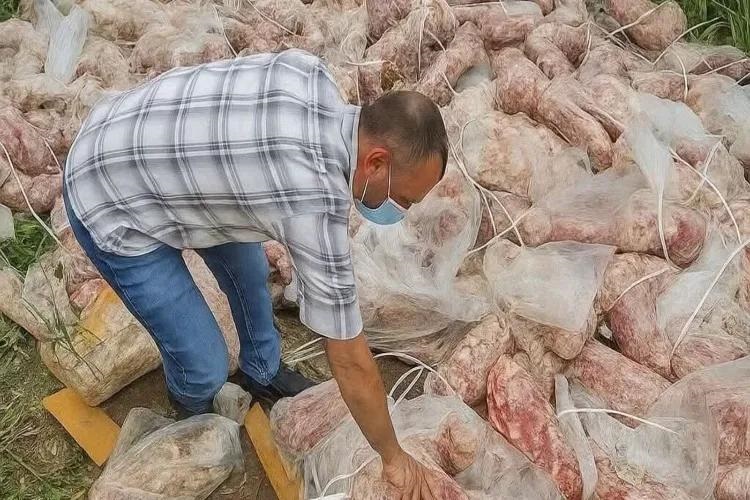
The recovery of approximately 1,600 kg of allegedly rotten buffalo meat at Budgam Railway Station is more than another food-safety enforcement story. It has reopened a question that Kashmir’s authorities have yet to answer convincingly: Did the crackdown of 2025 dismantle the network responsible for the illegal supply of unsafe meat, or did it merely interrupt its operations?
The distinction matters.
Last year’s scandal triggered raids, seizures, licence suspensions, financial penalties and police investigations. Authorities presented these measures as evidence of an extensive enforcement drive. Yet the latest recovery, reportedly involving a railway parcel consignment, suggests that the movement of suspect meat remains a serious concern.
It would be premature to conclude that the same operators are behind both incidents. That requires evidence from investigators. But it is equally difficult to ignore the recurrence of a problem that directly affects public health, consumer confidence and the credibility of food-safety regulation in Jammu and Kashmir.
For ordinary households, this is not simply about illegal trading. It is about what reaches their kitchens, what they are paying for and whether the food they consume has been properly inspected, transported, stored and handled.
1. Budgam railway station seizure: What exactly happened?
According to reports, the consignment had arrived from Delhi through a parcel train. Police received information about the suspicious cargo and intervened before it could enter the local supply chain.
The inspection reportedly revealed several serious irregularities:
-
The meat was transported without adequate refrigeration or dry-ice arrangements.
-
The required frozen transportation temperature of minus 18°C or below was not maintained, according to the FDA’s official account.
-
The packaging and declaration of the consignment raised concerns.
-
Veterinary and food-safety officials examined the material and declared it unfit for human consumption.
The entire consignment was subsequently seized and destroyed under the applicable food-safety procedures.
Police also registered a case and initiated an investigation to establish who arranged the consignment, who handled its transportation and where it was supposed to be delivered.
There are some differences in the initial reports concerning the precise FIR section and number. One report cites FIR No. 56/2026 under Section 27 of the BNS, while other reports mention Section 271 and a different FIR number. These particulars should be confirmed through the police record rather than reproduced as settled facts.
The railway route raises a different enforcement challenge
The latest seizure has brought railway parcel transportation into the food-safety debate.
Earlier enforcement operations had focused on meat being stored, processed or distributed through local facilities and conventional transportation channels. The Budgam recovery highlights another potential vulnerability: consignments moving through railway cargo facilities.
However, it is important to distinguish between an established fact and an investigative possibility. The seizure establishes that a large quantity of improperly transported meat reached Budgam. It does not, by itself, establish that an organised network deliberately shifted its operations from roads to railways.
That question must be answered through the investigation.
A particularly important detail is the issue of traceability. Authorities need to establish the consignor, consignee, booking documentation, ownership of the goods, transportation arrangements and intended recipient. Without this information, the investigation risks ending with the identification of a handler rather than the people responsible for the commercial operation.
Another seizure within days: Is this an isolated consignment?
The developments did not end with the 1,600 kg recovery.
Kashmir Life reported that another consignment weighing approximately 380 kg was seized at Budgam Railway Station on November 14, after being found in a deteriorated condition. The two recoveries together amount to nearly 1,980 kg, or approximately two tonnes, over two days.
This additional recovery deserves attention because it raises questions about cargo screening, documentation and the movement of perishable goods through railway facilities.
It does not establish that both consignments belonged to the same supplier or were connected to one organised operation. Investigators will have to determine whether they shared a source, destination, transporter or commercial beneficiary.
Nevertheless, two recoveries in such a short period make it important for authorities to examine whether the railway parcel system has adequate safeguards for transporting perishable food commodities.
2. The 2025 rotten meat scandal: What did the crackdown actually achieve?
To understand the seriousness of the latest recovery, it is necessary to revisit the 2025 scandal.
The controversy erupted after authorities uncovered large quantities of allegedly decomposed, unlabelled and improperly stored meat at locations in Kashmir, including the Zakura industrial area on the outskirts of Srinagar.
The discovery triggered inspections, raids and investigations across the Valley. Officials recovered substantial quantities of meat and meat products suspected of being unsafe for human consumption.
The scandal exposed several potential weaknesses in the food supply system:
-
Meat being stored without adequate temperature control.
-
Products lacking proper labels and traceable sourcing information.
-
Questions surrounding the transportation and distribution of imported meat.
-
Alleged attempts to sell unsafe products to commercial establishments.
-
Weak monitoring of storage facilities and intermediaries.
The scale of the enforcement operation was significant.
According to an August 2026 ETV Bharat report, the crackdown resulted in the suspension of licences belonging to nine Food Business Operators (FBOs), penalties amounting to approximately ₹26 lakh and the forwarding of certain cases for prosecution. Two traders were also reportedly booked by police over alleged violations involving imported meat.
There is, however, an important numerical distinction.
Different reports have quoted recoveries exceeding 11,000 kg, 12,000 kg and even higher figures. The figures should not automatically be treated as contradictory because they may cover different inspection periods, locations or categories of seized food products.
A particularly useful official figure emerged later.
According to a report by United News of India on November 14, 2026, Health Minister Sakeena Itoo informed the Jammu and Kashmir Legislative Assembly that 12,183.5 kg of rotten meat, valued at more than ₹29.19 lakh, had been destroyed during 1,676 inspections in the financial year 2025–26, up to December 2025.
This figure provides a more precise basis for understanding the scale of the problem than relying on rounded estimates from individual raid reports.
It also demonstrates that the issue extended beyond one location or one particular seizure.
Nine suspended licences and ₹26 lakh in penalties: Were these measures enough?
Suspending licences and imposing financial penalties are important regulatory steps. They can prevent businesses from continuing operations under the same conditions and send a warning to other operators.
But enforcement must go beyond immediate administrative action.
The critical questions are:
-
Were the suspended licences permanently cancelled or subsequently restored?
-
Were the owners and directors of the businesses identified?
-
Were the suppliers and distributors investigated?
-
Did police investigations lead to completed prosecutions?
-
Did courts impose convictions and meaningful penalties?
The available reporting confirms administrative action, financial penalties and ongoing legal proceedings. It does not provide a comprehensive final account of convictions, completed prosecutions or sentences imposed by courts.
This distinction is essential. A licence suspension is not the same as a criminal conviction. A police case is not proof of guilt. And a seizure does not automatically establish who was responsible for introducing unsafe food into the market.
The public deserves a clear account of what happened after the initial crackdown.
3. The biggest unanswered question: What happened to the people behind the trade?
The 2025 crackdown generated considerable public attention, but the latest seizure has brought the question of accountability back into focus.
Food-safety enforcement generally operates at several levels:
-
Identifying and seizing unsafe food.
-
Tracing the source and destination.
-
Establishing the identities of traders and intermediaries.
-
Investigating violations by transporters and storage operators.
-
Initiating prosecution where evidence supports criminal action.
-
Preventing the same operators from returning to the market through different businesses or channels.
The first step is visible in the latest Budgam operation. The more difficult work begins after the seizure.
Who purchased the meat? Where was it processed or stored? Who arranged its transportation? Was the consignee aware of its condition? Was the consignment intended for commercial processing, resale or another purpose?
These are investigative questions, not established allegations against any particular business.
The police and regulatory authorities must establish the chain of responsibility through documentary evidence, financial transactions, transport records and other legally admissible material.
Seizing the goods is not the same as dismantling the network
This is where the distinction between enforcement activity and enforcement outcomes becomes important.
A department may seize thousands of kilograms of unsafe food, impose penalties and suspend licences. Those actions demonstrate that inspections and regulatory intervention are taking place.
But dismantling an illegal supply operation requires identifying and acting against the people who organise procurement, storage, transportation and distribution.
If investigators identify only the person physically handling a consignment, the commercial chain behind the operation may remain untouched.
That is why the latest case should not be judged only by the quantity destroyed. Its eventual significance will depend on whether the investigation identifies the source, intended recipient and other people responsible.
4. Food safety is a public-health issue, not merely a regulatory violation
The rotten meat controversy is often discussed in terms of illegal trading, financial losses and government enforcement. But its most serious dimension is the potential harm to consumers.
Meat is a highly perishable food product. Its safety depends on proper slaughter, processing, hygiene, packaging, refrigeration, transportation and storage.
When these conditions are not maintained, harmful microorganisms can multiply, increasing the risk of foodborne illness.
What happens when consumers eat spoiled meat?
Consumption of contaminated or improperly stored meat can cause foodborne infections and gastrointestinal illness.
Depending on the contaminating organism and the level of exposure, symptoms may include:
-
Nausea and vomiting.
-
Diarrhoea and abdominal cramps.
-
Fever and weakness.
-
Dehydration, particularly in severe cases.
Some foodborne infections can become serious, especially among young children, older people, pregnant women and individuals with weakened immune systems.
An important distinction must be made: not every case of spoiled meat necessarily produces the same illness, and the precise health risk depends on the contaminant, exposure and individual circumstances. Nevertheless, meat declared unfit for consumption must never be allowed to enter the human food chain.
There is also a risk that consumers may unknowingly purchase unsafe products from restaurants, meat shops or other commercial outlets if inspection and traceability systems fail.
Why the cold chain matters
The cold chain is the controlled-temperature system through which perishable food moves from its source to the final consumer.
For frozen meat, maintaining the required temperature is essential to prevent thawing and deterioration.
The Food Safety and Standards Authority of India (FSSAI), in an advisory dated October 15, 2026, specifically warned food businesses about the risks associated with transporting meat, fish, paneer and other perishable commodities without appropriate temperature controls.
The advisory requires businesses to:
-
Use clean, covered and hygienic transportation facilities.
-
Maintain prescribed temperatures throughout transportation and storage.
-
Use appropriate food-grade packaging.
-
Prevent contamination from dust, moisture and pests.
-
Maintain invoices, records and traceability of consignments.
It also specifically asks food-safety authorities, Indian Railways and other concerned agencies to maintain vigilance during transportation checks.
This is particularly relevant to the Budgam incident.
The problem was not simply that meat arrived in poor condition. The reported absence of adequate refrigeration and dry-ice arrangements indicates a failure to maintain the controlled conditions required for transporting frozen meat.
The question now is why such a consignment was allowed to travel through the railway parcel system without the necessary safeguards.
5. Railway transportation and the missing accountability chain
The latest Budgam seizure raises an important question about the responsibility of different agencies involved in transporting food products.
Food safety does not begin when a consignment reaches a local market. It begins at the source.
Every stage must be accountable:
How a meat consignment should be monitored
-
Source and procurement
Verify the supplier, slaughterhouse, veterinary certification and origin of the meat.
-
Packaging and documentation
Check food-grade packaging, labelling, invoices and the identity of the consignor and consignee.
-
Transportation
Maintain the required temperature and hygienic conditions throughout transit.
-
Railway cargo handling
Ensure perishable food consignments comply with documentation and handling requirements.
-
Arrival and distribution
Inspect suspicious consignments and verify their storage conditions before distribution.
-
Retail and commercial sale
Conduct checks at meat shops, processing facilities, restaurants and storage premises.
The FSSAI’s October advisory makes clear that temperature control and traceability are responsibilities throughout the supply chain, not merely at the final point of sale.
Who should be held accountable?
The railway authorities, food-safety department, transport operators, consignors and receiving businesses have different responsibilities. Their respective roles must be established through records and the applicable regulations.
It would be unfair to hold any particular agency or business criminally responsible without evidence. However, the investigation should establish:
-
Who booked the consignments?
-
Were the required documents submitted?
-
Who inspected or accepted the cargo?
-
Were the goods declared as frozen meat?
-
Was temperature-controlled transportation arranged?
-
Who was supposed to receive the consignments?
-
Were there previous consignments linked to the same parties?
The investigation should also examine whether similar consignments have travelled through the same route without being detected.
If the latest seizures reveal repeated documentation or refrigeration violations, the authorities will need to examine the entire cargo-handling mechanism rather than treating each recovery as an unrelated incident.
6. What do the official figures tell us about Kashmir’s meat market?
The scale of Kashmir’s meat market makes the issue particularly significant.
A November 15 report by Hindustan Times, citing official estimates, states that Jammu and Kashmir, with consumption concentrated largely in the Valley, consumes more than 600 lakh kg of mutton annually. Approximately 350 lakh kg is brought from outside the Union Territory.
These figures underline the importance of a reliable supply chain.
Kashmir’s dependence on supplies from outside the region means that food-safety monitoring cannot be limited to local markets and slaughter facilities. It must also cover interstate procurement, transport, storage and distribution.
The 2025–26 Assembly figures provide another important perspective.
J&K food-safety enforcement: Official figures
1,676 – Inspections conducted
12,183.5 kg – Rotten meat destroyed
2,139 kg – Additional meat seized
144 – Samples lifted
Non-standard quality samples – 18
Financial Year 2025–26, up to December 2025. Figures reported by Health Minister Sakeena Itoo in the J&K Legislative Assembly. The 2,139 kg seized and 12,183.5 kg destroyed are separate reported categories and should not be confused.
They represent what authorities detected during inspections and enforcement operations. They cannot establish how much unsafe meat may have gone undetected.
Similarly, the 18 samples classified as non-standard quality should not be confused with the entire quantity of meat destroyed. These are different regulatory measurements.
A question of consumer confidence
The economic consequences also deserve attention.
When a food-safety scandal emerges, consumers often become cautious about buying meat from shops, ordering dishes at restaurants or purchasing packaged products.
Businesses that follow the rules can suffer alongside those accused of violations.
Restaurants, legitimate meat traders, wholesalers and small retailers may face declining customer confidence even when they have no connection to the offending consignments.
This creates a broader economic problem: irresponsible operators can damage the reputation of an entire industry.
For a region where meat consumption forms an important part of household food expenditure and the hospitality sector, maintaining consumer confidence is essential.
7. Why the prosecution figures matter more than the seizure headlines
One of the biggest gaps in the public discussion surrounding the 2025 scandal is the lack of a consolidated account of the final legal outcomes.
The reported enforcement measures included nine suspended FBO licences, approximately ₹26 lakh in penalties and cases referred for prosecution.
However, the available reporting does not establish a complete figure for:
-
Total accused persons convicted.
-
Completed prosecutions.
-
Acquittals and pending cases.
-
Final court-imposed penalties.
-
Jail sentences, if any.
-
Businesses permanently closed following the investigations.
This does not mean that no further action was taken. It means the publicly available reporting does not provide enough information to establish the final outcome.
There is another important legal distinction.
The Food Safety and Standards Act, 2006, contains its own enforcement framework, including inspection, sampling, adjudication and prosecution. During the February 2026 Assembly discussion, the Health Minister explained that contraventions under the Act are dealt with through this statutory mechanism.
A police FIR under the Bharatiya Nyaya Sanhita is a separate legal development and must be assessed according to the specific allegations and applicable provisions.
Therefore, the existence of a police case should not be presented as proof of a conviction under food-safety legislation.
What the government should publish
The latest controversy provides an opportunity to make food-safety enforcement more transparent.
The administration should consider publishing a consolidated, periodically updated enforcement report containing:
-
Total inspections conducted across districts.
-
Quantity and value of unsafe food seized and destroyed.
-
Number of samples tested and laboratory findings.
-
Licences suspended, cancelled or restored.
-
Number of cases referred for prosecution.
-
Convictions, acquittals and pending proceedings.
-
Repeat violations by businesses, where legally established.
-
Details of improvements made to interstate and railway cargo monitoring.
Such reporting would allow consumers to judge whether enforcement is producing lasting results rather than simply generating repeated seizure announcements.
8. What needs to change? Five measures that could prevent another scandal
Repeated seizures should lead to changes in the enforcement system. Otherwise, authorities risk returning to the same cycle: discovery, seizure, public outrage, investigation and another discovery months later.
The following measures deserve priority.
1. Mandatory verification of railway meat consignments
Indian Railways and food-safety authorities should establish a stronger verification mechanism for perishable food cargo. Consignments should carry identifiable documentation, supplier details, destination information and evidence of suitable transportation arrangements.
2. Digital tracking of meat transportation
A traceability system could help authorities identify the origin, ownership and movement of meat consignments. Digital records would make it more difficult for businesses to operate through unidentified intermediaries.
3. Joint inspections at major entry points
Food-safety teams should coordinate with railway police, transport authorities and district administrations to conduct risk-based inspections at railway stations, transport hubs and wholesale markets.
4. Stronger action against repeat offenders
Where repeat violations are established, enforcement should extend beyond the seizure of goods. Authorities should investigate business ownership, suppliers, financial links and distribution networks, and pursue appropriate legal action.
5. Public disclosure of investigation outcomes
The government should periodically inform the public about the progress of major food-safety investigations. Consumers deserve to know whether the people responsible have been identified and whether cases have reached their legal conclusion.
These measures would help shift the focus from reactive enforcement towards prevention and accountability.
9. The uncomfortable question: If rotten meat has returned, did it ever really stop?
The latest Budgam seizure has revived a question that goes beyond the 1,600 kg recovered at the railway station.
What happened to the alleged supply network exposed in 2025?
There is evidence of enforcement action. Licences were suspended, penalties were imposed, unsafe meat was destroyed and cases were referred for legal proceedings. The government also reported extensive inspections and recoveries in the Legislative Assembly.
But there is a difference between taking action against individual consignments and dismantling the commercial networks responsible for supplying unsafe food.
The latest railway seizure, along with the reported recovery of another 380 kg consignment, demonstrates that serious food-safety violations remain a concern. It does not establish that the same organised network has resumed operations or that every earlier enforcement measure failed.
That distinction should not dilute the demand for accountability.
Authorities must now establish whether the latest consignments were connected, identify their sources and intended recipients, examine the documentation and determine whether any larger distribution operation was involved.
The investigation should not stop with the person handling the boxes.
Seizures demonstrate enforcement. Repeated seizures demand answers.
Kashmir’s consumers should not have to depend on railway police receiving a tip-off, a suspicious smell or an unexpected inspection to know that unsafe meat is being kept out of the market.
Food safety must be guaranteed through routine inspections, proper transportation standards, effective laboratory testing and accountable supply chains.
The real measure of success will not be how many tonnes of rotten meat authorities destroy in another operation. It will be whether the people responsible are identified, the loopholes are closed and unsafe products are prevented from reaching consumers in the first place.
Until the government can demonstrate that the supply chains behind these violations have been traced and effectively disrupted, every fresh seizure will bring the same question back to Kashmir’s dinner tables: Who is ensuring that the food reaching our homes is safe?
Editorial fact-check: What is established and what remains unanswered?
| Issue | Verified position |
|---|---|
| November 2026 Budgam seizure | Approximately 1,600 kg in 44 boxes |
| Nature of meat | Buffalo meat, declared unfit for consumption |
| Transportation | Delhi to Budgam by parcel train, according to police reports |
| Cold-chain violation | Inadequate refrigeration/dry ice reported |
| Disposal | Consignment seized and destroyed |
| Additional recovery | Approximately 380 kg reported separately |
| 2025–26 official figures | 12,183.5 kg destroyed; 2,139 kg separately seized |
| 2025 enforcement | Nine FBO licences suspended and approximately ₹26 lakh in penalties reported |
| Conviction figures | No consolidated final figure established from available reporting |
| Network dismantled? | No publicly documented confirmation found |
Important editorial qualification: The November 2026 police reports differ on the FIR number and legal section. The article deliberately avoids treating those particulars as settled. Likewise, the 2025 seizure totals reported by different outlets cover potentially different periods and categories; the Assembly figures are presented separately rather than added indiscriminately.