Dogra Certificate Row Returns: BJP Invokes Separatist Pressure, but Key Policy Questions Remain
By: Javid Amin | 13 November 2026
Jammu: The Jammu and Kashmir BJP has once again brought the Dogra Certificate issue into the political spotlight, arguing that the community’s historical identity, cultural heritage and legitimate aspirations cannot be compromised under political or separatist pressure.
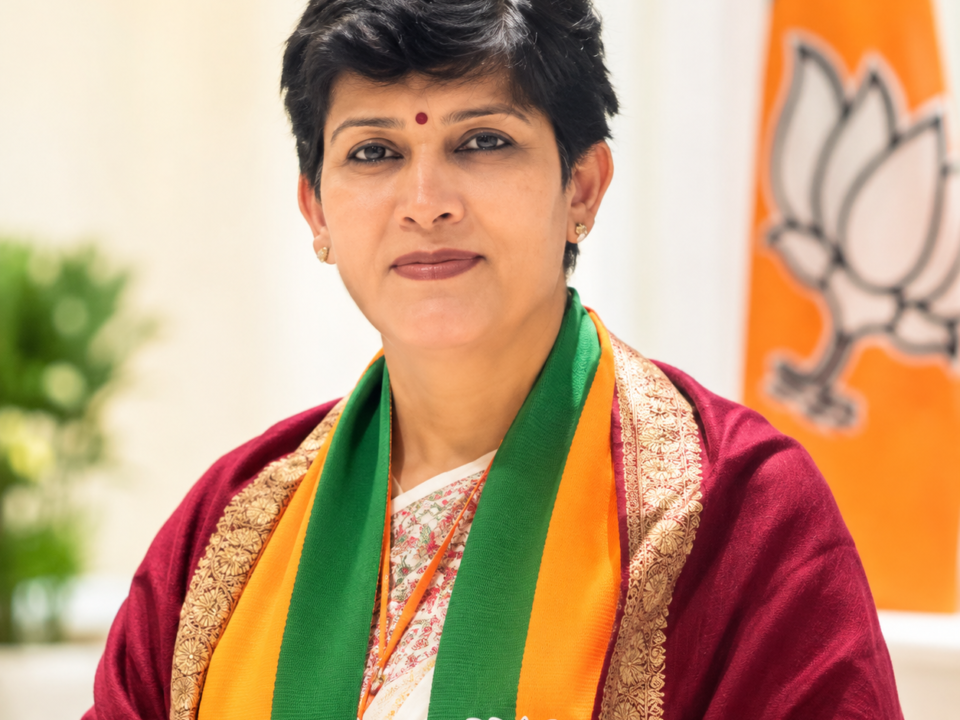
BJP spokesperson Rajni Sethi has urged the Omar Abdullah-led government to frame a clear policy defining who qualifies for a Dogra Certificate, what purpose it serves and whether it carries any specific benefits, particularly in recruitment.
The demand comes against the backdrop of a controversy that first erupted in 2011, when the then National Conference-Congress government introduced Dogra certificates for recruitment-related physical relaxations. The decision was withdrawn weeks later after the Union Ministry of Home Affairs extended similar concessions to all permanent residents of Jammu and Kashmir.
But the issue has acquired a new dimension. An official J&K government portal lists a service for issuing Dogra Certificates, and a digitally signed certificate dated August 2025 is publicly available. At the same time, the online application page has displayed a notice that the service is under modification.
This raises a question that goes beyond political slogans: if the government recognises a mechanism for issuing Dogra Certificates, why has it not clearly explained the eligibility criteria, administrative status and benefits attached to the document?
The BJP’s latest intervention has revived an old debate, but the documentary record suggests that the issue needs more than political assurances. It needs a transparent administrative framework.
What Rajni Sethi is demanding
In her November 13 statement, Sethi described the Dogra Certificate as more than an administrative document. She argued that it is connected to the historical recognition, social dignity and legitimate aspirations of Jammu’s Dogra community.
She also referred to the 2011 controversy, when the previous NC-Congress government issued orders concerning Dogra certificates before withdrawing them following changes in the Centre’s recruitment policy.
The BJP has maintained that the community’s contribution to Jammu and Kashmir’s history, administration, culture and national life deserves recognition. It has also argued that young people belonging to the Dogra community should receive fair opportunities in recruitment and other government-related matters.
Importantly, Sethi has called for the government to clarify the status of previous orders and subsequent decisions rather than allowing uncertainty to continue.
The demand for clarity is significant. However, the BJP’s political language about separatist pressure needs to be examined alongside the actual sequence of events that led to the withdrawal of the original certificate order.
The 2011 controversy: How the Dogra Certificate became a political flashpoint
The modern administrative controversy began in March 2011.
The then Jammu and Kashmir government, led by the NC-Congress coalition, issued Government Order No. Rev (LB) 69 of 2011 on March 25, followed by another order on April 7. The orders concerned the issuance of Dogra certificates to eligible residents of Jammu.
The immediate purpose was connected to recruitment in Central Armed Police Forces (CAPFs), where physical standards such as height and chest measurements were relevant to eligibility.
The background lay in the Union Home Ministry’s recruitment-related relaxations. Its earlier arrangements provided concessions to candidates from certain geographical areas, including Kashmir and Ladakh, while Dogra candidates from Jammu were considered under a separate community classification.
Revenue Minister Raman Bhalla directed the concerned revenue authorities to issue Dogra certificates so eligible candidates could establish their status for recruitment purposes.
The move soon generated objections from sections of the political establishment and separatist leadership in Kashmir.
One of the most vocal opponents was separatist leader Syed Ali Shah Geelani, who demanded that the government withdraw the certificate arrangement and warned of protests if it failed to do so by the end of April.
His opposition was not merely a general criticism. Contemporary reports recorded an ultimatum to the government, making separatist pressure a genuine part of the political atmosphere surrounding the controversy.
But the next development is equally important.
On April 22, 2011, the Union Ministry of Home Affairs amended its recruitment-related position and extended the relevant physical-standard relaxations to all permanent residents of Jammu and Kashmir.
The Centre’s stated reasoning was that recruitment into the CAPFs should benefit eligible candidates across the entire Union territory, including Jammu. Chief Minister Omar Abdullah had also sought an amendment that would extend the concessions to all permanent residents rather than divide applicants according to geographical or ethnic categories.
Following the Centre’s amendment, the state government issued an order on April 28 superseding the earlier Dogra Certificate arrangements. The official administrative explanation was that the specific certificate-based mechanism was no longer required for the recruitment concession because the benefit had been extended to all permanent residents.
This is where the political narratives diverge.
The BJP and sections of Dogra organisations have viewed the withdrawal as a retreat under pressure, particularly because the separatist opposition was accompanied by an explicit threat of agitation.
The administrative record, however, also establishes that the Centre changed the underlying recruitment rules before the state withdrew its orders.
It would therefore be incomplete to describe the entire decision simply as capitulation to separatist pressure. Equally, it would be inaccurate to ignore the political pressure that surrounded the controversy.
Both developments formed part of the same episode.
The certificate was originally about recruitment, not simply cultural recognition
One distinction is essential to understanding the present debate.
The original 2011 Dogra Certificate arrangement was linked to recruitment-related physical standards. It was not introduced as a comprehensive policy recognising every aspect of Dogra history, culture or community identity.
In September 2015, Union Minister of State in the Prime Minister’s Office Dr Jitendra Singh revived the demand for restoring the certificate in its original format.
Singh argued that the document had helped eligible youth from Jammu access opportunities in the armed forces and paramilitary services. He also maintained that the classification was not intended to be based on religion or caste, but on historical recruitment arrangements associated with particular areas and communities.
His explanation referred to the British-era concept of martial races, under which colonial authorities classified certain communities and geographical groups for military recruitment.
That historical context needs to be treated carefully. The British martial-race theory was a colonial recruitment classification, not scientific proof that any community was inherently better suited to military service.
The more important question today is whether any specific recruitment concession remains legally available to Dogra candidates and, if so, under which current rules.
A certificate that establishes community identity is not automatically the same thing as a certificate that guarantees recruitment benefits.
The government needs to explain the difference.
August 2025: The official record raises fresh questions
One of the more significant details in the BJP’s latest statement is its reference to developments surrounding the Dogra Certificate issue in August 2025.
The party has not specified exactly which administrative decision or event it is referring to. However, a check of the official J&K government service portal reveals an important development.
The JanSugam portal lists a service titled “Application for Issuance of Dogra Certificate by Tehsildar” under the Revenue Department.
The service description identifies the Tehsildar as the issuing authority and allows individuals to apply through different channels, including online submission, kiosks and physical applications. It also lists supporting documents such as a judicial undertaking, matriculation or date-of-birth certificate, a statement from a Lambardar, Chowkidar, BLO or VLW, and identity and residence-related documents.
More significantly, the portal contains a digitally signed Dogra Certificate issued by the Tehsildar, Jammu, dated August 4, 2025.
The certificate confirms that the individual concerned belongs to the Dogra community and states that it is applicable for enrolment in the Indian Army or for another bona fide purpose.
This establishes that the certificate was issued through an official government channel in 2025. It was not merely a historical document being discussed by political organisations.
But the portal also reveals an administrative inconsistency.
While the service description remains available, an associated application page has displayed the status “Service Under Modification.”
The public service description also does not provide a detailed definition of eligibility or a clear delivery timeline.
These details make the BJP’s demand for clarification more substantial than a purely political appeal. The government needs to explain whether the service is fully operational, what rules govern it, whether the 2011 orders remain relevant, and what practical benefits a certificate currently provides.
One certificate issued in August 2025 does not establish that a comprehensive statewide policy exists or that every eligible applicant can obtain the document under uniform conditions.
That is precisely the gap that requires official clarification.
Dogra identity is not confined to one religion or political party
The debate also requires a broader understanding of what the word Dogra represents.
Dogra identity is commonly associated with the historical Duggar region, its cultural traditions, language, customs and shared regional heritage. It cannot be reduced to the history of a ruling dynasty or the political position of one party.
In a 2002 speech in the Rajya Sabha, Dr Karan Singh described Dogra identity as geographical and explicitly referred to Dogra Hindus, Muslims and Sikhs. His remarks were made during a discussion on the recognition of Dogri as a constitutional language.
Dogri subsequently became one of the languages included in the Eighth Schedule of the Constitution through the 92nd Constitutional Amendment Act, 2003.
That recognition was an important milestone for the language and its literary tradition.
It is also a reminder that cultural identity and administrative certification are two different matters.
Dogra identity exists beyond government-issued documents. A certificate can help establish a person’s community status for a particular administrative purpose, but it does not create the culture, language or historical belonging that the document is meant to recognise.
Nor should the identity be treated as the exclusive property of a political organisation.
A credible policy must reflect the community’s cultural and regional character without turning the certificate into an instrument of religious or political classification.
The Maharaja Hari Singh holiday row has added another political dimension
The latest BJP statement comes at a time when the National Conference and BJP have already clashed over the official recognition of historical personalities.
On September 22, 2026, NC MLA Abdul Majeed Larmi raised the issue of restoring public holidays associated with National Conference founder Sheikh Mohammad Abdullah.
Sheikh Abdullah’s birth anniversary falls on December 5, while his death anniversary falls on September 8. Larmi also sought restoration of the July 13 Martyrs’ Day holiday.
He argued that if the demand for restoring Sheikh Abdullah’s holiday was not accepted, the holiday marking Maharaja Hari Singh’s birth anniversary on September 23 should also be withdrawn.
The remarks triggered protests from BJP legislators, who objected to any suggestion of cancelling the holiday associated with the last Dogra ruler. Several NC members supported restoring Sheikh Abdullah’s holiday, while Congress legislators backed that demand but favoured retaining the holiday for Maharaja Hari Singh. PDP members also raised the issue of July 13.
The historical sequence behind the holiday dispute is important.
Following the reorganisation of Jammu and Kashmir in 2019, the administration removed July 13 and December 5 from the official holiday calendar. In September 2022, the government issued Government Order No. 1093-JK(GAD) of 2022, declaring September 23, Maharaja Hari Singh’s birth anniversary, an annual public holiday across government offices and educational institutions in the Union Territory.
The BJP subsequently described the demand to withdraw the Maharaja’s holiday as an insult to Dogra heritage and the sentiments of Jammu.
There is, however, a distinction between a legislator expressing a conditional position in the Assembly and the government formally deciding to cancel an existing holiday.
The Speaker clarified that the Assembly itself did not have the administrative authority to grant or withdraw government holidays. No cancellation decision followed from that exchange.
The episode was a political confrontation over competing historical commemorations, not an official government order to remove Maharaja Hari Singh’s holiday.
It is also important not to equate the NC legislator’s demand with separatist pressure. It was raised by an elected representative during a legislative debate about public holidays. The BJP may strongly oppose the position, but that does not make it evidence of a separatist campaign.
Maharaja Hari Singh’s legacy remains historically complex
The political debate over Dogra heritage also reflects the different ways in which the region remembers its princely past.
The Dogra dynasty ruled the princely state of Jammu and Kashmir from 1846 until 1947. Maharaja Hari Singh, who became ruler in 1925, was the last Dogra Maharaja.
Supporters of his legacy point to social and administrative reforms during his reign, including initiatives in education, women’s education and measures against untouchability. The period also witnessed the development of public institutions and infrastructure.
But historical assessment cannot end there.
The same period was marked by oppressive taxation, unequal access to state services and growing political discontent. The protests of 1931 became a major turning point in Kashmir’s political history. On July 13 that year, 22 people were killed outside Srinagar Central Jail during protests against the Maharaja’s rule, an event remembered by many Kashmiris as Martyrs’ Day.
These contrasting memories explain why the Maharaja’s legacy remains politically sensitive.
For many in Jammu, he represents the Dogra dynasty, regional pride, administrative reforms and the history of the princely state. For many in Kashmir, his reign is also associated with political exclusion, repression and the struggle for representative government.
Recognising Dogra heritage does not require dismissing the grievances of people who suffered under princely rule. Similarly, acknowledging historical grievances does not justify erasing the cultural and linguistic identity of the Dogra community.
A mature historical understanding must allow both conversations to exist.
What the J&K government needs to clarify
The latest controversy offers the Omar Abdullah government an opportunity to resolve an issue that has repeatedly returned to political debate.
A clear policy should address several questions.
1. Who qualifies for a Dogra Certificate?
The government should publish precise eligibility criteria. These should explain the relevance of ancestry, family records, residence, cultural or linguistic links and any other evidence required.
2. What is the certificate meant to establish?
Is it a community identity document, a historical recognition certificate, a recruitment-related document, or a combination of these purposes? The distinction should be explicit.
3. Does it provide any specific recruitment benefit?
The original 2011 arrangement was connected with physical-standard relaxations for CAPF recruitment. The Centre subsequently extended relevant concessions to all permanent residents of Jammu and Kashmir.
The government should clarify whether any separate benefit remains available under current Army or CAPF recruitment rules. It should not allow applicants to assume that possession of the certificate guarantees a concession.
4. What is the status of the 2011 orders?
The Revenue Department should publish a clear explanation of which provisions were superseded, which administrative procedures remain in force and what legal basis currently governs issuance.
5. Why does the online service appear inconsistent?
If the certificate is an active government service, the application mechanism should function transparently. If it is being modified, the government should explain what changes are being made and when applicants can expect the process to resume.
These are administrative questions, not demands that require another round of political confrontation.
A question of recognition, fairness and political responsibility
The BJP is right to argue that the cultural and historical identity of the Dogra community deserves recognition and that young people should not face uncertainty over legitimate entitlements.
But the issue cannot be resolved simply by invoking separatism or accusing political opponents of undermining Jammu’s heritage.
The 2011 record shows that separatist opposition was real, but it also shows that the government withdrew the original recruitment-related arrangement after the Centre extended the relevant concessions to all permanent residents. The 2025 government record suggests that Dogra Certificates have since been issued, while the online service information remains less than clear.
These details point to an administrative problem that has been allowed to remain politically useful.
The National Conference, meanwhile, cannot avoid the political consequences of its earlier decisions. Its role in the 2011 withdrawal will continue to be raised by opponents, particularly when the party’s legislators make statements about the recognition of Maharaja Hari Singh and Sheikh Mohammad Abdullah.
But the present government must deal with the issue on its merits, not merely defend or reject the position taken by its predecessors.
Dogra identity should neither be held hostage to separatist opposition nor reduced to a political slogan. It deserves recognition that is inclusive, historically informed and supported by clear government policy.
The real test for the Omar Abdullah government is whether it can move beyond competing political narratives and provide a transparent answer to a straightforward question: what does a Dogra Certificate mean today, who is entitled to receive it, and what rights or benefits does it actually carry?
Until those questions are answered, the controversy is likely to return whenever Jammu and Kashmir’s competing political narratives turn towards history, identity and regional recognition.