J&K Rotten Meat Case: Who Is Accountable Beyond Licence Suspensions?
The suspension of food business licences following the rotten meat controversy has intensified scrutiny of food safety enforcement in Jammu and Kashmir. With an FIR registered over the Budgam seizure and the FDA reporting further legal proceedings, the public now wants clarity on the identities of those involved, the progress of investigations and whether accountability will extend beyond businesses facing regulatory action.
By: Javid Amin | 21 November 2026 | Srinagar
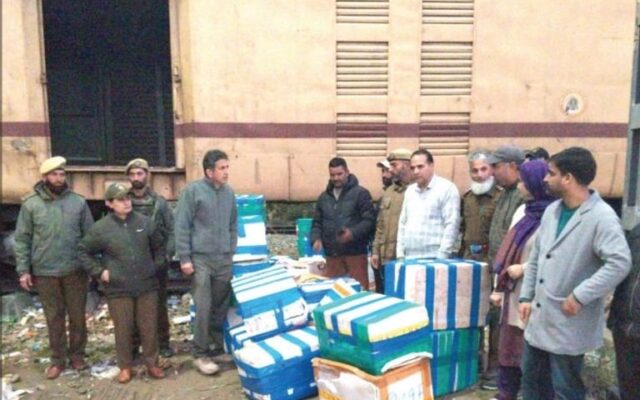
The suspension of licences and registrations of food establishments across Jammu and Kashmir has brought renewed attention to the controversy surrounding the seizure of approximately 1,600 kg of deteriorated buffalo meat at Budgam Railway Station. While the Food and Drugs Administration (FDA) has intensified inspections and initiated enforcement proceedings, the latest developments have also raised an important question: will the action go beyond suspending business licences and establish accountability across the entire supply chain?
For consumers, the issue is much bigger than a single consignment of unsafe meat. It concerns the credibility of the system responsible for ensuring that food sold in markets, restaurants and neighbourhood establishments meets prescribed safety standards.
The Budgam seizure exposed serious concerns about transportation, refrigeration, documentation and the handling of perishable meat products. Subsequent enforcement drives have brought more establishments under scrutiny, but consumers are still seeking a clearer picture of the criminal investigation, the people responsible and the action taken against those who may have facilitated violations.
A licence suspension can stop a business from operating until deficiencies are addressed. It cannot, by itself, establish who procured unsafe meat, who transported it, who intended to distribute it or whether any wider network was involved.
That distinction now lies at the centre of the public debate.
Seven Licence Suspensions: What Exactly Has the FDA Ordered?
The latest enforcement action, reported on November 21, followed inspections conducted across Jammu and Kashmir under the Food Safety and Standards Act, 2006.
According to the FDA, its teams conducted 127 inspections and collected 39 food samples for laboratory examination. Licences or registrations of food establishments were suspended until further orders because of deficiencies involving food safety, hygiene and sanitary requirements.
The establishments named in the published enforcement reports include:
-
M/s Jan Sweets, Hazoori Bagh, Srinagar.
-
Bakery manufacturing unit of M/s Mughal Darbar, Residency Road, Srinagar.
-
M/s Cottage Inn Restaurant, Baghat, Srinagar.
-
M/s Madina Sunrise Poultry, Baghat, Srinagar.
-
M/s Madina Zaika Biryani, Baghat, Srinagar.
-
M/s Orbit Restaurant, New Pulwama.
-
M/s NFS Poultry, Mandli, Billawar.
-
M/s Delhi Ki Mashoor Biryani, Vijaypur, Samba.
-
M/s Restaurant NAZ, Vijaypur, Samba.
Editorial clarification: The FDA statement is reported as covering seven establishments, but the reproduced lists in several news reports contain nine names. The discrepancy needs clarification from the department before the exact number is presented as settled.
The enforcement drive also resulted in the destruction of approximately 35 kg of sweets found under improper temperature conditions. Six momo-processing and selling operators in Hawal were served notices directing them to suspend operations until identified hygiene deficiencies were rectified.
The FDA also reported legal proceedings involving three cases under Section 56, three under Section 58 and three compounded under Section 69 of the Food Safety and Standards Act, with a total compounding fee of Rs 3,000.
These developments demonstrate that the department’s latest enforcement activity extends beyond the Budgam meat consignment and includes separate food safety violations across different establishments.
This distinction is important. The published suspension list does not establish that all the named businesses were connected to the 1,600 kg meat consignment or that they were all involved in selling rotten meat. The action was reported in the context of a wider enforcement drive.
Consumers deserve transparency, but that transparency must also distinguish between businesses facing hygiene-related regulatory action and individuals or establishments actually implicated in the meat investigation.
Who Was Behind the 1,600 Kg Meat Consignment? The FDA Has Disclosed Preliminary Details
One of the most important developments since the initial seizure came from the FDA’s clarification issued on November 19.
The department disclosed preliminary information about the origin and intended delivery of the consignment.
According to the FDA, the meat originated from M/s Al Nida Foods, Ghazipur Fish Market, Delhi, and was intended for Ayaan Manzoor of Bemina, Srinagar, through M/s Tultrav Courier Agency, Bemina.
The department stated that the consignment had been booked through the railway parcel service by declaring it as general goods rather than disclosing its actual nature as highly perishable food.
The FDA also identified discrepancies in the accompanying documentation and said that the transporter and intended recipient did not possess the required FSSAI licences.
These are significant findings because they move the investigation beyond the discovery of deteriorated meat and towards identifying the commercial chain through which the consignment was arranged and transported.
The FDA’s account also raises questions about the role of the railway parcel booking process. How was a consignment of highly perishable food accepted under the general-goods category? Were the declarations examined? Were the responsibilities of the booking agency and other intermediaries properly verified?
The department has subsequently issued an advisory to railway authorities, emphasising that highly perishable food products must be transported through duly licensed food business operators, under prescribed temperature-controlled conditions and with proper documentation.
The identities disclosed by the FDA are relevant to understanding the preliminary investigation. However, identification as a consignor, recipient or courier does not by itself establish criminal guilt. That must be determined through investigation and due legal process.
FIR Registered, But What Is the Status of Arrests and Criminal Proceedings?
The criminal investigation began immediately after the Budgam seizure.
Railway Police registered an FIR after the recovery of 44 boxes of meat and sought assistance from the Food Safety Department and veterinary authorities to establish whether the consignment was fit for consumption.
In an initial statement to Kashmir Reader on November 14, Railway Police officer Inspector Benazir Iqbal confirmed that an FIR had been registered under Section 271 of the Bharatiya Nyaya Sanhita (BNS).
She also stated that no arrest had been made at that stage. Police had apprehended the handler and were investigating the identity of the person behind the consignment.
This is an important distinction when discussing accountability.
There are two separate legal tracks:
1. Criminal investigation: Railway Police must establish whether offences were committed, identify the people responsible and collect evidence concerning the procurement, transportation and intended distribution of the meat.
2. Food safety proceedings: The FDA can initiate regulatory and adjudication proceedings against food business operators for violations of the Food Safety and Standards Act, 2006.
The FDA has also cited Sections 53 and 61 of the Act in connection with the Budgam consignment, while the absence of mandatory licences attracts provisions under Sections 31 and 63.
These proceedings can operate alongside the police investigation, but they are not interchangeable.
As of November 22, publicly available reporting establishes the registration of the FIR and the initial police statement that no arrest had been made. A subsequent, independently verified update establishing the number of arrests specifically connected with this consignment has not been located.
The government should therefore provide a clear update on:
-
Whether the consignor and intended recipient have been questioned.
-
Whether the courier agency’s role has been examined.
-
Whether any additional handlers or facilitators have been identified.
-
Whether arrests have subsequently been made.
-
Whether a chargesheet or other formal prosecution action has followed.
Without such information, consumers cannot assess how far the criminal investigation has progressed.
This Was Not the First Meat Enforcement Case: What Happened in 2025?
Perhaps the most important context for understanding the latest controversy is that Jammu and Kashmir’s food safety authorities had already documented substantial violations involving frozen meat during 2025.
An official FDA prohibitory order issued on October 3, 2025, referred to the detection of large quantities of rotten, decomposed and improperly labelled frozen and chilled meat products across the Union Territory.
The order highlighted violations involving missing batch numbers, manufacturing and expiry dates, storage conditions, manufacturer details and mandatory FSSAI declarations.
It also reiterated that frozen food must be received at a temperature of minus 18 degrees Celsius or below.
More importantly, subsequent enforcement disclosures identified five establishments from which a combined 4,040 kg of frozen meat and meat products had been seized during 2025.
The establishments included:
| Establishment | Reported quantity seized |
|---|---|
| Sunshine Industries, Zakura | 1,200 kg |
| Al-Taqwa, Lasjan | 500 kg |
| M.M. Foods, Haji Bagh, HMT | 1,400 kg |
| Niyaz Ahmad Kawa, Aali Kadal | 420 kg |
| Al-Azeem Enterprises, Manderbagh | 520 kg |
| Total | 4,040 kg |
The FDA subsequently reported that legal proceedings had been initiated against the respective food business operators.
The Court of the Additional Deputy Commissioner, Srinagar, acting as the adjudicating authority, imposed the following penalties:
| Establishment | Reported penalty |
|---|---|
| Sunshine Industries | Rs 4 lakh |
| Al-Taqwa | Rs 5 lakh |
| M.M. Foods | Rs 4.40 lakh |
| Niyaz Ahmad Kawa | Rs 1.25 lakh |
| Al-Azeem Enterprises | Rs 17,500 |
| Total | Rs 15.825 lakh |
The department also disclosed that two samples collected from the businesses were examined by the ICAR-National Meat Research Institute, Hyderabad, and identified as buffalo meat.
These records are important because they establish that the enforcement challenge did not begin with the November 2026 Budgam seizure.
There had already been seizures, regulatory proceedings and financial penalties involving frozen meat businesses.
The question now is whether those earlier enforcement actions produced lasting improvements in compliance and whether the authorities subsequently monitored the businesses and supply chains involved.
It would be incorrect to treat the 2025 establishments as participants in the November 2026 consignment without evidence. However, their cases demonstrate why the administration needs to publish follow-up compliance information alongside seizure and penalty figures.
More Than 12,700 Inspections and 533 Cases: What the FDA’s Own Figures Reveal
The FDA’s November 19-20 disclosures also provide a wider picture of its enforcement activity.
According to figures reported by the department for financial year 2026-27, it had conducted:
12,778 – Inspections conducted
7,266 – Enforcement samples lifted
2,857 – Surveillance samples lifted
533 – Cases instituted
619 – Cases adjudicated
₹1.004 crore – Penalties reported as realised under various provisions of the Act
Source: FDA figures reported on November 20, 2026. These are department-wide figures, not statistics exclusively related to the rotten meat investigation.
The FDA also reported that, following the Budgam incident, enforcement teams conducted 364 additional inspections, suspended nine food licences or registrations, issued 21 Improvement Notices and recommended 31 cases for adjudication over sanitary and hygienic violations.
More than 19 cases were also reported as compounded under Section 69 of the Act.
These figures indicate substantial regulatory activity.
However, they also highlight why the public needs a more detailed breakdown.
How many of the 533 cases involved meat and meat products? How many concerned improper transportation? How many related to expired or improperly labelled products? How many resulted in penalties, and how many remain pending?
The department has provided aggregate figures, but aggregate figures cannot independently establish whether the specific meat supply chain responsible for the Budgam controversy has been dismantled.
A more detailed public report would help answer that question.
Who Should Be Held Accountable? The Responsibility Extends Beyond the Retailer
The most important lesson from the Budgam incident is that food safety cannot be enforced by concentrating exclusively on the last person in the commercial chain.
A consignment of frozen meat involves several participants, each with a defined responsibility.
The supplier: Must ensure that the product is sourced, processed, labelled and stored in accordance with food safety requirements.
The transporter: Must maintain the prescribed temperature conditions and comply with licensing and documentation requirements.
The courier or logistics operator: Must correctly declare the nature of the consignment and follow the rules applicable to perishable food products.
The recipient: Must possess the necessary authorisation and ensure that the product is received and handled safely.
The regulatory authorities: Must conduct effective inspections, verify licences, monitor compliance and take action when violations are detected.
The railway authorities: Must have appropriate procedures for identifying and handling consignments of perishable food products.
This does not mean every participant in a supply chain is automatically guilty when a consignment is found unsafe. Individual responsibility must be established through evidence.
But it does mean that an investigation should not stop after identifying the person physically handling the boxes.
The authorities must establish where the meat originated, who arranged its transportation, who was supposed to receive it, whether it was intended for further commercial distribution and whether similar consignments had moved through the same channel.
The objective should be to identify every legally responsible participant, not simply the most visible person in the incident.
What About Officials and Possible Regulatory Negligence?
Another question raised by the controversy concerns the performance of regulatory institutions.
If highly perishable food can be booked as general goods, transported without adequate temperature control and brought into the region without the required documentation, the administration must examine whether existing monitoring arrangements are sufficient.
This is not proof that any particular government official was negligent or complicit.
Establishing such responsibility requires evidence of specific duties, knowledge, omissions and possible violations.
Nevertheless, an administrative review should examine:
-
Whether railway parcel procedures adequately identify perishable food consignments.
-
Whether inspection arrangements at entry points are sufficient.
-
Whether licensing verification is conducted effectively.
-
Whether previous violations involving the same businesses or operators were followed by compliance checks.
-
Whether departmental coordination failed at any stage.
-
Whether any official ignored documented warnings or violated prescribed procedures.
If negligence is established, appropriate departmental or legal action should follow.
Accountability must apply to both private businesses and public institutions, but allegations must be investigated fairly rather than treated as established guilt.
The Transparency Question: Should the Government Publish Names and Investigation Updates?
The FDA has already disclosed the names of the consignor, intended recipient and courier agency associated with the November consignment, along with details of earlier meat seizures and the businesses involved.
This is an important development because it addresses the information gap that often accompanies food safety controversies.
However, transparency should not end with publishing names.
The government should establish a publicly accessible mechanism for reporting the progress of major food safety cases.
Such updates could include:
-
FIR numbers and the police station handling each investigation.
-
The nature of the alleged offences.
-
The status of arrests and questioning, where legally permissible.
-
The number of businesses facing regulatory proceedings.
-
The outcome of laboratory examinations.
-
The penalties imposed and cases pending adjudication.
-
The compliance status of suspended establishments.
-
Any departmental inquiry into suspected administrative negligence.
There is also a need to distinguish between allegations, preliminary investigation findings and judicially established guilt.
The names of businesses and individuals can be disclosed where supported by official records and permitted under law, but public communication must not prejudge the outcome of criminal proceedings.
The government should also explain why the latest FDA suspension statement was reported as involving seven establishments while the reproduced list in several news reports contains nine names.
That discrepancy may be a reporting or counting issue, but it deserves an official clarification.
Transparency requires accuracy as much as disclosure.
Licence Suspension Is Not the Same as Prosecution
One issue that frequently creates confusion in food safety reporting is the difference between administrative action and criminal accountability.
Under the Food Safety and Standards Act, 2006, different provisions deal with different kinds of violations.
-
Section 31: Licensing and registration requirements for food businesses.
-
Section 53: Penalties for misleading advertisements.
-
Section 56: Penalties for manufacturing or processing food under insanitary or unhygienic conditions.
-
Section 59: Punishment for manufacturing, storing, selling or distributing unsafe food, depending on the consequences and circumstances.
-
Section 61: Penalty for false information.
-
Section 63: Punishment for carrying on a food business without the required licence.
-
Section 69: Compounding of certain offences, subject to the statutory conditions.
The applicability of each provision depends on the facts and evidence in an individual case.
A suspended licence can prevent an establishment from continuing operations until the required deficiencies are addressed. But where evidence establishes more serious offences, the authorities must consider the appropriate additional proceedings.
Similarly, a financial penalty in an adjudication proceeding should not automatically be described as a criminal conviction.
The public needs to know which establishments have been temporarily suspended, which are facing adjudication, which have been prosecuted and which have been found guilty by a competent court.
These are different legal outcomes, and responsible reporting must preserve that distinction.
What Happens Next? The Government’s Real Test
The Budgam incident has already produced several administrative consequences: seizure and destruction of the consignment, an FIR, intensified inspections, regulatory action against food businesses and an advisory to railway authorities.
The FDA has also placed preliminary supply-chain information in the public domain.
The next stage should focus on establishing responsibility and preventing recurrence.
The government should provide a consolidated update on the police investigation and FDA proceedings, including whether the consignor, recipient and logistics operators have been questioned, whether additional persons have been identified and whether any further arrests have been made.
It should also publish the outcomes of earlier frozen-meat cases and clarify whether the businesses penalised in 2025 complied with subsequent regulatory requirements.
Railway authorities should explain what changes have been made to parcel-booking procedures following the discovery that the meat was declared as general goods.
Finally, the administration should consider regular public reporting of major food safety enforcement cases so that consumers do not have to depend on isolated news reports to understand what is happening.
J&K Consumers Deserve More Than Periodic Crackdowns
The suspension of food business licences, destruction of unsafe food and registration of cases are important parts of regulatory enforcement. But their effectiveness must ultimately be measured by whether they prevent unsafe products from reaching consumers and whether violations are followed by meaningful legal consequences.
The Budgam meat seizure has brought several previously documented weaknesses into public discussion: cold-chain failures, inadequate documentation, licensing concerns and questions about the transportation of perishable products.
The earlier 2025 seizures show that enforcement agencies have encountered similar problems before.
What remains essential now is a transparent account of what happened, who was responsible and what has changed since those earlier cases.
Consumers should not be left wondering whether an unsafe food business has merely been temporarily closed, whether its operators have faced further proceedings or whether the same supply chain could continue operating through another channel.
The government must distinguish between administrative shortcomings and deliberate violations, protect legitimate businesses from unsubstantiated accusations and ensure that every person found responsible faces the consequences prescribed by law.
The real measure of accountability is not the number of licences suspended or inspections conducted. It is whether the people responsible are identified through a fair investigation, whether the law is enforced consistently and whether consumers can trust the food reaching their tables.
Jammu and Kashmir’s people deserve safe food, transparent investigations and an enforcement system that leaves no room for selective accountability.