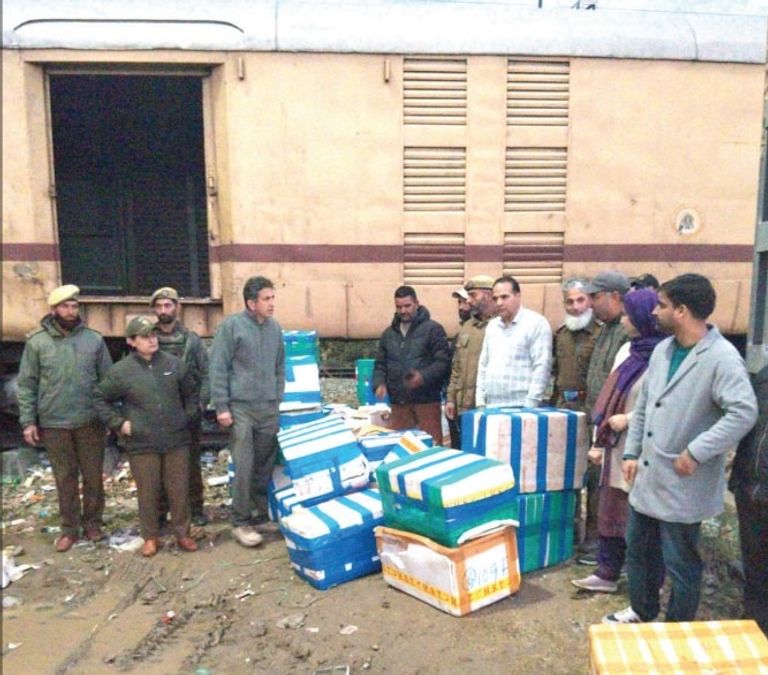
Rotten Meat on the Rails: Questions for FDA After 1,600-Kg Seizure in Budgam
The seizure of nearly 1,600 kg of frozen meat at Budgam Railway Station has exposed troubling questions about transportation, food safety oversight and regulatory accountability. Intercepting the consignment was important. But Kashmir’s consumers deserve to know how it travelled, who was responsible and what happens next.
By: Javid Amin | 20 November 2026 | Srinagar – Kashmir
The seizure and destruction of nearly 1,600 kilograms of frozen meat at Budgam Railway Station should concern every household in Kashmir. According to the Food and Drugs Administration (FDA), the consignment was allegedly transported through the railway parcel network after being declared as “general goods” rather than as a highly perishable food commodity requiring specific handling and transportation safeguards.
Authorities have also reported that the consignment lacked the prescribed cold-chain arrangements. Following the inspection, the meat was destroyed on public health grounds.
The FDA deserves credit for intercepting the consignment before it could potentially enter the consumer market. But while the immediate action may have prevented a public health risk, the incident raises questions that cannot be answered through a seizure announcement alone.
How did such a large consignment move through the transportation system? Were the declarations checked adequately? Was the required documentation verified? And if the alleged violations are established, who will ultimately be held accountable?
The issue is no longer limited to the meat that was seized at Budgam. It concerns the effectiveness of the safeguards designed to protect consumers across Kashmir.
Nearly 1,600 Kg of Meat, but How Did It Reach Budgam?
The scale of the seizure makes the incident particularly concerning.
Nearly 1,600 kilograms is not a small quantity that can easily escape attention. It represents a substantial consignment requiring transportation arrangements, handling, storage and eventual distribution.
The FDA has reportedly stated that the meat was transported through the railway parcel network under a declaration of “general goods.” If this declaration was inaccurate and the consignment required specific food-safety documentation or temperature controls, the circumstances demand a thorough investigation.
A railway transportation system is expected to operate on documentation, identification and prescribed procedures. Food consignments requiring temperature-controlled transportation present additional requirements that cannot be treated as an afterthought.
The critical question is whether existing verification mechanisms were sufficient to identify the nature of the goods and ensure that they were being transported under appropriate conditions.
Authorities must establish whether the alleged misdeclaration was deliberate, whether documentation was improperly accepted, whether required checks were bypassed, or whether the incident exposed a gap in the system.
These are questions of evidence, not assumptions. But they are questions the public deserves answers to.
Was This an Isolated Incident or Part of a Larger Pattern?
One of the most important unanswered questions is whether the Budgam seizure was an isolated case or part of a wider pattern of unsafe meat transportation.
Over the years, food safety authorities in Jammu and Kashmir have reported seizures, inspections, destruction of unsafe food products and action against businesses violating prescribed standards. Yet individual enforcement announcements rarely provide consumers with a complete picture of the problem.
How many consignments of frozen meat have been intercepted in Kashmir over the past three years? How many were found to have violated transportation, storage or labelling requirements? How many cases resulted in prosecution, penalties, licence suspension or closure?
Without consolidated data, the public cannot determine whether enforcement is becoming more effective or whether authorities are repeatedly dealing with similar violations.
The FDA should consider publishing an annual food-safety enforcement report detailing inspections, meat-related seizures, laboratory findings, violations, prosecutions, penalties and repeat offenders.
Such transparency would help distinguish isolated violations from systemic weaknesses and would allow the public to assess whether enforcement is producing measurable improvements.
The Railway Parcel Network Needs Scrutiny, Too
The alleged declaration of meat as “general goods” raises another important issue: the role of transportation and logistics systems in food safety.
Railways transport a wide range of goods across the country. But when a consignment contains perishable food products, the nature of the cargo matters.
If the goods require refrigeration, temperature monitoring or particular handling arrangements, those requirements must be reflected in the transportation process.
The investigation should establish what was declared, what documentation accompanied the consignment, how it was booked, what verification was conducted and whether any procedural safeguards failed.
It would be premature to blame railway personnel or assume institutional negligence without evidence. However, the incident provides an opportunity to examine whether the existing parcel verification system can adequately identify food products requiring special handling.
If a consignment can allegedly be misclassified in a way that obscures its actual contents or transportation requirements, authorities must determine whether the problem is individual misconduct, procedural weakness or a combination of both.
The objective should be to strengthen the system, not merely identify one consignment after it has arrived.
Where Was the Meat Supposed to Go?
The intended destination and distribution chain are equally important.
Authorities have reportedly disclosed details concerning the consignment’s origin and intended destination. Those details could help establish who arranged the transportation, who was expected to receive the meat, whether it was intended for a wholesale market, retail outlet, processing facility or another destination, and whether the supply chain can be traced.
If the investigation has identified the intended recipients, the FDA should clarify whether the consignment was meant for commercial distribution and whether any associated businesses or individuals are being examined.
Consumers should not be left to speculate about whether the meat was intended for restaurants, shops or local markets.
At the same time, names should not be made public without an appropriate legal and evidentiary basis. Transparency must not become a substitute for due process.
The public needs verified information, not rumours or unsubstantiated accusations.
Why the Laboratory Findings Matter
The destruction of the meat on public health grounds raises another question: what evidence supported the decision?
Was the consignment destroyed primarily because of the absence of prescribed cold-chain arrangements, improper declaration and documentation, or because laboratory examination established that the meat was unsafe?
These are distinct regulatory and scientific questions.
A breakdown in temperature control can create serious food safety concerns, but the exact risk depends on the product’s condition, the duration of exposure, the temperature history and other factors.
Laboratory findings, where testing was conducted, could provide additional information about the condition of the meat. The authorities should clarify whether samples were collected, which tests were conducted and whether the findings will be made public.
If laboratory testing was not considered necessary before destruction, the FDA should explain the regulatory and public health basis for that decision.
The public does not need technical jargon. It needs a clear explanation of why the consignment was considered unfit and what the investigation established.
The Law Must Not End at a Seizure
Food safety laws are designed not only to intercept unsafe products but also to deter violations and hold responsible parties accountable.
Where the evidence establishes violations, authorities must pursue the appropriate legal action under the Food Safety and Standards Act and other applicable provisions.
The public deserves clarity on whether proceedings have been initiated against the consignor, transporter, booking parties, intended recipients or any other persons found responsible. The nature of action must depend on the evidence and the applicable law.
An enforcement announcement should ideally be followed by updates on the investigation, adjudication, penalties, prosecution or other outcomes.
A seizure may prevent a particular consignment from reaching consumers. Meaningful enforcement can also deter similar conduct in the future.
That is why the follow-through matters as much as the interception.
Food Safety Is a Public Health Responsibility
Meat is a regular part of the diet of many families in Kashmir. It is sold through markets, butcher shops, restaurants and other food establishments. Consumer confidence depends on the belief that products are being handled under appropriate hygienic and safety conditions.
Unsafe meat can expose people to foodborne illness, including infections caused by bacteria and other pathogens. Improper refrigeration, contaminated surfaces, cross-contamination and inadequate handling can all increase risk.
Consumers, however, cannot independently verify the complete history of a meat consignment. They cannot know how long it travelled, whether the temperature was maintained, whether it was stored correctly or whether the transportation documents accurately reflected the cargo.
That responsibility rests primarily on food businesses and the regulatory systems tasked with overseeing them.
The Budgam incident illustrates why inspections must extend beyond retail counters. Slaughterhouses, processing facilities, transporters, railway parcel operations, cold-storage facilities, wholesalers and retailers all form part of a chain in which one failure can compromise food safety.
Transparency Is the Best Disinfectant
Every seizure attracts public attention. But public confidence is restored through accountability, not headlines alone.
The FDA should provide a clear update on the Budgam investigation, including the established facts concerning the consignment, the applicable violations, the laboratory findings if testing was conducted, the parties against whom proceedings have been initiated and the status of the case.
Authorities should also consider making food safety enforcement data more accessible, including annual statistics on meat inspections, transportation violations, unsafe products destroyed, prosecutions, penalties and repeat offenders.
Such reporting would help the public understand the scale of the problem while protecting individuals and businesses from premature or unsupported allegations.
The aim should not be to create fear about every meat product available in Kashmir. It should be to ensure that consumers can trust the regulatory system and that businesses following the law are not disadvantaged by those who allegedly cut corners.
Questions the FDA and Other Authorities Must Answer
The Budgam seizure leaves several important questions in the public domain:
- Was the consignment deliberately misdeclared, and what evidence establishes this?
- How was nearly 1,600 kg of meat booked and transported through the railway parcel network?
- Were the required documents checked at the point of booking and during transportation?
- Have authorities investigated whether similar consignments were transported through the same route or mechanism?
- Was laboratory testing conducted before destruction, and will its findings be disclosed?
- Who was the consignor, and who was the intended recipient? Have the relevant parties been questioned?
- What legal proceedings have been initiated, and what is their current status?
- Will railway and food safety authorities review their verification and monitoring procedures to prevent recurrence?
These are legitimate public-interest questions. Asking them does not prejudge guilt. It is part of ensuring that an enforcement action leads to a transparent investigation and meaningful safeguards.
The Real Test Begins After the Seizure
The FDA’s interception of the consignment was an important preventive action. But the real test of the system begins now.
Was the incident investigated thoroughly? Were the alleged violations established through evidence? Were responsible parties identified? Were appropriate legal proceedings initiated? And are the safeguards being strengthened to prevent similar incidents?
Kashmir’s consumers are not asking for sensational claims or premature conclusions. They are asking for a food supply chain they can trust.
Nearly 1,600 kilograms of meat at a railway station is a serious enough matter to warrant a clear, public account of what happened.
The FDA has taken the first step by intercepting the consignment. Now it must take the next step by telling the public what the investigation found, who was responsible under the law and what is being done to ensure that it does not happen again.
Because when food safety is at stake, transparency is not optional. It is part of public protection.