NC Reaffirms Article 370 and Statehood Agenda, but Political Struggle Faces a Constitutional Reality
National Conference says restoration of special status remains its ultimate objective. With statehood still unresolved, a Supreme Court verdict upholding the 2019 changes and growing political pressure at home, the party faces questions over how it intends to turn its promise into a tangible political outcome.
By: Javid Amin | 20 November 2026 | Srinagar – Kashmir
The National Conference has once again put the restoration of Jammu and Kashmir’s special constitutional status and full statehood at the centre of its political agenda, insisting that its struggle for constitutional rights, identity and democratic authority will continue despite the sweeping changes introduced in August 2019.
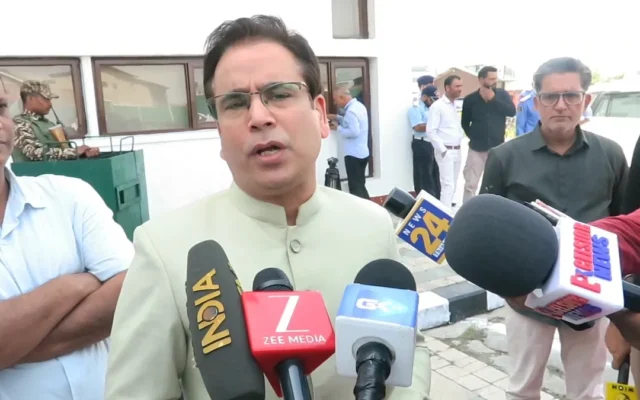
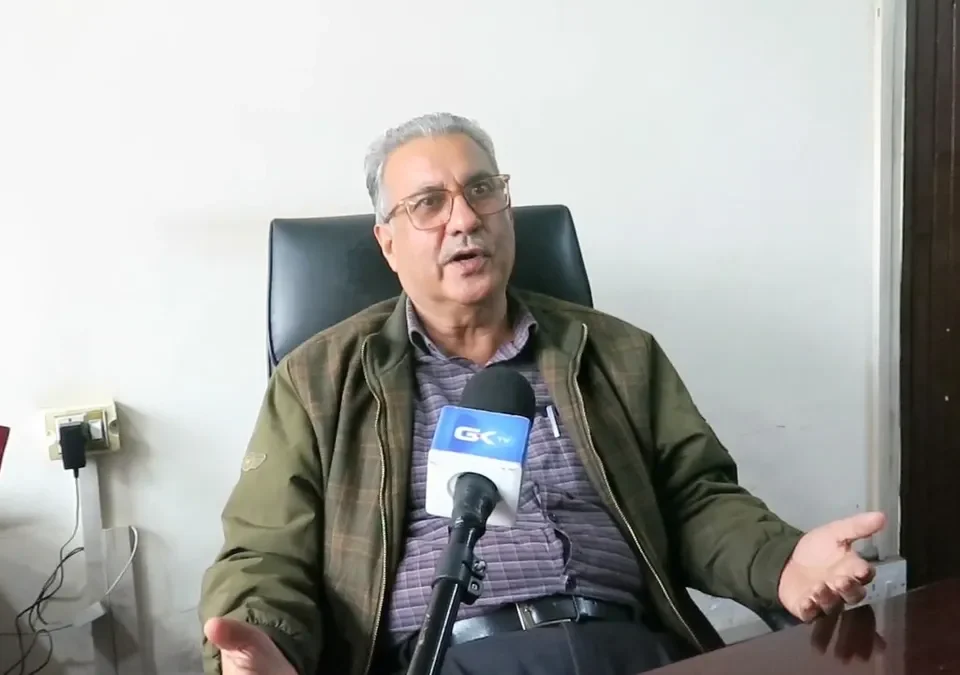
Speaking during an interaction with public delegations at the party headquarters, NC Provincial President Showkat Ahmad Mir said the party had never abandoned its position on the restoration of Articles 370 and 35A, statehood and the constitutional rights of the people of Jammu and Kashmir.
His remarks are more than another reaffirmation of the party’s longstanding political position. They come at a time when the NC-led government is itself under pressure to deliver on electoral promises, when restoration of statehood remains without a publicly announced timeline, and when the constitutional route to restoring the region’s former special status has become significantly more complicated following the Supreme Court’s December 2023 judgment.
The party is drawing a clear distinction between the restoration of statehood, which it continues to press as an immediate political demand, and the restoration of special constitutional protections, which it describes as its ultimate objective.
But the question increasingly confronting the NC is not whether it remains committed to these demands. It is how that commitment can translate into political results.
Five years after August 5, 2019, the NC says its position has not changed
The constitutional changes of August 5, 2019, fundamentally altered Jammu and Kashmir’s political and administrative structure.
The Centre made Article 370 largely inoperative, extended the Indian Constitution in its entirety to the region and reorganised the erstwhile state into two Union Territories, Jammu and Kashmir and Ladakh. Article 35A, which had empowered the former state’s legislature to define permanent residents and extend specific rights and privileges to them, ceased to operate with the constitutional changes.
The National Conference opposed the decisions, describing them as unilateral and arguing that they undermined the region’s political identity, constitutional safeguards and democratic rights.
Showkat Mir has now reiterated that the party’s struggle has continued through Parliament, courts, political platforms, public gatherings and negotiations.
The party maintains that its position is rooted in the historical and constitutional circumstances surrounding Jammu and Kashmir’s accession to India, and that special provisions were designed to protect the region’s distinct political and legal framework.
However, the political argument over the meaning and legal status of those arrangements has changed considerably since 2019. The Supreme Court’s ruling has established the current constitutional position, leaving the NC with a political demand that cannot be pursued as though the earlier legal framework remains intact.
Article 370 and 35A: What the NC wants restored
The National Conference’s demand involves two constitutional provisions that were closely connected but served different purposes.
Article 370 governed the constitutional relationship between Jammu and Kashmir and the Union of India. It provided the framework under which provisions of the Indian Constitution were applied to the former state, subject to specified constitutional processes and arrangements.
Article 35A, introduced through the Constitution (Application to Jammu and Kashmir) Order of 1954, enabled the erstwhile state’s legislature to define permanent residents and provide them with special rights relating to employment, property ownership, scholarships and other privileges.
For the NC, the restoration of these provisions is linked to protecting what it describes as the region’s distinct identity, land rights, employment safeguards and political autonomy.
The party argues that their removal altered the relationship between Jammu and Kashmir and the Union in ways that affected public confidence and the region’s sense of constitutional security.
These demands are politically significant, particularly among voters who continue to view the 2019 changes as a loss of rights and political control. But they also require a distinction between the party’s political interpretation of the earlier constitutional arrangement and the legal position established by the courts.
Supreme Court verdict changed the road to restoration
The biggest obstacle confronting the NC’s special-status demand is the Supreme Court’s December 11, 2023 judgment in the Article 370 case.
A five-judge Constitution Bench unanimously upheld the Union government’s decision to make Article 370 inoperative. The court held that Jammu and Kashmir did not retain an element of sovereignty after its accession to India and its subsequent constitutional integration.
The judgment also held that the Constitution of India applied in its entirety to Jammu and Kashmir following the 2019 constitutional orders.
The court did not merely settle a legal dispute over the validity of the Union government’s actions. It substantially changed the political and legal landscape within which parties such as the NC must pursue their demands.
The party can continue advocating for constitutional changes through political, parliamentary and democratic processes. But restoration of the former special status would require a route consistent with the prevailing constitutional framework and the Supreme Court’s judgment.
That makes the NC’s demand politically possible to continue, but far more complicated to realise than simply reversing an administrative decision.
The distinction between a political commitment and an enforceable legal outcome is central to understanding where the party stands today.
Statehood remains a separate, more immediate battle
Unlike the restoration of special constitutional status, the demand for statehood has received a specific assurance from the Union government before the Supreme Court.
In its December 2023 judgment, the court recorded the Solicitor General’s statement that statehood would be restored to Jammu and Kashmir, while Ladakh would remain a Union Territory. It directed that statehood be restored “at the earliest and as soon as possible”, although it did not prescribe a fixed deadline.
This has become one of the most persistent political issues in Jammu and Kashmir.
The NC-led government, which took office in October 2024 following Assembly elections, has repeatedly demanded restoration of full statehood. Chief Minister Omar Abdullah has questioned the Centre’s repeated references to an “appropriate time”, arguing that people deserve a clear answer rather than indefinite assurances.
The Jammu and Kashmir Assembly has also passed a resolution seeking restoration of full statehood, intensifying political pressure on New Delhi.
The BJP has maintained that it supports statehood restoration, but the absence of a publicly announced timetable has kept the issue alive and fuelled criticism from regional parties.
For the NC, statehood is not only a constitutional demand but also a question of governing authority. The current Union Territory framework leaves important powers, particularly police and public order, outside the elected government’s legislative control.
Restoration of statehood would alter the balance of political authority and give the elected government a broader institutional role.
Yet statehood alone would not restore Article 370 or the former protections under Article 35A. These are separate demands, even though the NC continues to present them as interconnected parts of its larger political agenda.
NC’s political promise faces questions of delivery
The NC’s renewed declaration comes at a time when the party is also facing questions about its performance in government and the pace at which its electoral promises are being implemented.
During the 2024 Assembly election campaign, restoration of statehood, political rights, employment, economic relief and the protection of regional interests were central themes.
The party’s return to power generated expectations that its electoral victory would translate into stronger political engagement with the Centre and progress on issues that had remained unresolved since 2019.
But governing a Union Territory with limited powers is different from governing a full-fledged state. The division of authority between the elected government and the Union-controlled administration has created political friction and complicated accountability.
This has also fuelled dissatisfaction within sections of the party. Reports of internal grievances among NC legislators following the recent cabinet expansion have included demands for a stronger push on statehood, Article 370, manifesto implementation and greater consultation within the party.
These developments do not necessarily mean the NC has abandoned its agenda. They do, however, underline the growing expectation that the party should demonstrate a more visible political strategy rather than repeatedly restating its commitments.
For voters, the question is increasingly practical: what progress can the party make while it remains in office, and what results can it show on issues over which it does not have full constitutional authority?
The PDP-BJP alliance remains part of NC’s political argument
Showkat Mir also criticised the 2015 alliance between the Peoples Democratic Party and the BJP, arguing that the partnership brought together parties with fundamentally different political ideologies and damaged public trust.
The PDP-BJP coalition was one of the most consequential political arrangements in Jammu and Kashmir’s recent history. Mufti Mohammad Sayeed led the coalition government after the 2014 Assembly election, followed by Mehbooba Mufti after his death in January 2016.
The alliance collapsed in June 2018 after the BJP withdrew support, leading to the imposition of Governor’s Rule and eventually President’s Rule.
The NC has repeatedly used the alliance to question the PDP’s political credibility, particularly given the BJP’s position on Article 370 and the subsequent constitutional changes.
But the historical debate is more complicated than a simple accusation of political betrayal. The PDP defended the alliance at the time as an opportunity to bridge political differences and govern under a common programme. Critics argued that the partnership exposed the limits of the party’s political strategy and failed to protect Jammu and Kashmir’s interests.
The collapse of the coalition, followed by the 2019 reorganisation, remains a defining chapter in the region’s political history. It continues to shape the rivalry between the NC and PDP and their competing claims over who can best represent the region’s political aspirations.
Can the NC turn its constitutional demand into a broader political movement?
The restoration of special status remains emotionally and politically significant for many people in Jammu and Kashmir. But sustaining that demand requires more than speeches, resolutions and declarations of commitment.
The NC faces several challenges.
First, it must explain the constitutional and political route through which it intends to pursue restoration after the Supreme Court judgment. Continuing to raise the issue is a political right, but the party needs to articulate what steps it believes are legally and politically achievable.
Second, it must keep statehood restoration moving independently of the special-status question. The two demands are linked in the party’s political narrative, but they have different legal pathways and different prospects.
Third, it must demonstrate that its government can deliver meaningful improvements in employment, public services, infrastructure, education and economic security despite the limitations of the Union Territory framework.
Finally, the party must maintain political credibility among a population that has heard repeated promises from different political formations over decades. The credibility of its demand will increasingly depend on its ability to show sustained political effort, concrete progress and transparent communication about the limits it faces.
A political commitment, but no immediate constitutional roadmap
Showkat Mir’s latest statement makes one thing clear: the National Conference does not intend to abandon its demand for restoration of Jammu and Kashmir’s special constitutional status.
The party continues to frame Articles 370 and 35A, statehood and democratic rights as part of a broader struggle to restore political dignity and regional identity.
But reaffirming the demand is not the same as advancing it. The Supreme Court has upheld the 2019 changes, the Centre has not announced a timeline for statehood, and the NC government continues to operate within the limitations of the Union Territory structure.
The political challenge ahead is therefore twofold. The party must continue pursuing the constitutional aspirations it has promised voters, while also demonstrating what it can achieve within the present system.
For Jammu and Kashmir, the debate is no longer only about what was removed in 2019. It is also about what can realistically be restored, through which institutions, on what timeline and with what political strategy.
Until the NC answers those questions with a clearer roadmap, restoration of special status and statehood will remain a powerful political promise, but one whose fulfilment is still uncertain.