Kishtwar SPO Killings: NC Seeks FIR Against Shagun Parihar Over Mosque Allegation
Parihar’s allegation that announcements were made from a mosque before two SPOs were killed has drawn criticism from the NC, Congress, local Muslim representatives and a BJP leader from Kishtwar. The central question remains: what evidence supports the claim, and what do investigators know about the killings?
By: Javid Amin | 16 November 2026
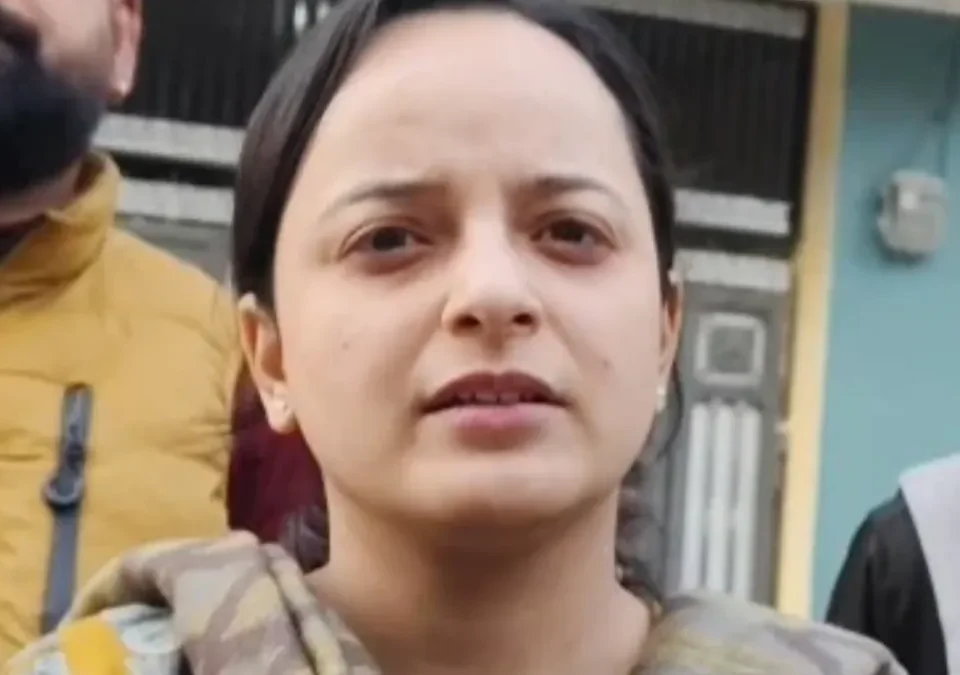
Srinagar: The killing of two Special Police Officers (SPOs) in Jammu and Kashmir’s Kishtwar district has taken a sharp political and communal turn after BJP MLA Shagun Parihar allegedly linked the incident to announcements made from a local mosque. The National Conference (NC) has demanded an FIR against the legislator, accusing her of making an irresponsible statement that could inflame religious tensions in an already sensitive region.
The controversy has moved beyond the initial political exchange. Local Muslim representatives have rejected Parihar’s allegation, a BJP leader from Kishtwar has questioned its factual basis, and Congress has called for a thorough investigation into the killings while warning against giving the incident a communal colour.
At the heart of the dispute is a claim that has not been independently established: that a mosque announcement preceded the killing of the two SPOs and was connected to the attack.
The distinction between an allegation and an established investigative finding is particularly important in this case. The deaths of the two personnel deserve a credible investigation. But linking a religious institution to a security incident without publicly demonstrated evidence risks creating suspicion against an entire community before investigators have established what happened.
What did Shagun Parihar allegedly say?
The controversy emerged after Parihar visited the area following the deaths of SPOs Babi Chand and Rashpal Kumar.
In a video recorded during the period surrounding a wreath-laying ceremony for the slain personnel, the Kishtwar MLA was heard alleging that announcements had been made from a mosque before the killings. She questioned why those allegedly involved had not been apprehended and suggested that information about the victims’ movements might have been leaked.
Her reported remarks included the allegation that someone was making announcements from a mosque about killing people and that information was being passed on from within the area.
However, the available reporting raises several unanswered questions. Parihar did not publicly identify the mosque, name the person allegedly responsible for the announcement or provide evidence establishing a connection between the alleged announcement and the killings.
The Wire reported that it attempted to contact the MLA for her response but did not receive one before publication. It also reported that the police had not publicly corroborated the allegation.
This is the crucial factual gap. A claim involving a mosque, an alleged announcement and the killing of two police personnel requires specific evidence. Without it, the allegation remains an assertion by a political representative, not an established account of the incident.
How the two SPOs were killed: What is known so far?
The two deceased personnel were identified as:
-
Babi Chand, 57
-
Rashpal Kumar, 45
Both were residents of Kishtwar district and were serving as Special Police Officers.
According to reports, the two went missing on November 11 while travelling towards a security position in the Basnan area. Their bullet-riddled bodies were recovered from the Dachhan forest area on November 12.
The circumstances surrounding their disappearance and deaths raised immediate questions about security arrangements, the route they were travelling on and the circumstances in which they came under attack.
A major anti-terror operation was reported in the district following the killings. But the available reports have not established a definitive account of who killed the two men or the precise sequence of events leading to their deaths.
That uncertainty has allowed competing political explanations to emerge.
The BJP’s initial narrative has included allegations of militant involvement and possible intelligence leaks. Congress has raised a different possibility, suggesting that the personnel may have been killed by security forces in a case of mistaken identity. Neither version should be treated as proven without the findings of an investigation.
The immediate priority remains establishing the facts through forensic evidence, ballistic examination, operational records, witness statements and other relevant material.
NC demands FIR and BJP apology
The National Conference responded strongly on November 16, demanding legal action against Parihar and calling upon the BJP leadership to issue an unconditional public apology.
NC Additional General Secretary and Rajya Sabha MP Chowdry Mohammad Ramzan described the alleged remarks as unacceptable, arguing that bringing mosques and religious institutions into a sensitive security controversy without concrete evidence could hurt religious sentiments and disturb communal harmony.
Ramzan maintained that anyone possessing information about wrongdoing should approach the police and investigating agencies rather than make public allegations that could generate religious tensions.
He also accused BJP legislators of relying on Hindu-Muslim polarisation instead of addressing issues such as development, employment and basic public amenities.
The NC’s demand has two parts: registration of an FIR against Parihar and an unconditional apology from the BJP leadership.
There is, however, a legal distinction worth making. A political demand for an FIR is not the same as an FIR being registered, and neither an FIR nor an investigation would by itself establish guilt. Any police action would have to examine the exact words, their context, the evidence available and the applicable law.
The issue therefore requires more than political condemnation. It requires a clear assessment by the competent authorities.
A BJP leader questions Parihar’s claim
One of the most significant developments in the controversy came from within the BJP’s own political space.
Jahanzaib Sirwal, a BJP leader from Kishtwar, publicly questioned Parihar’s allegation, describing the claim about mosque announcements as deeply unfortunate and factually unsubstantiated.
The Islami Markaz-e-Majlis Shura Kishtwar, headed by Jamia Masjid Imam Maulana Farooq Ahmad Kichloo, also rejected the allegation and sought a public apology from the legislator.
The organisation warned that unverified allegations against religious institutions could damage communal harmony in the sensitive district.
This response is politically important.
The criticism is not limited to the NC or parties opposed to the BJP. A BJP leader from the district has also questioned the factual basis of the claim. That does not settle the matter, but it demonstrates that concerns about the mosque allegation extend beyond the usual ruling-opposition divide.
It also places pressure on the BJP leadership to clarify whether it endorses Parihar’s remarks, considers them a personal statement or expects the MLA to substantiate her allegation.
Congress raises a different possibility: Mistaken identity
The mosque controversy is unfolding alongside another serious allegation concerning the circumstances of the SPOs’ deaths.
Jammu and Kashmir Congress president Tariq Hameed Karra has demanded a thorough investigation, saying information available to him suggested that the two personnel may have been shot by Army personnel who mistook them for militants.
According to the version Karra said he had received from the Congress district unit, the SPOs had gone hunting in the forest with their weapons and were allegedly fired upon while returning.
This is a serious allegation against security personnel. It must be treated with the same evidentiary caution as the claim about mosque announcements. Karra’s statement is not an official investigative finding, and the Army’s role in the deaths has not been established by the reports reviewed.
The two competing narratives underline why an independent and comprehensive investigation is necessary.
If there was militant involvement, investigators must establish how the attack occurred and whether information was leaked.
If there was a case of mistaken identity, the circumstances of the firing, operational coordination and accountability must be examined.
If there was an announcement from a mosque, investigators must identify its source, establish its exact content and determine whether it had any connection to the killings.
None of these possibilities should be converted into a conclusion before the evidence is examined.
The controversy widens as NC and BJP trade accusations
The dispute has now become part of a wider confrontation between the National Conference and the BJP over the security situation in Kishtwar.
NC leaders have accused BJP representatives of giving a communal colour to a tragic incident. BJP leaders, meanwhile, have raised questions about security lapses and the response of the police.
The Tribune reported that BJP MLA and Leader of Opposition Sunil Sharma also questioned the handling of the killings, alleging that attempts were being made to target the community to which the slain SPOs belonged. The paper noted that videos of both BJP legislators questioning aspects of the incident had circulated widely.
The controversy has therefore developed along two parallel tracks:
-
The security investigation: Who killed the two SPOs, under what circumstances and whether there was any intelligence failure or operational lapse?
-
The communal controversy: Whether public allegations linking a mosque to the killings are supported by evidence or risk directing suspicion towards a religious community.
These issues are related, but they should not be confused. An investigation into the deaths must not be obstructed by political arguments. Equally, the demand for accountability must not become a justification for unsubstantiated communal allegations.
Why Kishtwar’s communal balance makes the remarks sensitive
Kishtwar occupies an important position in the Chenab Valley, where communities with different religious identities have lived alongside one another across towns and villages.
The district has also experienced periods of militancy, violence and security-related tension. In such an environment, public statements by elected representatives can carry consequences beyond the immediate political dispute.
An allegation involving a mosque is especially sensitive because it can create suspicion around a religious institution and the people who worship there. If the allegation is not supported by evidence, it risks turning an investigation into a question of collective religious identity.
That is precisely the danger highlighted by local Muslim representatives and sections of the political leadership.
At the same time, concern about communal harmony should not be used to discourage legitimate questions about the killings. The families of the deceased deserve answers, and the public deserves a credible account of what happened.
The responsible approach is to investigate every credible lead while preventing unsupported claims from becoming accepted public narratives.
The political calculation behind the confrontation
For the National Conference, demanding an FIR serves both a legal and political purpose.
The party is positioning itself against what it describes as communal polarisation and presenting the mosque allegation as an attack on religious harmony. By demanding action against a BJP legislator, it is also seeking to make the issue one of political accountability rather than merely an exchange of statements.
For the BJP, the challenge is different. Parihar represents Kishtwar, and her remarks followed the deaths of two local security personnel. The party has an interest in demanding answers over the killings and questioning any security failures. But it must also address the evidentiary basis of allegations involving a mosque.
The fact that a BJP leader from Kishtwar has questioned Parihar’s claim makes the party’s response more consequential.
Congress, meanwhile, has attempted to challenge the BJP’s narrative by raising the possibility of mistaken identity and criticising what it sees as efforts to communalise the incident.
Each party is attempting to establish its version of accountability. But the investigation cannot be allowed to become secondary to the political contest.
What investigators must establish
The controversy will not be resolved through statements alone. Several questions require clear answers from the authorities:
-
Who last saw the two SPOs before they went missing?
-
What route were they travelling, and what were their assigned duties?
-
What does the forensic and ballistic evidence indicate about the firing?
-
Were there militant movements or security operations in the area at the relevant time?
-
Is there any verified evidence of an announcement from a mosque?
-
If such an announcement occurred, who made it, what exactly was said and was it connected to the killings?
-
Have investigators examined the possibility of mistaken identity or friendly fire?
The police and other investigating agencies must communicate verified information without compromising operational requirements or the investigation itself.
Silence can leave a vacuum in which competing political narratives gain ground. The Tribune has also highlighted the risk that the absence of a clear official account can allow rumours and unverified claims to spread.
A carefully worded official update, even if it does not answer every question, would help distinguish confirmed facts from speculation.
The real test: Justice without communal polarisation
The deaths of Babi Chand and Rashpal Kumar should not become an opportunity for political parties to compete over religious identity. Their families deserve a thorough investigation, an honest account of the circumstances and accountability wherever evidence establishes wrongdoing.
At the same time, religious institutions must not be publicly implicated in serious crimes without credible evidence. If Parihar possesses information about a mosque announcement, she should place it before the investigating agencies and make the supporting material available for examination.
The NC’s demand for an FIR is a political demand at this stage, not proof that an offence has been committed. The BJP, for its part, needs to explain whether it stands by the allegation and whether it expects its elected representative to substantiate it.
The larger responsibility rests with the investigating authorities: establish the truth about the killings, examine every credible lead and communicate findings transparently.
Kishtwar needs justice for its two slain SPOs, not an unresolved security tragedy turned into a communal confrontation.