Two SPO Deaths, Competing Allegations: Why Kishtwar Needs an Evidence-Based Investigation
By: Javid Amin | 16 November 2026
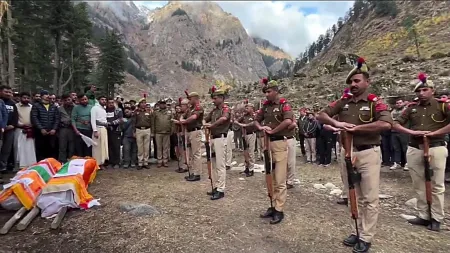
The killing of two Special Police Officers in Kishtwar is now unfolding on two fronts: an investigation into the deaths of Babi Chand and Rashpal Kumar, and a widening political confrontation over what can be said about the circumstances in which they died.
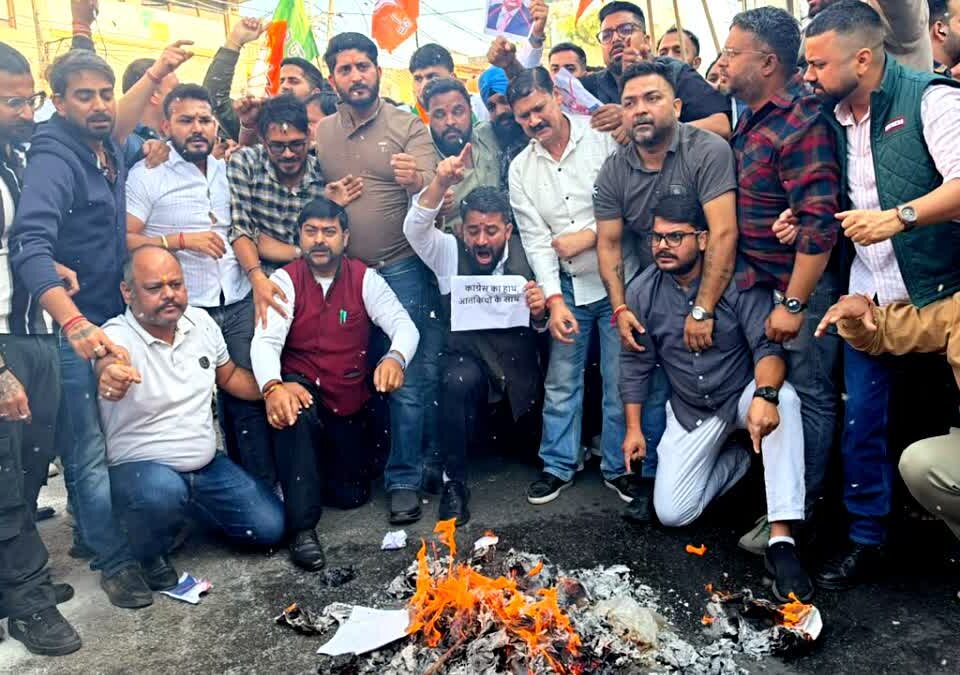
The latest escalation came on Monday, November 16, when the Bharatiya Janata Yuva Morcha (BJYM) staged protests in Jammu, demanding a public apology from J&K Congress president Tariq Hameed Karra. But beneath the slogans and competing political accusations lies a more serious question: why has a clear, authoritative account of the incident not yet been placed before the public?
The distinction matters. Demanding an investigation into a possible security failure is not, by itself, proof of wrongdoing by the Army. Equally, dismissing questions as anti-Army propaganda cannot substitute for evidence. The families of the two deceased officers deserve answers grounded in the investigation, not competing political versions.
From a security incident to a political confrontation
The protest was led by BJYM J&K president Arun Prabhat. Activists marched through Jammu carrying placards and raising slogans against the Congress and the National Conference. They also burnt an effigy of Karra and demanded an apology, accusing him of shifting responsibility for the killings onto the Army. Reports said BJYM protests were held across districts of the Jammu region, not just in the city.
Prabhat accused the Congress and NC of showing leniency towards terrorists and Pakistan while repeatedly questioning the Army. These were political allegations made during the demonstration, not findings established by the investigation. The BJP’s argument is that suggesting the Army may have killed the two SPOs risks undermining public confidence in the armed forces and the sacrifices of security personnel.
Karra’s statement, however, was more specific than a general call for transparency. He said information received from the Congress’s Kishtwar district unit suggested that the two SPOs had gone hunting with their weapons. According to the version he cited, they crossed security pickets while travelling towards the area and were allegedly fired upon by Army personnel on their return, when their civilian clothing may have led to mistaken identity.
That is a serious allegation. But it remains an allegation based on information Karra said he had received. No publicly established evidence in the reports reviewed confirms that the Army shot the two men. Nor has the available reporting established the precise sequence of events that led to their deaths.
Karra defended his remarks by saying he had sought a transparent investigation, not an opportunity to malign the armed forces. He accused the BJP of circulating a manipulated video to advance a divisive political agenda. The Congress’s position is that asking investigators to examine every possible explanation should not automatically be treated as an attack on the Army.
The Congress also turned the criticism back on the BJP. Party spokesperson Suhail Bukhari questioned the language used by BJP Leader of Opposition Sunil Sharma against senior police officers, arguing that public humiliation of police personnel was also an attack on a security institution. The exchange has exposed an uncomfortable contradiction: both parties claim to be defending the security forces, while leaders on both sides have made allegations about the conduct or competence of security personnel.
The unanswered questions behind the killings
The controversy cannot be understood without returning to the events in Kishtwar.
Babi Chand, 57, and Rashpal Kumar, 45, were posted in Kiyar village in the upper reaches of Dachhan. They went missing while travelling through the forested area between Kiyar and the direction of an Army post. Their bullet-riddled bodies were recovered near a watercourse in the area on November 12, according to reports published after the incident. Their service weapons were also reported missing.
The missing weapons became an important part of the early suspicion that militants may have been responsible. But the existence of that suspicion is not the same as a conclusive finding. The Tribune reported that police had not officially declared the deaths a terror attack, while subsequent coverage continued to point to the absence of a detailed public account from the security establishment.
There are several questions investigators need to answer:
-
What was the exact assignment given to the two SPOs, and who authorised their movement?
-
Why were they travelling through that particular route, and what security arrangements were in place?
-
Where and when were they last seen alive?
-
What do the post-mortem findings, ballistic evidence and crime-scene examination indicate?
-
Were their service weapons recovered, and if not, what does the evidence suggest happened to them?
-
Have investigators examined the possibility of militant involvement, friendly fire, mistaken identity or another explanation?
These are not questions that can be settled through press conferences or party statements. They require evidence, a documented timeline and an investigation capable of withstanding public scrutiny.
A second controversy: allegations against the police
The political debate has also widened beyond Karra’s remarks. BJP MLA Shagun Parihar alleged that an announcement from a mosque had preceded the killings and claimed that information about the SPOs’ movements had been leaked to militants. Sunil Sharma, meanwhile, questioned the police deployment and suggested that police personnel could have been involved. These are grave allegations, but the reports reviewed do not establish them as facts.
The allegations have raised concerns about communal tension in Kishtwar, a district with a history of sensitive inter-community relations. The Wire reported criticism from local Muslim representatives, who warned that unsupported claims linking the killings to mosque announcements could damage communal harmony. Kishtwar BJP leader Jahanzaib Sirwal also described Parihar’s mosque-related claim as unsubstantiated, while the district’s main cleric, Farooq Kichloo, condemned the remark.
This is an important part of the story. If there is evidence of a militant network, an intelligence leak or a security lapse, it must be investigated. But attaching suspicion to a religious institution or community without evidence risks punishing people who have no connection to the crime. Equally, allegations against police personnel should be supported by material evidence, not insinuation.
The authorities must establish whether any of these claims have a factual basis. Until then, they should remain clearly identified as allegations.
Why the absence of an authoritative account matters
The absence of a detailed public explanation has allowed competing versions to spread. The Tribune reported on November 14 that police had not issued an official account of the circumstances surrounding the killings. Later reports continued to describe the security establishment’s silence as a factor aggravating the political dispute.
There are legitimate reasons investigators may withhold operational details while an inquiry is underway. Releasing sensitive information prematurely can compromise evidence, expose sources or alert suspects. But that does not mean authorities should leave the public without even a basic factual account.
A carefully worded briefing could clarify what is confirmed, what remains under investigation and which claims have not been substantiated. It need not disclose tactical details or prejudice the inquiry. It would, however, help prevent speculation from becoming accepted as fact.
The families of the two SPOs have the strongest claim to answers. They deserve to know how the men died, whether their deaths could have been prevented and who, if anyone, is responsible. Public accountability should not depend on which political party is demanding it.
The political cost of turning every question into a loyalty test
The BJP’s demand for an apology from Karra may strengthen its political message that the Army should not be blamed without evidence. But the same standard must apply to allegations made by BJP representatives against the police, religious institutions and unnamed individuals.
The Congress, for its part, is entitled to demand an impartial inquiry. Yet a claim that the Army may have mistaken the SPOs for militants is exceptionally serious. It should be presented with clear attribution and supporting evidence, not allowed to circulate as though investigators have already confirmed it.
The National Conference has also been drawn into the dispute because BJYM protesters targeted the party alongside Congress. But the central questions concern the deaths of two police personnel and the conduct of the investigation. Political alliances and accusations should not distract from that responsibility.
Ultimately, the test is not which party wins the argument. It is whether the authorities establish the facts and make the findings public to the extent possible. If militants were responsible, the evidence should identify the perpetrators. If there was a security lapse or mistaken-identity incident, that too must be addressed. If allegations made by political leaders are false, they should be corrected.
Babi Chand and Rashpal Kumar should not become symbols in a political contest before the circumstances of their deaths are established. The public deserves evidence, the families deserve answers, and the investigation deserves to be judged on its findings rather than on the volume of political outrage.