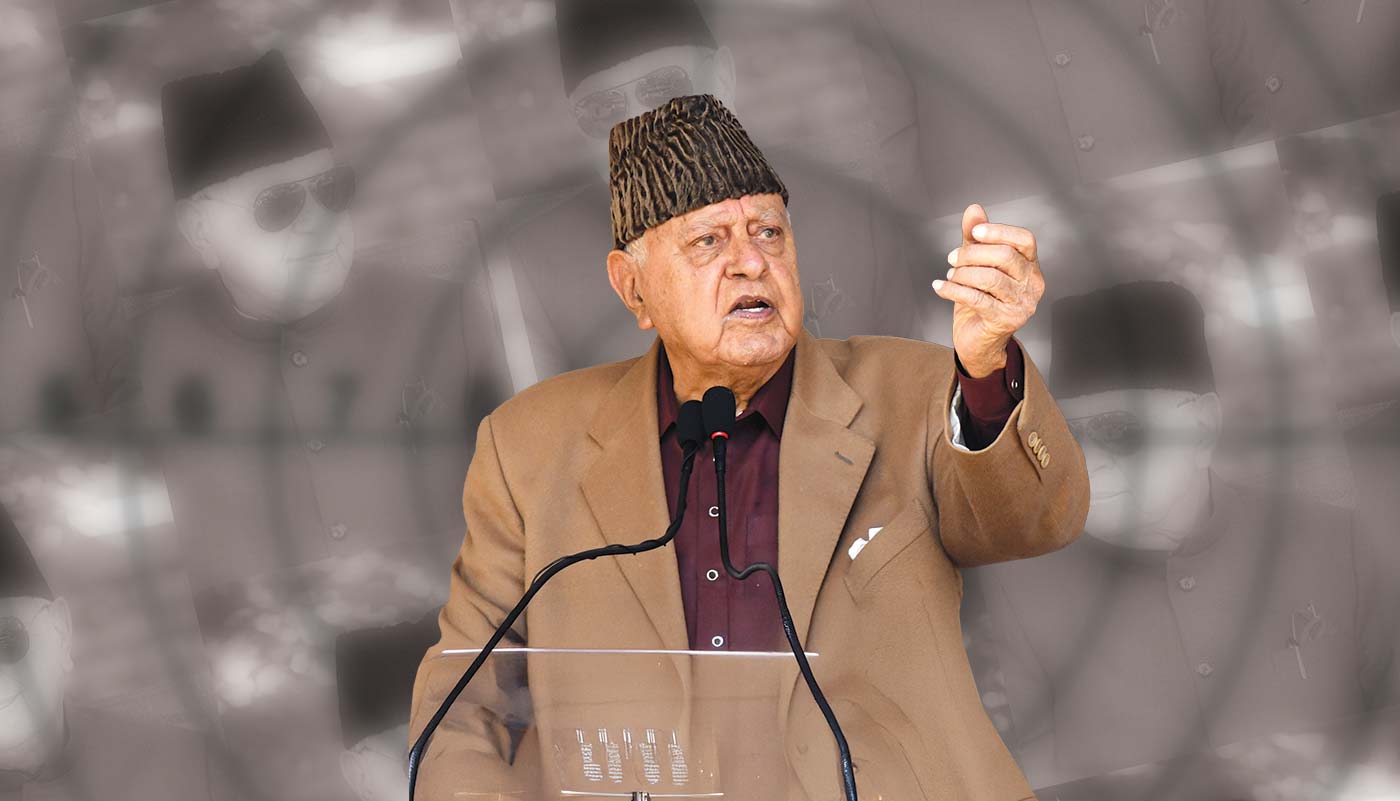
Farooq Abdullah Says Article 370 Is Linked to Kashmir’s Existence, Vows to Fight Till the End
By: Javid Amin | 05 May 2026
NC Patriarch Links Kashmir’s Identity to Article 370, Signaling a Return to Core Politics Amid Statehood Push and Internal Questions
Farooq Abdullah Returns to the Centre of the Political Debate
At a time when Jammu and Kashmir’s political discourse has been dominated by discussions on statehood restoration, governance reviews, cabinet expansion, and internal party dynamics, National Conference president Dr. Farooq Abdullah has sought to pull the conversation back to what remains the party’s most defining political issue: Article 370.
Declaring that Article 370 is intrinsically linked to Kashmir’s existence and identity, the veteran leader reiterated that the struggle for constitutional safeguards would continue “till the end.”
The statement is significant not merely because of what was said, but because of when it was said.
Coming days after the National Conference’s Dachigam retreat and amid preparations for a renewed political outreach on statehood, Farooq Abdullah’s remarks appear to signal an effort to reconnect the party with its traditional ideological foundation.
In many ways, it represents an attempt to remind both supporters and critics that while statehood may dominate immediate political discussions, the larger constitutional question remains central to the National Conference’s political identity.
Why Article 370 Remains NC’s Defining Issue
For the National Conference, Article 370 has never been treated as merely a constitutional provision.
The party has historically framed it as:
- A symbol of Jammu and Kashmir’s unique constitutional position.
- A safeguard for regional identity.
- A framework for democratic autonomy.
- A cornerstone of the political compact that governed the region’s relationship with the Union of India.
Since the constitutional changes of August 2019, the issue has remained at the heart of the party’s political messaging.
While statehood restoration has emerged as a more immediate and politically achievable demand, Article 370 continues to occupy a deeper symbolic space within the NC’s ideological narrative.
Farooq Abdullah’s latest remarks reinforce that distinction.
The message appears clear: statehood may be today’s political battle, but Article 370 remains the larger political cause.
A Strategic Shift After Dachigam?
The timing of the statement is unlikely to be accidental.
The Dachigam retreat exposed several challenges confronting the ruling party.
The meeting generated headlines not because of major announcements, but because of questions surrounding:
- Cabinet expansion.
- Governance performance.
- Internal expectations.
- Aga Ruhullah Mehdi’s absence.
- Opposition accusations of political optics.
In the days that followed, political attention increasingly shifted toward whether the National Conference still possessed a compelling narrative capable of energizing its support base.
Farooq Abdullah’s intervention appears designed to answer that question.
Rather than allowing the conversation to remain focused on internal management issues, the veteran leader has redirected attention toward a larger constitutional and emotional issue that continues to resonate with many supporters.
A Message to the Party’s Base
Beyond its constitutional implications, the statement also serves an internal political purpose.
Recent months have witnessed growing conversations within political circles about ideological clarity inside the National Conference.
The emergence of voices such as MP Aga Ruhullah Mehdi has highlighted differing views on political strategy, engagement with New Delhi, and the methods required to achieve constitutional objectives.
Against that backdrop, Farooq Abdullah’s remarks function as a reminder of the party’s historic mission.
The message to party workers appears straightforward:
Regardless of tactical debates, the fundamental political objective remains unchanged.
That objective is the restoration of constitutional safeguards and the protection of Jammu and Kashmir’s political identity.
Statehood and Article 370: Two Different Political Tracks
One of the most important aspects of the current political debate is the tendency to conflate statehood restoration with Article 370.
Politically, however, the two issues operate on different tracks.
Statehood
Statehood restoration concerns governance, administrative authority, and democratic representation.
It is frequently discussed in terms of political negotiations and institutional arrangements.
Article 370
Article 370 is framed by its supporters as a constitutional and identity-based issue.
Its significance extends beyond governance into questions of history, federalism, and political rights.
Farooq Abdullah’s latest remarks underscore that distinction.
The National Conference appears determined to ensure that the focus on statehood does not eclipse its long-standing position on Article 370.
Opposition Will Challenge the Narrative
The renewed emphasis on Article 370 is also likely to trigger political responses from rival parties.
BJP’s Position
The BJP has consistently defended the 2019 constitutional changes and views them as irreversible.
As a result, Farooq Abdullah’s remarks are unlikely to alter the party’s position.
PDP’s Position
The PDP may welcome renewed discussion on constitutional safeguards while simultaneously arguing that broader political unity is required to achieve meaningful progress.
Peoples Conference’s Position
The Peoples Conference is likely to continue focusing on governance, accountability, and the performance of the current administration rather than constitutional symbolism alone.
This ensures that the debate will remain politically contested.
Public Sentiment: Between Hope and Skepticism
For many citizens, the statement evokes a mixture of hope and caution.
Supporters see it as evidence that the National Conference has not abandoned its historic commitments.
Critics, however, point to the growing gap between political rhetoric and tangible outcomes.
The challenge for the party is that public expectations have evolved.
Increasingly, voters want not only declarations of intent but also evidence of strategy.
Questions being asked include:
- What is the roadmap?
- What are the next steps?
- How will these objectives be pursued?
- What progress can realistically be expected?
These questions will shape public perception more than any individual speech or statement.
The Real Significance of Farooq Abdullah’s Intervention
Viewed in isolation, the statement is another reaffirmation of a long-held political position.
Viewed within the broader political context, it carries greater significance.
It accomplishes three things simultaneously:
Reasserts NC’s Core Identity
The party is reminding supporters that constitutional issues remain central to its mission.
Counters Internal Drift Narratives
The remarks help reinforce ideological continuity at a time when questions about strategy and direction are emerging.
Sets the Stage for Delhi Engagement
As the National Conference prepares to intensify its statehood campaign, the statement broadens the conversation beyond administrative issues to larger constitutional questions.
Conclusion
Dr. Farooq Abdullah’s declaration that Article 370 is tied to Kashmir’s existence and that the struggle for its restoration will continue “till the end” is more than a routine political statement.
It is a strategic reaffirmation of the National Conference’s ideological foundation at a moment when the party faces scrutiny from multiple directions.
Following the Dachigam retreat, criticism from rivals, internal debates, and renewed focus on statehood, the veteran leader has sought to return the political conversation to the issue that has historically defined his party.
Whether the intervention strengthens the NC’s political position will depend not only on rhetoric but also on its ability to translate constitutional aspirations into a coherent political strategy.
For now, however, Farooq Abdullah has succeeded in shifting the debate. What began as a discussion about governance, cabinet vacancies, and party unity is once again becoming a conversation about identity, constitutional rights, and the unfinished questions that continue to shape Jammu and Kashmir’s politics.