JKSSB Recruitment Controversy: Iltija Mufti Alleges ‘Recruitment Mafia’ in J&K, Demands Independent Probe Into Exam Scams
With 14 people arrested in an alleged cheating operation during the Finance Accounts Assistant examination, eight wireless sets and 22 mobile phones seized, and police investigating possible insider involvement, Jammu and Kashmir’s recruitment system faces renewed scrutiny. PDP leader Iltija Mufti says the latest controversy cannot be dismissed as an isolated incident, raising questions about institutional accountability, examination security and the future of thousands of unemployed young people.
Srinagar, November 20: For thousands of young people in Jammu and Kashmir, a government recruitment examination represents much more than a test of academic ability. It is often the result of years of preparation, financial sacrifice and the hope of securing a stable livelihood in a region where government employment remains a highly sought-after opportunity.
But repeated allegations of examination irregularities, cancellations and organised cheating have increasingly complicated that aspiration.
The latest controversy surrounding the Jammu and Kashmir Services Selection Board (JKSSB) Finance Accounts Assistant (FAA) examination has brought these concerns back into sharp focus. A police operation in Jammu, involving the arrest of 14 people and the seizure of electronic communication equipment, has raised questions about whether an organised network attempted to manipulate the examination process.
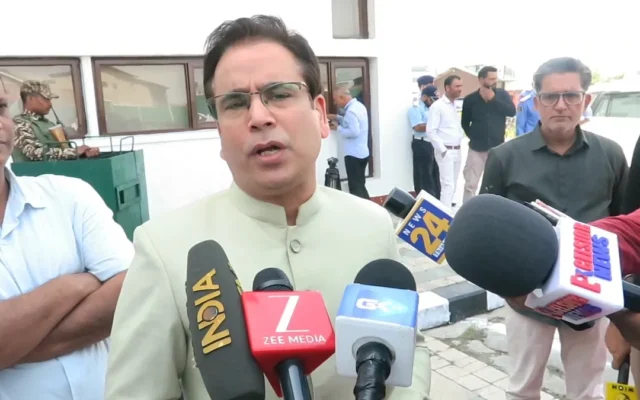
Against this backdrop, Peoples Democratic Party (PDP) leader Iltija Mufti on Friday accused elements within the recruitment system of operating what she described as a ‘recruitment mafia’, demanding an independent investigation into the alleged malpractice and questioning the Board’s decision to describe the incident as an isolated attempt at cheating.
Her allegations have added a political dimension to an already sensitive investigation. But beyond the exchange between political leaders and recruitment authorities lies a more consequential issue: can JKSSB restore the confidence of candidates who increasingly fear that even a successful examination may not guarantee a fair selection process?
JKSSB Finance Accounts Assistant Exam: What Happened on November 15?
The controversy originated during the Finance Accounts Assistant recruitment examination conducted by JKSSB on November 15, 2026.
The examination was organised for 600 vacancies in the Finance Department, attracting an enormous response from job aspirants across Jammu and Kashmir.
According to the Board’s official statement issued on November 19, the examination was scheduled across 493 centres in all 20 districts of the Union Territory, with 1,61,946 candidates scheduled to appear.
The scale of the competition is striking. More than 1.6 lakh aspirants were competing for just 600 positions, translating into approximately 270 scheduled candidates for every vacancy.
However, the examination came under scrutiny after Jammu Police received intelligence about an alleged conspiracy to help selected candidates cheat through electronic communication devices.
Police teams were deployed around identified examination centres to intercept the suspected operation. According to SSP Jammu Joginder Singh, the suspected facilitators had allegedly planned to transmit answers to candidates sitting inside examination halls.
The operation resulted in the arrest of 14 people, including suspected facilitators and candidates. Police recovered:
-
Eight wireless communication sets.
-
22 mobile phones.
-
Five vehicles allegedly used by the suspected network.
Three FIRs were registered at Domana Police Station, and a Special Investigation Team (SIT), headed by the SDPO Domana, was constituted to investigate the alleged conspiracy.
The suspected modus operandi involved candidates inside examination centres relaying questions to associates outside. Those associates would allegedly arrange answers and communicate them back through electronic equipment.
The Indian Express reported, citing police, that some candidates were allegedly equipped with tiny electronic receivers or microchips inserted into their ears to receive answers transmitted from outside.
Investigators are examining the seized equipment and attempting to establish the roles of the different suspects, identify possible beneficiaries and determine whether the operation involved anyone connected with the examination system.
It is important to distinguish between an alleged conspiracy and proven examination manipulation. The arrests establish that police acted against suspected participants, but the precise extent of the operation, the identities of all beneficiaries and whether any candidate actually gained an unfair advantage remain matters for investigation.
Nevertheless, the sophistication of the alleged method has raised uncomfortable questions about the ability of conventional examination security arrangements to detect increasingly advanced cheating techniques.
JKSSB Rejects the ‘One-Off Incident’ Criticism, Says Examination Integrity Was Not Compromised
The Jammu and Kashmir Services Selection Board has defended the conduct of the November 15 examination, maintaining that the alleged cheating attempt was detected and prevented before it could compromise the overall selection process.
In an official press notice dated November 19, JKSSB described the incident as an isolated attempt to use unfair means and credited Jammu and Kashmir Police with swift intervention.
The Board said the examination was conducted successfully across all 20 districts and that the suspected elements were apprehended through coordinated action involving police, district administrations and examination authorities.
It also outlined the security arrangements already in place, including:
-
CCTV surveillance at examination centres.
-
Electronic jammers.
-
Biometric authentication of candidates.
-
Physical verification at entry points.
-
Surprise inspections by flying squads.
-
Security protocols for examination material.
The Board further announced additional preventive measures for upcoming examinations, including tighter access controls, updated standard operating procedures and stronger technical surveillance.
The Board’s position is significant because it draws a distinction between an attempted examination fraud and a compromised examination.
If police intercepted the alleged network before it could deliver answers to candidates, JKSSB argues, the examination itself should not automatically be considered invalid.
That is a legitimate distinction. Cancelling an examination involving more than 1.6 lakh scheduled candidates and 600 vacancies would have serious consequences for genuine aspirants.
However, the question raised by Iltija Mufti is different: can the Board conclusively describe the incident as isolated while the police investigation is still examining possible connections with recruitment officials?
The police investigation, as reported on November 20 by The Tribune, had indicated possible involvement of officials associated with the recruitment body. Investigators were reportedly questioning suspected insiders to establish their roles. The report did not identify those officials or establish their guilt.
This is precisely where transparency becomes essential.
The Board can explain why it believes the examination remained intact, but the investigation must independently establish whether the suspected operation had access to confidential examination material, whether any candidates received answers and whether anyone inside the system assisted the network.
A public statement cannot substitute for the findings of an investigation.
From Police Sub-Inspector to Fire Services: Why Recruitment Controversies Keep Returning
Iltija Mufti’s central argument is that the latest FAA controversy cannot be examined in isolation from earlier recruitment scandals.
A review of Jammu and Kashmir’s recruitment history shows why this concern resonates with many aspirants.
The region has experienced several major recruitment controversies, some of which resulted in cancellations, criminal investigations and even termination of appointments.
1. Police Sub-Inspector recruitment scandal, 2022
One of the most damaging controversies involved the recruitment of 1,200 Police Sub-Inspectors.
The written examination was conducted on March 27, 2022. Following allegations of irregularities, the administration cancelled the selection process on July 8 and recommended a Central Bureau of Investigation (CBI) inquiry.
The CBI subsequently registered a case, conducted searches and investigated an alleged conspiracy involving middlemen, candidates and public officials.
The investigation established a paper-leak conspiracy involving the theft and circulation of examination material. The Enforcement Directorate later stated that candidates had allegedly been charged between ₹15 lakh and ₹30 lakh to access the leaked paper.
The case demonstrated that recruitment fraud, when organised, can extend well beyond an examination centre. It can involve access to confidential papers, intermediaries, financial transactions and people with connections to the recruitment process.
2. Finance Accounts Assistant recruitment controversy, 2022
Ironically, the Finance Accounts Assistant examination has been at the centre of a major controversy before the latest incident.
The earlier recruitment drive involved 972 vacancies. The examination was conducted on March 6, 2022, and the selection process subsequently came under scrutiny following allegations of irregularities.
The administration constituted an inquiry committee and cancelled the recruitment process in August 2022, recommending a CBI investigation.
For candidates who had already appeared and some who had secured positions on the selection list, the cancellation was devastating.
A Scroll.in investigation published in January 2023 documented the experiences of aspirants who had spent months preparing for the examinations and then faced uncertainty after the recruitment process was scrapped.
Some selected candidates protested for weeks, arguing that genuine candidates should not be punished for alleged wrongdoing by others.
This remains an important distinction in recruitment controversies: cancelling a tainted process may be necessary to protect merit, but innocent candidates can also suffer when institutions fail to prevent malpractice in the first place.
3. Junior Engineer recruitment in Jal Shakti Department
The Junior Engineer (Civil) recruitment for the Jal Shakti Department also faced allegations of irregularities in 2022.
The examination for 163 vacancies was conducted on March 20. Following complaints, the administration ordered an inquiry, and JKSSB subsequently cancelled the examination.
The controversy also became part of a wider legal dispute over the selection of the examination-conducting agency.
In December 2022, the Jammu and Kashmir and Ladakh High Court cancelled examinations for Junior Engineers and Police Sub-Inspectors and directed a high-level inquiry into the functioning of JKSSB and the process through which the examination contract had been awarded.
The court’s observations were particularly serious. It questioned the Board’s handling of the tender process and said its functioning did not inspire confidence in the conduct of public examinations.
These were not merely political allegations. They were concerns that reached the judicial system and resulted in intervention.
4. Fire and Emergency Services recruitment controversy
Another major case involved recruitment for 870 posts of Firemen and Fireman Drivers.
The recruitment process had a complicated history, including earlier examinations, cancellations and fresh selection attempts. Allegations of paper leakage and manipulation emerged after the September 2020 examination.
The government constituted an inquiry committee in December 2022. The matter subsequently reached the Anti-Corruption Bureau, which registered an FIR in January 2025.
The consequences were significant.
According to the government-related records reproduced in subsequent Central Administrative Tribunal proceedings, the inquiry and ACB investigation identified serious manipulation, including tampering with OMR answer sheets and fabricated scanned images. The investigation found that marks had allegedly been inflated in favour of 106 candidates.
In December 2025, the government ordered the termination of 103 appointees associated with the tainted recruitment process.
This case is particularly important because it demonstrates how recruitment irregularities can remain under investigation for years before administrative consequences follow.
It also shows that the damage is not limited to candidates who lose selection opportunities. It can undermine the credibility of an entire department’s recruitment system.
Historical cases cited above involved different examinations, agencies and allegations. They should not be treated as proof that the same individuals or networks are involved in the November 2026 FAA controversy.
Aptech and the Examination Agency Question: Who Is Responsible for Choosing the Testing Partner?
Iltija Mufti also questioned the engagement of Aptech for conducting examinations in 2022, describing the company as blacklisted.
The issue deserves a closer examination because the selection of an examination-conducting agency is itself an important part of recruitment integrity.
In 2022, candidates challenged JKSSB’s decision to award examination-related work to Aptech Limited, arguing that the company had previously been blacklisted.
The dispute reached the Jammu and Kashmir High Court, which examined the process through which the contract had been awarded. In its December 2022 judgment, the court raised serious concerns about the tendering process and the Board’s functioning.
However, the description of Aptech requires context.
In March 2023, then JKSSB chairman Rajesh Sharma stated that the company’s three-year blacklisting period had expired in May 2022. He defended its engagement and said the issue was before the court.
Therefore, it would be inaccurate to describe Aptech as necessarily remaining blacklisted when it was engaged. The circumstances and applicable blacklisting orders must be considered.
But the larger accountability question remains valid.
Who evaluated the agency’s technical capacity, previous record, security systems and ability to conduct sensitive public examinations? What safeguards were included in the contract? Who was responsible for monitoring its performance?
The recruitment board cannot transfer all responsibility to a private testing company. The ultimate responsibility for ensuring a fair recruitment process rests with the public institutions that commission, supervise and approve the examinations.
₹113 Crore in Examination Fees: The Financial Burden on Unemployed Youth
One of the most striking allegations made by Iltija Mufti concerns the money collected from candidates applying for government recruitment examinations.
She claimed that JKSSB collected approximately ₹113 crore in examination fees between 2023 and 2026.
The figure raises an important question about the financial relationship between recruitment authorities and unemployed candidates.
Every recruitment notification attracts thousands, sometimes lakhs, of applicants. Candidates pay application fees, purchase study material, enrol in coaching programmes, travel to examination centres and spend months preparing.
When an examination is cancelled or becomes embroiled in allegations of malpractice, the financial consequences are not limited to the recruitment authority.
For many families, the cost of preparing for government employment is substantial.
However, the ₹113-crore figure needs independent verification. The statement attributed to Iltija Mufti has been reported, but a consolidated official account of JKSSB’s examination-fee collections for the entire 2023-2026 period was not available in the material reviewed for this article.
The government should publish a year-wise financial statement covering:
-
Total examination applications received.
-
Total examination fees collected.
-
Refunds issued following cancellations.
-
Examination-conducting agency payments.
-
Administrative and examination-related expenditure.
-
Unspent balances and accumulated fee revenue.
This would help establish how much money the Board collects and how it is utilised.
There is also a broader policy question: should candidates bear the entire financial burden when recruitment processes are cancelled because of institutional failures?
A transparent refund policy, particularly where an examination is cancelled due to proven administrative misconduct, would provide some protection to aspirants.
The larger principle is simple: unemployed candidates should not repeatedly pay the price for failures they did not cause.
Omar Abdullah Under Political Pressure: Who Is Accountable for JKSSB?
Iltija Mufti has also questioned Chief Minister Omar Abdullah’s position on the recruitment controversy.
She referred to his reported remarks that JKSSB was not under his direct control, contrasting them with his May 2026 review of the Board’s functioning.
According to her, the Chief Minister had previously spoken about reviewing recruitment bottlenecks and ensuring time-bound selections, but appeared to distance himself from responsibility when allegations of irregularities emerged.
Her criticism was based on the apparent contradiction between the two positions.
The political question, however, goes beyond whether the Chief Minister personally controls the Board’s day-to-day functioning.
JKSSB operates within the administrative framework of the Jammu and Kashmir government, while recruitment responsibilities are distributed across the Board, government departments and other authorities.
Operational independence and political accountability are not necessarily contradictory.
A recruitment board must be allowed to function independently of political interference. At the same time, the elected government has a responsibility to ensure that public recruitment institutions are adequately supervised, properly staffed and held accountable for administrative failures.
The government cannot dictate who should be selected. But it cannot remain indifferent when recruitment processes repeatedly face serious allegations.
The Chief Minister’s May review, as cited by Iltija, makes it reasonable to ask what improvements followed that exercise.
Were examination security procedures strengthened? Were previous recommendations implemented? Were recruitment timelines monitored? Did the government review the performance of examination agencies?
These are legitimate governance questions.
Iltija has also raised concerns over the vacancy in the Jammu and Kashmir Public Service Commission following the resignation of its chairman, Arun Kumar Choudhary, in August 2026. She questioned the delay in appointing a successor and argued that important recruitment institutions require stable leadership.
The broader issue is institutional continuity. Recruitment authorities cannot inspire confidence if important leadership positions remain vacant or accountability becomes unclear whenever controversies arise.
Why the Recruitment Crisis Is More Than a Political Controversy
Government employment carries particular importance in Jammu and Kashmir.
The public sector has traditionally been one of the most sought-after sources of stable employment. For many educated families, securing a government position represents financial security, social mobility and independence.
This makes recruitment examinations especially sensitive.
Consider the scale of the latest FAA examination:
JKSSB FAA Examination 2026
1,61,946 – Scheduled candidates
600 – Available vacancies
493 – Examination centres
20 – Districts covered
270 : 1
Approximate scheduled candidates per vacancy
Calculated from JKSSB’s published figures. This is a competition ratio, not the number of candidates who actually appeared or qualified.
When competition is this intense, even the perception of unfairness can have serious consequences.
A candidate who spends two or three years preparing for an examination may lose valuable time if the process is cancelled. Someone who has taken loans to pay for coaching may face financial pressure. Families may postpone other decisions because they expect a recruitment result.
Repeated uncertainty can also discourage young people from trusting merit-based selection.
There are several wider economic consequences:
-
Unemployment pressure: Delayed recruitment keeps qualified candidates waiting for opportunities.
-
Household financial stress: Repeated examination fees, coaching costs and travel expenses increase the burden on families.
-
Loss of productivity: Young graduates can spend years preparing for recruitment processes that remain uncertain.
-
Institutional distrust: Repeated controversies damage confidence in public administration.
-
Unequal opportunity: If organised cheating is allowed to flourish, candidates without financial resources or connections are placed at a disadvantage.
The most serious consequence is the possibility that genuine merit becomes secondary to money, access and influence.
That is precisely what a public recruitment system is supposed to prevent.
Should Upcoming JKSSB Examinations Be Postponed?
Iltija Mufti has called for the review or postponement of upcoming recruitment examinations until the latest controversy is properly investigated.
The Jammu and Kashmir Students Association had made a similar demand earlier, writing to Lieutenant Governor Manoj Sinha on November 17 and seeking a CBI investigation into the alleged FAA cheating network. It also requested postponement of the upcoming Police Sub-Inspector and Police Constable recruitment examinations.
The demand reflects genuine anxiety among candidates, particularly those preparing for examinations scheduled in the immediate future.
However, postponing every upcoming examination may not necessarily be the best solution.
A blanket suspension could further delay recruitment and penalise thousands of candidates who have prepared honestly.
A more balanced approach would involve:
-
A time-bound investigation into the FAA cheating attempt.
-
A security audit of upcoming examination arrangements.
-
Verification of examination-centre staff and access controls.
-
Stronger electronic surveillance and communication-blocking arrangements.
-
Independent monitoring of examination material.
-
Transparent disclosure of the investigation’s findings.
If investigators discover evidence that a particular examination is vulnerable to manipulation, postponement may become necessary.
But where adequate safeguards can be demonstrated, recruitment should continue without unnecessary delays.
The objective must be to protect both the integrity of examinations and the interests of genuine candidates.
What an Independent Investigation Should Examine
The demand for an impartial investigation deserves serious consideration, particularly because the police investigation has reportedly indicated possible involvement of insiders.
An effective inquiry should not stop with the 14 arrests.
It should establish the complete structure of the suspected network.
First, the alleged insider connection: Investigators must determine whether any JKSSB employees, departmental officials, examination staff or invigilators provided confidential information or assisted the suspected operation.
Second, the electronic communication network: The eight wireless sets and 22 mobile phones should undergo forensic examination to establish communication records, device ownership, call patterns and any links between the suspects.
Third, the beneficiaries: Investigators should identify every candidate who allegedly received assistance and establish whether any unfair advantage was actually obtained.
Fourth, the source of examination material: Authorities should determine how the suspected network planned to access questions and answers and whether any confidential material was compromised.
Fifth, examination security failures: The investigation should assess how the alleged electronic devices were intended to bypass biometric checks, frisking, jammers and other security arrangements.
Sixth, financial transactions: Any evidence of payments, middlemen or financial inducements should be traced to identify the economic structure of the alleged racket.
Finally, institutional responsibility: If the investigation establishes negligence or deliberate assistance by officials, responsibility must extend beyond the immediate accused to those who enabled or ignored the wrongdoing.
The investigation should also publish findings that can be disclosed without compromising the legal process.
An independent inquiry does not automatically mean that the entire FAA examination must be cancelled. That decision should depend on evidence about whether the examination’s integrity was actually compromised and whether a fair selection can still be ensured.
The Real Test: Can Jammu and Kashmir Restore Faith in Public Recruitment?
The latest FAA examination controversy has reopened a debate that Jammu and Kashmir has struggled to resolve for years.
The 2022 recruitment scandals demonstrated how paper leaks, questionable examination contracts and alleged manipulation can damage the credibility of public institutions. The Fire and Emergency Services case, with its subsequent ACB investigation and termination of 103 appointees, showed that the consequences can extend long after the original examination.
Now, the alleged cheating operation during the November 15 FAA examination has brought the issue back.
Iltija Mufti’s ‘recruitment mafia’ allegation is a political charge and must be established through evidence. The 14 arrests are also not a final determination of guilt. The police investigation and the legal process must establish individual responsibility.
At the same time, JKSSB’s assurance that the examination was not compromised must be supported by transparent findings, particularly if investigators establish possible insider involvement.
There is no shortage of statements promising fair recruitment. What candidates need is a system in which such assurances are backed by verifiable safeguards.
The government must ensure that examination agencies are carefully selected, security protocols are independently audited, recruitment timelines are respected and proven wrongdoing leads to accountability.
Most importantly, genuine candidates should not be made to suffer repeatedly because institutions fail to protect the examinations they administer.
For the young people of Jammu and Kashmir, a government job is often the culmination of years of effort. Their expectations are neither unreasonable nor political.
They are asking for something fundamental: a fair examination, a transparent selection process and a genuine opportunity to compete.
The credibility of JKSSB will ultimately depend not on how strongly it defends its examinations, but on how effectively it prevents malpractice, investigates wrongdoing and protects the merit of every genuine candidate.