The second attack on Riyadh’s financial district in less than a week exposes the growing vulnerability of Saudi Arabia’s economic infrastructure. With Iran refusing negotiations until seven conditions are met, the crisis is opening another dangerous front in an already expanding Middle East conflict.
By: Javid Amin | 25 November 2026
Saudi Arabia’s economic heartland has come under renewed attack, with a drone strike targeting a tower in Riyadh’s King Abdullah Financial District (KAFD), leaving 11 people injured, including two Indian nationals.
The November 24 attack is particularly significant because it marks the second strike on Riyadh’s financial district in less than a week. It also comes at a moment when the confrontation involving Iran, the United States, Israel and Iran-aligned armed groups is increasingly threatening the economic infrastructure that keeps the Gulf region functioning.
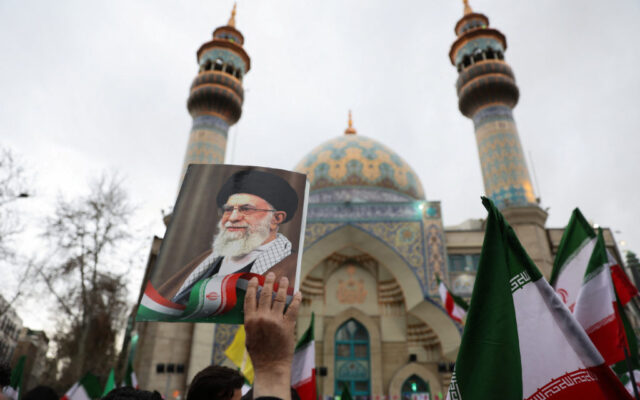
While Saudi authorities have attributed the latest attack to Yemen’s Houthi movement, Tehran has simultaneously hardened its diplomatic position, declaring that negotiations with Washington will not resume until its seven conditions are fulfilled.
These developments reveal two interconnected dimensions of the escalating crisis: the growing military threat to Saudi Arabia’s strategic economic assets and the diminishing prospects of a diplomatic settlement between Washington and Tehran.
The immediate concern is the safety of civilians and foreign workers. The longer-term concern is considerably larger: whether the Gulf’s financial centres, energy infrastructure and international trade corridors can remain insulated from a regional war that is spreading across multiple fronts.
Riyadh attack leaves 11 injured, including two Indians
According to Saudi Arabia’s General Directorate of Civil Defense, the attack on November 24 targeted a tower in Riyadh’s financial district, resulting in injuries to 11 people.
The official casualty breakdown confirmed by Saudi authorities is:
| Nationality | Injured |
|---|---|
| Saudi nationals | 2 |
| Indian nationals | 2 |
| Nepalese nationals | 3 |
| Egyptian nationals | 4 |
| Total | 11 |
The figures were confirmed in an official statement carried by the Saudi Press Agency (SPA).
The presence of Indian, Nepalese and Egyptian nationals among the injured highlights another dimension of the Gulf’s security crisis. Millions of foreign workers contribute to Saudi Arabia’s construction, services, finance, logistics and infrastructure sectors. When attacks reach major commercial districts, the consequences extend well beyond the country’s own population.
Saudi emergency services and other competent authorities responded immediately, implementing established procedures to protect lives and property.
The Saudi-led coalition’s spokesperson, Major General Turki Al-Maliki, subsequently said the attack had been carried out using a drone and warned that deliberate attacks on civilians and civilian infrastructure would invite a firm response.
The identities of the injured Indians and the severity of their injuries had not been publicly disclosed in the initial reporting.
India’s diplomatic concern is therefore not limited to the immediate incident. The safety of its large expatriate community across the Gulf remains an important consideration as regional hostilities intensify.
Why the PIF Tower matters: Saudi Arabia’s economic ambitions under pressure
The significance of the Riyadh attack becomes clearer when viewed against Saudi Arabia’s economic transformation strategy.
King Abdullah Financial District is not an ordinary commercial neighbourhood. It is a major financial and business hub designed to position Riyadh as an international centre for banking, investment, corporate services and financial activity.
The district also houses the headquarters of the Public Investment Fund (PIF) — one of the most influential sovereign wealth funds in the world.
PIF is central to Crown Prince Mohammed bin Salman’s economic transformation programme. Its investments span tourism, entertainment, infrastructure, technology, sports, real estate and major development projects.
Its importance extends beyond the financial value of individual investments. The fund represents Saudi Arabia’s ambition to reduce dependence on oil revenues and develop alternative economic engines under Vision 2030.
That makes an attack on a prominent building associated with this financial ecosystem particularly sensitive.
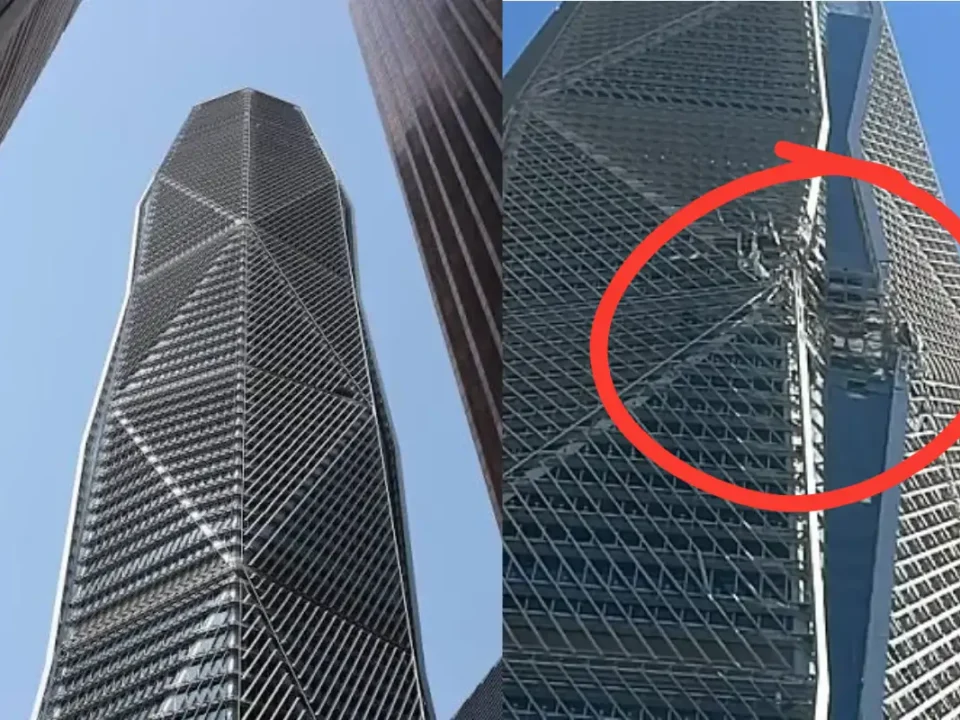
There is, however, an important distinction in the reporting: Saudi authorities confirmed that a tower in the financial district was targeted, but their initial public statement did not identify the specific building. Reuters and other reporting have associated the November 24 incident with the PIF Tower, while Al Jazeera cited witnesses identifying the PIF skyscraper as the target. The precise extent of damage from the latest incident has not been independently established.
The distinction matters because reporting should not confuse the confirmed attack on the financial district with independently verified details about the exact building and damage.
A worrying sequence of attacks on Saudi economic infrastructure
The November 24 incident did not occur in isolation. Riyadh had already experienced a series of attacks targeting prominent economic and strategic locations.
The chronology illustrates the growing pressure on Saudi Arabia:
-
November 8 – Aramco building targeted
An attack damaged windows across several floors of Saudi Aramco’s corporate building in Riyadh’s financial district. Saudi authorities attributed the damage to debris following an attempted attack, while the Houthis claimed responsibility. No injuries or fatalities were reported.
-
November 19 – PIF Tower damaged
Riyadh’s prominent Public Investment Fund Tower sustained significant visible damage, including broken windows across several floors. Saudi authorities reported material damage but no injuries. Reuters reported that the building was hit in a suspected Houthi missile attack, although the Saudi-led coalition described the damage in terms of debris following an intercepted threat.
-
November 24 – Another attack on the financial district
A tower in the district was targeted, leaving 11 people injured, including two Indians, three Nepalese and four Egyptians. Saudi authorities attributed the attack to the Houthis, while the coalition spokesperson identified a drone as the weapon used.
This sequence demonstrates a shift in the nature of the threat.
Saudi Arabia is not simply dealing with occasional attacks against military installations or oil facilities. Its commercial buildings, financial institutions, airports and other civilian-linked infrastructure are increasingly exposed to the conflict.
The distinction between an attack’s immediate physical damage and its broader economic consequences is particularly important.
Even when an interception prevents a major explosion, the resulting debris, evacuations, security restrictions and disruption to business operations can create substantial costs.
The Houthi factor: How Yemen’s conflict has become a wider Gulf security crisis
The Houthi movement has emerged as one of the most consequential non-state military actors in the Middle East.
Known formally as Ansar Allah, the movement controls large parts of northern Yemen, including the capital Sanaa. Its military capabilities include drones, ballistic missiles, cruise missiles and anti-ship weapons.
Its confrontation with Saudi Arabia has roots in Yemen’s civil war, which escalated into a regional conflict in 2015 when a Saudi-led coalition intervened in support of Yemen’s internationally recognised government.
Years of fighting produced a humanitarian catastrophe, extensive infrastructure destruction and repeated cross-border attacks.
Although diplomatic initiatives previously reduced the intensity of Saudi-Houthi hostilities, the current regional confrontation has reopened a dangerous chapter.
Why are the Houthis targeting Saudi Arabia?
The immediate explanation lies in the widening confrontation involving Iran, the United States and Israel.
The Houthis are politically and strategically aligned with Iran and form part of what Tehran describes as the regional resistance front. Their military activities have increasingly intersected with the broader conflict.
However, Iranian alignment should not automatically be interpreted as proof that every Houthi operation is directly ordered by Tehran. The movement has its own leadership, political objectives and calculations inside Yemen.
For Saudi Arabia, that distinction offers little comfort. Regardless of the precise decision-making chain, the Houthis possess the capacity to threaten important Saudi locations from across the Yemeni border.
The targets reported in recent weeks indicate a broader campaign:
-
Airports: Attacks and attempted attacks have disrupted aviation and raised concerns about passenger safety.
-
Oil infrastructure: Aramco facilities and other energy-related assets have faced threats.
-
Financial centres: Riyadh’s Aramco and PIF buildings have become prominent targets.
-
Transport corridors: The East-West oil pipeline and maritime routes have acquired additional strategic importance.
Reuters’ reporting on the Houthi campaign documents repeated claims of attacks against Saudi airports, oil installations and office buildings, although the Saudi government has not independently confirmed every Houthi claim.
The economic message behind the attacks
Targeting a prominent financial district carries a significance beyond physical destruction.
Saudi Arabia is attempting to attract international investors, multinational companies, financial institutions and tourism-related businesses.
Its economic transformation depends heavily on confidence: confidence that projects will be completed, investments will remain secure and international businesses can operate without prolonged security disruptions.
Repeated attacks on prominent buildings can undermine that confidence even when casualties remain limited.
The question confronting Riyadh is therefore not simply how to intercept incoming drones and missiles. It is how to preserve the credibility of its economic transformation programme while managing a security environment that is becoming increasingly unpredictable.
Iran refuses negotiations: What are Tehran’s seven conditions?
While Saudi Arabia confronts renewed attacks, Tehran is sending an equally significant message through its diplomatic position.
Iran’s Parliament Speaker and chief negotiator, Mohammad Bagher Ghalibaf , reiterated on November 24 that negotiations with the United States would not proceed until Iran’s seven conditions were met.
The statement was reported by Iranian state television and international news agencies.
The announcement is important because it indicates that Tehran is not prepared to accept negotiations simply to secure a temporary pause in hostilities.
Instead, Iran is attempting to establish conditions that address the military, economic and political dimensions of the confrontation.
What does Iran want from Washington?
The seven conditions were not fully enumerated in the November 24 statement reported by the Associated Press. However, previous public remarks by Qalibaf and Iranian state-media reporting provide an outline of Tehran’s demands.
These include:
-
Lifting economic sanctions: Iran wants restrictions on its economy and international financial transactions removed.
-
Ending the US naval blockade: Tehran demands an end to restrictions on Iranian ports and maritime activity.
-
Releasing frozen Iranian assets: Iran wants access to financial resources held abroad.
-
Ending the war across all fronts: Tehran wants a broader settlement covering the conflict involving its regional allies.
-
A formal end to hostilities: Iran has distinguished a definitive end to the war from a temporary ceasefire.
-
Guarantees against renewed military aggression: Tehran wants assurances that the United States and Israel will not restart military operations.
-
Non-interference in Iran’s internal affairs: Iran insists that Washington respect its political sovereignty.
The precise wording and status of these demands should be treated carefully because different Iranian statements have described the conditions in varying levels of detail. Qalibaf had previously outlined several of them in an interview reported by Anadolu Agency on November 11.
Why the United States may find these conditions difficult to accept
From Washington’s perspective, agreeing to all of Tehran’s demands would involve substantial strategic concessions.
Sanctions relief, the release of frozen assets and the removal of a naval blockade are not merely technical diplomatic measures. They would directly affect America’s economic leverage over Iran.
The question of regional security is even more complicated.
The United States and its regional partners have repeatedly raised concerns about Iran’s missile capabilities, military partnerships and influence through armed groups across the Middle East.
Iran, meanwhile, views these same arrangements as part of its national defence and regional deterrence strategy.
This creates a fundamental disagreement over what constitutes a fair settlement.
Washington wants a framework that addresses its security concerns. Tehran wants a settlement that removes the pressure it considers an infringement on its sovereignty.
Until both sides find common ground, negotiations are likely to remain difficult.
Strait of Hormuz: The conflict’s most dangerous economic pressure point
The diplomatic deadlock becomes even more serious when viewed alongside developments in the Strait of Hormuz.
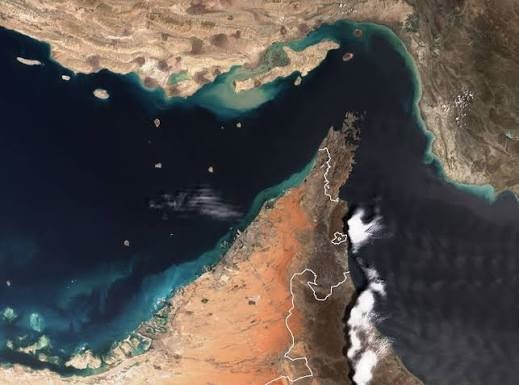
This narrow maritime passage connects the Persian Gulf with the Gulf of Oman and the Arabian Sea. It is one of the most important energy shipping routes in the world.
A substantial share of internationally traded oil and liquefied natural gas passes through this corridor.
Any prolonged disruption can affect:
-
International crude oil prices.
-
LNG supplies to Asian and European markets.
-
Marine insurance premiums.
-
Shipping and freight costs.
-
Energy-importing countries, particularly in Asia.
-
Global inflation and industrial production.
The situation has become particularly dangerous following reports that three oil tankers struck naval mines and caught fire in the Strait of Hormuz, according to the Associated Press’s November 24 regional coverage. Iranian military authorities said the vessels had violated navigation regulations, while the reports described the ships as being under US aerial escort.
These incidents demonstrate that the economic consequences of the conflict are no longer limited to the countries directly involved.
A disruption in Hormuz can quickly become a global economic problem.
Why this matters for India
For India, the implications are particularly serious.
The country relies heavily on imported crude oil and maintains substantial economic and energy relationships with Gulf countries. Saudi Arabia and other Gulf states are important sources of energy, trade, employment and investment.
A prolonged confrontation could create several pressures:
1. Higher oil import costs
Any sustained increase in international crude prices would raise India’s import bill, potentially putting pressure on the current account and the rupee.
2. Pressure on fuel and transportation costs
Higher crude prices can eventually translate into increased costs across transportation, logistics, manufacturing and agriculture.
3. Risks to Indian expatriates
The latest Riyadh attack, which injured two Indian nationals, is a reminder that Indian citizens working in the region are directly exposed to the consequences of regional instability.
4. Shipping and insurance disruptions
Higher maritime insurance premiums and longer shipping routes can increase the cost of imported energy and other commodities.
5. Remittance uncertainty
Millions of Indians work across the Gulf. Any sustained deterioration in economic activity could affect employment opportunities and the flow of remittances to India.
The Indian government’s challenge is therefore twofold: protecting its citizens while maintaining stable energy supplies and diplomatic relations with all major regional stakeholders.
Saudi Arabia’s dilemma: Retaliation or restraint?
Saudi Arabia now faces a difficult strategic calculation.
Allowing repeated attacks on its economic infrastructure without a visible response could weaken perceptions of its security capabilities. However, launching an extensive military campaign against Houthi positions in Yemen could deepen a conflict that has already imposed enormous humanitarian and economic costs.
Riyadh has experience with both approaches.
The Saudi-led military intervention in Yemen, which began in 2015, failed to eliminate the Houthi movement despite years of military operations. The conflict instead developed into a prolonged war, with the Houthis retaining control over significant territory and acquiring increasingly sophisticated weapons.
The present circumstances are different because the Yemen conflict is now intersecting with a wider confrontation involving Iran, Israel and the United States.
Saudi Arabia must therefore consider three priorities.
First, protecting critical infrastructure. Airports, financial districts, energy installations and transport networks require stronger air-defence arrangements and emergency preparedness.
Second, avoiding an uncontrolled escalation. A major Saudi military response could invite further retaliation against oil facilities, airports and civilian infrastructure.
Third, preserving economic confidence. Vision 2030 depends on international investment, tourism, financial activity and the ability to attract global businesses. Prolonged insecurity could undermine these objectives.
The kingdom’s response will consequently be measured not only by its military capabilities but also by its ability to prevent the conflict from disrupting its economic transformation.
An important distinction: Saudi accusations, Houthi responsibility and Iran’s role
The Riyadh incident also raises an important question about responsibility.
Saudi Arabia has attributed the November 24 attack to the Houthi movement. Its coalition spokesperson has specifically identified a drone attack.
However, independent verification of the complete operational chain remains limited in the initial reporting. The Houthis’ own public acceptance of responsibility for this particular November 24 incident was not established in the reports reviewed.
There is also a broader distinction between Iranian support for the Houthis and direct Iranian command of individual operations.
Iran has developed relationships with armed groups across the region, providing varying degrees of political, military and technological support. The Houthis are an important part of this regional network.
Nevertheless, the movement has its own domestic political interests and military decision-making structure. Treating every Houthi operation as a direct Iranian order would oversimplify the conflict.
This distinction matters diplomatically.
If Saudi Arabia views the attacks primarily as a Houthi security threat, its response could focus on Yemen and regional deterrence. If it considers them part of a coordinated Iranian military strategy, the implications become much broader, potentially drawing Saudi Arabia deeper into the confrontation between Tehran and Washington.
The danger is that a conflict already involving multiple countries could acquire another direct military dimension.
The international community faces a widening security challenge
The latest developments are attracting attention beyond the Gulf because the Middle East occupies a central position in global energy supplies, international shipping and financial markets.
The United States has a direct security interest in protecting maritime trade and supporting its regional partners.
Israel remains deeply concerned about Iran’s military capabilities and the activities of Iran-aligned groups.
European countries face the prospect of higher energy prices, disrupted maritime trade and renewed security pressures.
For Asian economies, particularly India, China, Japan and South Korea, the stability of Gulf energy supplies is an essential economic concern.
The United Nations has also faced growing diplomatic pressure as attacks on civilian and energy infrastructure threaten to expand the humanitarian and economic consequences of the conflict.
Saudi Arabia’s November attacks on its economic assets have been raised in communications to the UN Security Council, highlighting the kingdom’s argument that attacks on commercial and energy infrastructure represent a threat extending beyond its national borders.
The challenge for international diplomacy is to prevent the conflict from becoming a prolonged regional war in which economic infrastructure and commercial shipping remain exposed to military action.
What happens next? Three developments to watch
The immediate future of the crisis will depend on decisions taken in Riyadh, Tehran and Washington.
1. Saudi Arabia’s military response
Whether Riyadh chooses additional defensive measures, retaliatory operations or renewed diplomatic engagement with regional actors will shape the next phase of the Yemen confrontation.
2. Iran’s willingness to negotiate
Tehran’s seven conditions represent a substantial diplomatic hurdle. Washington’s response will determine whether there is room for indirect negotiations or whether the two countries move towards another round of military confrontation.
3. Security in the Strait of Hormuz
The maritime situation may prove even more consequential than the attacks on individual buildings. Any sustained disruption to oil and gas shipments could rapidly increase pressure on governments around the world to intervene diplomatically.
There is also a fourth consideration: the safety of foreign nationals.
The injury of two Indians in Riyadh is a reminder that ordinary workers, families and expatriate communities are among those who bear the immediate human cost of conflicts driven by decisions taken far away from their workplaces and homes.
The bigger picture: A financial centre becomes another front in the Middle East conflict
The Riyadh attack represents more than another security incident in an increasingly volatile region.
It demonstrates how the geography of the Middle East conflict is expanding. Financial districts, energy companies, airports and maritime corridors are becoming part of a security environment traditionally associated with military installations and border regions.
For Saudi Arabia, the challenge is especially significant because its economic transformation depends on projecting stability at a time when regional security is deteriorating.
For Iran, refusing negotiations until its demands are addressed is an attempt to preserve diplomatic and strategic leverage.
For the United States, the problem is how to maintain pressure on Tehran without allowing the conflict to destabilise critical energy routes and regional partners.
And for India, the stakes involve much more than the safety of two nationals injured in Riyadh. Energy security, expatriate welfare, trade, investment and regional diplomatic relationships are all directly connected to what happens next.
The central question is no longer whether the Middle East conflict can affect the Gulf’s economic centres. That possibility has already become a reality.
The real question is whether regional and international powers can prevent the next attack from triggering a much wider confrontation.