Israel Presses Trump on Iran as Qatar, Pakistan and Turkey Intensify Peace Efforts
By: Javid Amin | 18 November 2026
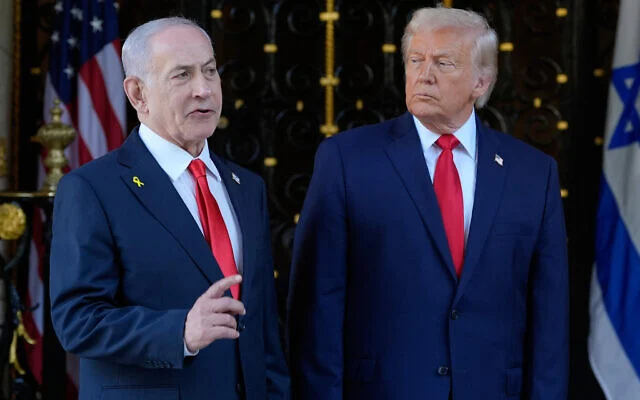
CAIRO/WASHINGTON/TEL AVIV: The Middle East is facing a dangerous diplomatic and military crossroads. While Gulf governments, Pakistan and Turkey are stepping up contacts with Washington to prevent another full-scale confrontation with Iran, Israel is reportedly pressing the Donald Trump administration to consider renewed military action against Tehran’s nuclear and missile infrastructure.
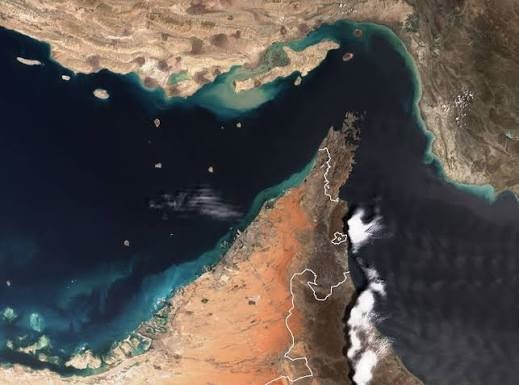
The diplomatic effort is unfolding against a backdrop of fresh exchanges between American and Iranian forces. Iran has widened attacks on US-linked facilities in Kuwait and Bahrain, following an American strike on an Islamic Revolutionary Guard Corps (IRGC) missile site on Qeshm Island in the Strait of Hormuz. At the same time, attacks on commercial shipping and growing tensions around Yemen are adding further pressure to an already unstable regional situation.
The immediate concern is that a conflict which has never been fully resolved could move into another major phase. Gulf governments fear that renewed American or Israeli strikes would invite Iranian retaliation against military bases, oil facilities, power installations, desalination plants and vital shipping routes.
The diplomatic campaign is therefore not simply about preventing another exchange of missiles. It is an attempt to stop a regional conflict from expanding into a wider confrontation that could threaten the security and economic foundations of the Gulf.
Reporting by the Associated Press and Reuters indicates that the diplomatic push is being driven by regional officials concerned about the consequences of renewed war, while Israeli representatives have been making the case for a tougher military response.
Israel’s push for renewed strikes puts Washington under pressure
A significant development came with the visit of Israel’s Mossad chief, Roman Gofman, to the United States.
According to Reuters, Gofman met senior Trump administration officials, including CIA Director John Ratcliffe in Washington, before travelling to Miami for discussions with US special envoy Steve Witkoff. Two people briefed on the meetings told Reuters that Gofman advocated joint American-Israeli strikes against Iran and presented Israeli intelligence relating to Tehran’s nuclear programme.
Former Israeli minister Ron Dermer, a close associate of Prime Minister Benjamin Netanyahu, was also reportedly in the United States advocating military action.
The meetings matter because they took place shortly after Gulf leaders had urged Trump not to restart the war. Regional officials told the Associated Press that Gulf governments were concerned the Israeli intelligence chief’s visit could influence Washington towards another military campaign.
However, the picture is not entirely straightforward.
A person familiar with Gofman’s visit described his discussions with the CIA director as routine and covering a range of issues, including Iran and military assistance. The CIA declined to comment, while Netanyahu’s office did not immediately respond to Reuters’ request for comment.
There is also an important qualification concerning the urgency of Israel’s security concerns. Reuters, citing two people briefed on the matter, reported that Israel’s military assessed Iran did not pose an imminent threat to Israel, suggesting that immediate military action was not considered necessary by the military itself. The Israeli military did not immediately respond to a request for comment.
This distinction is significant. Israel’s political leadership may be pressing for a limited window to act, but the reported military assessment does not describe an immediate threat requiring an urgent strike.
Netanyahu is also operating in a politically uncertain environment. Reuters reported that he was serving as caretaker prime minister after an inconclusive election the previous month. His political opponents have accused him of seeking to escalate the conflict to improve his domestic position, an allegation he denies. There is no established evidence that domestic political considerations are driving the reported military lobbying.
The question facing Washington is whether it accepts Israel’s assessment that further military action is necessary, or whether it believes economic pressure, deterrence and diplomacy can achieve its objectives without reopening a major war.
Washington sends mixed signals on another military campaign
The Trump administration has not publicly committed itself to a renewed large-scale offensive against Iran.
A White House official told Reuters that the administration believed its economic pressure campaign was damaging Iran so severely that major combat operations were not currently necessary. The official also said Trump retained all options to prevent Iran from obtaining a nuclear weapon.
That position reflects a central tension in Washington’s approach.
The administration wants to prevent Iran from developing a nuclear weapon and to limit its military capabilities. But another major campaign would carry substantial costs, including the risk of Iranian attacks on US bases, American personnel and regional partners.
Trump has also sent mixed public signals. According to the Associated Press, he has described new strikes as highly unlikely while also warning that the US military remains prepared for action.
This uncertainty complicates the diplomatic process. Gulf governments need assurances that their territories will not become launchpads for a new offensive or targets for Iranian retaliation. Tehran, meanwhile, has little reason to assume that Washington has ruled out further military action.
The result is an uneasy situation in which diplomatic contacts continue while military forces remain active.
Fresh US-Iran exchanges expose the fragility of the ceasefire
The latest diplomatic push comes after a renewed sequence of attacks involving Iran, the United States, Kuwait and Bahrain.
The wider conflict began on February 28, 2026, when the United States and Israel launched strikes against Iran, targeting military and nuclear-related infrastructure. Iran responded with attacks on Israel, American military facilities and locations in neighbouring Arab states.
A ceasefire announced in April reduced the scale of the fighting, but it did not produce a durable political settlement. Subsequent negotiations, including a June memorandum intended to create a framework for ending hostilities, also failed to resolve the central disputes. A September assessment by the US Congressional Research Service described the memorandum as having collapsed and formally expired in August.
Since then, the confrontation has continued through intermittent military strikes, economic pressure, maritime restrictions and attacks on shipping.
The latest escalation followed an Iranian attack on an American radar installation in Bahrain on Tuesday, November 17. The United States subsequently struck an IRGC missile launch site on Qeshm Island, close to the Strait of Hormuz.
A US military official told Reuters that the American operation targeted a missile launch site and was carried out in response to Iranian attacks on US personnel and assets.
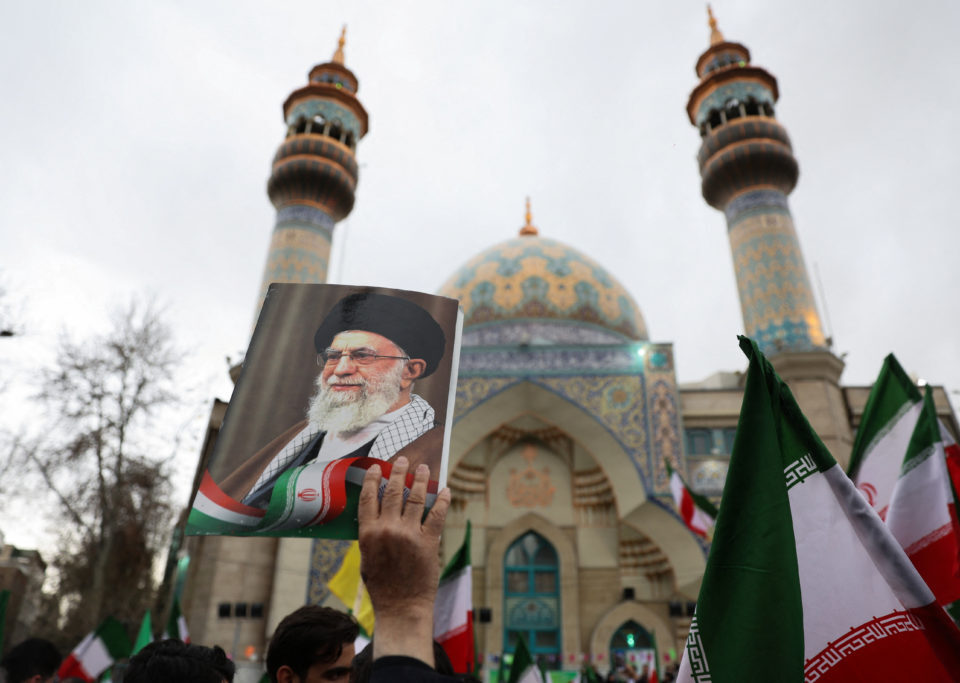
Iran presented a different account of the events. Iranian officials said the country’s recent attacks were responses to US drone surveillance operations and an attack on Iranian communications infrastructure. Iran’s deputy governor for Hormozgan province said the American strike on Qeshm had not damaged residential, commercial or infrastructure facilities, according to Iranian state media.
The following morning, Iran widened its attacks.
Kuwait and Bahrain face renewed attacks
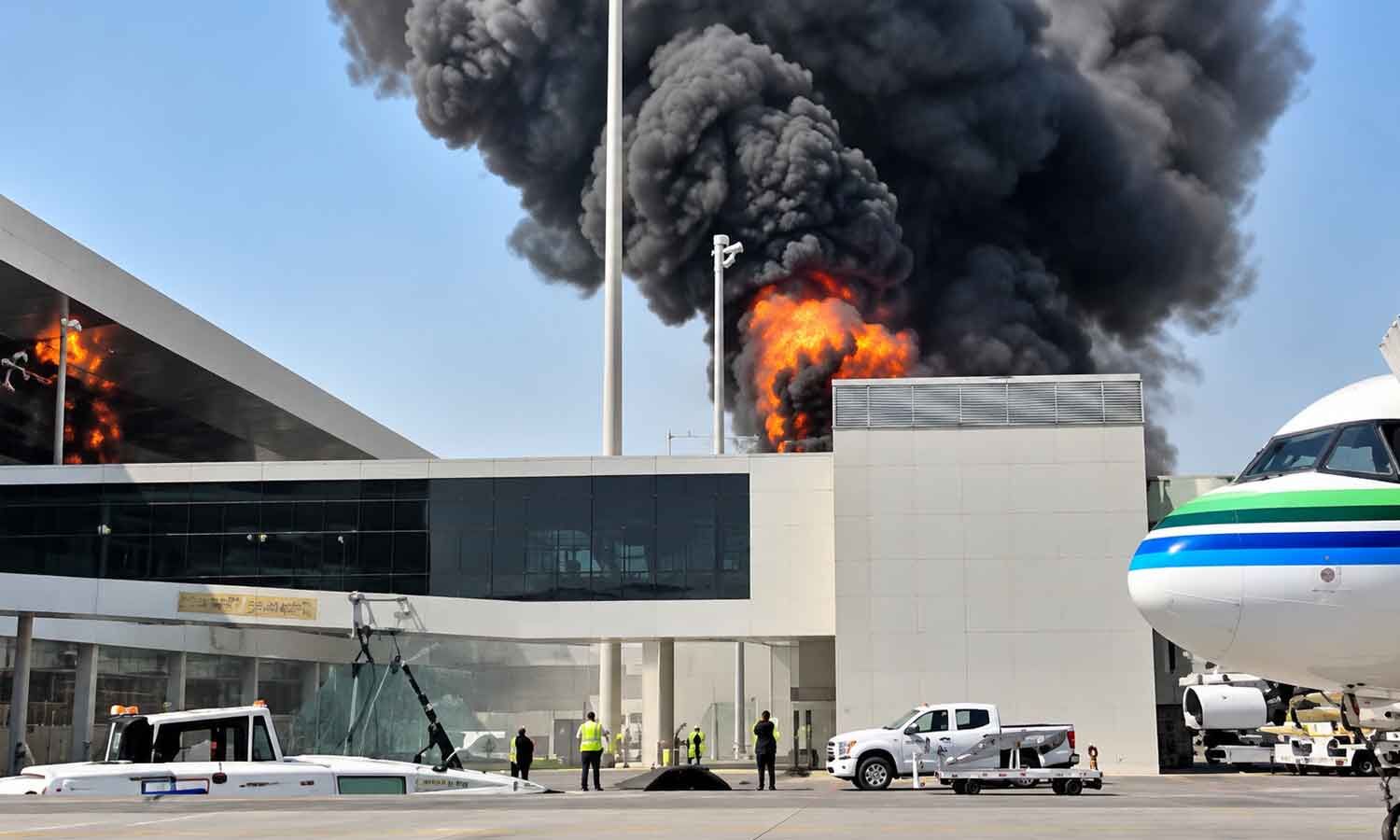
Iran targeted Ali Al Salem Air Base in Kuwait, a facility used by US forces, and launched further attacks towards Bahrain, which hosts the headquarters of the US Navy’s Fifth Fleet.
Kuwait’s military said its air defences had intercepted drone attacks. The government did not immediately report damage from the latest incident, while its Foreign Ministry condemned the repeated attacks as a threat to the country’s security and stability.
Bahrain’s military also said it had intercepted Iranian attacks. Authorities issued public shelter alerts before announcing that the immediate danger had passed. No detailed assessment of damage or casualties was provided in the initial reports.
Iran’s military said it had targeted American drone and missile installations at the Kuwaiti base. The attacks underline the difficulty of separating a direct US-Iran confrontation from the security of the neighbouring countries that host American forces.
For Bahrain and Kuwait, the issue is particularly sensitive. Both maintain security partnerships with Washington, but their territories are exposed when American facilities become part of a confrontation with Tehran.
The Associated Press reported that Ali Al Salem Air Base had already been struck repeatedly during the war, with at least 30 attacks damaging or destroying hangars, warehouses and other buildings. The latest attacks therefore come after months of pressure on facilities that are important to regional military operations.
Qatar emerges as a key diplomatic channel
While military exchanges continue, Qatar has been working to keep communication between Washington and Tehran alive.
Qatar’s Prime Minister and Foreign Minister, Sheikh Mohammed bin Abdulrahman bin Jassim Al Thani, met US Vice President JD Vance and later held a closed-door meeting with President Donald Trump at the White House during a visit earlier in November.
Qatar’s Foreign Ministry confirmed on November 10 that the discussions included the regional situation and ways to make progress in US-Iran negotiations.
The diplomatic activity continued on November 17. Qatar’s Foreign Ministry spokesperson, Majed bin Mohammed Al Ansari, confirmed that Doha’s mediation efforts were ongoing and that a meeting with the Iranian side was scheduled to exchange views on proposals under consideration.
Al Ansari warned that military escalation was threatening freedom of navigation, the global economy and the prospects of reaching an agreement. He also described the continuing state of neither war nor peace as damaging to Gulf economies, global energy markets and international security.
Qatar’s role is important because it maintains communication channels with both Washington and Tehran. Its position allows it to help transmit proposals, explore possible compromises and reduce the risk of miscalculation.
But mediation does not mean that an agreement is close. The parties still face difficult questions involving Iran’s nuclear programme, missile capabilities, sanctions, maritime security and the future of military operations in the region.
The involvement of Pakistan and Turkey adds further diplomatic weight. Regional officials told the Associated Press that government and security representatives from both countries, alongside Gulf states, have been making coordinated contacts with senior US officials. The details of those discussions have not been made public, and there has been no announced agreement establishing a common negotiating framework.
Why Gulf states are resisting another war
The Gulf countries face a strategic dilemma.
They rely on American military cooperation to protect their territory and strategic infrastructure. Several host important US military facilities. At the same time, their geographic proximity to Iran means they could face retaliation if Washington and Israel launch another major offensive.
A new conflict could expose more than military installations.
Regional officials cited by the Associated Press fear that Iranian forces or allied groups could target oil facilities, electricity infrastructure, desalination plants and undersea communication cables. These systems are essential to the daily functioning of Gulf economies.
The threat to desalination facilities is particularly serious. Several Gulf countries depend heavily on desalinated seawater for drinking water and other essential needs. Damage to major plants or the electricity supply needed to operate them could create a civilian emergency, not merely an economic setback.
Undersea cables are another vulnerability. They carry a large share of international digital communications and financial data. Disruption could affect banking, business operations and connectivity well beyond the immediate conflict zone.
The risks are not limited to the Persian Gulf.
Regional officials are also concerned that Yemen’s Houthi movement could intensify attacks on shipping through the Bab el-Mandeb Strait, which connects the Red Sea with the Gulf of Aden. A disruption there, alongside instability around Hormuz, would place pressure on two major maritime routes at the same time.
The strategic concern is clear: a renewed war could turn several separate pressure points into a connected regional crisis.
The UAE and the danger to commercial shipping
The United Arab Emirates has a direct economic and security interest in preventing further escalation.
One recent incident illustrated the exposure of commercial vessels operating in the region. Abu Dhabi National Oil Company (ADNOC) said on Wednesday that one crew member was missing following an attack on one of its tankers in the Strait of Hormuz on Tuesday. Eleven other crew members were injured and were receiving medical care.
The identity of those responsible for the attack was not established in the initial reporting. It would therefore be premature to attribute the incident to a particular military or armed group without further evidence.
Nevertheless, the incident highlights the vulnerability of commercial shipping even when oil traffic is moving.
The United States has been using military escorts to help restore the passage of some tankers through the Strait. But naval protection cannot remove every risk, particularly when attacks, mines and military operations threaten a narrow and heavily trafficked waterway.
The problem is not only whether ships can pass. It is whether shipping companies, insurers, crews and energy traders believe the route is safe enough to use consistently.
Hormuz remains a global economic pressure point
The Strait of Hormuz is central to the economic consequences of the conflict.
According to the International Energy Agency, around 20 million barrels of oil and petroleum products passed through the strait each day in 2025, representing approximately one-quarter of global seaborne oil trade. Around 80% of the oil moving through the waterway was destined for Asian markets.
The IEA also estimates that nearly one-fifth of global liquefied natural gas trade passes through the strait. Qatar is particularly dependent on this route for its LNG exports.
The exposure extends directly to India. The IEA identifies China and India among the major destinations for oil moving through Hormuz. A sustained disruption could therefore affect Indian import costs, transport expenses, inflation and the price of energy-intensive goods.
However, the current market picture is more complicated than a simple story of collapsing oil shipments.
Reuters reported on November 19 that crude shipments through the Strait of Hormuz had returned to roughly pre-war levels, helping ease some immediate supply concerns. Brent crude was trading around $92.12 per barrel in early Thursday trading. Prices had fallen in the previous session amid expectations of a supply surplus and other market factors.
That does not mean maritime risks have disappeared. Reuters also reported that Iranian media had said three tankers east of the strait were disabled by mines, a claim that requires careful attribution. The ADNOC tanker incident and continuing military exchanges show that shipping remains exposed even when aggregate oil flows recover.
The distinction matters. A waterway can carry near-normal volumes while still facing serious security risks. Markets may respond to overall supply figures, but shipping companies and governments must also consider the possibility of sudden attacks, insurance increases and temporary closures.
The IEA says Saudi Arabia and the UAE have some pipeline capacity to bypass Hormuz, but alternative routes cannot replace all the oil and gas normally carried through the strait. Qatar’s LNG exports are especially vulnerable because there is no equivalent alternative export route for its gas.
Yemen adds another front to the crisis
The situation in Yemen is also becoming part of the wider regional calculation.
Saudi air defences intercepted two cruise missiles fired towards Riyadh by Yemen’s Houthi rebels, according to the Saudi-led coalition. The incident followed coalition airstrikes on Houthi-controlled areas, which the rebels said had killed at least 17 people.
The coalition said its strikes targeted military facilities and sought to weaken Houthi missile and drone capabilities. The Houthis have continued to demonstrate their ability to threaten Saudi territory and strategic infrastructure.
The Associated Press reported that Saudi officials had warned allies that the conflict with the Houthis could continue for another six months. The kingdom is seeking further military pressure on the group before entering what it considers meaningful negotiations.
This creates an additional complication for diplomacy over Iran. Even if Washington and Tehran reduce direct military exchanges, the wider regional conflict may continue through armed groups and separate battlefronts.
The Houthis’ ability to threaten the Bab el-Mandeb Strait is particularly significant. The waterway is a major route for international trade and shipping between the Red Sea and the Gulf of Aden. A simultaneous crisis around Hormuz and Bab el-Mandeb would increase shipping costs and force vessels to consider longer routes.
What is preventing a diplomatic settlement?
The obstacles are not limited to mistrust between Washington and Tehran. The two sides have fundamentally different priorities.
The United States wants to prevent Iran from acquiring a nuclear weapon, restrict its missile capabilities and reduce the threat to American forces and regional partners. It is also using sanctions and maritime pressure to weaken Tehran’s negotiating position.
Iran, meanwhile, has continued to resist US pressure and has used its regional military capabilities and influence over maritime routes to raise the costs of the confrontation. Tehran presents its attacks as retaliation for American and Israeli operations, while Gulf governments view attacks on their territory as a direct threat to their sovereignty.
The Strait of Hormuz has become part of this dispute. For Washington, freedom of navigation is a central security and economic concern. For Tehran, control over the waterway and the ability to disrupt shipping provide leverage in a conflict where it faces a stronger conventional military coalition.
The nuclear issue remains unresolved as well. Israel is concerned that Iran could rebuild or advance its nuclear capabilities, while the United States wants verifiable limits and safeguards. Any agreement would need to address not only nuclear activity but also inspection arrangements, sanctions and the broader security concerns of regional states.
There is also a problem of credibility. Each side fears that concessions could be followed by further pressure or military action. Without a mechanism to verify commitments and manage violations, even a temporary understanding could prove fragile.
What happens next?
The coming days will test whether regional diplomacy can produce more than calls for restraint.
Three developments will be particularly important.
First, Washington will have to clarify whether it intends to continue relying on sanctions, deterrence and limited military responses or whether it is considering a renewed offensive. The administration’s public statements have left room for both possibilities.
Second, Qatar, Pakistan and Turkey will need to keep communication channels open and establish whether the proposals being exchanged can lead to formal negotiations. Qatar’s confirmation that contacts with both sides are continuing is important, but there is not yet a publicly announced breakthrough.
Third, Iran and the United States will need to prevent further attacks on military facilities and commercial shipping from triggering another round of retaliation. A single incident causing significant casualties could rapidly change the calculations in Washington, Tehran and regional capitals.
A durable settlement would require more than a pause in airstrikes. It would need arrangements addressing Iran’s nuclear programme, sanctions, maritime access, military deployments and the security concerns of neighbouring countries.
The Gulf states are trying to prevent a conflict in which they could bear a large share of the economic and security costs without controlling the decisions that trigger it. Israel, meanwhile, continues to press its case that Iran’s military and nuclear capabilities require a tougher response. Washington is caught between those competing demands, its own security commitments and the risks of another prolonged campaign.
For now, diplomacy is still active, but so are the military operations. The most dangerous feature of the present situation is that neither side needs to formally declare a new war for one to begin. A miscalculated strike, a successful attack on a major facility or a serious incident involving commercial shipping could be enough to set off another chain of retaliation.
The immediate challenge is to prevent that chain from becoming unstoppable.