₹30 Crore in Recruitment Fees, but Youth Still Question Fairness: J&K’s Growing Crisis of Trust
Political accountability | Recruitment transparency | Jammu & Kashmir employment
For thousands of unemployed young people in Jammu and Kashmir, a government job is more than a monthly salary. It represents financial stability, independence, dignity and, often, years of sacrifice by entire families. That is why questions surrounding recruitment examinations, selection lists, cancellations and alleged irregularities carry such emotional and political weight.
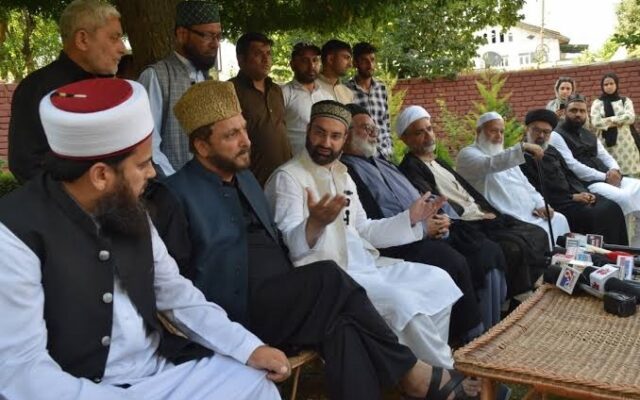
Former Chief Minister Mehbooba Mufti has raised questions over the money collected from job aspirants through examination application fees, alleging that nearly ₹30 crore has been taken from unemployed youth over the years even as controversies surrounding recruitment continue. National Conference MP Aga Syed Ruhullah Mehdi has also criticised the government’s handling of recruitment concerns, while the Baramulla MLA has sought an independent investigation and a five-year audit of recruitment agencies.
The allegations have opened up a larger debate that cannot be settled through political statements alone. How much money has actually been collected from candidates? What safeguards exist to protect the integrity of examinations? When a recruitment process comes under suspicion, who investigates it, and how are candidates compensated for lost time, money and opportunity?
At the centre of this debate is a fundamental demand: Jammu and Kashmir’s recruitment system must be credible enough that every candidate can trust the result, even when they fail to secure a job.
The FAA examination controversy: 1.6 lakh candidates, 600 posts and a security scare
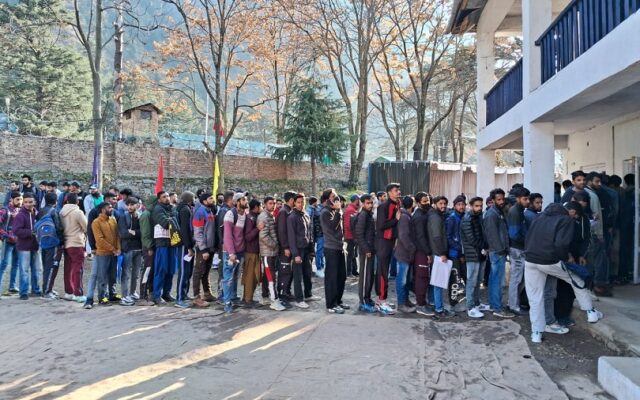
The immediate trigger for the latest uproar is the Finance Accounts Assistant (FAA) examination conducted by the Jammu and Kashmir Services Selection Board (JKSSB) on November 15, 2026. The examination was held for 600 vacancies, with approximately 1.62 lakh candidates appearing across the Union Territory, making it one of the highly competitive recruitment exercises.
The controversy intensified after police reportedly apprehended 14 suspects in connection with an alleged cheating operation involving electronic communication equipment. Investigators are looking into claims that questions could be transmitted from examination halls to outside operators, who would arrange answers and relay them back through wireless devices.
Police reportedly identified multiple suspected modules and registered three FIRs, with a Special Investigation Team formed to investigate the alleged network, identify its members and determine whether any candidates or insiders were involved.
The allegations are serious, but they must be distinguished from proven wrongdoing. An attempted cheating operation, if established, does not automatically mean the entire examination was compromised. The crucial questions are whether the suspected network succeeded in communicating answers, whether any candidates benefited, and whether the examination’s overall integrity was affected.
These are precisely the questions an independent investigation should establish through digital evidence, examination-centre records, CCTV footage, seized devices, statements and a documented chain of custody.
JKSSB’s defence: The board says the examination was not compromised
The recruitment board has defended the examination, maintaining that the alleged attempt to use unfair means was detected and did not compromise the overall process.
In its November 19 statement, JKSSB said the examination was conducted at 493 centres across all 20 districts, with security measures including CCTV surveillance, electronic jammers, biometric authentication, physical frisking, flying squads and protocols governing examination material.
The board said the incident was an isolated attempt and that police intervention helped prevent those allegedly involved from undermining the examination. It also said additional safeguards had been introduced for forthcoming tests.
That is the board’s official position, and it matters. If the alleged cheating attempt was intercepted before it could influence candidates’ performance, cancelling an examination involving more than 1.6 lakh candidates could itself impose enormous costs and hardship.
But the board’s assurance alone may not settle the matter for candidates. When an examination agency is defending the integrity of a test it conducted, an independent assessment of the evidence could provide a stronger basis for public confidence than an institutional statement.
The challenge for authorities is to establish, with evidence, whether the threat was contained or whether it exposed deeper weaknesses in the system.
₹30 crore claim: What the government’s own figures reveal
The money collected from candidates has become one of the most politically sensitive parts of the controversy. However, the figures need to be read carefully because different statements refer to different financial periods.
The allegation that nearly ₹30 crore has been collected should not be mistaken for the total amount collected over several years. Government figures reported in the Assembly indicate a substantially larger cumulative amount.
Recruitment application-fee collections reported for JKPSC and JKSSB
| Period | Fees collected |
|---|---|
| 2023–24 | ₹14.48 crore |
| 2024–25 | ₹34.38 crore |
| 2025–26 | ₹65.05 crore |
| Total, three financial years | ₹113.91 crore |
Figures compiled from reported Assembly disclosures for the Jammu and Kashmir Public Service Commission (JKPSC) and Jammu and Kashmir Services Selection Board (JKSSB).
According to reported Assembly data, JKPSC collected approximately ₹24.42 crore while JKSSB collected approximately ₹89.49 crore between 2023–24 and 2025–26. The agencies conducted 369 recruitment examinations for 15,964 advertised posts and received more than 21.12 lakh applications during the period.
This is a far more revealing picture than the ₹30 crore figure alone. It shows the scale of financial transactions between recruitment agencies and young job seekers, as well as the enormous demand for government employment in Jammu and Kashmir.
The government has maintained that these fees help cover recruitment expenses, including application processing, examination centres, technical infrastructure, security arrangements, manpower, evaluation and other operational costs. It has also argued that the fee structure is broadly comparable to recruitment agencies elsewhere in the country.
The question, therefore, is not whether recruitment agencies should incur expenses. They clearly do. The question is whether the scale of collections, the expenditure incurred, the examination outcomes and the handling of cancelled or disputed recruitment processes are transparent enough to withstand independent scrutiny.
When examination fees become a burden on unemployed families
For an applicant from a financially struggling household, examination fees are rarely an isolated expense.
Candidates may apply for multiple posts, sometimes across different departments, because they cannot afford to depend on a single recruitment notification. Each application can bring another fee, along with travel expenses, coaching fees, books, internet access, accommodation and the cost of reaching examination centres.
A candidate who applies for several examinations in a year may spend a significant amount before even entering an examination hall.
And unlike a salaried employee, an unemployed applicant has no regular income to absorb these expenses. The financial burden often falls on parents, siblings or family members who may themselves be working on low incomes.
This makes the debate around application fees more than a discussion of government accounting. It raises questions about access and fairness.
Should financially weaker candidates be provided greater fee exemptions? Should application fees be refunded when a recruitment process is cancelled because of administrative failure or proven malpractice? Should agencies publish annual financial statements specifically detailing examination-related receipts and expenditure?
These are reasonable policy questions that deserve serious consideration, particularly in a region where public employment remains a major aspiration for educated young people.
Why the latest controversy brings back memories of earlier recruitment failures
The frustration among aspirants is not emerging in isolation. Jammu and Kashmir has witnessed several recruitment controversies in recent years, some of which resulted in cancellations, investigations and prolonged uncertainty for candidates.
The 2022 Police Sub-Inspector recruitment controversy became a major turning point. The written examination for 1,200 posts was cancelled after allegations of irregularities and paper leakage. The case was subsequently investigated by the Central Bureau of Investigation (CBI), with arrests and a chargesheet reported during the investigation.
Recruitment processes involving Finance Accounts Assistants and Junior Engineers also faced controversy in 2022. The selection processes for 972 Finance Accounts Assistant posts and 163 Junior Engineer (Civil) posts were cancelled amid allegations of irregularities.
These episodes left candidates with a difficult experience: preparing for examinations, appearing in tests, waiting for results and then confronting cancellations or investigations that disrupted their career plans.
The repercussions are not limited to those who lose an examination opportunity. When recruitment is repeatedly clouded by allegations, even candidates who secure selections may face public doubt, while genuinely deserving applicants may begin to question whether hard work alone is enough.
The latest FAA controversy has reopened these unresolved concerns. For many young aspirants, the problem is no longer just one examination. It is whether the institutions responsible for conducting recruitment can demonstrate that lessons from previous controversies have actually been learned.
Mehbooba Mufti’s criticism puts the government under pressure
PDP president and former Chief Minister Mehbooba Mufti has criticised the handling of recruitment controversies, arguing that young people continue to suffer despite changes in the political administration.
Her criticism is politically significant because recruitment integrity is an issue that cuts across party lines. Government employment remains highly sought after, and any controversy involving alleged cheating or procedural lapses can quickly become a test of political accountability.
Mufti has questioned why aspirants should continue to pay substantial fees and invest years in preparation if authorities cannot ensure a fair examination environment. Her demand for accountability reflects a broader public frustration, although the allegations surrounding the latest examination still need to be established through investigation.
The political challenge for the Omar Abdullah-led government is that it cannot afford to treat the controversy merely as an opposition attack. The administration is expected to demonstrate that recruitment agencies are functioning independently, that security arrangements are effective, and that any suspected wrongdoing is investigated without protecting influential individuals.
For the government, a transparent investigation could be an opportunity to demonstrate that it is serious about institutional reform rather than simply defending the examination process.
Ruhullah Mehdi’s demand: Suspend future examinations until accountability is established
Former MP Aga Syed Ruhullah Mehdi has also questioned the recruitment system, demanding that upcoming JKSSB examinations be suspended until the allegations are investigated and accountability established.
His concern centres on the repeated appearance of recruitment controversies and the impact they have on young people who rely on competitive examinations to secure a future.
Ruhullah has argued that merely detecting alleged cheating is not enough. Authorities must identify those responsible, determine whether any candidates benefited, examine the role of possible insiders and ensure that similar networks cannot operate in future examinations.
His demand for a pause in upcoming tests is contentious. A suspension could reassure candidates that the administration is taking the allegations seriously, but it could also delay recruitment for thousands of aspirants waiting for opportunities. For candidates who have already spent years preparing, another postponement could mean more uncertainty, financial pressure and lost time.
The more practical question may be whether the government can ensure a rapid, independent and credible investigation while strengthening safeguards before the next major examination, rather than allowing the recruitment calendar to become indefinitely stalled.
The five-year audit demand: A step towards accountability?
A demand for an independent inquiry and a five-year audit of recruitment agencies would take the debate beyond the latest examination and examine how the recruitment system has functioned over a longer period.
Such an audit should not be limited to checking accounts. It should examine the entire recruitment chain, from advertisement and tendering to examination conduct, evaluation, publication of results and final appointments.
A credible review should look into:
-
Financial records: Application-fee collections, expenditure on examination vendors, centre management, technology, security and outsourced services.
-
Tendering and contracts: Selection of examination contractors, eligibility criteria, contract conditions, performance reviews and any complaints against vendors.
-
Examination security: Question-paper preparation, printing, transportation, storage, access controls, CCTV monitoring and digital security.
-
Recruitment timelines: Delays between advertisement, examination, result declaration, document verification and appointment.
-
Cancelled or disputed processes: The reasons behind cancellations, administrative responsibility, financial consequences and whether candidates received any relief.
-
Complaints and investigations: The number of complaints received, inquiries initiated, action taken and cases still pending.
-
Institutional accountability: Whether officials or contractors faced disciplinary, financial or legal action after proven lapses.
A five-year audit could help identify recurring weaknesses instead of treating every controversy as a separate incident. It could also help determine whether problems arose from deliberate manipulation, poor supervision, flawed tendering, inadequate technology or failures in coordination.
However, an audit must be independent of the agencies being examined, have a clear scope and timeline, and publish its findings in a manner that protects sensitive information without concealing public-interest facts.
What the government should do now
The administration faces a choice: respond to the controversy with statements and assurances, or use it to strengthen the recruitment system in a way candidates can actually see.
A credible reform package should begin with an independent investigation into the alleged FAA cheating network. The inquiry should establish whether the suspected operation was limited to an attempted breach, whether it affected candidates or examination results, and whether any officials, staff or contractors were involved.
The government should also consider the following measures:
1. Publish the investigation’s findings
Candidates should not be left relying on rumours or political claims. A public report, with sensitive investigative details appropriately withheld, should explain what happened, what evidence was established and what corrective action followed.
2. Conduct a recruitment-agency audit
An independent financial and procedural audit of JKSSB and other recruitment agencies over five years could help identify systemic shortcomings, expenditure patterns, vendor issues and repeated administrative failures.
3. Establish a clear fee-refund policy
Candidates should know in advance whether fees are refundable in cases of cancellation, proven irregularities or administrative failure. The policy should be consistent, clearly published and easy to understand.
4. Strengthen examination security
Technology should not be treated as a substitute for supervision. Secure question-paper handling, biometric verification, controlled access, monitoring of examination centres, independent security reviews and rapid incident response should work together.
5. Fix responsibility wherever wrongdoing is established
An inquiry should not end with the arrest of suspected individuals alone. If evidence establishes negligence, misconduct, collusion or procedural failure by officials or contractors, accountability should follow through the appropriate legal and disciplinary channels.
6. Create a grievance mechanism for candidates
A time-bound grievance portal could allow aspirants to report suspected irregularities, fee-related concerns, examination-centre issues and recruitment delays. Complaints should be acknowledged, tracked and resolved rather than disappearing into administrative files.
7. Publish a recruitment dashboard
A publicly accessible dashboard showing advertised vacancies, applications received, examinations held, results declared, appointments completed, pending stages and cancellation reasons could help candidates monitor recruitment without depending on unofficial sources.
Transparency is not simply about publishing notifications. It means giving candidates the information they need to understand what is happening to their applications, examinations and future.
The cost of losing faith in merit
For a young person preparing for a competitive examination in Kashmir, the stakes are often much higher than the marks on a paper.
Behind many applications is a family hoping that a government job will provide stability. Behind every examination attempt are months, sometimes years, of preparation. Candidates postpone other career choices, spend money they may not have, and organise their lives around recruitment calendars that can change without warning.
When allegations of cheating emerge, the damage extends beyond the examination hall. It creates doubts about merit, increases anxiety among candidates and weakens faith in institutions that are supposed to offer equal opportunity.
That is why a transparent investigation is essential, regardless of which political party is in power or which recruitment agency is involved.
The government may argue that examinations were conducted securely and that the latest cheating attempt was intercepted. The opposition may allege systemic failures. Both positions must ultimately be tested against evidence, not political rhetoric.
If wrongdoing occurred, those responsible must face consequences. If the examination was not compromised, the authorities must demonstrate that through a credible and independently verifiable process.
A recruitment system cannot ask for trust without earning it
Jammu and Kashmir’s unemployment challenge cannot be solved by recruitment examinations alone. But when government jobs are advertised, candidates must be able to compete without fear that their hard work will be undermined by manipulation, insider access or administrative failure.
The debate over application fees, alleged cheating networks, examination cancellations and audit demands is ultimately about the credibility of public institutions.
Young people do not expect the government to guarantee them a job. They expect a fair chance to earn one.
That is not an unreasonable demand. It is the minimum standard a public recruitment system must meet.
And until that confidence is restored, every new examination risks becoming another test, not just of candidates’ knowledge, but of the government’s ability to deliver fairness.