Paper Leaks to Rotten Meat: Mirwaiz Umar Farooq Questions Government Accountability as Public Trust Comes Under Strain in Jammu & Kashmir
By: Javid Amin | 21 November 2026 | Srinagar
Jammu & Kashmir is facing a growing crisis of public confidence, with recurring concerns over recruitment examination irregularities, alleged paper leaks and food safety violations bringing government accountability under renewed scrutiny. From young job aspirants worried about the fairness of competitive examinations to ordinary consumers questioning the quality of meat and food products entering local markets, the concerns are increasingly touching everyday life.
The issue has now drawn sharp criticism from Kashmir’s chief cleric, Mirwaiz Umar Farooq, who has questioned the government’s ability to protect public interests and maintain effective control over essential sectors.
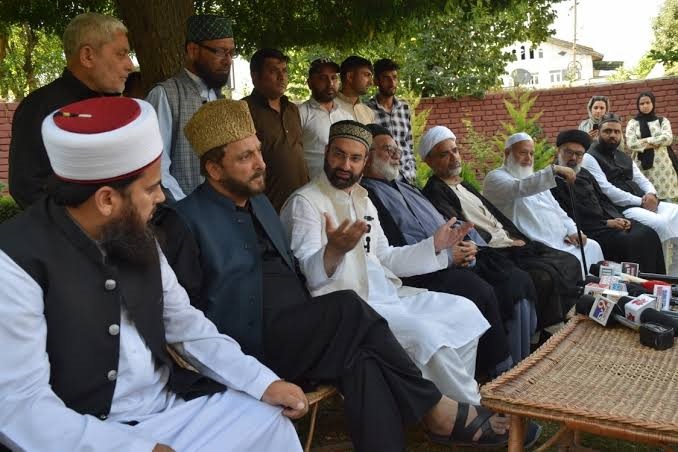
Speaking in Srinagar on November 21, Mirwaiz expressed concern over the reported irregularities surrounding a recent Jammu and Kashmir Services Selection Board (JKSSB) examination and the controversy surrounding the seizure of rotten meat. He argued that repeated incidents were creating an atmosphere of uncertainty and that the government could no longer respond to public concerns through assurances alone.
His remarks have come at a particularly sensitive time. A recruitment examination involving more than 1.6 lakh candidates has attracted attention following an alleged attempt to use unfair means, while food safety authorities have intensified inspections after the seizure of a large consignment of rotten meat in Budgam.
Although the two developments belong to different administrative sectors, they raise a common question: Who takes responsibility when systems designed to protect citizens fail to inspire confidence?
The controversy is not simply about an examination or an unsafe food consignment. It concerns the credibility of public institutions, the effectiveness of regulatory oversight and the government’s responsibility to ensure that citizens receive fair opportunities and basic protection.
Mirwaiz Umar Farooq’s criticism puts governance and accountability back in focus
Mirwaiz Umar Farooq’s November 21 remarks reflected growing public frustration over what he described as recurring governance failures.
Addressing reporters, he expressed concern that recruitment-related controversies were affecting the future of educated young people who spend years preparing for limited government employment opportunities.
He also questioned the government’s handling of the food safety controversy, particularly the reported circulation of rotten meat and the absence of publicly available findings from an earlier committee constituted to examine the issue.
According to his remarks, a common Friday sermon had been prepared and delivered across more than 200 mosques, khanqahs and imambaras, reflecting the seriousness with which the issue had entered public discussion.
Mirwaiz argued that the seizure of unsafe food products was not enough if the larger supply chain responsible for bringing such material into markets remained unidentified.
He called for those involved to be exposed and held accountable, while also stressing the moral responsibility of people engaged in the food business.
His criticism goes beyond political disagreement. It touches two areas where public confidence is essential: the fairness of employment opportunities and the safety of food consumed by families.
The government’s response will therefore be judged not only by the number of inspections or investigations announced, but also by whether the people responsible are identified and the underlying weaknesses are corrected.
JKSSB examination controversy: 1.61 lakh candidates, 600 posts and renewed questions
The recruitment controversy has particular significance because government employment remains one of the most sought-after career options for educated youth in Jammu & Kashmir.
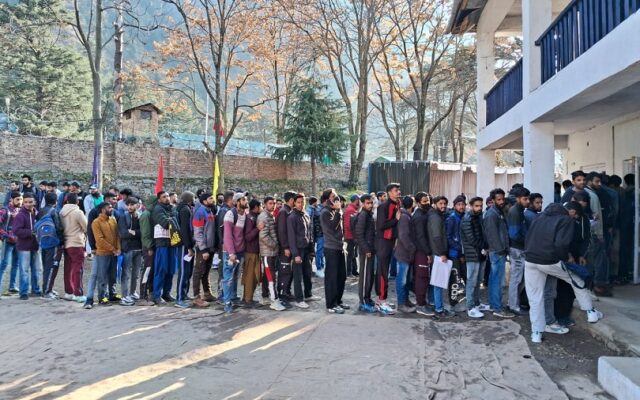
On November 15, the Jammu and Kashmir Services Selection Board conducted an examination across the Union Territory for 600 posts.
According to the Board’s subsequent statement, the examination was held at 493 centres across all 20 districts, with 1,61,946 candidates appearing.
The scale of participation highlights the enormous competition facing young job seekers.
Against this backdrop, reports of an alleged attempt to use unfair means during the examination attracted considerable attention.
Mirwaiz described the matter as a serious concern and called for an impartial and transparent investigation into recruitment-related irregularities.
However, an important distinction needs to be maintained.
The JKSSB, in its November 19 press communication, maintained that the examination was successfully conducted and that the isolated incident involving an alleged attempt to use unfair means had not compromised the overall examination process.
The Board also acknowledged the attempted modus operandi and said additional preventive measures would be introduced for forthcoming examinations.
These include strengthening existing surveillance, biometric verification, electronic security arrangements, flying-squad inspections and safeguards governing the handling and transportation of examination material.
The Board’s position is that the alleged attempt was identified and addressed without undermining the examination as a whole.
Nevertheless, the incident has renewed a difficult question for the recruitment system: how can authorities convince candidates that every examination is protected against manipulation, impersonation and organised cheating?
For candidates who have invested years in preparation, even an unsuccessful attempt to compromise an examination can create uncertainty.
The challenge is particularly serious in a region where government recruitment is closely connected with economic security, social mobility and expectations of a stable future.
Why recruitment irregularities hurt Jammu & Kashmir’s youth so deeply
The recruitment debate cannot be separated from the employment situation in Jammu & Kashmir.
For many educated young people, a government job represents more than a monthly salary. It offers financial stability, social security and an opportunity to support their families.
Thousands of candidates spend considerable amounts of money on coaching, books, accommodation and repeated examination attempts. Many postpone other career choices in the hope of securing a government position.
When allegations of paper leaks, examination manipulation or recruitment irregularities emerge, the damage extends beyond the candidates directly involved.
It creates doubts about whether merit is sufficient to secure employment.
It also raises concerns about whether influential individuals can obtain unfair advantages while ordinary candidates are left competing on unequal terms.
The previous JKSSB Sub-Inspector recruitment paper leak case remains an important example of why these concerns cannot be dismissed.
The Enforcement Directorate’s July 2024 press release documented its investigation into the 2022 Sub-Inspector examination paper leak, including allegations that candidates were offered access to the leaked examination paper in exchange for payments ranging from ₹15 lakh to ₹30 lakh.
That case demonstrated how recruitment fraud can involve organised networks, financial transactions and individuals operating beyond the examination centre.
The lesson is clear: examination security cannot depend exclusively on arrangements made on the day of the test. It requires protection throughout the recruitment process, from paper-setting and printing to transportation, examination administration and final selection.
For the current controversy, however, the reported November 15 incident must not automatically be described as another established paper leak. The JKSSB has maintained that the examination was not compromised. The allegations and investigation must be assessed on their own evidence.
The public deserves both a fair recruitment process and accurate information about what actually happened.
Rotten meat controversy: Nearly two tonnes seized at Budgam railway station
While recruitment irregularities have raised questions about institutional credibility, the food safety controversy has brought an immediate public health concern into focus.
The latest episode unfolded at Budgam Railway Station in mid-November, where authorities seized approximately 1,600 kilograms of buffalo meat transported from Delhi in railway parcel cargo.
According to reports based on official statements, the consignment was found in a deteriorated condition, with inadequate refrigeration arrangements and serious violations of prescribed transportation requirements.
The meat was reportedly packed in 44 boxes. Food safety officials found that the required cold-chain conditions had not been maintained. Frozen meat transported over long distances must be kept at the prescribed temperature of minus 18 degrees Celsius or below.
The consignment was declared unfit for human consumption and destroyed by the authorities.
But the matter did not end there.
On November 14, another consignment containing approximately 400 kilograms of deteriorated meat was reportedly seized at the same railway station.
Together, the two recoveries brought the reported quantity to around 2,000 kilograms within two days, intensifying concerns about the transportation and distribution of unsafe meat into Kashmir.
The incident also raised questions about the checks conducted before perishable food consignments are accepted for railway transportation.
How did such quantities travel from outside the Union Territory without the required refrigeration arrangements? Were the necessary documents and food safety certificates verified? Who was responsible for ensuring compliance with transportation standards?
These are questions that an investigation must answer.
The seizure itself represents an enforcement intervention, not proof that the entire quantity had entered the local market or reached consumers. However, the scale of the recovery and the circumstances surrounding its transportation justify a thorough examination of the supply chain.
The shadow of last year’s rotten meat controversy
The latest seizure has revived memories of the major rotten meat controversy that affected Kashmir last year.
During that episode, enforcement agencies reportedly recovered more than 12,000 kilograms of rotten meat from different locations in the Valley. The controversy generated considerable public anxiety and raised questions about meat storage, transportation, inspection mechanisms and the accountability of traders involved in the supply chain.
The recurrence of similar concerns is particularly troubling because the issue had already attracted considerable public attention.
A seizure followed by destruction of unsafe products is necessary, but it does not automatically address the wider problem.
Authorities must establish where the meat originated, who arranged its transportation, who was supposed to receive it and whether similar consignments have entered the supply chain through other routes.
The investigation must also examine the role of transport operators, intermediaries, wholesalers and retailers wherever evidence establishes their involvement.
The objective should not be limited to identifying the immediate consignor. It should be to prevent the same supply chain from becoming operational again under a different name or through another route.
Mirwaiz questions the fate of the earlier inquiry committee
One of the most significant aspects of Mirwaiz Umar Farooq’s criticism concerns the earlier committee constituted after last year’s food safety controversy.
He questioned why the findings of that committee had not been made publicly available, despite assurances that the matter would be investigated and a report presented.
His concern is that without publicly communicating the findings, citizens have little opportunity to understand what went wrong, what corrective measures were recommended and whether those measures were implemented.
This is an important governance issue.
An inquiry committee cannot become the final destination of a public controversy. Its purpose is to establish facts, identify institutional weaknesses and recommend corrective action.
If a report has been completed, the government should explain its findings and the action taken on its recommendations, subject to legal restrictions and the protection of ongoing investigations.
If the inquiry remains incomplete, the administration should communicate its status and explain the reasons for the delay.
The public is entitled to know whether last year’s failures were properly examined and whether the latest incident reflects gaps that were never corrected.
Food safety inspections intensify, but enforcement alone is not enough
The government and the Food and Drugs Administration (FDA), Jammu & Kashmir, have responded to the latest controversy with intensified inspection and enforcement activities.
Official figures reported on November 21 indicate that the FDA conducted 127 inspections across the Union Territory and collected 39 food samples for laboratory examination.
During the same drive:
-
Approximately 35 kilograms of sweets stored under improper temperature conditions were destroyed.
-
Licences and registrations of several food business establishments were suspended.
-
Six momo vendors in Hawal were served notices and directed to suspend operations until sanitary deficiencies were corrected.
-
Legal proceedings were initiated under different provisions of the Food Safety and Standards Act, 2006.
-
Food businesses were directed to display accurate information about the meat used in non-vegetarian preparations, including whether it was mutton, beef or chicken and whether it was fresh or frozen.
These measures indicate that enforcement activity has been stepped up beyond the immediate meat controversy.
Other recent enforcement figures also underline the scale of the department’s activity.
On November 17, the FDA reported 95 inspections during a separate drive targeting meat-processing, storage and selling establishments. Five registrations were suspended, five samples were collected for laboratory analysis and expired food products worth approximately ₹8,300 were destroyed.
On November 16, another enforcement exercise covering 108 establishments resulted in three licence suspensions and the destruction of expired food products worth approximately ₹77,500.
These are separate enforcement exercises and should not be added together as though they represent a single consolidated inspection report. Nevertheless, they demonstrate the breadth of recent food safety action.
The central question is whether this enforcement can become a sustained system rather than a temporary response to public outrage.
Inspections should be regular, risk-based and supported by adequate laboratory facilities. Food samples must be tested promptly, and results should be communicated transparently. Establishments found violating safety requirements should face appropriate proceedings under the law.
Most importantly, action must extend beyond destroying unsafe products. It must identify the people and businesses responsible for placing those products into circulation.
Health Minister acknowledges a long-standing shortage of food safety staff
An important dimension of the controversy emerged when Health Minister Sakeena Itoo acknowledged that the Food Safety Department had been facing a shortage of personnel for years.
Speaking in Kulgam on November 21, she said the department was established in 2002 but had not been provided adequate staff since its inception.
She acknowledged that the shortage created difficulties and said she had reviewed the matter to address the problem.
The minister also explained that the department could suspend or cancel licences under the relevant law, but criminal proceedings and registration of FIRs required police intervention. She said the department had already approached the police in relevant matters.
Her statement introduces an important administrative perspective into the debate.
The effectiveness of food safety regulation depends heavily on manpower. A department responsible for monitoring thousands of food establishments, meat shops, processing units, storage facilities and supply routes cannot function effectively without sufficient inspectors and technical personnel.
Food safety is not restricted to checking restaurants and shops.
It involves a much larger chain:
-
Inspection of meat processing and storage facilities.
-
Verification of transportation and cold-chain conditions.
-
Checking documentation and food safety certifications.
-
Random sampling of products.
-
Laboratory testing and follow-up investigations.
-
Monitoring wholesale markets and retail outlets.
-
Legal proceedings against violators.
If staffing shortages have persisted for years, the government must treat the issue as an institutional weakness rather than a temporary administrative inconvenience.
The minister’s acknowledgement is significant, but the next step must be measurable: filling vacancies, strengthening district-level inspection teams, improving laboratory capacity and ensuring effective coordination between food safety officials, police and district administrations.
The public needs to see these improvements on the ground.
Food adulteration is not just a regulatory issue; it is a public health concern
The consequences of unsafe food extend far beyond commercial violations.
Food adulteration, improper storage and the sale of contaminated products can expose consumers to serious health risks. Meat transported without adequate refrigeration is particularly concerning because improper temperature control can encourage bacterial growth and deterioration.
For families purchasing food from local markets, restaurants and neighbourhood shops, the most basic expectation is that the products being sold are safe for consumption.
Consumers generally cannot independently verify the transportation history of meat, the temperature at which it was stored or whether the required veterinary and food safety certifications were obtained.
That responsibility rests primarily with the regulatory system and the businesses involved in the supply chain.
The latest FDA directive requiring food establishments to clearly disclose whether meat used in non-vegetarian preparations is fresh or frozen is therefore an important step towards consumer awareness.
However, transparency must extend beyond menu declarations.
Consumers should have access to meaningful information about food safety standards, inspection outcomes and action taken against repeat offenders.
The government must also strengthen the mechanism through which citizens can report suspected adulteration and receive information about the action taken on their complaints.
A common thread connects recruitment failures and food safety concerns
At first glance, recruitment examination irregularities and food adulteration appear to be two unrelated administrative problems.
One concerns employment opportunities; the other concerns public health.
But both involve the same fundamental responsibility of government: protecting citizens through institutions that function fairly, transparently and effectively.
In recruitment, the government must ensure that candidates compete on merit without interference from organised cheating networks.
In food safety, it must ensure that traders and businesses cannot compromise public health for financial gain.
In both cases, enforcement must be backed by credible investigations and consequences.
The previous JKSSB Sub-Inspector paper leak investigation illustrates the seriousness of recruitment fraud. Similarly, the repeated recovery of unsafe meat highlights the need for effective monitoring of food transportation and distribution.
The two cases also demonstrate why announcements of investigations should not be confused with their successful completion.
A police investigation, departmental inquiry or inspection drive is only one stage of accountability.
The real outcome is measured by whether wrongdoing is established, responsible individuals are prosecuted where warranted and systemic weaknesses are corrected.
This is where the government faces its biggest test.
Omar Abdullah government faces a credibility test over everyday governance
For the Omar Abdullah-led government, these developments have created an important governance challenge.
Public expectations from an elected government extend beyond political announcements, infrastructure projects and development programmes.
Citizens also expect institutions to protect their everyday interests.
A young candidate preparing for a recruitment examination wants assurance that the selection process is fair. A parent purchasing meat or other food products wants confidence that the items are safe. A business operating within the law expects that competitors violating regulations will not enjoy unfair advantages.
These expectations are fundamental to public trust.
The government has demonstrated that enforcement agencies are capable of taking action. The seizure of unsafe meat, suspension of food business licences and the response to the alleged examination malpractice attempt are relevant examples.
However, enforcement after a violation has been detected cannot replace preventive governance.
The administration must ask why these incidents occurred, whether existing safeguards were sufficient and what changes are necessary to prevent recurrence.
It must also ensure that departmental shortcomings do not become permanent explanations for administrative failures.
The acknowledgement of a food safety staff shortage since 2002, for instance, raises questions about successive governments and the continuity of administrative neglect.
The responsibility for correcting these deficiencies now rests with the present administration.
What people expect from the government now
The public response to these controversies suggests that citizens are looking for concrete outcomes rather than another round of assurances.
Several measures could help restore confidence.
1. Transparent recruitment investigations
The authorities should provide credible updates on the investigation into the November 15 examination incident. Any established involvement of individuals or organised networks must be dealt with under the law.
At the same time, the JKSSB should maintain examination security and publish clear information about safeguards protecting candidates.
2. Disclosure of the earlier food safety inquiry
The government should clarify the status of the committee constituted after last year’s rotten meat controversy. Its findings and recommendations should be made public wherever legally permissible.
3. Accountability throughout the meat supply chain
Investigations should identify the source, transporters, intermediaries and intended recipients of the seized consignments. Any action must be based on evidence rather than assumptions about entire categories of traders.
4. Strengthening the Food Safety Department
Long-standing vacancies must be addressed through recruitment and deployment of adequate technical and inspection staff. District-level monitoring and laboratory testing facilities also need strengthening.
5. Regular public reporting
The FDA should periodically publish consolidated information about inspections, samples collected, laboratory results, licence suspensions, prosecutions and convictions.
6. Protection for consumers and genuine businesses
The government must ensure that citizens have accessible complaint mechanisms and that businesses following prescribed standards are protected from unfair competition by violators.
These measures would help move the administration from reactive enforcement towards preventive governance.
Public trust cannot be restored through announcements alone
Mirwaiz Umar Farooq’s criticism comes at a time when two essential aspects of public life have entered the centre of public debate: the future of young job seekers and the safety of food consumed by ordinary families.
His remarks reflect a wider concern that repeated controversies, even when they involve different departments, can gradually weaken confidence in the institutions responsible for protecting citizens.
There is also a broader social dimension.
Government accountability cannot replace individual responsibility. Traders must follow food safety regulations, transport operators must comply with prescribed standards, and citizens should report suspected violations rather than knowingly support unsafe commercial practices.
But individual responsibility must not become an excuse for administrative shortcomings.
The government has the legal authority, regulatory machinery and institutional responsibility to enforce standards. It must ensure that those powers are exercised consistently.
The recent developments also offer an opportunity to strengthen public institutions rather than merely manage another political controversy.
The JKSSB must demonstrate that merit remains the foundation of recruitment. The FDA must establish that unsafe food cannot move through markets without effective scrutiny. The police and investigative agencies must ensure that complaints are examined fairly and that evidence leads to appropriate legal action.
Ultimately, the credibility of a government is not determined only by what it promises or announces. It is determined by whether ordinary people can see a difference in their daily lives.
Jammu & Kashmir’s youth deserve recruitment examinations they can trust. Its citizens deserve food that is safe to consume. And both deserve institutions that accept responsibility when things go wrong.
That is the real test facing the Omar Abdullah government: not simply controlling the damage after a controversy emerges, but building a system in which such failures become increasingly difficult to repeat.