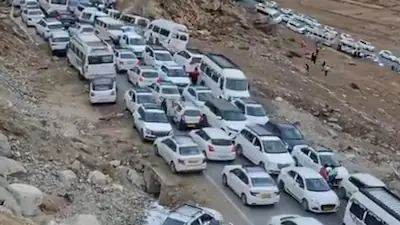
Ladakh Traffic Jam Viral Video Sparks Overtourism Concerns on Nubra-Pangong Route
By: Javid Amin | 11 June 2026
Viral Nubra-Pangong Traffic Jam Raises Questions About Sustainable Tourism in Ladakh
Ladakh’s Viral Traffic Jam Is More Than a Travel Problem — It’s an Environmental Warning
A viral video showing hundreds of vehicles crawling along Ladakh’s scenic Nubra-Pangong route has triggered widespread concern among travelers, environmentalists, and local residents alike. What was once considered one of the world’s most breathtaking high-altitude drives has now become a symbol of a growing challenge facing many mountain destinations: overtourism.
The footage, widely shared across social media platforms this week, captures a seemingly endless line of tourist vehicles stuck on a narrow mountain road between Nubra Valley and Pangong Lake. The images have sparked an uncomfortable question:
How much tourism can Ladakh sustainably handle before its fragile ecosystem begins to suffer irreversible damage?
While tourism remains the backbone of Ladakh’s economy, the incident has reignited debates about carrying capacity, vehicle regulation, infrastructure planning, and the urgent need for sustainable tourism policies in one of India’s most ecologically sensitive regions.
The Viral Video That Started the Debate
The now-viral video shows long queues of SUVs, motorcycles, taxis, and tourist vehicles moving at a snail’s pace through a narrow stretch of road on the Nubra-Pangong circuit.
For many viewers, the scene was shocking.
The route connecting Nubra Valley and Pangong Lake is famous for its dramatic mountain landscapes, remote wilderness, and pristine beauty. Travelers typically choose the route to escape urban congestion and experience the untouched grandeur of the Trans-Himalayan region.
Instead, many found themselves witnessing traffic conditions more commonly associated with metropolitan cities.
Social media users quickly voiced concerns, with many describing the situation as evidence of “uncontrolled tourism” and warning that Ladakh risks following the path of other overcrowded tourist destinations if corrective measures are not implemented soon.
Why the Nubra-Pangong Route Matters
The Nubra-Pangong route is among the most popular tourist circuits in Ladakh.
The journey connects two of the region’s most iconic attractions:
- Nubra Valley, known for its sand dunes, double-humped Bactrian camels, and dramatic desert landscapes.
- Pangong Lake, the world-famous high-altitude lake stretching across India and China.
For many visitors, completing the Leh-Nubra-Pangong circuit has become a must-do travel experience.
However, increasing tourist demand has transformed what was once a relatively quiet route into one of Ladakh’s busiest travel corridors during the peak tourism season between May and September.
Travel forums and recent visitor accounts indicate that accommodation shortages, heavy tourist flows, and increasing road congestion have become increasingly common during peak months.
The Hidden Environmental Cost of Traffic at 14,000 Feet
Traffic jams are inconvenient anywhere.
In Ladakh, they can be environmentally damaging.
Unlike urban regions with extensive infrastructure, Ladakh’s ecosystem is exceptionally fragile. The cold desert landscape has a limited capacity to absorb pollution and recover from environmental stress.
When hundreds of vehicles remain idling for hours:
Fuel Consumption Increases
Vehicles consume fuel even while stationary or moving slowly. Long queues mean engines continue running, leading to unnecessary fuel wastage.
Carbon Emissions Rise
More fuel burned means more greenhouse gas emissions. In a region already experiencing climate-related changes, increased emissions add further pressure on the environment.
Dust and Air Pollution Intensify
Mountain roads generate substantial dust, particularly during dry months. Heavy vehicle movement worsens air quality and affects local vegetation.
Noise Pollution Disrupts Wildlife
Ladakh is home to several sensitive wildlife species, including Himalayan marmots, blue sheep, Tibetan wild asses, migratory birds, and the elusive snow leopard. Increased vehicle movement and traffic noise can disturb natural habitats.
Environmentalists have repeatedly warned that unchecked tourism can gradually alter ecosystems that evolved over thousands of years under delicate climatic conditions.
Also Read | Rediscover Kashmir’s Untouched Beauty: The Ultimate Offbeat Kashmir Travel Guide 2026
A Growing Pattern Across Himalayan Destinations
The situation in Ladakh is not unique.
Across the Himalayas, popular destinations are struggling to balance tourism growth with environmental sustainability.
Recent viral videos from Manali and other hill stations have similarly highlighted severe traffic congestion caused by surging tourist numbers. These incidents reveal a broader challenge facing mountain destinations across India: infrastructure development has often failed to keep pace with visitor growth.
Experts note that mountain ecosystems are particularly vulnerable because:
- Roads are narrow and difficult to expand.
- Waste management systems are limited.
- Water resources are scarce.
- Natural habitats are sensitive to disturbance.
- Climate change impacts are already accelerating glacier retreat and environmental degradation.
The Human Cost: What Riders and Drivers Experience
Beyond environmental concerns, prolonged traffic jams in Ladakh also create physical and mental challenges for travelers.
The Nubra-Pangong route traverses high-altitude terrain where oxygen levels are significantly lower than at sea level.
For motorcyclists and drivers:
- Long waiting periods increase fatigue.
- Continuous stop-and-go traffic causes stress.
- Uneven road surfaces demand constant concentration.
- Exposure to harsh weather conditions can become exhausting.
- High-altitude conditions increase the risk of headaches and exhaustion.
Vehicle performance can also be affected. Extended traffic snarls may result in clutch wear, overheating concerns, and additional mechanical strain, particularly on vehicles operating under already challenging mountain conditions.
Also Read | Gurez and Keran Valley: Kashmir’s Hidden Frontiers Are Emerging as the Next Big Travel Destinations
Are We Witnessing the Limits of Ladakh’s Carrying Capacity?
The latest incident has revived discussions around an important concept in environmental planning:
Carrying Capacity
Carrying capacity refers to the maximum number of visitors a destination can accommodate without causing unacceptable environmental, social, or infrastructural damage.
Many conservationists argue that Ladakh may already be approaching critical thresholds during peak tourism months.
Warning signs include:
- Frequent traffic congestion.
- Rising waste generation.
- Increased pressure on water resources.
- Habitat disturbance.
- Noise pollution.
- Growth in unauthorized tourism activities.
Several previous incidents involving irresponsible tourist behavior around sensitive ecosystems, including Pangong Lake, have also fueled concerns about environmental awareness and enforcement.
What Solutions Are Being Suggested?
The viral traffic jam has prompted a wave of suggestions from environmental advocates, travel experts, and social media users.
1. Vehicle Entry Caps
Many are calling for a permit-based vehicle quota system during peak seasons.
Such systems are already used successfully in environmentally sensitive destinations worldwide to prevent overcrowding.
2. Improved Public Transportation
One of the most frequently suggested solutions is expanding public transport services between key tourist destinations.
Dedicated tourist shuttle buses could:
- Reduce the number of private vehicles.
- Lower emissions.
- Minimize road congestion.
- Improve overall visitor experience.
3. Promote Off-Season Tourism
Encouraging travel during shoulder seasons can distribute visitor numbers more evenly throughout the year and reduce peak-season pressure.
4. Sustainable Tourism Policies
Experts advocate comprehensive tourism management plans that integrate:
- Environmental monitoring.
- Visitor education.
- Waste management.
- Vehicle regulations.
- Community participation.
5. Responsible Travel Awareness
Tourists themselves play a critical role.
Simple measures such as carpooling, using shared transportation, avoiding littering, respecting wildlife habitats, and minimizing unnecessary vehicle use can collectively make a substantial difference.
Tourism Is Essential — But So Is Preservation
There is no denying that tourism has transformed Ladakh’s economy.
Thousands of local families depend directly or indirectly on tourism-related activities, including hotels, guesthouses, restaurants, taxi services, tour operators, and handicraft businesses.
The challenge, therefore, is not reducing tourism altogether.
The challenge is ensuring that tourism growth remains sustainable.
Finding the right balance between economic opportunity and environmental protection will determine whether future generations can continue to experience the same pristine landscapes that have made Ladakh a global travel icon.
The Road Ahead
The viral traffic jam on the Nubra-Pangong route may eventually clear.
But the larger questions it has raised are unlikely to disappear anytime soon.
As visitor numbers continue to grow and social media fuels demand for Himalayan destinations, Ladakh faces a defining moment.
Will it follow the path of overcrowded mountain destinations struggling under tourism pressure?
Or will it emerge as a model for sustainable, responsible, and environmentally conscious tourism?
The answer may depend on decisions made today by policymakers, tourism operators, local communities, and travelers themselves.
For now, the viral video serves as a powerful reminder that even the most remote and beautiful landscapes have limits—and respecting those limits may be the only way to preserve Ladakh’s magic for generations to come.


