Can J&K’s Divided Politics Find Common Ground on Statehood?
By: Javid Amin | 04 October 2026
PDP chief urges Omar Abdullah and political rivals to put differences aside, seek dialogue with Modi and Shah; Ladakh’s negotiations cited as a possible model
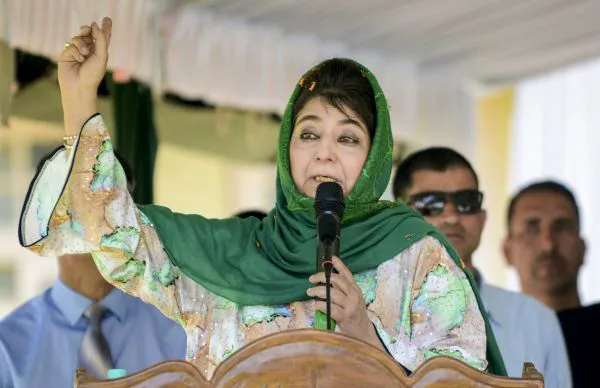
Srinagar: Former Jammu and Kashmir Chief Minister and Peoples Democratic Party (PDP) president Mehbooba Mufti has proposed a broad political outreach to New Delhi, urging rival parties and social groups in Jammu and Kashmir to temporarily set aside their differences and jointly press the Centre for sustained dialogue and the restoration of statehood.
In letters sent to Chief Minister Omar Abdullah and leaders from across the political spectrum, Mufti argued that Jammu and Kashmir’s political leadership needs to speak collectively if it wants to influence the Centre’s approach to the region.
Her appeal, made on June 2, 2026, came against the backdrop of renewed political frustration over the delay in restoring J&K’s statehood and the continuing debate over the Union Territory’s political and constitutional future.
But the proposal immediately encountered the central difficulty it was attempting to address: Jammu and Kashmir’s political parties do not agree on the region’s ultimate political objectives, the pace of engagement with New Delhi, or even the terms on which such engagement should take place.
That makes Mehbooba’s proposal simultaneously simple in concept and difficult in execution.
Mehbooba’s Message: Unity Before Political Credit
In her communication to Omar Abdullah, Mehbooba Mufti argued that J&K had reached another critical point and that political leaders needed to rise above partisan considerations.
She proposed an official meeting involving political parties and other stakeholders, followed by a collective approach to Prime Minister Narendra Modi and Union Home Minister Amit Shah.
The PDP chief’s argument was that political differences should not prevent parties from finding common ground on issues affecting the people of Jammu and Kashmir.
She also cautioned against turning the initiative into a contest over who receives political credit.
The broader objective, according to her appeal, was to create a platform capable of representing the region’s concerns collectively before the Union government.
This is significant because J&K’s political landscape since 2019 has been marked by competing approaches rather than a single negotiating position.
The National Conference has made restoration of statehood a central political demand. The PDP has continued to advocate a wider political dialogue and restoration of what it describes as the region’s constitutional and political rights. The BJP, meanwhile, has rejected the restoration of the pre-2019 constitutional arrangement while maintaining its own position on statehood.
A common platform would therefore require agreement on at least the issues that can unite these otherwise competing positions.
Why Omar Abdullah Was Central to the Proposal
Mehbooba specifically placed responsibility on Chief Minister Omar Abdullah to convene the proposed all-party meeting.
Her reasoning was straightforward: the elected government is headed by Abdullah, and his involvement would give any collective initiative greater political legitimacy.
She told Abdullah that his support was a prerequisite for the success of the proposed platform and urged him to bring political parties together through a formal meeting.
There was, however, an immediate complication.
Mehbooba said she had sought an appointment with Abdullah but had not been able to meet him because of his schedule. Abdullah subsequently disputed the suggestion that there had been no communication between them, according to reporting at the time.
That exchange illustrated the larger problem facing the proposed unity platform: even before discussions over its agenda could begin, differences between the principal regional parties remained visible.
The Ladakh Example Behind the Proposal
The most distinctive element of Mehbooba’s appeal was her reference to Ladakh.
She pointed to engagement between the Union government and the Leh Apex Body (LAB) and Kargil Democratic Alliance (KDA), arguing that the experience demonstrated the potential of sustained negotiations.
The comparison is based on a real dialogue mechanism.
The Union government has said that its High Powered Committee mechanism with LAB and KDA has produced outcomes including increased Scheduled Tribe reservation, women’s reservation in the Ladakh Autonomous Hill Development Councils and protection for local languages. It has also said recruitment for 1,800 government posts had commenced.
The Centre has repeatedly described itself as open to continued dialogue with the two Ladakh bodies.
That experience is what Mehbooba wants J&K’s political leadership to examine.
Her argument is not necessarily that Jammu and Kashmir and Ladakh face identical political circumstances. Rather, she is pointing to the method of collective representation and sustained engagement as something J&K could attempt.
But J&K Is Not Ladakh
The comparison also has clear limitations.
Jammu and Kashmir and Ladakh were created as separate Union Territories through the Jammu and Kashmir Reorganisation Act, 2019, after the erstwhile state’s constitutional status was altered.
Their political circumstances, geography, demographic composition, security environment and institutional structures are different.
Even BJP leaders opposing Mehbooba’s initiative emphasised this distinction.
Former J&K BJP president Ravinder Raina rejected the proposed outreach and argued that Ladakh and J&K could not simply be treated as equivalent because of J&K’s border and security circumstances. He described Mehbooba’s proposal as a political exercise rather than a workable common front.
That response exposes one of the first hurdles for Mehbooba’s idea.
A united platform cannot simply be built around the assumption that every party accepts the same diagnosis of J&K’s problems.
It would have to identify a narrow set of demands on which parties with fundamentally different political positions can agree.
Statehood Is the Most Obvious Common Ground
Among those issues, restoration of statehood appears to offer the clearest potential area of convergence.
The Supreme Court, in its December 2023 judgment on Article 370, recorded the Union government’s submission that statehood would be restored and said restoration should take place “at the earliest and as soon as possible.”
The Assembly elections were subsequently held in 2024, followed by the formation of an elected government headed by Omar Abdullah.
Yet J&K remains a Union Territory.
That gap between an elected government and the continuing Union Territory structure has kept statehood at the centre of regional political debate.
The issue subsequently moved beyond individual party statements.
In June, the National Conference decided to organise a protest in New Delhi demanding restoration of statehood, and Omar Abdullah later sought the support of INDIA bloc parties for the proposed mobilisation.
This development is particularly relevant to Mehbooba’s proposal because it suggests that the demand for statehood is increasingly being taken from the J&K Assembly and local political arena into national-level political mobilisation.
The Question of What Comes After Statehood
The more difficult question is whether statehood alone can unite J&K’s political parties.
Probably not.
For the National Conference, statehood is an important part of its post-2019 political programme, but its political discourse has also included the restoration of constitutional safeguards.
The PDP has its own broader political position concerning the constitutional rights and political identity of J&K.
The BJP’s position is fundamentally different: it supports restoration of statehood but rejects demands aimed at returning J&K to its pre-August 5, 2019 constitutional arrangement.
That difference was starkly visible during the J&K Assembly’s recent statehood resolution debate, when the BJP objected to references connected to the erstwhile state’s constitutional status and walked out before the vote.
Therefore, a genuinely united delegation would have to distinguish between:
- issues on which there is broad agreement;
- issues that remain party-specific; and
- issues that some parties may refuse to endorse altogether.
Without that distinction, an all-party meeting could quickly become another arena for political disagreement.
The BJP Question
The inclusion of BJP representatives is perhaps the biggest test of the proposal.
Mehbooba’s outreach was deliberately broad. Her letters went beyond the traditional regional opposition space and included J&K BJP Leader of Opposition Sunil Sharma, Congress leader Tariq Hameed Karra, CPI(M)’s Mohammad Yousuf Tarigami, People’s Conference chairman Sajad Gani Lone, Engineer Rashid, AAP’s Mehraj Malik and representatives of various social and community organisations.
That breadth was important.
A platform comprising only the NC, PDP and other parties broadly opposed to the BJP-led Centre would not amount to the kind of “united J&K” initiative Mehbooba was proposing.
But BJP leaders subsequently rejected the appeal.
Ravinder Raina called it a “political gimmick” and argued that the security situation in J&K made the Ladakh comparison inappropriate.
The BJP’s position therefore presents the first major structural obstacle to the idea of an all-party delegation.
Omar Abdullah’s Position Became More Important
Interestingly, events after Mehbooba’s appeal demonstrated that there is some overlap between the PDP’s proposed strategy and the National Conference government’s own statehood campaign.
Omar Abdullah later sought the support of INDIA bloc parties for the National Conference’s planned protest in New Delhi over restoration of statehood.
The June 8 INDIA bloc meeting in Delhi was attended by Mehbooba Mufti as well.
This did not create an all-party J&K platform of the kind Mehbooba originally proposed.
But it demonstrated that the statehood demand was increasingly moving into a wider opposition-political space.
There is therefore a distinction between unity around a specific demand and unity around the entire political future of J&K.
The first may be achievable.
The second remains considerably more difficult.
Why Dialogue With New Delhi Matters
Mehbooba’s appeal also reflects a recognition of the institutional reality governing J&K.
As a Union Territory, Jammu and Kashmir does not exercise the same constitutional powers as a full-fledged state.
The Jammu and Kashmir Reorganisation Act, 2019 provides the Union Territory’s Legislative Assembly with legislative powers over much of the State List, but excludes public order and police, while Parliament retains legislative authority under the Act.
That arrangement has repeatedly become part of the political debate over governance.
For regional parties, the issue is therefore not simply symbolic.
Statehood would alter the institutional relationship between the elected government and the Union government.
It would also change the political accountability structure: voters would be able to judge a state government for a larger range of responsibilities currently divided between the elected administration and the Union-controlled institutional framework.
This is one reason the statehood debate has remained politically significant even after the restoration of an elected Assembly.
Mehbooba’s Appeal Also Reflects Regional Political Fragmentation
There is another layer to the initiative.
Jammu and Kashmir’s regional political space is no longer dominated by a simple NC-versus-PDP contest.
The People’s Conference, AIP, Congress, BJP, CPI(M), smaller parties and independent political figures occupy different positions.
The 2024 Assembly elections also produced a more fragmented political landscape, while subsequent political developments have generated new tensions within and between parties.
In that environment, Mehbooba’s proposal can be viewed as an attempt to create an issue-based political platform that temporarily rises above ordinary electoral competition.
Whether that can happen depends less on rhetoric and more on the willingness of parties to accept a limited common agenda.
What Would a Genuine United Front Need?
If the proposed initiative were to move beyond political statements, it would need a clearly defined structure.
A workable framework could begin with an all-party meeting in J&K, followed by agreement on a short list of common demands.
Statehood could form the central demand.
A second component could be sustained institutional dialogue with New Delhi.
Other contentious questions could be recorded as individual party positions rather than forced into a common declaration.
That would allow political parties to disagree on Article 370, constitutional safeguards, land rights or other questions while still presenting a common position on statehood and democratic governance.
Such an approach would be more realistic than attempting to create a single political programme for parties that fundamentally disagree about J&K’s constitutional history and future.
The Centre’s Response Will Ultimately Determine the Strategy’s Value
Even if J&K’s political parties manage to find common ground, the effectiveness of the initiative will ultimately depend on New Delhi’s response.
The Ladakh experience cited by Mehbooba demonstrates that negotiations can produce specific administrative and political outcomes.
But the Union government has also made clear that its engagement with Ladakh operates through established mechanisms and remains within the constitutional and administrative framework governing the Union Territory.
J&K would therefore need a similarly structured process if dialogue were to become more than a symbolic meeting.
The crucial question would be whether the Centre is prepared to establish a sustained political channel involving the elected government and wider political stakeholders.
A Proposal Caught Between Unity and Political Rivalry
Mehbooba Mufti’s initiative contains an obvious political paradox.
She is asking parties that routinely compete against one another to temporarily suspend their differences.
At the same time, the political parties have strong incentives to retain their individual identities, particularly on issues as consequential as Article 370, statehood, relations with New Delhi and the region’s constitutional future.
That tension cannot be eliminated through an appeal for unity.
It has to be managed.
The proposal’s viability will therefore depend on whether J&K’s parties can agree that certain issues are important enough to be taken out of ordinary partisan competition.
Statehood may be the most obvious candidate.
The Road Ahead
The most consequential aspect of Mehbooba’s initiative may not be whether every political party signs up to it.
It may instead be whether her appeal contributes to a shift in the political conversation—from competing demands and public accusations towards a structured negotiating position.
There are already signs of parallel efforts.
The National Conference has pursued its own statehood mobilisation, while Mehbooba has called for a wider cross-party platform. Omar Abdullah has subsequently sought broader opposition support for the statehood campaign.
These efforts are not identical, but they revolve around a common political question:
How should Jammu and Kashmir’s elected leadership engage with New Delhi to secure restoration of statehood and address the region’s wider political concerns?
The answer is unlikely to emerge from one party acting alone.
But neither is political unity guaranteed merely because the parties share one demand.
For Mehbooba Mufti, the challenge now is to turn an appeal for unity into an actual negotiating mechanism.
For Omar Abdullah, the question is whether his government is prepared to convene the broader political meeting she has sought while continuing its own statehood campaign.
For the BJP, the question is whether it is willing to participate in any common forum whose agenda includes a statehood demand but excludes questions it regards as settled after 2019.
And for New Delhi, the larger question is whether sustained dialogue with J&K’s political leadership can become a structured process rather than a series of episodic political exchanges.
The Ladakh example has shown that negotiations can produce concrete outcomes.
Whether Jammu and Kashmir’s political leadership can reproduce the consensus-building process—without pretending that the region’s political differences do not exist—remains the real test of Mehbooba Mufti’s proposal.
For now, her initiative has put a straightforward question before J&K’s political class:
Can competing parties disagree on the region’s ultimate political future, yet still stand together on the limited question of restoring statehood and opening a sustained dialogue with New Delhi?
The answer will determine whether the latest call for unity becomes another political appeal—or the beginning of a new phase in J&K’s statehood campaign.
SEO Package
SEO Title:
Meta Description:
Focus Keyphrase:
Mehbooba Mufti J&K statehood
Secondary Keywords:
Slug:
Tags: