Mehbooba’s 1987 Warning to Omar Abdullah: Kashmir Recruitment Row Deepens as 20 Arrested
Kashmir’s recruitment crisis puts youth confidence, examination transparency and government accountability under renewed scrutiny
By: Javid Amin | 23 November 2026
Jammu and Kashmir’s recruitment controversy has once again brought the future of thousands of unemployed young people into the political spotlight. With allegations of examination manipulation, demands for independent investigations and the arrest of government employees in an alleged cheating network, the credibility of public recruitment has become a major issue for the Omar Abdullah-led government.
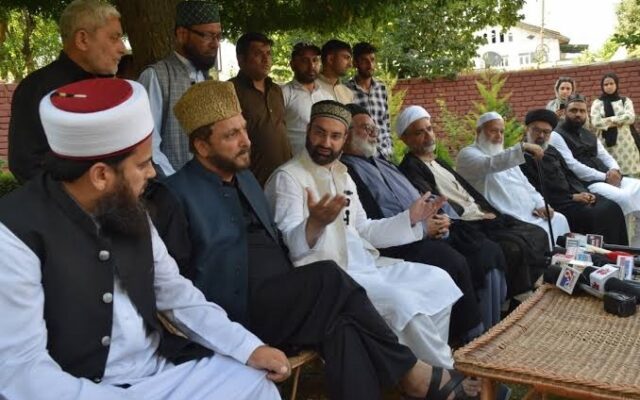
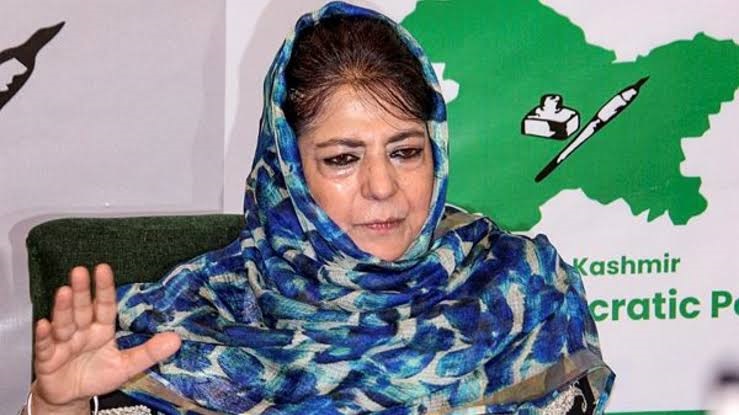
Two prominent voices have now joined the debate from different political and social perspectives. Peoples Democratic Party (PDP) president Mehbooba Mufti has cautioned Chief Minister Omar Abdullah against repeating historical mistakes that could deepen public alienation, invoking the controversial 1987 Assembly elections. Meanwhile, Mirwaiz Umar Farooq has expressed concern over recurring examination irregularities, arguing that the aspirations of Kashmir’s youth cannot continue to be compromised.
Their interventions come against the backdrop of an investigation into alleged malpractice during the Jammu and Kashmir Services Selection Board’s (JKSSB) Finance Accounts Assistant (FAA) examination held on November 15, 2026.
The latest police disclosures have added a serious dimension to the controversy: 20 people have been arrested, including six government employees. However, investigators have described the incident as an organised attempt to facilitate cheating at a particular examination centre, rather than a question paper leak affecting the entire examination.
The distinction matters. So does the larger question facing the administration: how can a recruitment system maintain public confidence when even isolated attempts to manipulate examinations raise concerns among an already anxious generation of job seekers?
Mehbooba invokes 1987 elections: A warning about the consequences of eroding public trust
Mehbooba Mufti’s reference to the 1987 Assembly elections brings a significant historical dimension to the current recruitment controversy.
The 1987 elections remain one of the most contentious chapters in Jammu and Kashmir’s political history. The National Conference-Congress alliance secured victory against the Muslim United Front (MUF), but the election was followed by widespread and credible allegations of electoral manipulation, arrests of opposition candidates and political workers, and growing public disillusionment.
Human Rights Watch, in its 2006 report on Jammu and Kashmir, documented the allegations of electoral fraud and the resulting resentment towards the political establishment. The report also discussed how the experience contributed to the loss of confidence in electoral politics among sections of Kashmiri society.
The historical reference is important because it highlights a broader political concern: institutions depend not only on their formal authority but also on public confidence in their fairness.
In her November 23 remarks, Mehbooba drew a parallel between the allegations surrounding recruitment examinations and the consequences of compromising the aspirations of educated youth. She urged Omar Abdullah to intervene in the recruitment controversy and called for postponement of the Police Sub-Inspector examination scheduled for November 28 until allegations of malpractice were investigated.
She also questioned the division of responsibility between the Chief Minister and Lieutenant Governor, arguing that both should work together rather than allow administrative differences to delay corrective action.
Her November 21 criticism had already focused on the Finance Accounts Assistant examination. She questioned why recruitment controversies continued despite the transition from Lieutenant Governor’s administration to an elected government.
The political message is therefore broader than an argument over one examination. Mehbooba is linking recruitment transparency with the credibility of elected institutions and the government’s responsibility towards young people.
However, the comparison with 1987 remains a political warning, not evidence that the present recruitment controversy has consequences equivalent to that historical episode. The two situations involve different circumstances and must be understood accordingly.
For the Omar Abdullah government, the immediate challenge is to demonstrate that recruitment irregularities, wherever established, will be investigated independently and that deserving candidates will not be disadvantaged.
FAA examination controversy: What the police investigation has revealed
The immediate trigger for the latest political reactions is the alleged cheating network uncovered during the JKSSB Finance Accounts Assistant examination held on November 15.
The examination was conducted for 600 posts in the Finance Department, attracting an exceptionally large number of applicants.
According to the JKSSB’s official press statement dated November 19:
-
Examination date: November 15, 2026.
-
Vacancies: 600 Accounts Assistant posts.
-
Examination centres: 493.
-
Geographical coverage: All 20 districts of Jammu and Kashmir.
-
Candidates scheduled to appear: 1,61,946.
These figures demonstrate the scale of the competition. More than 269 candidates were scheduled to compete for each advertised vacancy.
The controversy emerged after Jammu Police apprehended 14 suspects in an intelligence-based operation linked to an alleged attempt to facilitate cheating through electronic communication devices.
A Special Investigation Team (SIT) was subsequently constituted to investigate the alleged network.
On November 22, Jammu Senior Superintendent of Police Joginder Singh disclosed that six additional arrests had been made, taking the total number of arrested persons to 20. Six of those arrested are government employees, including the alleged mastermind of the operation.
The involvement of serving government employees has added to public concern because the recruitment process depends on the integrity of examination-centre arrangements, confidentiality of question papers and effective enforcement of examination rules.
Police have clarified that none of the six arrested government employees belongs to JKSSB itself. Their alleged roles are being investigated, and their respective departments have been informed for appropriate departmental action.
How the alleged cheating network operated
According to the account provided by SSP Jammu, investigators uncovered an alleged arrangement involving examination-centre personnel, intermediaries and selected candidates.
The investigation indicates that an employee deployed at a particular examination centre allegedly helped remove a question paper from the examination premises.
The paper was reportedly taken from the desk of an absent candidate and passed to an accomplice outside the centre. The accomplice allegedly photographed the paper inside a vehicle before returning it for deposit.
The photographs were then circulated through a Telegram group to facilitate cheating by selected candidates.
Investigators believe the arrangement was intended to benefit approximately 25 to 26 candidates. Police intervention reportedly prevented most of the intended beneficiaries from exploiting the arrangement, although two candidates allegedly managed to use electronic devices during the examination.
The financial dimension of the case has also attracted attention.
According to the SSP, investigators traced financial transactions amounting to approximately ₹1.80 lakh, of which ₹1.40 lakh has been recovered. The accused allegedly negotiated payments ranging between ₹10 lakh and ₹12 lakh from candidates in exchange for helping them secure selection.
Police also reported that original academic documents and blank cheques had allegedly been collected from some candidates as part of the arrangement.
These are allegations forming part of an ongoing investigation. The guilt of the arrested individuals and the involvement of suspected candidates will ultimately have to be established through legal proceedings.
An important distinction: Police say it was not a widespread paper leak
One aspect of the investigation requires particular attention.
The arrest of 20 people and the reported circulation of photographed question papers have understandably raised concerns about the integrity of the examination. However, police have specifically clarified that the alleged malpractice was confined to a particular examination centre.
The SSP has described the incident as an attempt to facilitate cheating rather than a paper leak that compromised the entire examination across Jammu and Kashmir.
This distinction is also reflected in the JKSSB’s official position.
In its November 19 statement, the Board maintained that the examination was successfully conducted across all 20 districts and that the isolated attempt to use unfair means had not compromised the overall examination process. It also appreciated the police action and announced additional preventive measures for forthcoming examinations.
The Board’s position and the concerns raised by political leaders and students represent two different aspects of the same controversy.
The Board is defending the overall validity of the examination, while critics are questioning whether the alleged manipulation and the possibility of unfair advantage warrant further scrutiny.
Both questions require evidence-based answers. Establishing that a particular examination centre was targeted does not automatically establish that the entire examination was compromised. Equally, describing an incident as isolated cannot remove the need to investigate whether any candidate gained an unfair advantage.
That is why the findings of the SIT and the examination authorities’ response will be crucial.
Mirwaiz Umar Farooq questions recurring recruitment controversies
While Mehbooba Mufti has framed the controversy through political accountability and the historical consequences of public disillusionment, Mirwaiz Umar Farooq has focused on the recurring nature of recruitment-related allegations and their impact on young people.
In his November 22 statement, the Mirwaiz questioned why similar allegations had surfaced repeatedly in Jammu and Kashmir without, in his view, adequate accountability.
He referred specifically to allegations surrounding the 2022 Police Sub-Inspector and Finance Accounts Assistant examinations and the 2025 Junior Engineer (Electrical) examination.
He alleged that earlier controversies had not received satisfactory investigations and argued that the present case should not be allowed to follow the same pattern.
His concern centres on the expectations of candidates who invest years preparing for competitive examinations.
For many families, government employment remains an important route to financial stability. Parents often spend substantial amounts on coaching, application fees, accommodation and study materials, while candidates dedicate years to preparing for a limited number of vacancies.
When allegations of cheating or manipulation emerge, the damage is not necessarily restricted to those directly involved.
Even candidates who clear examinations entirely on merit may find their achievements questioned. Those who narrowly miss selection may begin to doubt whether their performance was the only factor determining the outcome.
Mirwaiz has therefore called for accountability, strict action against those found responsible and either a re-examination or cancellation of the FAA examination, depending on the investigation’s findings.
His position is that the government must provide a credible explanation rather than expect aspirants to accept administrative assurances without examining the evidence.
This demand also raises an important procedural question: if malpractice is established at one centre, what threshold of evidence should determine whether the examination results remain valid, particular candidates are disqualified, or the entire examination is cancelled?
That decision must be based on the extent of proven irregularities, the number of affected candidates and whether the examination’s overall fairness can be independently established.
Student protests and the growing demand for accountability
The recruitment controversy has also brought students and job aspirants onto the streets.
Candidates have sought answers over the alleged use of electronic devices, the reported circulation of question papers and the possibility that selected individuals may have obtained an unfair advantage.
Political representatives have joined the demand for accountability.
Former Srinagar MP Aga Syed Ruhullah Mehdi also joined students protesting at Srinagar’s Sher-i-Kashmir Park, while CPI(M) leader and MLA M.Y. Tarigami described the latest case as another addition to the list of recruitment controversies affecting confidence in the selection system.
The Jammu and Kashmir Students Association has also sought intervention from Union Home Minister Amit Shah, demanding an independent CBI investigation, postponement of upcoming examinations and a comprehensive review of JKSSB’s functioning.
These demands reflect a larger concern: candidates want an investigation that is credible not only to the authorities but also to the people whose careers depend on the recruitment process.
The demand for an independent investigation is particularly significant because recruitment examinations involve several institutions and administrative layers. Examination agencies, district administrations, examination-centre staff, security personnel and technology providers all have responsibilities in maintaining confidentiality and preventing malpractice.
An investigation that identifies only the immediate participants without examining how security arrangements were breached may leave important questions unanswered.
Why the JKSSB controversy has become a major political issue
The controversy is unfolding at a time when employment remains one of the most pressing concerns for Jammu and Kashmir’s young population.
Government recruitment examinations are particularly important in a region where private-sector employment opportunities remain limited in comparison with the number of educated job seekers.
For thousands of candidates, a single examination can represent years of preparation and an opportunity to secure a stable career.
This makes recruitment transparency more than an administrative requirement. It is closely connected with public confidence in governance.
There are three major concerns emerging from the present controversy.
1. Confidence in recruitment agencies
Repeated allegations of paper leaks, cheating and examination manipulation have placed recruitment agencies under public scrutiny. Even when individual allegations remain unproven, the perception that selection processes may be vulnerable to manipulation can discourage genuine candidates.
2. Accountability across government departments
The arrest of six government employees raises questions about the responsibilities of personnel involved in examination arrangements. The investigation must establish how examination material was accessed, how electronic devices entered the centre and whether any additional officials facilitated the alleged operation.
3. Protection of genuine candidates
Candidates who have prepared honestly should not bear the consequences of institutional failures. Any decision concerning the examination must protect their interests while ensuring that nobody receives an unfair advantage.
The government will also have to address the financial and emotional costs of repeated recruitment controversies, particularly for families that have invested heavily in their children’s education.
Omar Abdullah government faces questions over recruitment reforms
The controversy presents a significant administrative challenge for Chief Minister Omar Abdullah.
The National Conference government assumed office with expectations that an elected administration would address longstanding public concerns, including unemployment, recruitment delays and transparency in government institutions.
Mehbooba Mufti’s criticism is rooted in this political expectation. Her argument is that the transition to an elected government should bring visible improvements in the way recruitment examinations are conducted.
The government, however, must distinguish between political criticism and the specific responsibilities of different institutions.
The JKSSB conducts recruitment examinations, while the police investigate criminal allegations. The administration must ensure coordination between these institutions and take appropriate action when evidence establishes misconduct.
The Board has already announced additional preventive measures for upcoming examinations, including stronger safeguards against emerging methods of cheating.
However, preventive announcements alone may not be sufficient to restore confidence.
A comprehensive response would require:
-
An independent and transparent assessment of the alleged malpractice.
-
Publication of investigation findings wherever legally permissible.
-
Identification of all examination-centre personnel involved in security arrangements.
-
Strict departmental and criminal action against individuals found responsible.
-
A transparent assessment of whether any candidates obtained an unfair advantage.
-
Stronger electronic surveillance and biometric verification at examination centres.
-
Clear guidelines explaining when an examination should be cancelled or reconducted.
Most importantly, the government must communicate its decisions clearly to candidates.
Silence or prolonged uncertainty can become another source of frustration for aspirants who are already struggling with recruitment delays and limited employment opportunities.
The upcoming Police Sub-Inspector examination adds another challenge
The controversy has acquired an additional dimension because Mehbooba Mufti has also raised concerns about the Police Sub-Inspector recruitment examination scheduled for November 28.
Her November 23 intervention called for postponement of the examination until allegations surrounding recruitment irregularities were investigated.
She has questioned the alleged circulation of examination material and the possibility of electronic devices being used to facilitate unfair practices.
She has also raised concerns about delays in security verification for government appointments and passport-related matters, arguing that genuine applicants should not face unnecessary administrative obstacles.
This means the administration faces two connected but distinct responsibilities.
First, it must establish the facts surrounding the November 15 Finance Accounts Assistant examination.
Second, it must ensure that forthcoming recruitment examinations are protected against similar attempts at malpractice.
The question of postponement should be considered on the basis of credible evidence, examination security and the ability of authorities to guarantee a fair process. It should not be determined merely by political pressure or public speculation.
For candidates preparing for the November 28 examination, timely and unambiguous communication from the competent authorities is essential.
The larger issue: Kashmir’s youth cannot afford another recruitment crisis
Beyond the political exchanges between Mehbooba Mufti, Omar Abdullah and other public figures, the controversy exposes a problem that goes much deeper than one examination.
Jammu and Kashmir has a large population of educated young people competing for a limited number of government vacancies.
The Finance Accounts Assistant examination alone involved 1,61,946 candidates scheduled to appear for just 600 posts. Such competition makes the integrity of every stage of recruitment especially important.
When candidates believe that their selection depends on factors other than merit, the consequences extend beyond an individual examination.
It affects their willingness to invest further years in preparation, their families’ confidence in public institutions and their belief that hard work can lead to a fair opportunity.
This is also why the references to the 1987 elections have attracted attention.
The political circumstances of 1987 and the present recruitment controversy are not equivalent. Nevertheless, the historical experience demonstrates why public trust in institutional fairness carries particular significance in Jammu and Kashmir.
The lesson for the administration is that credibility must be demonstrated through transparent procedures, accountability and decisions supported by evidence.
A credible investigation into the FAA examination would therefore serve a purpose beyond identifying those allegedly involved. It would help establish whether the existing recruitment safeguards are adequate and what changes are necessary to prevent future violations.
What happens next?
The immediate focus remains on the investigation into the alleged FAA examination cheating network.
With 20 people arrested, including six government employees, investigators must establish the individual roles of the accused, identify the intended beneficiaries and determine whether anyone successfully secured an unfair advantage.
The forensic examination of seized electronic devices and the investigation into the alleged circulation of question papers will be particularly important.
The JKSSB will also have to demonstrate that its additional security measures are effective in forthcoming examinations.
For the government, the political challenge is equally significant. Mehbooba Mufti’s historical warning and Mirwaiz Umar Farooq’s demand for accountability have brought the recruitment controversy into a wider public debate about governance and institutional credibility.
Ultimately, the interests of genuine candidates must remain central to every decision.
The future of thousands of young people cannot be left uncertain because of administrative failures or alleged manipulation by individuals seeking personal gain.
The real test for the Omar Abdullah government will be whether it can turn assurances of transparency into demonstrable action, establish accountability wherever wrongdoing is proven and ensure that merit remains the foundation of public recruitment in Jammu and Kashmir.