Sheshnag Lake Row: Mehbooba Demands MoU Cancellation, Alleges Harassment of Environmental Activists
By: Javid Amin | November 27, 2026 | Kashmir | Environment | Politics
The controversy surrounding construction-related activity near Kashmir’s iconic Sheshnag Lake is rapidly becoming a test of the Jammu and Kashmir government’s environmental accountability, transparency and handling of dissent.
PDP president and former Chief Minister Mehbooba Mufti has now directly challenged Chief Minister Omar Abdullah, demanding cancellation of the Memorandum of Understanding (MoU) with the Border Roads Organisation (BRO), disclosure of project documents and an independent inspection of the disputed site. She has also alleged that citizens, young protesters and environmental campaigners speaking up for the lake are facing harassment.
The allegations have added another layer to an already contentious debate. The government has maintained that Sheshnag Lake is safe and that the ongoing work relates to the existing Amarnath pilgrimage track. But questions over the project’s scope, approvals, environmental assessment and public access to the site continue to fuel public unease.
Mehbooba challenges Omar Abdullah: Why the MoU should be cancelled
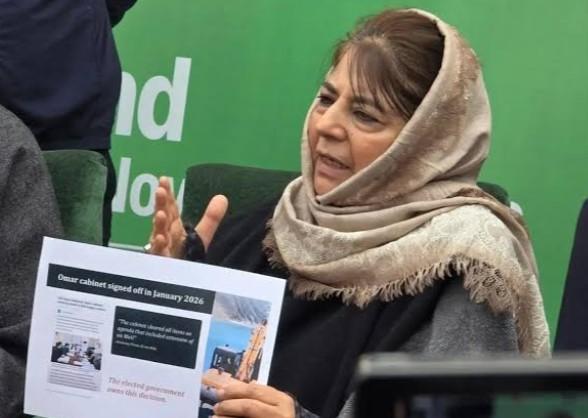
Addressing a press conference in Srinagar, Mehbooba asked the government to explain why the agreement with BRO was extended and whether a formal environmental impact assessment was carried out before allowing work in the ecologically sensitive area.
She argued that the government should not expect public trust while keeping key documents inaccessible. Her demands include cancelling the agreement, making its terms public, halting work until environmental concerns are independently examined, and allowing environmental experts and elected representatives to assess the ground situation.
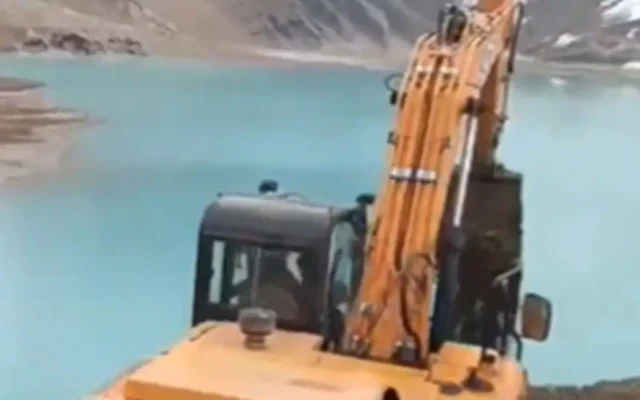
She has also questioned the deployment of heavy machinery at such a high altitude, asking who authorised its movement and what permissions were issued.
The dispute is not merely about the presence of machinery. At its core, it concerns what the project actually permits, where the work is taking place, what environmental safeguards apply, and whether those safeguards can be independently verified.
Harassment allegations raise a new and serious concern
One of the most troubling aspects of the latest developments is Mehbooba’s allegation that people raising environmental concerns are being pressured.
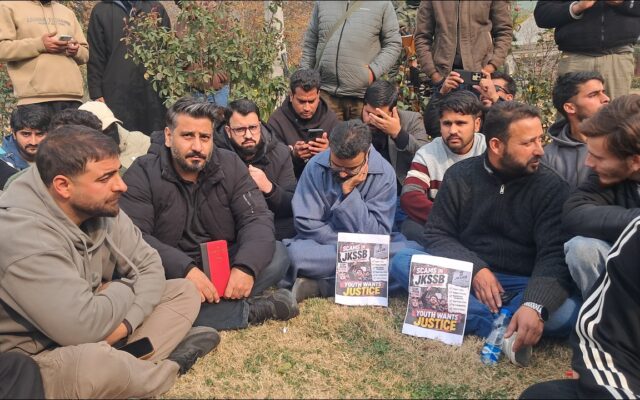
The PDP chief claimed that Zarqua Bandey, who initiated an online campaign to protect Sheshnag, was facing harassment. She also alleged that some young people associated with the “Save Sheshnag, Save Kashmir” campaign had been summoned to police stations and that their mobile phones were seized.
These allegations have also been reported by The Tribune, which carried accounts of activists allegedly being called in for questioning and their families facing pressure. Climate activist Raja Muzaffar, cited in the report, expressed concern about the alleged treatment of Bandey and her family and argued that citizens should be free to raise environmental issues without intimidation.
However, the allegations have not been independently established in the public domain, and a police response addressing the specific claims was not available in the reports reviewed.
That distinction matters. If the allegations are true, authorities need to explain the action taken against the campaigners, its legal basis and whether any investigation is underway. If the claims are disputed, a transparent official response is equally necessary.
Environmental petitions, peaceful protests and public questions about projects in sensitive ecological areas should not become matters of suspicion simply because they create political discomfort.
Why Sheshnag’s ecology deserves more than political assurances
Potential risks associated with poorly managed excavation, track widening or heavy machinery include:
-
Soil erosion and sediment runoff into nearby water bodies.
-
Disturbance to fragile alpine vegetation, which may take years to recover.
-
Changes to natural drainage patterns.
-
Instability of slopes and loose terrain.
-
Improper disposal of excavated material.
-
Cumulative impacts from repeated infrastructure interventions.
These are environmental risks that warrant scientific examination, not proof that the current work has already caused damage.
The government’s position that the lake remains safe is important, but a visual inspection or finding that no soil has entered the water cannot, by itself, answer every question about slope stability, drainage, vegetation disturbance or long-term ecological impact.
That is why a transparent assessment should go beyond a simple declaration that the lake is unharmed.
The government says the lake is safe. But what evidence has been made public?
The controversy intensified after Forest Minister Altaf Ahmad Wani, also known as Altaf Kaloo, said a 12-member departmental team had inspected the area and found no damage to Sheshnag Lake. He stated that no soil had entered the water body and maintained that the existing track had not been tampered with.
The minister also claimed the track was around 200–300 feet from the lake, disputing the impression created by videos circulating online.
These are important official assurances, but the larger issue remains public verification. A detailed inspection report, precise site measurements, geotagged photographs, maps showing the alignment of the track and work areas, and information about drainage and spoil disposal would allow the public to assess the government’s claims more meaningfully.
A departmental inspection is relevant evidence. However, an independent assessment involving qualified environmental and geotechnical experts would help resolve the controversy with greater credibility.
The disputed MoU: What exactly was approved?
The political dispute has increasingly centred on the agreement between the government and BRO, particularly its extension and the nature of the work covered by it.
Mehbooba has questioned why the MoU was extended and demanded its cancellation. She has asked the government to disclose the agreement, environmental assessment and approvals behind the activity.
The National Conference, meanwhile, has rejected the opposition’s description of the work as a newly sanctioned road project. Its position is that the activity is connected with existing pilgrimage tracks, maintenance, stabilisation and snow clearance, rather than approval for an entirely new road.
This difference is crucial. Without access to the original agreement, its extensions, technical annexures, maps and administrative approvals, the public cannot independently determine whether the activity is routine track maintenance, widening, a new alignment or a combination of works.
The debate cannot be settled through political statements alone. The documentary record is what matters.
Why restricting access is fuelling suspicion
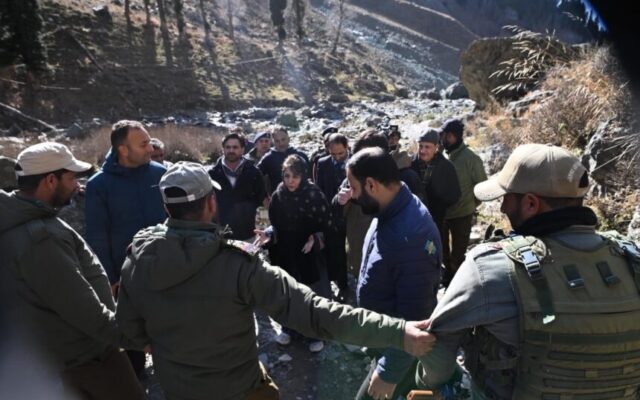
Mehbooba has also questioned why she was stopped from proceeding towards Sheshnag and why environmental campaigners and concerned citizens have not been allowed to freely inspect the area.
The administration has cited security considerations in connection with restrictions along the route. But in a controversy where the government is already facing questions about construction, access restrictions can deepen suspicion, even when security reasons may be legitimate.
There is a practical middle ground. Authorities could permit a carefully coordinated visit by a credible team comprising environmental scientists, geologists, hydrologists, government officials and representatives of civil society, subject to reasonable security arrangements.
Such an inspection would not compromise security or ongoing operations. It could instead help replace competing claims with documented findings.
The politics of Sheshnag: NC, PDP and the growing public debate
The Sheshnag controversy is now exposing a political divide between the ruling National Conference and the PDP, with both sides disputing the project’s approval, scope and responsibility.
Mehbooba has accused the Omar Abdullah government of failing to provide clarity and has questioned its decision-making. The NC has countered that the opposition is misrepresenting the nature and history of the work.
Other political voices have also urged that environmental experts, rather than political accusations, should lead the assessment. The growing public reaction, including online petitions and calls for the work to be reviewed, indicates that the controversy has moved beyond party politics into a broader debate about the protection of Kashmir’s fragile mountain environment.
The danger is that ecological concerns become trapped in partisan exchanges. If every allegation is dismissed as politics and every government explanation is treated as concealment, a factual resolution becomes harder to achieve.
Sheshnag should not have to wait for political consensus before its environmental questions are examined.
A transparency test for the Omar Abdullah government
The controversy presents the Omar Abdullah government with an opportunity to respond through evidence rather than political counterarguments.
There are several steps that could help settle the issue:
-
Publish the MoU: Disclose the agreement with BRO, extensions, scope of work, approvals and relevant technical documents.
-
Release the inspection findings: Make the 12-member team’s report public, including photographs, site measurements and findings.
-
Commission an independent assessment: Involve qualified experts in alpine ecology, geology, hydrology and slope stability.
-
Address harassment allegations: Clarify whether protesters were summoned, whether phones were seized, and the legal grounds for any police action.
-
Allow a supervised expert visit: Provide access for an independent team under appropriate security arrangements.
-
Clarify the project’s actual scope: Identify what is maintenance, track stabilisation, widening or new construction, and what approvals apply to each.
These measures would help protect both the environment and the government’s credibility.
Sheshnag is bigger than a political dispute
The Sheshnag controversy is ultimately about the kind of development Kashmir chooses in its most fragile landscapes.
Infrastructure is necessary. The Amarnath pilgrimage route requires safety, access, maintenance and emergency preparedness. But high-altitude infrastructure cannot be evaluated using the same standards as ordinary road construction in urban or lowland areas. The environmental costs of disturbing fragile terrain can persist long after machinery has left the site.
Mehbooba Mufti’s allegations of harassment, her demand for MoU cancellation and the government’s assurances that the lake remains safe have created a situation where neither political statements nor viral videos alone can settle the facts.
The government has the authority to explain its decisions. The public has the right to question them. And environmental protection requires evidence that can withstand scrutiny.
The most credible way to end the Sheshnag controversy is not through another political exchange, but through public disclosure, independent scientific assessment and a clear record of what was done, where it was done, and under whose approval.
Until that happens, the questions surrounding Sheshnag Lake are unlikely to disappear.