From Pesticide-Laden Vegetables to Rotten Meat: Kashmir’s Growing Food Safety Concerns
By: Javid Amin | 20 November 2026
58 of 1,489 fruit and vegetable samples in J&K exceeded permissible pesticide limits, while repeated meat seizures expose weaknesses in food monitoring, transportation and regulatory enforcement
Every household expects the food purchased from neighbourhood markets to be safe. Vegetables are washed, meat is cooked, fruits are served to children and families sit down for meals believing that the products on their tables meet basic standards of quality and hygiene. But recent findings from Jammu and Kashmir have raised uncomfortable questions about how much consumers can actually trust the food supply chain.
From pesticide residues exceeding prescribed limits in fruits and vegetables to repeated seizures of deteriorated meat, a series of food safety concerns has brought the effectiveness of the region’s monitoring and enforcement mechanisms under scrutiny.
The figures are particularly concerning. Government data presented in Parliament shows that 58 out of 1,489 fruit and vegetable samples tested in Jammu and Kashmir between 2023 and 2026 exceeded the Maximum Residue Limits (MRLs) prescribed by the Food Safety and Standards Authority of India (FSSAI). This represents a violation rate of approximately 3.9 per cent, higher than the reported national average of 3.1 per cent.
The concerns do not end with agricultural produce. In February 2026, the Jammu and Kashmir Government informed the Legislative Assembly that 12,183.5 kg of rotten meat had been destroyed across the Union Territory during the 2025-26 financial year up to December 2025. Another 2,139 kg had been seized during enforcement operations.
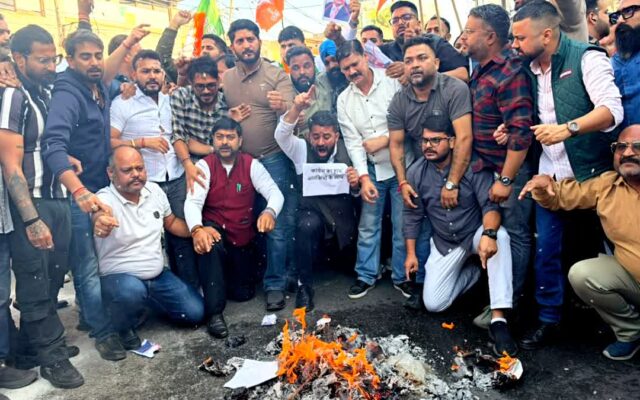
More recently, the seizure of approximately 1,600 kg of deteriorated buffalo meat at Budgam Railway Station, followed by another recovery from a separate consignment, has once again exposed serious weaknesses in the transportation and handling of perishable food products.
Taken together, these developments reveal a food safety challenge that deserves sustained public attention. The concern is not that every vegetable sold in Kashmir is contaminated or that all meat entering the market is unsafe. Rather, it is that violations have been detected at different stages of the food supply chain, while consumers still have limited access to the information needed to understand the nature and scale of the problem.
For ordinary families, the question is increasingly straightforward: Who is ensuring that the food reaching their kitchens is safe, and how can consumers know when something is wrong?
58 Food Samples Breached Pesticide Limits: What Government Data Reveals
The pesticide residue findings provide one of the clearest indications of the challenges facing food monitoring in Jammu and Kashmir.
The figures were disclosed by Union Agriculture and Farmers Welfare Minister Shivraj Singh Chouhan in a written reply in the Lok Sabha in August 2026, following a question concerning excessive and indiscriminate pesticide use in agricultural production.
According to the government’s response, 1,489 fruit and vegetable samples collected in Jammu and Kashmir between 2023 and 2026 were examined under the Monitoring of Pesticide Residues at National Level (MPRNL) programme.
Of these, 58 samples contained pesticide residues above the limits prescribed under FSSAI regulations.
The figures translate into the following comparison:
| Monitoring indicator | J&K | National |
|---|---|---|
| Samples tested | 1,489 | 70,652 |
| Samples exceeding MRLs | 58 | 2,223 |
| Violation rate | 3.9% | 3.1% |
The difference may appear relatively small, but it deserves attention because Jammu and Kashmir’s reported violation rate was higher than the national average.
At the same time, the findings need to be interpreted carefully. The 3.9 per cent figure represents the proportion of tested samples that crossed prescribed pesticide limits. It does not mean that 3.9 per cent of all vegetables and fruits available in Kashmir are contaminated, nor does it establish the overall prevalence of unsafe produce in local markets.
The more significant concern lies in the information missing from the government’s published response.
It does not identify the particular fruits or vegetables in which excessive residues were detected. It also does not disclose the pesticides involved, the extent to which individual samples exceeded permissible limits, or the specific enforcement action taken following the findings.
For consumers, these are not minor administrative details. They are essential pieces of information that could help identify problematic supply chains, understand the risks and demand corrective action.
A family purchasing apples, tomatoes, leafy vegetables or other everyday commodities has little practical way of knowing whether a particular batch has been tested or whether it has crossed the prescribed residue limit.
This information gap is precisely where a stronger public disclosure system becomes necessary.
Kashmir’s Pesticide Residue Rate Higher Than National Average
The national comparison makes the Jammu and Kashmir findings more significant.
Across 23 States and Union Territories covered by the reported monitoring exercise, 70,652 samples were tested between 2023 and 2026. A total of 2,223 samples exceeded the prescribed pesticide residue limits, accounting for approximately 3.1 per cent of the total.
Jammu and Kashmir recorded a higher rate of 3.9 per cent.
The findings emerged from the MPRNL programme, implemented by the Department of Agriculture and Farmers Welfare since 2005-06 to monitor pesticide residues in agricultural commodities.
Samples are collected from different points in the agricultural and commercial supply chain, including wholesale and retail markets, Agricultural Produce Market Committee markets, farm gates and other designated outlets.
This approach is important because pesticide residue problems can originate at different stages of agricultural production and distribution.
However, a testing programme can only become an effective consumer protection mechanism when its findings translate into traceable action. Identifying a sample that exceeds the legal limit is the beginning of enforcement, not its conclusion.
The government needs to establish whether the affected produce originated from a particular growing area, whether the problem involved incorrect pesticide application, inadequate waiting periods before harvesting, misuse of chemicals or other agricultural practices.
Without this information, the same violations may continue to recur without meaningful corrective measures.
What Are Pesticide Residue Limits, and Why Should Consumers Care?
Pesticide use is an established part of modern agriculture. Farmers depend on approved chemicals to protect crops from insects, fungi, weeds and diseases that can destroy production and reduce their earnings.
The problem begins when pesticides are used incorrectly, applied in excessive quantities, or when harvested produce is marketed before the prescribed waiting period has elapsed.
Pesticide residues are traces of chemicals or their breakdown products that may remain on or within agricultural produce following treatment.
To regulate these residues, FSSAI establishes Maximum Residue Limits for specific pesticide and food-commodity combinations.
An MRL represents the maximum legally permitted residue concentration under the applicable regulatory standard. These limits are based on scientific assessments, approved agricultural practices and dietary exposure considerations.
A sample exceeding its prescribed MRL is a regulatory non-compliance and requires appropriate investigation and enforcement.
However, it is important to distinguish between a legal residue violation and a confirmed case of human poisoning.
The health implications depend on the particular chemical, concentration, quantity consumed, frequency of exposure and the individual’s vulnerability.
The World Health Organization (WHO) explains that pesticides can cause acute and chronic health effects depending on the level and route of exposure. Certain chemicals have been associated with neurological, reproductive and other health effects, while some pesticide exposures have been linked to cancer risks.
WHO also makes an important distinction: the general population is generally exposed to considerably lower pesticide levels through food and water than people who handle pesticides occupationally.
This distinction matters because public discussion should be based on actual exposure and toxicological evidence rather than fear.
The purpose of residue limits is precisely to prevent dietary exposure from reaching levels considered harmful under established risk assessments.
When food samples exceed those limits, authorities must investigate the violation and ensure that unsafe products do not continue entering the consumer market.
The Missing Information: Consumers Know That Limits Were Breached, But Not Which Food Was Involved
Perhaps the most troubling aspect of the pesticide findings is the limited information available to the public.
The government has disclosed the number of samples exceeding permissible limits, but consumers have not been provided with a detailed breakdown identifying the affected commodities, chemicals and locations.
Was the problem detected in apples, vegetables, leafy produce or other fruits?
Were the violations linked to particular pesticides or agricultural practices?
Were the affected samples collected from wholesale markets, retail outlets or farm gates?
Were the suppliers traced, and were the relevant products withdrawn from circulation?
These questions remain unanswered in the publicly reported figures.
Without such details, consumers cannot make informed decisions, while farmers and legitimate traders also lose an opportunity to identify and correct specific problems.
Public disclosure does not necessarily mean publishing unverified allegations against individual traders or farmers. It means releasing verified laboratory findings, commodity-wise data, relevant locations and enforcement outcomes in a transparent manner.
A credible food safety system should be able to tell the public what was tested, what failed, what action followed and whether the problem was resolved.
The absence of such information weakens public confidence even when regulatory agencies are conducting inspections.
Rotten Meat Seizures: A Second Warning From the Food Supply Chain
While pesticide residues have raised concerns about agricultural produce, repeated seizures of deteriorated meat have exposed another serious dimension of food safety in Jammu and Kashmir.
The issue gained renewed attention in November 2026 following the seizure of approximately 1,600 kg of buffalo meat at Budgam Railway Station.
According to official accounts, the consignment had arrived from Delhi through a railway parcel service. Railway Police alerted the concerned authorities after noticing suspicious conditions involving the consignment.
An inspection revealed 44 boxes containing meat in a highly deteriorated condition. Officials reported a foul smell and leaking containers, while the required refrigeration and cold-chain arrangements had not been maintained.
The Food Safety Department, veterinary officials and district administration examined the consignment and declared the meat unfit for human consumption. The material was subsequently destroyed to prevent it from entering the food supply chain.
A separate consignment weighing approximately 380-400 kg was also intercepted at Budgam Railway Station the following day and found unfit for consumption.
The back-to-back recoveries raised questions about how perishable food products could be transported through railway cargo without adequate refrigeration and the necessary documentation.
The investigation into the consignments is important not only for establishing the responsibility of those involved but also for identifying whether similar transportation practices have been followed previously.
The seizures have once again highlighted the importance of monitoring food products before they reach wholesale markets, retail establishments and restaurants.
More Than 12,183 Kg of Rotten Meat Destroyed Across J&K
The November seizures are particularly concerning when viewed against the official enforcement figures already presented in the Jammu and Kashmir Legislative Assembly.
In February 2026, Health and Medical Education Minister Sakeena Itoo informed the House that authorities had conducted 1,676 inspections across the Union Territory during the 2025-26 financial year up to December 2025.
The reported enforcement figures included:
- 12,183.5 kg: Rotten meat destroyed.
- 2,139 kg: Meat seized.
- 1,676: Inspections conducted.
- 144: Meat and meat-product samples collected.
- 17: Samples reported unsafe.
- 1: Sample reported substandard.
- Rs 29.19 lakh: Estimated value of the destroyed rotten meat.
The minister also informed the Assembly that approximately 7,665 kg of adulterated or substandard paneer had been seized or destroyed in Jammu and Samba districts.
These figures show that food safety enforcement is dealing with violations across multiple categories of everyday consumption.
They also demonstrate why food monitoring cannot be limited to occasional market inspections.
The distinction between meat seized, meat destroyed and laboratory samples found unsafe must be maintained. These categories represent different enforcement outcomes and should not be combined into a single contamination rate.
The government has also clarified that the reported incidents do not establish food adulteration as a generalised phenomenon across the Union Territory.
That position deserves consideration. The figures demonstrate serious individual violations, but they do not establish that the entire food market is unsafe.
Nevertheless, the scale of the destroyed stock and the recurrence of suspicious consignments make stronger preventive action necessary.
Why the Cold Chain Is Critical for Meat Safety
The meat seizures have also exposed the importance of maintaining the cold chain during transportation.
Meat is highly perishable and requires controlled storage conditions from processing and packaging until it reaches the retailer or consumer.
For frozen meat, the prescribed transportation temperature is generally minus 18 degrees Celsius or below. Chilled meat is subject to a different temperature requirement.
When frozen meat is transported without suitable refrigeration or dry-ice arrangements, its temperature can rise, creating conditions that may allow microorganisms to multiply and accelerate spoilage.
Once the cold chain is compromised, the product cannot automatically be considered safe simply because it was originally frozen or came from a commercial supplier.
Proper transportation also requires hygienic packaging, appropriate documentation, traceability and protection against contamination.
The Budgam incident raises questions about how the consignment was accepted for railway transportation, whether its nature was correctly declared and why the necessary temperature-control arrangements were reportedly missing.
These are questions that require investigation by the relevant authorities.
The railway network is an important channel for transporting goods, including food products. It must therefore operate with effective checks for consignments containing highly perishable commodities.
Food safety responsibility cannot end at the point where a product leaves the supplier’s premises. It must continue throughout transportation and distribution.