J&K Faces Up to 1,300 MW Winter Power Deficit: Omar Abdullah Government Seeks Special Package from Centre
By: Javid Amin | 27 November 2026
Jammu & Kashmir is heading into another difficult winter, with electricity demand expected to reach nearly 3,450 MW against an anticipated supply shortfall of 600 MW to 1,300 MW. The widening gap has prompted the Omar Abdullah-led government to approach the Centre for additional electricity allocations and a dedicated financial package to strengthen the Union Territory’s struggling power sector.
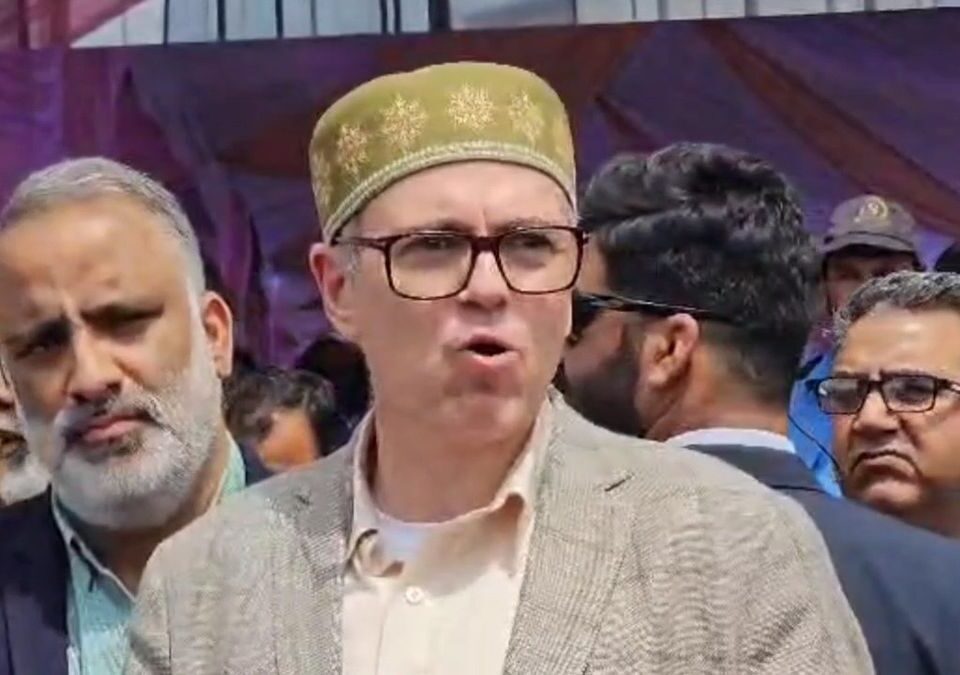
The issue was formally raised by Power Development Department Minister Ali Mohammad Sagar during the State Ministers’ Conference on Power in New Delhi on November 27, chaired by Union Power Minister Manohar Lal. Sagar submitted a detailed memorandum seeking central assistance for modernising electricity infrastructure, improving power availability, reducing distribution losses and accelerating hydropower development.
The timing is significant. Kashmir is entering the period when electricity becomes one of the most important household necessities. Temperatures fall, heating requirements increase and the demand for electricity rises sharply. At the same time, reduced water flow in rivers affects hydropower generation, leaving the Union Territory increasingly dependent on electricity purchased from outside.
For ordinary consumers, the concern is immediate: longer power cuts, unreliable heating and additional pressure on household budgets.
For the government, the challenge is much bigger. It must arrange sufficient electricity for the coming months while addressing structural weaknesses that have kept Jammu & Kashmir dependent on external power despite its considerable hydropower resources.
The latest request for central assistance therefore represents more than a seasonal appeal. It highlights a long-standing problem in Jammu & Kashmir’s energy economy: the gap between its power-generation potential and its ability to meet its own winter requirements.
Winter electricity demand projected at 3,450 MW
The figures presented by Ali Mohammad Sagar provide a clear picture of the pressure facing the electricity sector.
During the previous winter, Jammu & Kashmir recorded peak electricity demand of approximately 3,362 MW.
The demand was divided between:
-
Kashmir division: 1,906 MW.
-
Jammu division: 1,456 MW.
For winter 2026–27, the government has projected demand of approximately 3,450 MW.
Against this requirement, the estimated supply deficit ranges between 600 MW and 1,300 MW, depending on availability and procurement arrangements.
J&K winter power situation 2026–27
3,450 MW – Projected winter demand
1,300 MW – Maximum estimated supply gap
3,362 MW – Previous winter peak demand
600 MW – Lower end of estimated deficit
Source: Power Minister’s presentation at the November 27 State Ministers’ Conference. These are demand and estimated supply-gap figures, not confirmed scheduled outages.
The distinction between the lower and upper estimates is important. A projected deficit of 1,300 MW does not mean every consumer will experience an identical shortage or that the entire amount will necessarily remain unmet.
Actual electricity availability will depend on central allocations, purchases from the power market, banking arrangements with neighbouring states and the performance of the transmission and distribution network.
Nevertheless, the upper estimate indicates the scale of the challenge if additional supplies cannot be secured.
Why Kashmir faces electricity shortages during winter
The biggest structural reason behind Jammu & Kashmir’s winter power difficulties is the seasonal nature of hydropower generation.
The Union Territory has substantial hydropower resources, but electricity production from many river-based projects depends on the volume and consistency of water flowing through their systems.
During summer, melting snow and glacier-fed rivers generally support higher water flows. This provides favourable conditions for hydropower generation.
Winter brings a different situation.
Water availability declines in several river systems as temperatures fall and precipitation is stored as snow in higher-altitude regions. The reduced flow affects electricity production, particularly in run-of-the-river hydropower projects.
The problem becomes more pronounced when electricity demand rises at the same time.
In Kashmir, households increasingly depend on electric heating appliances, particularly during prolonged cold spells. Heating requirements in residential buildings, commercial establishments, hospitals and other institutions add to the overall demand.
The result is a seasonal mismatch: electricity consumption increases precisely when locally available hydropower generation becomes less favourable.
This is why Jammu & Kashmir cannot rely exclusively on its own generation during winter.
It must arrange electricity from the national grid, purchase additional power and negotiate seasonal banking arrangements with other states.
The challenge is not simply generating more electricity. It is ensuring that sufficient power is available when consumers need it most.
Government seeks additional 329 MW allocation from Centre
To address the immediate winter shortage, the Jammu & Kashmir government has sought additional unallocated electricity from the national pool.
One of the key demands submitted by Ali Mohammad Sagar is the continuation or enhancement of an additional allocation of 329 MW for December 2026 to February 2027.
This allocation is particularly important because winter shortages are not limited to Kashmir. Both Jammu and Kashmir divisions experience higher electricity requirements, although the nature and intensity of consumption vary across regions.
The minister has also requested:
-
Additional unallocated electricity from the Central pool.
-
More predictable power allocations during peak winter months.
-
Affordable long-term electricity procurement arrangements.
-
Banking arrangements with neighbouring states, including Punjab and Uttar Pradesh.
-
Financial assistance for strengthening transmission and distribution infrastructure.
Power banking is particularly relevant to Jammu & Kashmir’s seasonal electricity requirements.
Under such arrangements, a region can supply electricity to another state when it has surplus generation and receive electricity back when its own requirements increase.
The J&K Economic Survey 2024–25 has already recognised the importance of bilateral arrangements with states that have surplus electricity during winter, alongside additional unallocated power from the Ministry of Power.
However, banking arrangements depend on mutually agreed terms, available surplus, transmission capacity and the ability to return equivalent electricity within the agreed period.
The government is therefore seeking a combination of immediate power procurement and longer-term arrangements rather than relying on a single source.
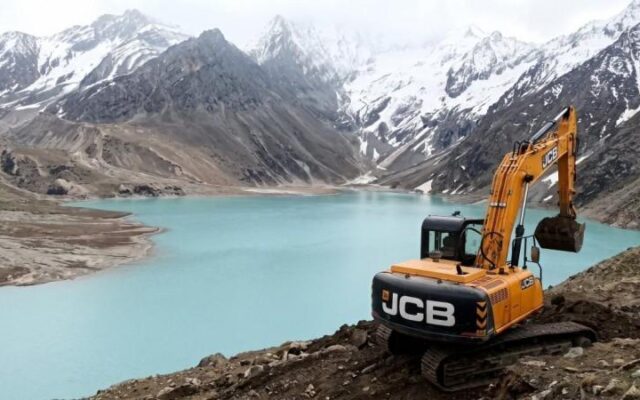
J&K has enormous hydropower potential, but only a fraction has been harnessed
Perhaps the biggest contradiction in Jammu & Kashmir’s electricity situation is the difference between its hydropower potential and its actual installed capacity.
According to the figures presented by the Power Minister, Jammu & Kashmir has an estimated hydropower potential of approximately 14,635 MW.
However, only around 3,540 MW has been harnessed so far.
Jammu & Kashmir’s hydropower potential
3,540 MW harnessed – 24.2%
Approximately 11,095 MW of the estimated potential remains unharnessed. This is a potential-capacity comparison, not immediately available electricity.
This gap represents a major long-term opportunity for the region.
Jammu & Kashmir has rivers and mountainous terrain that offer considerable opportunities for hydropower development. Yet converting that natural advantage into dependable electricity requires substantial investment, geological investigations, environmental clearances, construction and transmission infrastructure.
The minister highlighted four major projects currently under development:
| Hydropower project | Capacity |
|---|---|
| Pakal Dul | Part of the combined project capacity |
| Kiru | Part of the combined project capacity |
| Kwar | Part of the combined project capacity |
| Ratle | Part of the combined project capacity |
| Combined capacity | 3,563.5 MW |
The government aims to increase installed hydropower capacity to approximately 10,975.65 MW by 2035.
That would represent a substantial expansion from the currently harnessed capacity.
However, large hydropower projects are not short-term solutions to an immediate winter deficit. They require years of construction, major capital expenditure and careful environmental and geological assessment.
Even after commissioning, their contribution to winter electricity availability will depend on water availability, reservoir or run-of-river characteristics, operating conditions and the ability to transmit the generated power.
The government is therefore seeking central grants, concessional financing and viability-gap funding to accelerate the development process.
The proposed Jammu & Kashmir Hydro Power Policy 2026 is also intended to encourage investment and create a more structured framework for future projects.
Power distribution losses remain another major challenge
Generating or purchasing additional electricity is only one part of the problem.
The electricity must also travel through transmission lines, substations, transformers and local distribution networks before reaching households.
Weak infrastructure, overloaded transformers, technical losses, electricity theft and inefficient billing can reduce the effectiveness of the entire supply system.
The government has acknowledged these problems and highlighted improvements in the performance of the two distribution companies.
According to figures presented by Ali Mohammad Sagar:
-
Jammu Power Distribution Corporation Limited (JPDCL) reduced AT&C losses from 49.82 per cent to 27.13 per cent.
-
Kashmir Power Distribution Corporation Limited (KPDCL) reduced AT&C losses from 65.61 per cent to 33 per cent.
Revenue realisation by the two companies reportedly increased from approximately ₹3,060 crore in 2021–22 to ₹5,290 crore in 2025–26, a rise of nearly 73 per cent.
These figures indicate progress in revenue collection and distribution-sector reforms.
However, the remaining losses are still substantial, particularly in the Kashmir distribution network.
An important cross-check comes from KPDCL’s FY 2024–25 energy audit report. It records AT&C losses of 33.65 per cent and technical and distribution losses of 38.47 per cent for that financial year.
The audit also identifies gaps in consumer-end metering and distribution efficiency. Its figures relate to FY 2024–25 and should not be confused with the minister’s subsequently reported 2025–26 performance figures.
The distinction matters because reducing AT&C losses does not automatically mean that electricity shortages will disappear.
But every improvement in billing, collection, metering and technical efficiency can help distribution companies manage their resources more effectively and reduce the financial burden associated with power supply.
Smart meters and ₹4,708 crore distribution modernisation programme
Under the Revamped Distribution Sector Scheme (RDSS), the government has sanctioned 14.07 lakh smart meters across Jammu & Kashmir.
Of these, nearly 12.25 lakh had been installed by November 19, 2026.
In addition, distribution strengthening and power-loss reduction works worth approximately ₹4,708.52 crore have been sanctioned.
The programme includes:
-
Replacing ageing and overloaded transformers.
-
Strengthening 33/11 kV infrastructure.
-
Installing additional substations.
-
Improving low-tension distribution networks.
-
Developing alternative power-feeding arrangements.
-
Installing underground and insulated cables in vulnerable locations.
-
Strengthening enforcement against electricity theft and unauthorised consumption.
These investments are essential because the reliability of electricity depends as much on the condition of the distribution network as on the availability of power at the generating station.
A household may remain without electricity even when sufficient power has been purchased if a local transformer fails or a distribution line is damaged.
The challenge is particularly serious in remote and mountainous areas, where repairing damaged infrastructure can take considerably longer.
Battery storage could help reduce the winter demand-supply gap
Another important proposal presented by the Power Minister concerns Battery Energy Storage Systems (BESS).
The government has proposed developing 250 MW/1,000 MWh of battery storage capacity over three years, with an eventual expansion to 1,000 MW/4,000 MWh by 2031.
Battery storage can help electricity systems manage fluctuations between generation and demand.
Electricity can be stored when supply is relatively abundant and discharged during periods when demand rises or generation falls.
For Jammu & Kashmir, this could provide additional flexibility during peak evening hours, particularly when households increase their use of heating appliances.
Battery storage can also help integrate renewable electricity into the grid and improve the management of short-duration supply fluctuations.
However, storage is not a replacement for generating capacity or dependable power procurement.
A 1,000 MW/4,000 MWh system, for example, represents a maximum discharge capability of 1,000 MW for four hours under specified operating conditions. It cannot independently supply the entire Union Territory’s electricity requirements throughout a prolonged winter shortage.
Its effectiveness will depend on charging arrangements, operating costs, grid integration and the availability of electricity to store.
Nevertheless, the proposal represents an important step towards building a more flexible electricity system.
Mountainous terrain and extreme weather make power restoration difficult
Jammu & Kashmir faces another challenge that is often overlooked in discussions about electricity shortages: the vulnerability of its power infrastructure to extreme weather.
Heavy snowfall, avalanches, landslides, cloudbursts and flash floods can damage transmission lines, distribution networks and substations.
In several mountainous and remote areas, restoring electricity is not simply a matter of sending a repair team. Difficult terrain, blocked roads and severe weather can delay access to damaged infrastructure.
Recognising this problem, Sagar proposed a dedicated Himalayan Power Infrastructure Resilience Programme.
The proposal includes the procurement of Emergency Restoration System (ERS) units, which can help restore damaged transmission infrastructure following major disruptions.
According to the minister, seven such units have already been procured for Jammu. He sought 15 additional units for Jammu and another 10 for Kashmir.
He also proposed establishing two dedicated Power Training Colleges, one in each division, to strengthen technical expertise and develop specialised manpower for the electricity sector.
These proposals recognise that Jammu & Kashmir requires a power infrastructure designed for Himalayan conditions rather than one based on conventional maintenance arrangements.
The government has also sought support for new transmission lines, grid substations, transformer augmentation, digital substations and stronger transmission corridors.
What the power shortage means for ordinary households
Behind the technical figures and financial proposals lies a much more immediate concern for residents.
Electricity is essential to daily life in Kashmir, particularly during the winter months.
For households relying on electric heating appliances, an extended power cut can make indoor conditions uncomfortable and, in some circumstances, create serious difficulties for elderly residents, children and people with limited access to alternative heating.
The impact is not restricted to residential consumers.
Hospitals and healthcare facilities require dependable electricity for diagnostic equipment, operating theatres, heating systems and emergency services.
Small businesses depend on electricity for daily operations, refrigeration, machinery and commercial activities. Frequent interruptions can increase operating costs and reduce productivity.
Hotels and tourism establishments need reliable power to maintain heating, hot-water systems and other facilities for visitors.
Horticulture and cold-chain businesses require electricity to operate storage and preservation facilities, particularly where temperature control is essential.
Students and educational institutions also face difficulties when prolonged power interruptions affect lighting, heating and digital learning facilities.
For lower-income households, the situation can become particularly difficult because alternative heating arrangements may involve additional expenditure.
This is why the winter power deficit should not be viewed merely as an electricity department issue. It has direct implications for household welfare, economic activity, public health and the overall cost of living.
Is Jammu & Kashmir paying the price for years of power-sector dependence?
The latest winter power crisis has revived a larger question about Jammu & Kashmir’s energy policy.
How can a region with an estimated hydropower potential of 14,635 MW continue to depend so heavily on purchased electricity during its most difficult season?
The answer involves several interconnected factors.
First, the majority of hydropower potential remains unharnessed. Developing large projects requires considerable investment, time and technical preparation.
Second, the electricity generated by existing hydroelectric projects is not sufficient to meet peak winter requirements.
Third, seasonal variations in river flows create a mismatch between electricity generation and consumption.
Fourth, transmission and distribution infrastructure continues to require substantial modernisation.
Finally, financial constraints limit the ability of distribution companies and the administration to procure electricity at affordable rates while simultaneously investing in infrastructure.
The Jammu & Kashmir Economic Survey 2024–25 had already identified a power requirement-availability gap of approximately 14–16 per cent, primarily because hydropower generation declines during winter as water flow in snow-fed rivers reduces.
It also highlighted the use of bilateral arrangements with other states and unallocated Central power to manage the seasonal shortage.
The latest projected deficit of 600–1,300 MW illustrates how serious the challenge remains under the winter 2026–27 demand estimates.
The problem, therefore, cannot be solved through emergency electricity purchases alone.
Jammu & Kashmir needs a long-term strategy that connects hydropower development, electricity procurement, battery storage, distribution reforms and infrastructure resilience.
What the Centre’s special package could mean for J&K
The financial assistance requested by the Omar Abdullah government could become an important opportunity to restructure the power sector.
The proposed Jammu & Kashmir Power Sector Development and Modernisation Package is expected to combine grants, concessional loans, viability-gap funding and project-based assistance.
Unlike a temporary allocation of additional electricity, such a package could support long-term improvements in the entire power infrastructure.
Its potential benefits include:
-
Accelerating hydropower projects and expanding local generation capacity.
-
Strengthening transmission lines and distribution networks.
-
Replacing ageing transformers and overloaded equipment.
-
Reducing technical and commercial losses.
-
Expanding smart metering and digital monitoring.
-
Developing battery storage infrastructure.
-
Improving the ability to restore electricity after natural disasters.
The minister has also proposed creating a joint working group involving representatives of the Union Government and Jammu & Kashmir administration to examine the demands and facilitate time-bound implementation.
However, one important distinction must be made: the government has sought the package; its approval and release have not been established.
The Centre’s response will determine whether the proposals translate into actual financial support and infrastructure projects.
For the Union Territory, the objective should be to secure assistance that produces measurable improvements rather than simply covering recurring winter procurement expenses.
The real test begins when winter demand peaks
The request for additional electricity and financial support comes at a time when consumers are preparing for another difficult winter.
The government’s immediate priority is to ensure sufficient electricity through additional Central allocations, market purchases and seasonal arrangements with neighbouring states.
At the same time, it must ensure that the sanctioned modernisation works translate into stronger distribution networks and fewer technical failures.
The improvement in revenue collection, installation of smart meters and reduction in AT&C losses are encouraging developments. But the scale of the remaining challenge demands sustained investment and administrative accountability.
The Centre, too, must recognise that Jammu & Kashmir’s electricity requirements are shaped by its geography, climate and seasonal consumption patterns.
A Himalayan region cannot be assessed entirely through the same infrastructure and maintenance assumptions applied to plains-based electricity networks.
But geography cannot become a permanent explanation for inadequate supply either.
The region has considerable hydropower potential, and its long-term energy security depends on converting that potential into dependable generation while ensuring that electricity reaches consumers efficiently.
For now, the question facing thousands of households is straightforward: will the additional electricity sought from the Centre translate into fewer power cuts this winter?
For the Omar Abdullah government, the larger challenge is to ensure that Jammu & Kashmir does not return to the same annual cycle of winter shortages, emergency procurement and fresh financial appeals.
The success of the proposed package should ultimately be measured not by the amount of money sanctioned or the number of projects announced, but by whether consumers receive more reliable electricity.
Because for a family sitting through a freezing winter evening without power, the distinction between installed capacity, electricity procurement and infrastructure modernisation matters only when the lights actually stay on.