Mehbooba Mufti Targets BJP Ahead of August 5, Links Article 370 Abrogation to Wider Political Narrative
By: News Desk | 04 Aug 2025
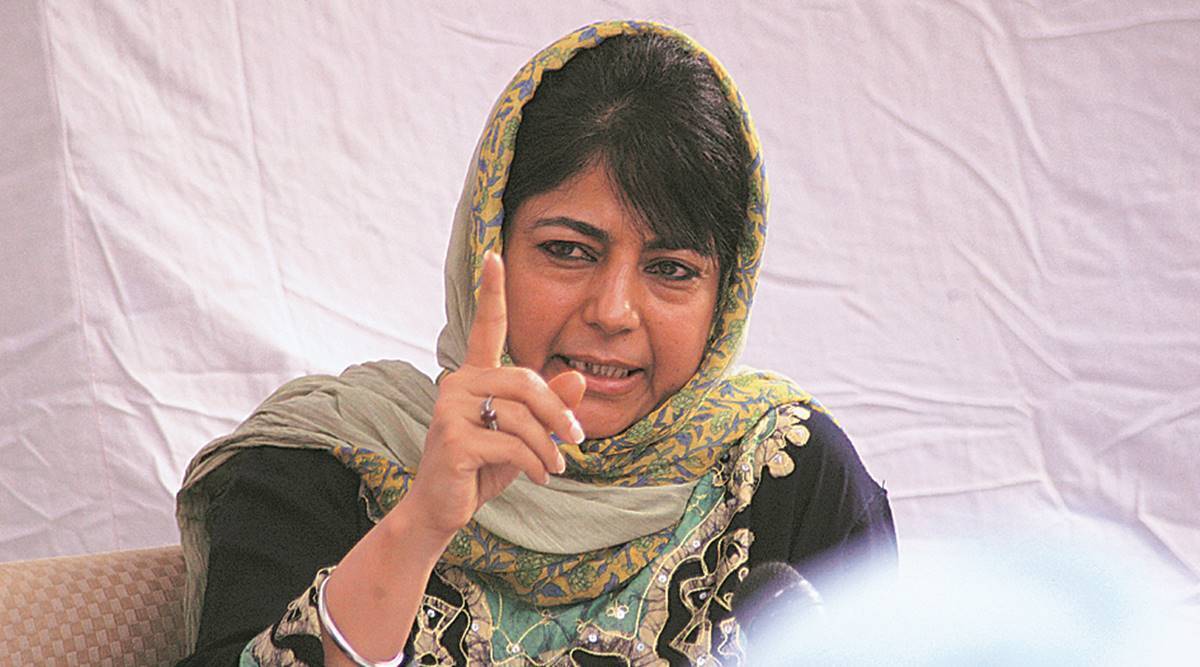
As Jammu and Kashmir marks another anniversary of the constitutional changes of August 5, 2019, People’s Democratic Party (PDP) president Mehbooba Mufti has intensified her criticism of the Bharatiya Janata Party (BJP), accusing it of dismantling the region’s special constitutional status and using emotionally charged political symbolism in the process.
Speaking ahead of the anniversary, Mufti reiterated the PDP’s long-standing position that the abrogation of Article 370 and Article 35A fundamentally altered Jammu and Kashmir’s constitutional identity. According to reports, she also drew a controversial comparison involving the Ram Temple, alleging that the BJP had similarly appropriated issues of constitutional and religious significance for political purposes. The BJP has not accepted such characterisations, and these remarks represent Mufti’s political opinion.
The comments come as regional parties prepare to observe August 5 in different ways, reflecting continuing divisions over the constitutional changes introduced in 2019.
August 5 Continues to Shape J&K Politics
Seven years after the Centre revoked Jammu and Kashmir’s special constitutional status and reorganised the former state into two Union Territories, August 5 remains one of the most politically significant dates in the region.
The BJP has consistently defended the decision as a historic step towards national integration, equal rights and improved governance.
The PDP, however, maintains that the move represented the removal of constitutional guarantees that formed the basis of Jammu and Kashmir’s relationship with the Union of India.
Mehbooba Mufti has repeatedly argued that statehood alone cannot substitute for the restoration of Article 370 and Article 35A, a position she reaffirmed during the PDP’s recent foundation day programme.
Why the Ram Temple Reference Has Triggered Political Attention
The reported comparison with the Ram Temple has added another dimension to an already sensitive political debate.
The Ram Temple in Ayodhya occupies a central place in the BJP’s political narrative and is viewed by many supporters as the culmination of a decades-long religious and legal movement.
By invoking it in the context of Article 370, Mufti sought to argue that, in her view, the BJP has turned major constitutional and religious issues into instruments of political mobilisation.
Such comparisons are likely to provoke sharp reactions.
BJP leaders have consistently rejected allegations that the party exploits religious issues for electoral gain, maintaining that both the Ram Temple and the Article 370 decision reflect longstanding ideological commitments implemented through constitutional and legal processes.
As of publication, there has been no comprehensive official BJP response to Mufti’s latest remarks.
PDP Reaffirms Its Core Political Position
Mufti’s latest statement is consistent with the PDP’s broader political strategy.
The party continues to insist that:
- Restoration of Article 370 remains its principal constitutional demand.
- Article 35A should also be restored.
- Statehood, while important, is not sufficient on its own.
- Democratic rights and constitutional safeguards should remain central to the political discourse.
The PDP has also called for peaceful observance of August 5 through district-level protests and programmes highlighting what it describes as the erosion of constitutional and federal principles.
Different Parties, Different Political Priorities
The Article 370 debate has exposed differing strategies among Jammu and Kashmir’s principal regional parties.
| Political Party | Current Priority | Position on August 5 |
|---|---|---|
| PDP | Restoration of Article 370 and Article 35A | Calls for peaceful protests and renewed constitutional campaign |
| National Conference | Immediate restoration of statehood | Focuses on statehood while continuing to oppose the 2019 changes |
| Apni Party | Statehood and Article 370 restoration | Has described August 5 as a “black day” |
| JKPC | Constitutional and political response through democratic institutions | Opposes reducing the debate to statehood alone |
Although these parties differ in tactics, they continue to challenge aspects of the post-2019 political framework.
BJP and Opposition Locked in Competing Narratives
The latest remarks illustrate the wider narrative battle surrounding August 5.
The BJP argues that the constitutional changes:
- Fully integrated Jammu and Kashmir with the rest of India.
- Extended central laws and welfare schemes.
- Improved governance and development.
- Strengthened national unity.
Opposition parties such as the PDP argue instead that the move:
- Removed constitutionally guaranteed protections.
- Reduced Jammu and Kashmir’s political autonomy.
- Weakened federal principles.
- Altered the constitutional compact that existed before August 2019.
These competing narratives continue to dominate political discourse in the region.
Political Rhetoric Likely to Intensify
With August 5 carrying enormous symbolic significance, strong political statements from both the ruling party and the opposition are expected.
Observers anticipate that the debate will centre on:
- Article 370 and constitutional safeguards.
- Restoration of statehood.
- Democratic rights.
- Federalism.
- Security arrangements surrounding anniversary programmes.
- Competing interpretations of the events of August 2019.
The anniversary is therefore likely to remain a focal point for political messaging across Jammu and Kashmir.
Outlook
Mehbooba Mufti’s latest criticism reinforces the PDP’s long-held position that the constitutional changes of August 2019 represented a fundamental shift in Jammu and Kashmir’s political and constitutional status. Her reported comparison involving the Ram Temple is likely to generate political controversy, with supporters viewing it as a critique of the BJP’s political strategy and opponents dismissing it as provocative rhetoric.
As August 5 approaches, the debate over Article 370, statehood, constitutional safeguards and democratic rights continues to define the region’s political landscape. While the legal position on Article 370 was settled by the Supreme Court’s 2023 judgment, the political debate remains active, with regional parties using the anniversary to advance competing visions of Jammu and Kashmir’s future.